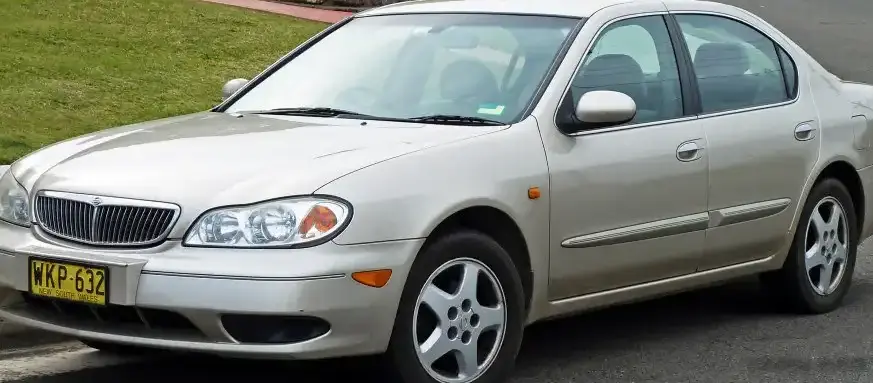
The Nissan Cefiro (32), produced between 1994 and 1999, represented Nissan’s offering in the mid-size sedan segment, primarily targeted towards the Japanese domestic market (JDM) and export markets like Australia, New Zealand, and parts of Asia. The 2.0i V6 24V variant, equipped with a 155 horsepower engine and a four-speed automatic transmission, occupied a middle ground within the Cefiro (32) lineup, offering a balance between performance, comfort, and affordability. It served as a step up from the base 1.8L models, while remaining more accessible than the higher-performance 2.5L variants.
Technical Specifications
| Brand | Nissan |
| Model | Cefiro |
| Generation | Cefiro (32) |
| Type (Engine) | 2.0i V6 24V (155 Hp) Automatic |
| Start of production | 1994 |
| End of production | 1999 |
| Powertrain Architecture | Internal Combustion engine |
| Body type | Sedan |
| Seats | 5 |
| Doors | 4 |
| Fuel consumption (extra urban) | 7.1 l/100 km (33.1 US mpg, 39.8 UK mpg, 14.1 km/l) |
| Fuel consumption (combined) | 10 l/100 km (23.5 US mpg, 28.2 UK mpg, 10 km/l) |
| Fuel Type | Petrol (Gasoline) |
| Weight-to-power ratio | 8.3 kg/Hp, 120.2 Hp/tonne |
| Weight-to-torque ratio | 6.9 kg/Nm, 144.2 Nm/tonne |
| Power | 155 Hp @ 6400 rpm |
| Power per litre | 77.6 Hp/l |
| Torque | 186 Nm @ 4400 rpm (137.19 lb.-ft. @ 4400 rpm) |
| Engine layout | Front, Longitudinal |
| Engine displacement | 1998 cm3 (121.93 cu. in.) |
| Number of cylinders | 6 |
| Engine configuration | V-engine |
| Cylinder Bore | 78 mm (3.07 in.) |
| Piston Stroke | 69.7 mm (2.74 in.) |
| Compression ratio | 9.5:1 |
| Number of valves per cylinder | 4 |
| Fuel injection system | Multi-port manifold injection |
| Engine aspiration | Naturally aspirated engine |
| Valvetrain | DOHC |
| Kerb Weight | 1290 kg (2843.96 lbs.) |
| Max. weight | 1565 kg (3450.23 lbs.) |
| Max load | 275 kg (606.27 lbs.) |
| Trunk (boot) space – minimum | 265 l (9.36 cu. ft.) |
| Fuel tank capacity | 70 l (18.49 US gal | 15.4 UK gal) |
| Length | 4760 mm (187.4 in.) |
| Width | 1770 mm (69.69 in.) |
| Height | 1410 mm (55.51 in.) |
| Wheelbase | 2700 mm (106.3 in.) |
| Front track | 1530 mm (60.24 in.) |
| Rear (Back) track | 1510 mm (59.45 in.) |
| Drivetrain Architecture | The Internal combustion engine (ICE) drives the front wheels of the vehicle. |
| Drive wheel | Front wheel drive |
| Number of gears and type of gearbox | 4 gears, automatic transmission |
| Front suspension | Wishbone |
| Rear suspension | Coil spring |
| Front brakes | Ventilated discs |
| Rear brakes | Disc |
| Assisting systems | ABS (Anti-lock braking system) |
| Steering type | Steering rack and pinion |
| Power steering | Hydraulic Steering |
| Tires size | 195/65 R15 |
| Wheel rims size | 15 |
Powertrain & Engine Architecture
The heart of the Cefiro 2.0i was the Nissan KA24DE engine, a 2.0-liter (1998 cc) V6. This engine featured a 9.5:1 compression ratio, multi-port fuel injection, and a double overhead camshaft (DOHC) valvetrain with four valves per cylinder. The KA24DE was known for its relatively smooth operation and decent power output for its displacement. The engine’s longitudinal mounting contributed to a balanced front-to-rear weight distribution. Paired with this engine was a four-speed automatic transmission, designed for comfortable and convenient driving. This transmission wasn’t known for its sportiness, prioritizing smooth shifts over rapid acceleration. The automatic transmission’s gear ratios were tuned for fuel efficiency and everyday usability, rather than aggressive performance.
Driving Characteristics
The 155 hp and 186 Nm (137 lb-ft) of torque delivered by the 2.0i powertrain provided adequate, but not exhilarating, performance. Acceleration from 0 to 60 mph was estimated to be around 10-11 seconds. Compared to the more powerful 2.5L V6 variants, the 2.0i felt noticeably less responsive, particularly during overtaking maneuvers. The automatic transmission, while smooth, contributed to a slightly lethargic feel. However, for drivers prioritizing comfort and fuel economy, the 2.0i offered a pleasant driving experience. The front-wheel-drive configuration provided predictable handling, and the suspension offered a comfortable ride, absorbing bumps and imperfections in the road effectively.
Equipment & Trim Levels
The 2.0i Cefiro typically came equipped with features such as power windows, power locks, air conditioning, and a basic audio system. Higher trim levels within the 2.0i range could include features like alloy wheels, a sunroof, and upgraded interior upholstery. Interior materials were generally of good quality for the price point, with a focus on durability and comfort. The dashboard layout was functional and straightforward, with easy-to-read gauges and controls. Optional extras often included a CD player, upgraded speakers, and a rear window defogger.
Chassis & Braking
The Cefiro (32) utilized a front-wheel-drive layout with an independent wishbone suspension at the front and a coil spring suspension at the rear. This suspension setup provided a good balance between ride comfort and handling. The braking system consisted of ventilated discs at the front and solid discs at the rear. Anti-lock Braking System (ABS) was standard, enhancing safety by preventing wheel lockup during hard braking. The steering was rack and pinion with hydraulic power assistance, providing light and precise steering feel.
Market Reception & Comparison
The Cefiro 2.0i Automatic was generally well-received as a comfortable and reliable family sedan. Critics praised its smooth ride, spacious interior, and decent fuel economy (around 23.5 US mpg combined). However, it was often criticized for its lack of sporty handling and relatively modest performance compared to some of its competitors. Compared to the 2.5L Cefiro, the 2.0i offered a more affordable entry point, but at the expense of performance. The 1.8L models were even more economical but lacked the power of the V6. In terms of reliability, the KA24DE engine proved to be a durable and long-lasting unit, although regular maintenance was essential.
Legacy
The Nissan Cefiro (32) 2.0i Automatic has developed a modest following among enthusiasts, particularly those seeking a comfortable and reliable classic Japanese sedan. The KA24DE engine is known for its robustness and relative simplicity, making it relatively easy to maintain and repair. While not a high-performance machine, the 2.0i Cefiro offers a unique blend of comfort, practicality, and affordability. In the used car market, well-maintained examples can still be found, often at reasonable prices, making them an attractive option for those looking for a classic Japanese car with a comfortable driving experience.