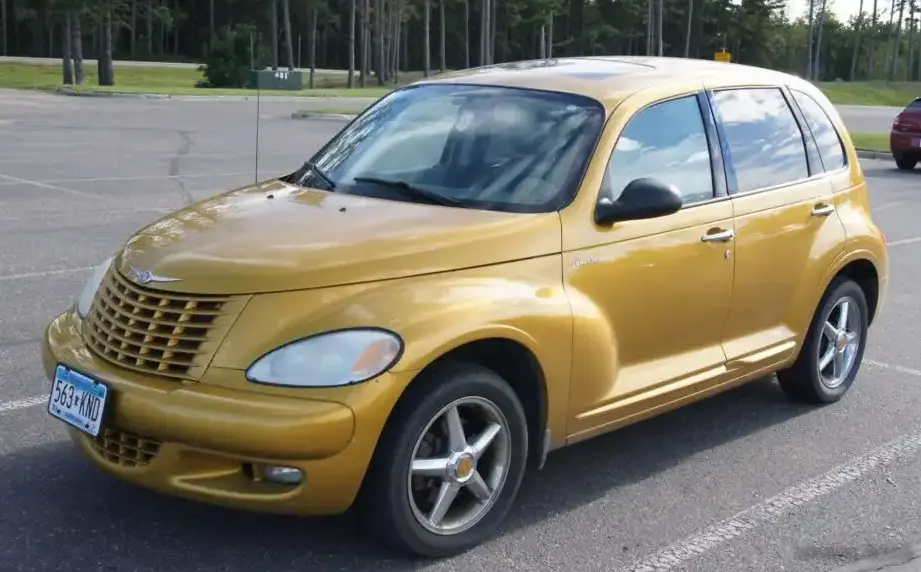
The Chrysler PT Cruiser Cabrio 2.0i 16V Automatic, produced from 2004 to 2010, represented a unique offering in the American automotive landscape. Falling within the first generation (2000-2010) of the PT Cruiser, the Cabrio variant aimed to capitalize on the retro styling of the original while providing an open-air driving experience. This particular configuration, equipped with the 2.0-liter inline-four engine and a four-speed automatic transmission, was positioned as a mid-range option within the PT Cruiser Cabrio lineup, offering a balance between affordability and convenience. It was built on the Chrysler’s 2HX platform, shared with the Dodge Neon and other compact Chrysler products.
Technical Specifications
| Brand | Chrysler |
| Model | PT Cruiser |
| Generation | PT Cruiser Cabrio |
| Type (Engine) | 2.0 i 16V (136 Hp) Automatic |
| Start of production | 2004 |
| End of production | 2010 |
| Powertrain Architecture | Internal Combustion engine |
| Body type | Cabriolet |
| Seats | 4 |
| Doors | 2 |
| Fuel consumption (urban) | 12.6 l/100 km (18.7 US mpg) |
| Fuel consumption (extra urban) | 7.8 l/100 km (30.2 US mpg) |
| Fuel consumption (combined) | 9.6 l/100 km (24.5 US mpg) |
| Fuel Type | Petrol (Gasoline) |
| Acceleration 0 – 100 km/h | 12.8 sec |
| Acceleration 0 – 62 mph | 12.8 sec |
| Acceleration 0 – 60 mph | 12.2 sec |
| Maximum speed | 166 km/h (103.15 mph) |
| Weight-to-power ratio | 11 kg/Hp |
| Weight-to-torque ratio | 8 kg/Nm |
| Power | 136 Hp @ 5500 rpm |
| Torque | 188 Nm @ 4150 rpm (138.66 lb.-ft. @ 4150 rpm) |
| Engine layout | Front, Transverse |
| Engine Model/Code | ECC |
| Engine displacement | 1996 cm3 (121.8 cu. in.) |
| Number of cylinders | 4 |
| Engine configuration | Inline |
| Cylinder Bore | 87.5 mm (3.44 in.) |
| Piston Stroke | 83 mm (3.27 in.) |
| Compression ratio | 9.6:1 |
| Number of valves per cylinder | 4 |
| Fuel injection system | Multi-port manifold injection |
| Engine aspiration | Naturally aspirated |
| Engine oil capacity | 4.3 l (4.54 US qt | 3.78 UK qt) |
| Coolant capacity | 6.2 l (6.55 US qt | 5.46 UK qt) |
| Kerb Weight | 1500 kg (3306.93 lbs.) |
| Max. weight | 1900 kg (4188.78 lbs.) |
| Max load | 400 kg (881.85 lbs.) |
| Trunk (boot) space – maximum | 375 l (13.24 cu. ft.) |
| Fuel tank capacity | 57 l (15.06 US gal | 12.54 UK gal) |
| Length | 4290 mm (168.9 in.) |
| Width | 1705 mm (67.13 in.) |
| Height | 1600 mm (62.99 in.) |
| Wheelbase | 2615 mm (102.95 in.) |
| Front track | 1480 mm (58.27 in.) |
| Rear track | 1480 mm (58.27 in.) |
| Drivetrain Architecture | Front wheel drive |
| Number of gears | 4 |
| Gearbox type | Automatic transmission |
| Front suspension | Spring Strut |
| Rear suspension | Torsion |
| Front brakes | Ventilated discs |
| Rear brakes | Disc |
| Assisting systems | ABS (Anti-lock braking system) |
| Steering type | Steering rack and pinion |
| Tires size | 195/65 R15 |
| Wheel rims size | 6J x 15 |
Powertrain & Engine Architecture
The heart of the PT Cruiser Cabrio 2.0i Automatic is the Chrysler ECC 2.0-liter inline-four engine. This engine, a member of the Chrysler’s K-series family, utilizes a single overhead camshaft (SOHC) design with four valves per cylinder. The engine employs multi-point fuel injection, delivering fuel directly into the intake ports. The 9.6:1 compression ratio was a compromise between performance and the ability to run on readily available gasoline grades. Paired with this engine is a four-speed automatic transmission, a common choice for drivers prioritizing ease of use over outright performance. This transmission, while reliable, lacks the efficiency and responsiveness of more modern automatic gearboxes with additional ratios.
Driving Characteristics
The 136 horsepower and 188 lb-ft of torque produced by the 2.0-liter engine, when channeled through the four-speed automatic, resulted in adequate, but not exhilarating, performance. Acceleration from 0-60 mph took around 12.2 seconds, making it competitive with other similarly sized and priced vehicles of the era. The automatic transmission’s gear ratios were tuned for comfortable cruising rather than aggressive acceleration. Compared to the manual transmission versions of the PT Cruiser, the automatic offered less driver engagement and slightly slower acceleration times. The higher-output turbocharged engines, such as the 2.4L, provided a significantly more spirited driving experience, but at a higher price point.
Equipment & Trim Levels
The PT Cruiser Cabrio 2.0i Automatic typically included standard features such as air conditioning, power windows and locks, and an AM/FM stereo. The Cabrio models, in general, added features specific to the convertible body style, including a power-operated soft top. Interior upholstery was typically cloth, with optional leather available. Common optional extras included upgraded sound systems, alloy wheels, and a premium trim package that added features like chrome accents and enhanced interior detailing. The dashboard layout was characterized by a retro-inspired design, featuring large, easy-to-read gauges and a centrally mounted speedometer.
Chassis & Braking
The PT Cruiser Cabrio utilized a front-wheel-drive layout with an independent front suspension featuring MacPherson struts and a torsion beam rear suspension. The front brakes were ventilated discs, providing adequate stopping power, while the rear brakes were solid discs. Anti-lock Braking System (ABS) was standard, enhancing safety. The suspension tuning was geared towards providing a comfortable ride, prioritizing smoothness over sporty handling. Stabilizer bars were included at both the front and rear to reduce body roll during cornering.
Market Reception & Comparison
The PT Cruiser Cabrio 2.0i Automatic received mixed reviews from automotive critics. While the retro styling was widely praised, the performance of the 2.0-liter engine and four-speed automatic transmission was often criticized as being underwhelming. Fuel economy was considered average for the class, with combined figures around 24.5 US mpg. Compared to other trims, the 2.0L automatic offered the lowest price of entry into the PT Cruiser Cabrio range, making it attractive to budget-conscious buyers. However, those seeking more performance often opted for the turbocharged models. Reliability was generally considered acceptable, although some owners reported issues with the automatic transmission over the long term.
Legacy
Today, the Chrysler PT Cruiser Cabrio 2.0i Automatic is primarily found in the used car market. The powertrain, while not known for exceptional longevity, has proven reasonably durable with proper maintenance. The availability of parts remains good, making repairs relatively straightforward. The PT Cruiser Cabrio, in general, has gained a cult following among enthusiasts who appreciate its unique styling and retro charm. However, its relatively low performance and aging technology mean it is unlikely to become a highly sought-after classic car. The 2.0L automatic variant remains an affordable and accessible entry point into the world of PT Cruiser ownership, appealing to those seeking a distinctive and nostalgic vehicle.