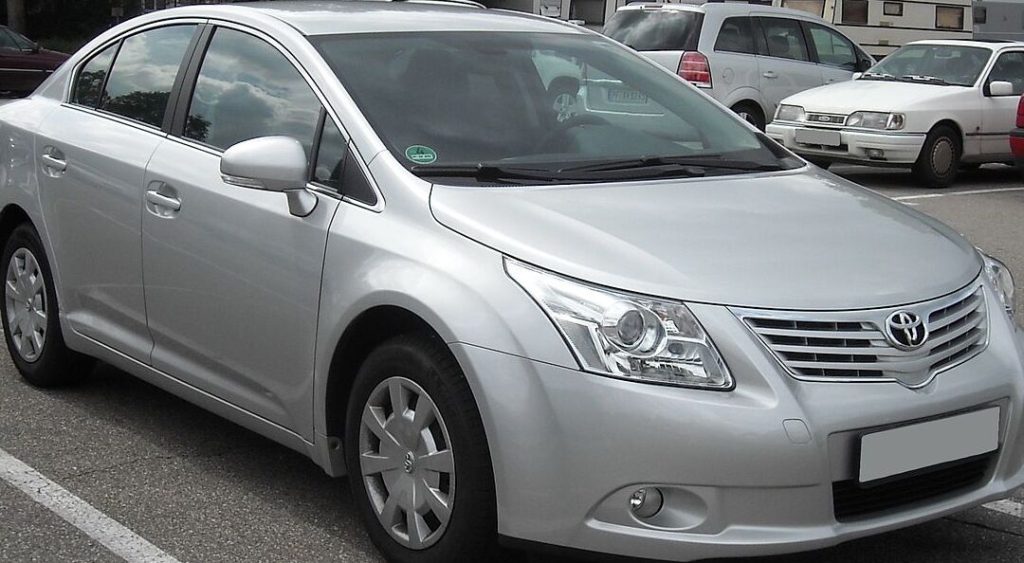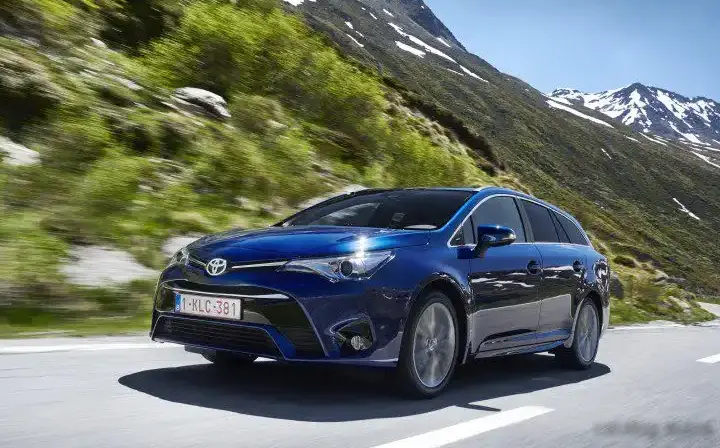
The Toyota Avensis III Wagon, specifically the 2.0 D-4D variant produced from 2015 to 2018, represents a mid-cycle refresh of the third-generation Avensis. Positioned as a practical and reliable family vehicle, this model aimed to compete with established European estates like the Ford Mondeo Wagon and Volkswagen Passat Variant. The facelift brought styling updates, improved equipment levels, and refinements to the existing powertrain options. This particular 2.0 D-4D engine, producing 143 horsepower, was a popular choice in European markets, offering a balance between fuel efficiency and usable performance. It sat in the mid-range of the Avensis lineup, offering more power than the lower-spec 1.6 D-4D but remaining more affordable than the higher-output engine options.
Technical Specifications
| Brand | Toyota |
| Model | Avensis |
| Generation | Avensis III Wagon (facelift 2015) |
| Type (Engine) | 2.0 D-4D (143 Hp) |
| Start of production | 2015 |
| End of production | 2018 |
| Powertrain Architecture | Internal Combustion engine |
| Body type | Station wagon (estate) |
| Seats | 5 |
| Doors | 5 |
| Fuel consumption (urban) | 5.7 l/100 km (41.3 US mpg, 49.6 UK mpg, 17.5 km/l) |
| Fuel consumption (extra urban) | 4 l/100 km (58.8 US mpg, 70.6 UK mpg, 25 km/l) |
| Fuel consumption (combined) | 4.6 l/100 km (51.1 US mpg, 61.4 UK mpg, 21.7 km/l) |
| CO2 emissions | 120 g/km |
| Fuel Type | Diesel |
| Acceleration 0 – 100 km/h | 9.8 sec |
| Acceleration 0 – 62 mph | 9.8 sec |
| Acceleration 0 – 60 mph | 9.3 sec |
| Maximum speed | 200 km/h (124.27 mph) |
| Emission standard | Euro 6 W |
| Power | 143 Hp @ 4000 rpm |
| Power per litre | 71.7 Hp/l |
| Torque | 320 Nm @ 1750-2250 rpm (236.02 lb.-ft. @ 1750-2250 rpm) |
| Engine layout | Front, Transverse |
| Engine Model/Code | 2WW |
| Engine displacement | 1995 cm3 (121.74 cu. in.) |
| Number of cylinders | 4 |
| Engine configuration | Inline |
| Cylinder Bore | 84 mm (3.31 in.) |
| Piston Stroke | 90 mm (3.54 in.) |
| Compression ratio | 16.5:1 |
| Number of valves per cylinder | 4 |
| Fuel injection system | Diesel Commonrail |
| Engine aspiration | Turbocharger, Intercooler |
| Valvetrain | DOHC |
| Engine oil capacity | 5.2 l (5.49 US qt | 4.58 UK qt) |
| Coolant | 7 l (7.4 US qt | 6.16 UK qt) |
| Max. weight | 2100 kg (4629.71 lbs.) |
| Trunk (boot) space – minimum | 543 l (19.18 cu. ft.) |
| Trunk (boot) space – maximum | 1609 l (56.82 cu. ft.) |
| Fuel tank capacity | 60 l (15.85 US gal | 13.2 UK gal) |
| Max. roof load | 103 kg (227.08 lbs.) |
| Permitted trailer load with brakes (12%) | 1800 kg (3968.32 lbs.) |
| Permitted trailer load without brakes | 500 kg (1102.31 lbs.) |
| Permitted towbar download | 75 kg (165.35 lbs.) |
| Length | 4820 mm (189.76 in.) |
| Width | 1810 mm (71.26 in.) |
| Height | 1480 mm (58.27 in.) |
| Wheelbase | 2700 mm (106.3 in.) |
| Front track | 1550 mm (61.02 in.) |
| Rear (Back) track | 1540 mm (60.63 in.) |
| Drag coefficient (Cd) | 0.29 |
| Minimum turning circle (turning diameter) | 10.8 m (35.43 ft.) |
| Drivetrain Architecture | ICE, Front wheel drive |
| Drive wheel | Front wheel drive |
| Number of gears and type of gearbox | 6 gears, manual transmission |
| Front suspension | Independent, type McPherson with coil spring and anti-roll bar |
| Rear suspension | Double wishbone |
| Front brakes | Ventilated discs |
| Rear brakes | Disc |
| Assisting systems | ABS (Anti-lock braking system) |
| Steering type | Steering rack and pinion |
| Tires size | 215/55 R17 |
| Wheel rims size | 7.0 x 17 |
Powertrain & Engine Architecture
The 2.0 D-4D engine, designated as the 2WW, is a four-cylinder diesel engine utilizing a common-rail direct injection system. This system, crucial for modern diesel efficiency, allows for precise fuel delivery and optimized combustion. The engine features a turbocharger with an intercooler, boosting power output and improving torque across a wider rev range. The DOHC (Double Overhead Camshaft) valvetrain contributes to efficient gas exchange. The 16.5:1 compression ratio is typical for a diesel engine, maximizing thermal efficiency. A particulate filter was standard, helping to reduce harmful emissions and meet Euro 6 W standards. The engine’s design prioritized fuel economy and low-end torque, making it well-suited for long-distance driving and hauling loads. The 6-speed manual transmission was the standard offering, providing a good balance between fuel efficiency and driver control.
Driving Characteristics
The 143 horsepower and 320 Nm (236 lb-ft) of torque delivered by the 2.0 D-4D engine provided adequate performance for the Avensis Wagon. Acceleration from 0-60 mph took around 9.3 seconds, which was competitive within its class. The engine’s peak torque, available from 1750-2250 rpm, meant that strong pulling power was readily accessible for overtaking and climbing hills. Compared to the lower-powered 1.6 D-4D, the 2.0 D-4D offered noticeably more responsiveness. However, it didn’t possess the outright performance of higher-output versions. The 6-speed manual transmission was well-matched to the engine, offering smooth gear changes and allowing the driver to keep the engine in its optimal power band. The gear ratios were tuned for fuel efficiency, with a relatively long final drive.
Equipment & Trim Levels
The 2.0 D-4D Avensis Wagon typically came equipped with a reasonable level of standard features. These included air conditioning, electric windows and mirrors, a CD/radio system with USB connectivity, and alloy wheels. Higher trim levels added features such as automatic climate control, a touchscreen infotainment system with navigation, parking sensors, and leather upholstery. Safety features like ABS, traction control, and multiple airbags were standard across the range. Optional extras included a panoramic sunroof, heated seats, and a rear parking camera.
Chassis & Braking
The Avensis Wagon featured an independent McPherson strut suspension at the front and a double wishbone suspension at the rear, providing a comfortable ride and good handling characteristics. The suspension was tuned to prioritize comfort over outright sportiness. Front brakes were ventilated discs, while rear brakes were solid discs, providing adequate stopping power for the vehicle’s weight. The steering was a rack and pinion system, offering precise and responsive control. Stabilizer bars were fitted to both the front and rear axles to reduce body roll during cornering.
Market Reception & Comparison
The Toyota Avensis III Wagon 2.0 D-4D was generally well-received by automotive critics. It was praised for its reliability, fuel efficiency, spacious interior, and comfortable ride. However, some critics found the styling to be somewhat conservative and the driving experience less engaging than some of its rivals. Compared to the 1.6 D-4D, the 2.0 D-4D offered a significant improvement in performance, making it a more suitable choice for drivers who frequently carry passengers or luggage. Fuel economy remained excellent, averaging around 51.1 US mpg in combined driving. The Avensis also compared favorably to competitors like the Ford Mondeo Wagon and Volkswagen Passat Variant in terms of reliability and overall value.
Legacy
The 2.0 D-4D engine in the Avensis III Wagon has proven to be a durable and reliable powertrain. While not without its potential issues (like any diesel engine, DPF maintenance is crucial), it generally enjoys a good reputation for longevity. On the used car market, these Avensis Wagons are often sought after for their practicality, fuel efficiency, and Toyota’s renowned reliability. They represent a sensible and dependable choice for families and individuals needing a spacious and economical estate car. Parts availability remains good, and maintenance costs are generally reasonable, contributing to the Avensis’ continued appeal in the used car sector.