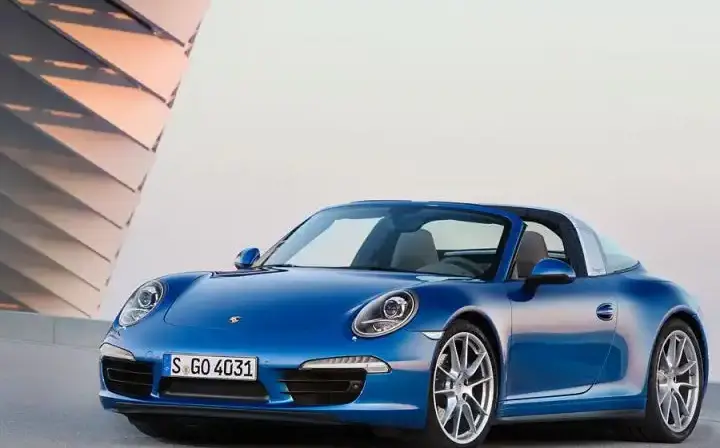
The Porsche 911 Targa 4 GTS 3.8 (430 Hp) PDK, released in 2015, represents a compelling blend of performance, open-air driving enjoyment, and everyday usability within the 991 generation of the iconic 911. Positioned as a high-performance variant of the Targa model, it occupied a premium space in the 911 lineup, offering a significant step up from the base Carrera models while remaining more focused than the track-oriented GT3. This particular configuration, combining the naturally aspirated 3.8-liter flat-six engine with Porsche’s dual-clutch PDK transmission and all-wheel drive, aimed to deliver exhilarating performance with a degree of accessibility. The 991 Targa, reintroduced in 2014 after a nearly two-decade hiatus, combined the classic Targa roof design with modern engineering, offering a unique proposition in the sports car market.
Technical Specifications
| Brand | Porsche |
| Model | 911 |
| Generation | 911 Targa (991) |
| Type (Engine) | 4 GTS 3.8 (430 Hp) PDK |
| Start of production | 2015 |
| End of production | 2015 |
| Powertrain Architecture | Internal Combustion engine |
| Body type | Targa |
| Seats | 4 |
| Doors | 2 |
| Fuel consumption (economy) – urban | 12.5 l/100 km (18.8 US mpg, 22.6 UK mpg, 8 km/l) |
| Fuel consumption (economy) – extra urban | 7.1 l/100 km (33.1 US mpg, 39.8 UK mpg, 14.1 km/l) |
| Fuel consumption (economy) – combined | 9.2 l/100 km (25.6 US mpg, 30.7 UK mpg, 10.9 km/l) |
| CO2 emissions | 214 g/km |
| Fuel Type | Petrol (Gasoline) |
| Acceleration 0 – 100 km/h | 4.3 sec |
| Acceleration 0 – 62 mph | 4.3 sec |
| Acceleration 0 – 60 mph | 4.1 sec |
| Maximum speed | 301 km/h (187.03 mph) |
| Emission standard | Euro 6 |
| Weight-to-power ratio | 3.7 kg/Hp, 272.2 Hp/tonne |
| Weight-to-torque ratio | 3.6 kg/Nm, 278.5 Nm/tonne |
| Power | 430 Hp @ 7500 rpm |
| Power per litre | 113.2 Hp/l |
| Torque | 440 Nm @ 5750 rpm (324.53 lb.-ft. @ 5750 rpm) |
| Engine layout | Rear, Longitudinal |
| Engine Model/Code | MA1.01 |
| Engine displacement | 3800 cm3 (231.89 cu. in.) |
| Number of cylinders | 6 |
| Engine configuration | Boxer |
| Cylinder Bore | 102 mm (4.02 in.) |
| Piston Stroke | 77.5 mm (3.05 in.) |
| Compression ratio | 12.5:1 |
| Number of valves per cylinder | 4 |
| Fuel injection system | Direct injection |
| Engine aspiration | Naturally aspirated engine |
| Engine oil capacity | 7.5 l (7.93 US qt | 6.6 UK qt) |
| Coolant | 26.3 l (27.79 US qt | 23.14 UK qt) |
| Kerb Weight | 1580 kg (3483.3 lbs.) |
| Max. weight | 1980 kg (4365.15 lbs.) |
| Max load | 400 kg (881.85 lbs.) |
| Trunk (boot) space – minimum | 285 l (10.06 cu. ft.) |
| Fuel tank capacity | 68 l (17.96 US gal | 14.96 UK gal) |
| Length | 4509 mm (177.52 in.) |
| Width | 1852 mm (72.91 in.) |
| Height | 1291 mm (50.83 in.) |
| Wheelbase | 2450 mm (96.46 in.) |
| Front track | 1538 mm (60.55 in.) |
| Rear (Back) track | 1560 mm (61.42 in.) |
| Drag coefficient (Cd) | 0.30 |
| Drive wheel | All wheel drive (4×4) |
| Number of gears and type of gearbox | 7 gears, automatic transmission PDK |
| Front suspension | Independent type McPherson |
| Rear suspension | Independent multi-link suspension |
| Front brakes | Ventilated discs |
| Rear brakes | Ventilated discs |
| Assisting systems | ABS (Anti-lock braking system) |
| Steering type | Steering rack and pinion |
| Tires size | 245/35 ZR20; 305/30 ZR20 |
| Wheel rims size | 9J x 20; 11.5J x 20 |
Powertrain & Engine Architecture
At the heart of the 911 Targa 4 GTS PDK lies the MA1.01 engine, a 3.8-liter naturally aspirated flat-six. This engine is a direct descendant of the powerplant found in the 991 Carrera S, but with enhancements specifically for the GTS model. These included an upgraded intake system, revised engine mapping, and a sport exhaust system, resulting in an increase in power output to 430 horsepower at 7,500 rpm and 440 Nm (324.53 lb-ft) of torque at 5,750 rpm. The engine utilizes direct fuel injection, optimizing combustion efficiency and responsiveness. The flat-six configuration, a hallmark of the 911, contributes to a low center of gravity, enhancing handling characteristics. The engine’s dry-sump lubrication system further aids in maintaining oil supply during aggressive cornering. Paired with the engine is Porsche’s seven-speed PDK (Porsche Doppelkupplung) dual-clutch transmission. This transmission offers incredibly fast and smooth gear changes, contributing to both acceleration performance and driving enjoyment. The PDK in the GTS variant is tuned for more aggressive shift points compared to the standard Carrera models.
Driving Characteristics
The 911 Targa 4 GTS PDK delivers a driving experience that is both engaging and refined. The combination of the powerful engine, quick-shifting PDK transmission, and all-wheel drive provides exceptional acceleration and grip. The all-wheel-drive system, featuring Porsche’s Porsche Traction Management (PTM), intelligently distributes torque between the front and rear axles, maximizing traction in various conditions. While not as brutally fast as the 911 GT3, the GTS offers a more accessible and usable performance envelope. The PDK transmission allows for both fully automatic operation and manual gear selection via steering wheel-mounted paddles, catering to different driving preferences. The Targa top, while adding some weight compared to the coupe, doesn’t significantly detract from the car’s handling prowess. The GTS suspension, which is slightly stiffer than the standard Targa, provides excellent body control and a connected feel to the road.
Equipment & Trim Levels
The 911 Targa 4 GTS PDK came standard with a comprehensive list of features, befitting its premium positioning. Interior appointments included sport seats upholstered in leather, a sport steering wheel, and aluminum trim accents. Standard equipment also included Porsche Communication Management (PCM) with a touchscreen display, navigation, and a premium sound system. Optional extras were plentiful, allowing buyers to personalize their vehicles. Popular options included adaptive sport seats with memory function, a sunroof, and various interior trim packages. The GTS also offered a wider range of exterior color options and wheel designs compared to the base Targa models.
Chassis & Braking
The 911 Targa 4 GTS utilizes a sophisticated chassis design. The front suspension features McPherson struts, while the rear employs a multi-link setup. Porsche Active Suspension Management (PASM) was standard, allowing drivers to adjust the damper settings for a more comfortable or sportier ride. The braking system consists of ventilated discs on all four wheels, providing ample stopping power. Larger brake rotors and upgraded calipers were available as an option for even greater braking performance. The Targa’s chassis is reinforced compared to the standard 911 to compensate for the structural changes required by the retractable roof mechanism.
Market Reception & Comparison
The 911 Targa 4 GTS PDK was generally well-received by automotive critics. It was praised for its blend of performance, comfort, and open-air driving experience. Compared to the standard Targa models, the GTS offered a noticeable increase in performance and a more engaging driving experience. Against the 911 Carrera S, the GTS provided a more focused and sporty character. Fuel economy, while not a primary concern for buyers in this segment, was respectable for a high-performance sports car. Reliability has generally been good, with the MA1.01 engine proving to be robust.
Legacy
The 911 Targa 4 GTS PDK remains a desirable vehicle in the used car market. Its combination of performance, style, and relative rarity has helped to maintain its value. The MA1.01 engine is known for its durability, and with proper maintenance, these cars can provide many years of enjoyable driving. The 991 Targa GTS represents a sweet spot in the 911 lineage, offering a unique and rewarding driving experience that continues to appeal to enthusiasts today. The PDK transmission, while requiring periodic servicing, has proven to be a reliable and efficient component.