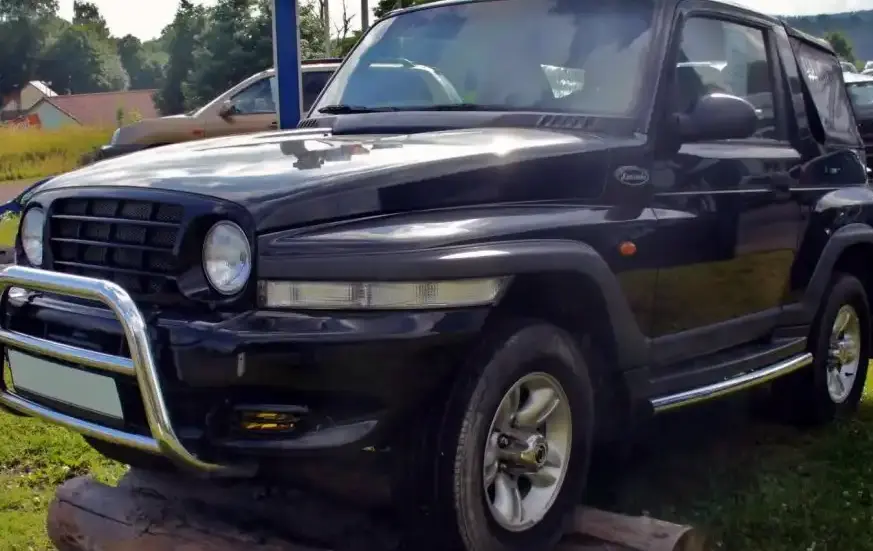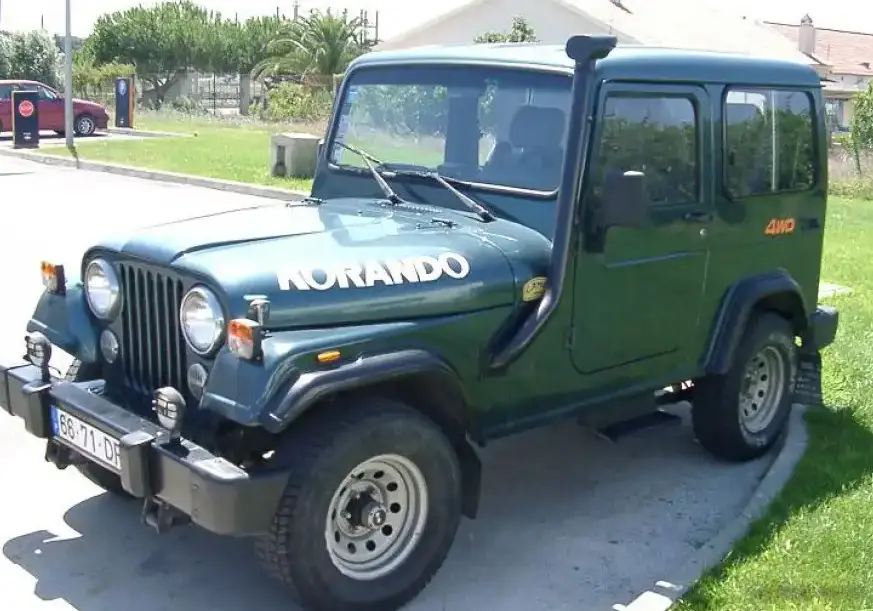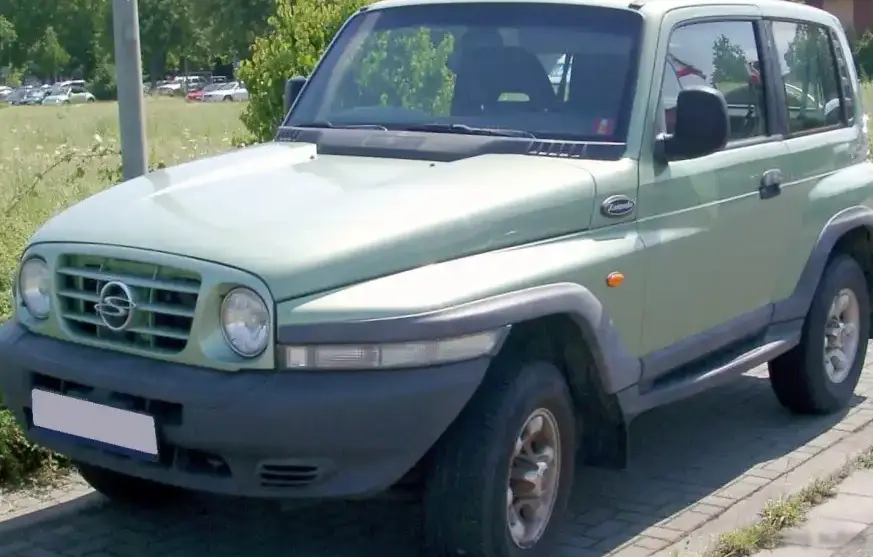
The SsangYong Korando II (KJ) 3.2i 24V, produced from 1997 to 2006, represented a significant step forward for the South Korean automaker. This iteration of the Korando, a nameplate dating back to the 1980s, aimed to offer a more refined and capable SUV experience, particularly within the European and Asian markets. The 3.2-liter engine variant occupied a premium position in the Korando II lineup, offering a substantial power upgrade over the smaller displacement options. It was positioned as the flagship model for those seeking both on-road comfort and off-road capability. The Korando II (KJ) was built upon a body-on-frame construction, a design choice common for SUVs of the era intended for rugged use.
Technical Specifications
| Brand | SsangYong |
| Model | Korando |
| Generation | Korando II (KJ) |
| Type (Engine) | 3.2 i 24V (210 Hp) |
| Start of production | 1997 |
| End of production | 2006 |
| Powertrain Architecture | Internal Combustion engine |
| Body type | SUV |
| Seats | 5 |
| Doors | 3 |
| Fuel consumption (urban) | 17.3 l/100 km (13.6 US mpg / 16.3 UK mpg / 5.8 km/l) |
| Fuel consumption (extra urban) | 10.1 l/100 km (23.3 US mpg / 28 UK mpg / 9.9 km/l) |
| Fuel consumption (combined) | 12.4 l/100 km (19 US mpg / 22.8 UK mpg / 8.1 km/l) |
| Fuel Type | Petrol (Gasoline) |
| Acceleration 0 – 100 km/h | 10.9 sec |
| Acceleration 0 – 62 mph | 10.9 sec |
| Acceleration 0 – 60 mph | 10.4 sec |
| Maximum speed | 182 km/h (113.09 mph) |
| Weight-to-power ratio | 9.1 kg/Hp, 110.2 Hp/tonne |
| Weight-to-torque ratio | 6.4 kg/Nm, 155.9 Nm/tonne |
| Power | 210 Hp @ 5700 rpm |
| Power per litre | 65.6 Hp/l |
| Torque | 297 Nm @ 4700 rpm (219.06 lb.-ft. @ 4700 rpm) |
| Engine layout | Front, Longitudinal |
| Engine displacement | 3199 cm3 (195.21 cu. in.) |
| Number of cylinders | 6 |
| Engine configuration | Inline |
| Cylinder Bore | 89.9 mm (3.54 in.) |
| Piston Stroke | 84 mm (3.31 in.) |
| Compression ratio | 10:1 |
| Number of valves per cylinder | 4 |
| Fuel injection system | Multi-port manifold injection |
| Engine aspiration | Naturally aspirated engine |
| Valvetrain | DOHC |
| Engine oil capacity | 6.7 l (7.08 US qt | 5.9 UK qt) |
| Kerb Weight | 1905 kg (4199.81 lbs.) |
| Max. weight | 2515 kg (5544.63 lbs.) |
| Max load | 610 kg (1344.82 lbs.) |
| Trunk (boot) space – minimum | 350 l (12.36 cu. ft.) |
| Trunk (boot) space – maximum | 1200 l (42.38 cu. ft.) |
| Fuel tank capacity | 70 l (18.49 US gal | 15.4 UK gal) |
| Length | 4330 mm (170.47 in.) |
| Width | 1841 mm (72.48 in.) |
| Height | 1940 mm (76.38 in.) |
| Wheelbase | 2480 mm (97.64 in.) |
| Front track | 1510 mm (59.45 in.) |
| Rear (Back) track | 1520 mm (59.84 in.) |
| Drive wheel | All wheel drive (4×4) |
| Number of gears and type of gearbox | 4 gears, automatic transmission |
| Front suspension | Torsion |
| Rear suspension | Rigid axle suspension |
| Front brakes | Ventilated discs |
| Rear brakes | Disc |
| Assisting systems | ABS (Anti-lock braking system) |
| Steering type | Steering rack and pinion |
| Power steering | Hydraulic Steering |
| Tires size | 255/70 R15 |
Powertrain & Engine Architecture
The heart of the Korando II 3.2i is the Mercedes-Benz derived 3.2-liter inline-six cylinder engine. SsangYong had a long-standing technical partnership with Mercedes-Benz, and this engine was a product of that collaboration. The engine, internally designated as the 602, featured a cast-iron block and aluminum cylinder head. It employed multi-port fuel injection and a double overhead camshaft (DOHC) valvetrain, contributing to its relatively smooth power delivery. The 4-speed automatic transmission, while adequate for the time, was a point of criticism for some reviewers who felt it didn’t fully exploit the engine’s potential. The transmission was designed to provide comfortable shifting, prioritizing ease of use over sporty responsiveness. The engine’s longitudinal mounting and rear-wheel-drive bias, coupled with the selectable four-wheel-drive system, gave the Korando II a traditional SUV feel.
Driving Characteristics
The 3.2-liter engine provided a noticeable performance advantage over the smaller 2.0-liter and 2.3-liter engine options available in the Korando II. Acceleration to 60 mph took approximately 10.4 seconds, which was competitive for an SUV of its size and weight in the late 1990s and early 2000s. The automatic transmission, while smooth, did result in some power loss compared to the available manual transmission. The gear ratios were tuned for comfortable cruising rather than rapid acceleration. In real-world driving, the Korando II 3.2i felt capable on both paved roads and moderately challenging off-road terrain. The four-wheel-drive system, selectable via a rotary dial, provided enhanced traction in slippery conditions. However, the body-on-frame construction resulted in a less refined ride compared to more modern, unibody SUVs.
Equipment & Trim Levels
The 3.2i trim level typically included features such as air conditioning, power windows, power door locks, and a basic audio system. Higher-spec models could be equipped with leather upholstery, sunroof, and upgraded audio systems. Interior appointments were generally functional and durable, reflecting the Korando II’s intended use as a rugged utility vehicle. The dashboard layout was straightforward, with clearly labeled controls. Optional extras included alloy wheels and a tow hitch, catering to customers who planned to use the vehicle for recreational activities.
Chassis & Braking
The Korando II utilized a traditional body-on-frame construction, providing a robust and durable chassis. The front suspension consisted of torsion bars, while the rear suspension employed a rigid axle setup. This configuration prioritized load-carrying capacity and off-road capability over on-road handling finesse. Braking duties were handled by ventilated discs at the front and solid discs at the rear. An Anti-lock Braking System (ABS) was standard equipment, enhancing safety during emergency braking situations. The steering system was a rack and pinion setup with hydraulic power assistance, providing reasonable steering feel and maneuverability.
Market Reception & Comparison
The Korando II 3.2i received mixed reviews from automotive critics. While the engine was praised for its power and smoothness, the automatic transmission and somewhat dated interior were points of criticism. Compared to rivals like the Suzuki Grand Vitara and the Mitsubishi Pajero, the Korando II offered a more utilitarian experience. Fuel economy was also a concern, with the 3.2-liter engine consuming a significant amount of fuel, particularly in urban driving conditions. However, the Korando II’s robust construction and capable four-wheel-drive system appealed to buyers seeking a reliable and versatile SUV.
Legacy
The SsangYong Korando II 3.2i, while not a mainstream success, established SsangYong as a manufacturer capable of producing competent and durable SUVs. The 3.2-liter Mercedes-Benz engine proved to be relatively reliable, although regular maintenance is crucial for long-term durability. Today, the Korando II 3.2i is a relatively rare vehicle, particularly in North America. Well-maintained examples are sought after by enthusiasts who appreciate its rugged character and unique heritage. Parts availability can be a challenge, but a dedicated community of owners and online resources help to keep these vehicles on the road. The Korando II paved the way for SsangYong’s continued development of SUVs, ultimately leading to the more modern and refined models offered today.