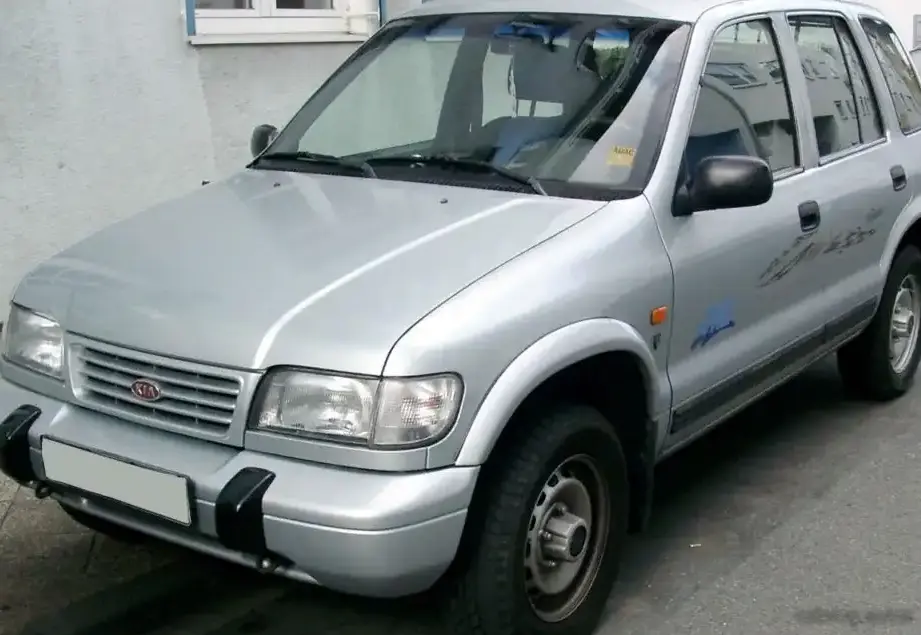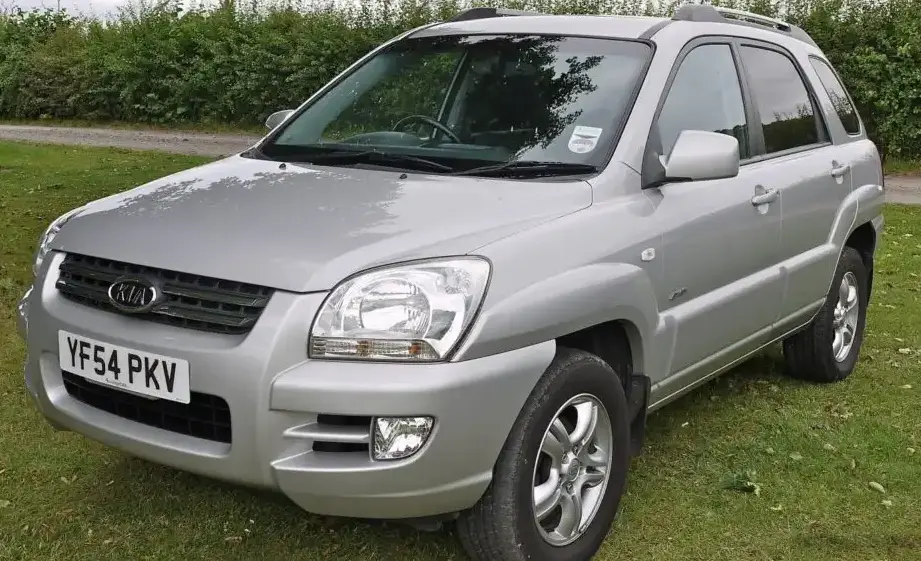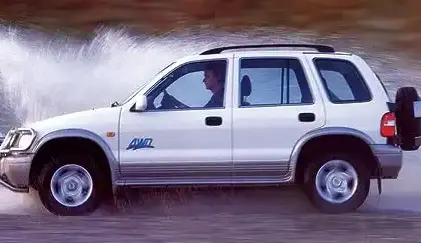
The Kia Sportage (K00) 2.2 D, producing 63 horsepower, was a foundational model in Kia’s expansion into the global SUV market. Produced from 1997 to 2006, this first-generation Sportage represented a significant step for the Korean automaker, aiming to offer a rugged, affordable, and capable vehicle, particularly in Europe and emerging markets. This specific variant, powered by the 2.2-liter diesel engine and equipped with a five-speed manual transmission, served as the entry point into the Sportage lineup, prioritizing fuel efficiency and durability over outright performance. It was built on the K00 platform, a body-on-frame construction that emphasized robustness.
Technical Specifications
| Brand | Kia |
| Model | Sportage |
| Generation | Sportage (K00) |
| Type (Engine) | 2.2 D (63 Hp) |
| Start of production | 1997 |
| End of production | 2006 |
| Powertrain Architecture | Internal Combustion engine |
| Body type | SUV |
| Seats | 5 |
| Doors | 5 |
| Fuel consumption (urban) | 8 l/100 km (29.4 US mpg) |
| Fuel consumption (extra urban) | 5 l/100 km (47 US mpg) |
| Fuel Type | Diesel |
| Acceleration 0 – 100 km/h | 18.4 sec |
| Acceleration 0 – 62 mph | 18.4 sec |
| Acceleration 0 – 60 mph | 17.5 sec |
| Maximum speed | 130 km/h (80.78 mph) |
| Weight-to-power ratio | 23.3 kg/Hp |
| Weight-to-torque ratio | 11.5 kg/Nm |
| Power | 63 Hp @ 4050 rpm |
| Power per litre | 28.8 Hp/l |
| Torque | 127 Nm @ 2500 rpm (93.67 lb.-ft. @ 2500 rpm) |
| Engine layout | Front, Longitudinal |
| Engine displacement | 2184 cm3 (133.28 cu. in.) |
| Number of cylinders | 4 |
| Engine configuration | Inline |
| Cylinder Bore | 86 mm (3.39 in.) |
| Piston Stroke | 94 mm (3.7 in.) |
| Compression ratio | 22:1 |
| Number of valves per cylinder | 2 |
| Fuel injection system | Precombustion chamber injection |
| Engine aspiration | Naturally aspirated engine |
| Valvetrain | OHC |
| Engine oil capacity | 6.6 l (6.97 US qt | 5.81 UK qt) |
| Kerb Weight | 1465 kg (3229.77 lbs.) |
| Max. weight | 1930 kg (4254.92 lbs.) |
| Max load | 465 kg (1025.15 lbs.) |
| Trunk (boot) space – minimum | 375 l (13.24 cu. ft.) |
| Trunk (boot) space – maximum | 640 l (22.6 cu. ft.) |
| Fuel tank capacity | 60 l (15.85 US gal | 13.2 UK gal) |
| Length | 4245 mm (167.13 in.) |
| Width | 1730 mm (68.11 in.) |
| Height | 1650 mm (64.96 in.) |
| Wheelbase | 2650 mm (104.33 in.) |
| Front track | 1440 mm (56.69 in.) |
| Rear (Back) track | 1440 mm (56.69 in.) |
| Drive wheel | All wheel drive (4×4) |
| Number of gears and type of gearbox | 5 gears, manual transmission |
| Front suspension | Double wishbone |
| Rear suspension | Spring Strut |
| Front brakes | Ventilated discs |
| Rear brakes | Drum |
| Assisting systems | ABS (Anti-lock braking system) |
| Power steering | Hydraulic Steering |
| Tires size | 205/70 R15 |
Powertrain & Engine Architecture
The heart of this Sportage variant was the Kia-developed 2.2-liter inline-four diesel engine. Designated with engine codes like D4FA, it utilized a precombustion chamber injection system, a common technology for diesel engines of the era. This system involved injecting fuel into a precombustion chamber connected to the main cylinder, promoting more complete combustion and reducing noise. The engine featured an overhead camshaft (OHC) valvetrain with two valves per cylinder. The 63 horsepower output at 4050 rpm and 127 Nm (93.67 lb-ft) of torque at 2500 rpm were modest, but sufficient for the vehicle’s intended purpose. The five-speed manual transmission was the only gearbox option for this trim, offering a direct connection between the engine and the wheels. The longitudinal engine layout was typical for four-wheel-drive vehicles of this period, allowing for a more efficient drivetrain configuration.
Driving Characteristics
The 2.2 D Sportage was not designed for speed. Acceleration was leisurely, taking over 18 seconds to reach 62 mph. However, the diesel engine provided a usable amount of low-end torque, making it reasonably capable for everyday driving and off-road situations. The manual transmission allowed drivers to maintain control over the engine’s power band, but frequent shifting was necessary, especially when climbing hills or overtaking. Compared to later, more powerful Sportage variants (like those with gasoline engines), this diesel model prioritized fuel economy and durability over performance. The 4×4 system, typically part-time, provided enhanced traction on loose surfaces, making it a popular choice for rural areas and challenging terrains.
Equipment & Trim Levels
The 63 hp 2.2 D Sportage was generally considered the base model. Standard equipment typically included basic cloth upholstery, manual windows and door locks, and a relatively simple dashboard layout. Air conditioning was often an optional extra, as were features like power steering and a radio/cassette player. The interior was functional and durable, designed to withstand the rigors of off-road use. Higher trim levels offered upgrades such as leather upholstery, electric windows, and more sophisticated audio systems, but the 2.2 D remained the most affordable and utilitarian option.
Chassis & Braking
The Sportage K00 utilized a traditional body-on-frame construction, providing a robust and durable chassis. The front suspension featured a double wishbone setup, offering a reasonable level of ride comfort and handling. The rear suspension employed a simpler spring strut design. Braking duties were handled by ventilated discs at the front and drum brakes at the rear. ABS (Anti-lock Braking System) was often included as standard equipment, enhancing safety. The hydraulic power steering system provided assistance at lower speeds, making maneuvering easier.
Market Reception & Comparison
The Kia Sportage 2.2 D was well-received in markets where fuel efficiency and affordability were paramount. Critics praised its ruggedness and off-road capability, but noted its lack of refinement and relatively slow performance. Compared to other SUVs of the time, such as the Suzuki Vitara or the Nissan Terrano, the Sportage offered a competitive price point and a spacious interior. The diesel engine provided significantly better fuel economy than gasoline alternatives, making it a practical choice for drivers covering long distances. However, the engine’s noise and vibration levels were higher than those of more modern diesel engines.
Legacy
The Kia Sportage (K00) 2.2 D played a crucial role in establishing Kia as a credible player in the global SUV market. While the engine itself is now considered outdated, its durability and simplicity have ensured that many examples remain on the road today. The 2.2-liter diesel engine, while not known for its high performance, proved to be relatively reliable, and parts availability remains reasonable. In the used car market, this variant is often sought after by those looking for an affordable and capable off-road vehicle, or a classic example of early Korean automotive engineering. It represents a pivotal moment in Kia’s history, demonstrating the company’s ambition to compete with established automakers on a global scale.