
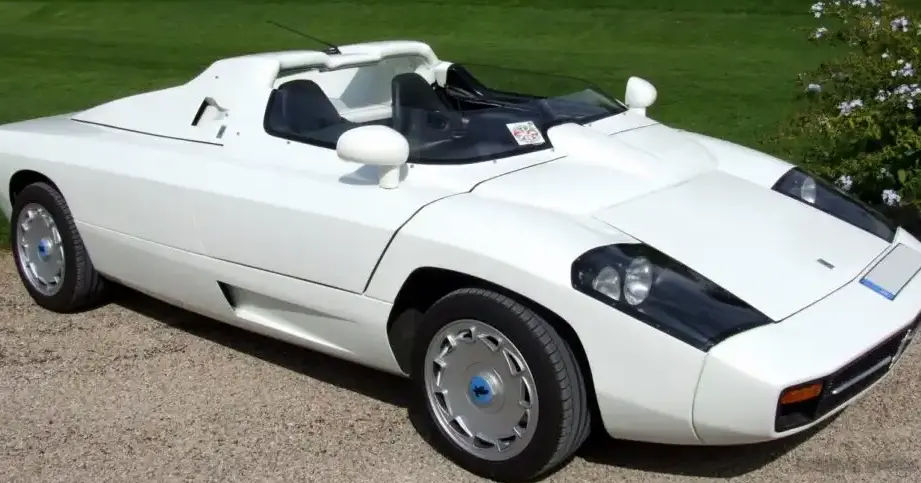
The Isdera Spyder 036i 3.0, produced in a limited run during 1991, represents a unique chapter in German automotive history. This hand-built, two-seat roadster was the culmination of years of development by Isdera, a company founded by Eberhard Schultz, who previously worked at Mercedes-Benz. The Spyder was intended to be a high-performance, exclusive sports car, embodying a blend of classic styling and modern engineering. It was positioned as a competitor to established exotic car manufacturers, offering a distinctive alternative with its striking design and powerful engine. Production was extremely limited, making the 036i 3.0 a rare and sought-after vehicle among collectors today.
Technical Specifications
| Brand | Isdera |
| Model | Spyder |
| Generation | Spyder |
| Type (Engine) | 036i 3.0 (220 Hp) |
| Start of production | 1991 |
| End of production | 1991 |
| Powertrain Architecture | Internal Combustion engine |
| Body type | Cabriolet |
| Seats | 2 |
| Doors | 2 |
| Fuel Type | Petrol (Gasoline) |
| Acceleration 0 – 100 km/h | 6.4 sec |
| Acceleration 0 – 62 mph | 6.4 sec |
| Acceleration 0 – 60 mph | 6.1 sec |
| Maximum speed | 262 km/h (162.8 mph) |
| Weight-to-power ratio | 4.5 kg/Hp, 220 Hp/tonne |
| Weight-to-torque ratio | 1.4 kg/Nm, 707 Nm/tonne |
| Power | 220 Hp |
| Power per litre | 74.3 Hp/l |
| Torque | 707 Nm @ 3800 rpm (521.46 lb.-ft. @ 3800 rpm) |
| Engine layout | Middle, Longitudinal |
| Engine displacement | 2960 cm3 (180.63 cu. in.) |
| Number of cylinders | 6 |
| Engine configuration | Inline |
| Cylinder Bore | 88.5 mm (3.48 in.) |
| Piston Stroke | 80.2 mm (3.16 in.) |
| Compression ratio | 10:1 |
| Number of valves per cylinder | 4 |
| Fuel injection system | Multi-port manifold injection |
| Engine aspiration | Naturally aspirated engine |
| Kerb Weight | 1000 kg (2204.62 lbs.) |
| Max. weight | 1200 kg (2645.55 lbs.) |
| Max load | 200 kg (440.92 lbs.) |
| Trunk (boot) space – minimum | 300 l (10.59 cu. ft.) |
| Fuel tank capacity | 65 l (17.17 US gal | 14.3 UK gal) |
| Length | 4220 mm (166.14 in.) |
| Width | 1835 mm (72.24 in.) |
| Height | 1135 mm (44.69 in.) |
| Drivetrain Architecture | The Internal combustion engine (ICE) drives the rear wheels of the vehicle. |
| Drive wheel | Rear wheel drive |
| Number of gears and type of gearbox | 5 gears, manual transmission |
| Front suspension | Coil spring |
| Rear suspension | Coil spring |
| Front brakes | Ventilated discs |
| Rear brakes | Ventilated discs |
| Assisting systems | ABS (Anti-lock braking system) |
Powertrain & Engine Architecture
The heart of the Isdera Spyder 036i 3.0 is its 3.0-liter inline-six cylinder engine. This engine, while bearing some resemblance to Mercedes-Benz M104 engines of the era, was extensively modified by Isdera. It featured a multi-port fuel injection system and a compression ratio of 10:1, contributing to its impressive output of 220 horsepower and 707 Nm (521.46 lb-ft) of torque. The engine’s longitudinal mid-engine layout provided a favorable weight distribution, enhancing handling characteristics. The engine was mated to a 5-speed manual transmission, delivering power to the rear wheels. The engine’s design prioritized robust construction and reliability, reflecting Isdera’s commitment to building a durable and high-performing sports car.
Driving Characteristics
The Spyder 036i 3.0 offered a thrilling driving experience. The combination of the mid-engine layout, relatively lightweight construction (around 1000 kg or 2204 lbs), and potent inline-six engine resulted in brisk acceleration. The 0-60 mph sprint was achieved in approximately 6.1 seconds, and the car could reach a top speed of 262 km/h (162.8 mph). The manual transmission provided precise control, allowing drivers to fully exploit the engine’s torque curve. While not as raw or visceral as some contemporary sports cars, the Spyder offered a refined and balanced driving experience, suitable for both spirited driving and comfortable cruising. The suspension, utilizing coil springs all around, provided a good balance between ride comfort and handling precision.
Equipment & Trim Levels
Given the limited production run and bespoke nature of the Isdera Spyder, trim levels were minimal. The car was largely hand-built to order, with customers having some degree of personalization. Standard features included leather upholstery, a well-appointed interior, and a comprehensive instrument cluster. The Spyder’s interior was designed to be both luxurious and functional, with a focus on driver ergonomics. Optional extras could include upgraded audio systems, custom paint finishes, and unique interior trim materials. The overall aesthetic was one of understated elegance, reflecting the car’s exclusivity.
Chassis & Braking
The Isdera Spyder 036i 3.0 utilized a steel chassis, providing a solid and rigid foundation for the vehicle. The suspension system employed coil springs at all four corners, offering a balance between ride comfort and handling performance. Braking duties were handled by ventilated disc brakes on all wheels, augmented by an ABS (Anti-lock Braking System) for enhanced safety. The braking system was designed to provide ample stopping power, commensurate with the car’s performance capabilities. The Spyder’s relatively low weight contributed to its agility and responsiveness, making it a capable performer on both winding roads and open highways.
Market Reception & Comparison
The Isdera Spyder 036i 3.0 received generally positive reviews from automotive journalists. Critics praised its striking design, powerful engine, and engaging driving dynamics. However, its high price and limited availability restricted its market appeal. Compared to other sports cars of the era, such as the Porsche 911 or the Chevrolet Corvette, the Spyder offered a more exclusive and bespoke experience. Its inline-six engine provided a different character than the flat-six of the Porsche or the V8 of the Corvette. Fuel economy was typical for a high-performance sports car of the time, and reliability was generally good, although maintenance costs could be substantial due to the car’s specialized components.
Legacy
The Isdera Spyder 036i 3.0 remains a rare and collectible automobile. Its limited production run and unique design have ensured its status as a desirable vehicle among enthusiasts. The powertrain, while not without its complexities, has proven to be relatively durable over time, provided it has been properly maintained. Today, the Spyder commands a significant premium in the used car market, reflecting its rarity and historical significance. It represents a fascinating example of German automotive engineering and a testament to the vision of Eberhard Schultz. The Isdera Spyder 036i 3.0 is a reminder of a time when small, independent manufacturers could create truly exceptional and distinctive automobiles.
