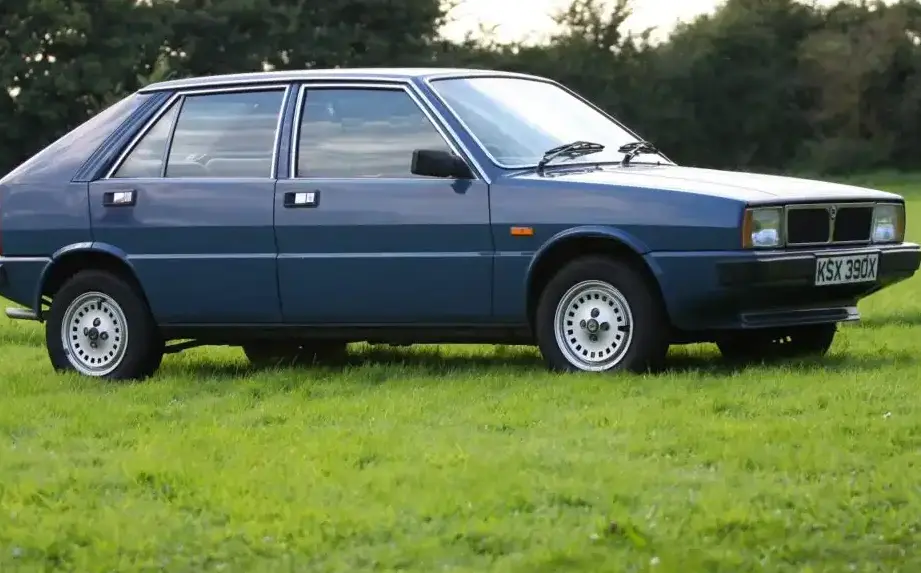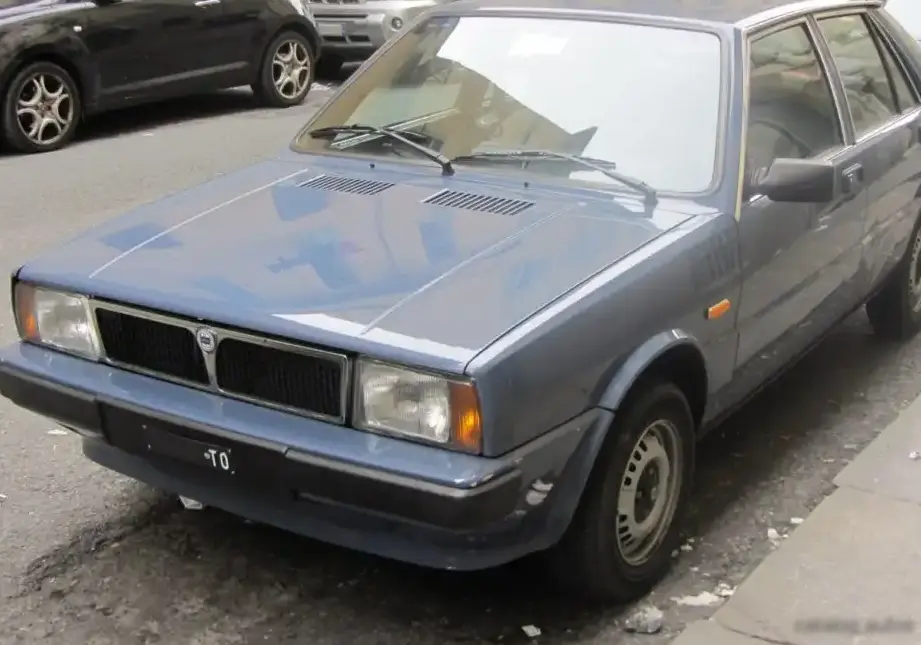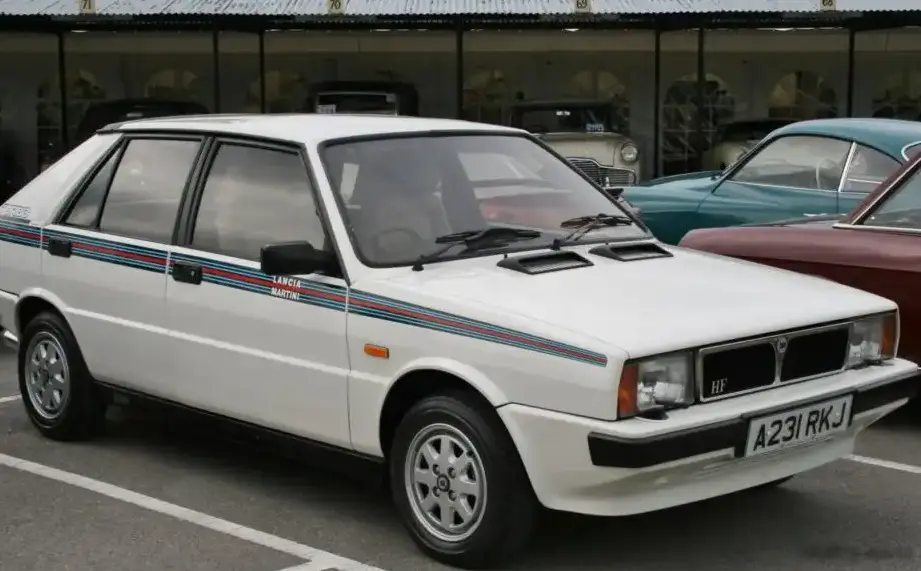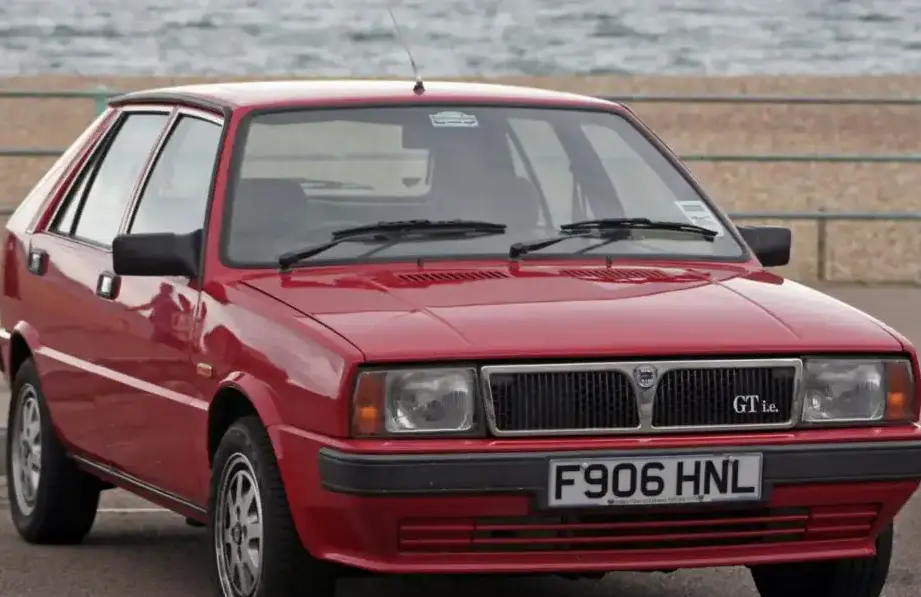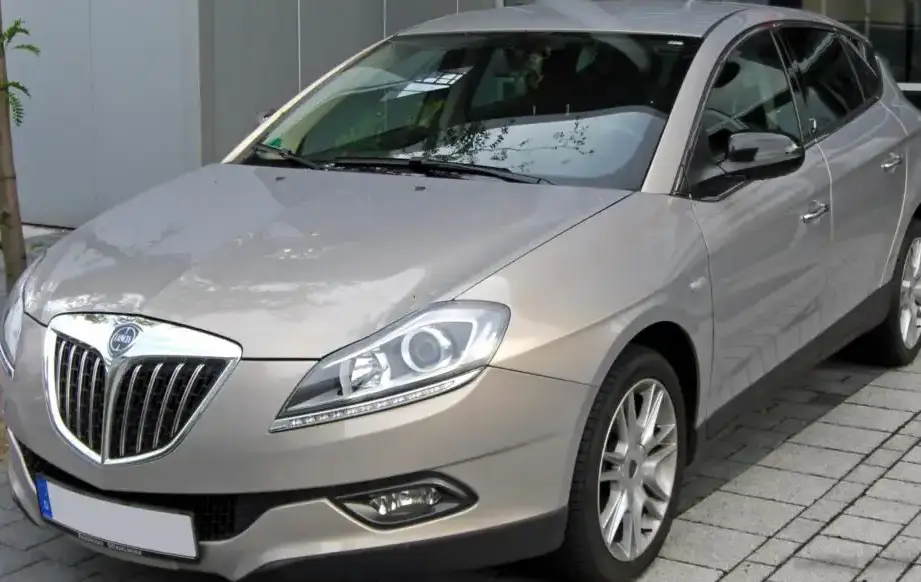
The Lancia Delta III (844) 2.0 Multijet 16V, produced from September 2008 to June 2011, represented a significant attempt to revive the iconic Delta nameplate. Positioned as a mid-range offering within the Delta III lineup, this variant aimed to balance performance, fuel efficiency, and practicality for the European market. It was a key component of Lancia’s strategy to recapture a segment of the premium hatchback market, competing with vehicles like the Audi A3 and Volkswagen Golf. The Delta III was built on the Fiat/Chrysler C-segment platform, shared with models like the Fiat Bravo and Alfa Romeo Giulietta.
Technical Specifications
| Brand | Lancia |
| Model | Delta |
| Generation | Delta III (844) |
| Type (Engine) | 2.0 Multijet 16V (165 Hp) DPF |
| Start of production | September, 2008 |
| End of production | June, 2011 |
| Powertrain Architecture | Internal Combustion engine |
| Body type | Hatchback |
| Seats | 5 |
| Doors | 5 |
| Fuel consumption (urban) | 6.9 l/100 km (34.1 US mpg, 40.9 UK mpg, 14.5 km/l) |
| Fuel consumption (extra urban) | 4.3 l/100 km (54.7 US mpg, 65.7 UK mpg, 23.3 km/l) |
| Fuel consumption (combined) | 5.3 l/100 km (44.4 US mpg, 53.3 UK mpg, 18.9 km/l) |
| CO2 emissions | 139 g/km |
| Fuel Type | Diesel |
| Acceleration 0 – 100 km/h | 8.5 sec |
| Acceleration 0 – 62 mph | 8.5 sec |
| Acceleration 0 – 60 mph | 8.1 sec |
| Maximum speed | 214 km/h (132.97 mph) |
| Emission standard | Euro 5 |
| Weight-to-power ratio | 8.7 kg/Hp, 115.4 Hp/tonne |
| Weight-to-torque ratio | 4 kg/Nm, 251.7 Nm/tonne |
| Power | 165 Hp @ 4000 rpm |
| Power per litre | 84.4 Hp/l |
| Torque | 360 Nm @ 1750 rpm (265.52 lb.-ft. @ 1750 rpm) |
| Engine layout | Front, Transverse |
| Engine Model/Code | 198A5000 |
| Engine displacement | 1956 cm3 (119.36 cu. in.) |
| Number of cylinders | 4 |
| Engine configuration | Inline |
| Cylinder Bore | 83 mm (3.27 in.) |
| Piston Stroke | 90.4 mm (3.56 in.) |
| Compression ratio | 16.5:1 |
| Number of valves per cylinder | 4 |
| Fuel injection system | Diesel Commonrail |
| Engine aspiration | Turbocharger, Intercooler |
| Valvetrain | DOHC |
| Engine oil capacity | 4.9 l (5.18 US qt | 4.31 UK qt) |
| Coolant capacity | 7.1 l (7.5 US qt | 6.25 UK qt) |
| Kerb Weight | 1430 kg (3152.61 lbs.) |
| Max. weight | 2000 kg (4409.25 lbs.) |
| Max load | 570 kg (1256.63 lbs.) |
| Trunk (boot) space – minimum | 420 l (14.83 cu. ft.) |
| Trunk (boot) space – maximum | 1190 l (42.02 cu. ft.) |
| Fuel tank capacity | 57 l (15.06 US gal | 12.54 UK gal) |
| Max. roof load | 80 kg (176.37 lbs.) |
| Permitted trailer load with brakes (12%) | 1300 kg (2866.01 lbs.) |
| Permitted trailer load without brakes | 500 kg (1102.31 lbs.) |
| Permitted towbar download | 60 kg (132.28 lbs.) |
| Length | 4520 mm (177.95 in.) |
| Width | 1797 mm (70.75 in.) |
| Height | 1499 mm (59.02 in.) |
| Wheelbase | 2700 mm (106.3 in.) |
| Front track | 1538 mm (60.55 in.) |
| Rear track | 1531 mm (60.28 in.) |
| Front overhang | 1017 mm (40.04 in.) |
| Rear overhang | 803 mm (31.61 in.) |
| Minimum turning circle | 10.6 m (34.78 ft.) |
| Drivetrain Architecture | Front wheel drive |
| Drive wheel | Front wheel drive |
| Number of gears | 6 gears, manual transmission |
| Front suspension | Independent, type McPherson with coil spring and anti-roll bar |
| Rear suspension | Transverse stabilizer, Torsion |
| Front brakes | Ventilated discs, 305×28 mm |
| Rear brakes | Disc, 251×10 mm |
| Assisting systems | ABS (Anti-lock braking system) |
| Steering type | Steering rack and pinion |
| Power steering | Electric Steering |
| Tires size | 205/55 R16; 225/45 R17; 225/40 R18 |
| Wheel rims size | 7J x 16; 7J x 17; 7.5J x 18 |
Powertrain & Engine Architecture
The heart of the Delta 2.0 Multijet 16V is the 198A5000 engine, a 1.956-liter inline-four cylinder diesel. This engine is a member of the Fiat Multijet family, known for its common-rail direct injection system and variable geometry turbocharger. The 16V designation refers to the four valves per cylinder, contributing to improved breathing and efficiency. The engine utilizes a sophisticated Bosch EDC16C39 engine control unit (ECU) to manage fuel injection, turbo boost, and other parameters. The Multijet technology allows for multiple fuel injections per combustion cycle, reducing noise, vibration, and harshness (NVH) while improving combustion efficiency. The engine’s intercooler helps to cool the intake air, further enhancing performance. The 6-speed manual transmission was standard, providing a balance between fuel economy and driver engagement.
Driving Characteristics
The 165 horsepower and 360 Nm (265 lb-ft) of torque delivered by the 2.0 Multijet provided the Delta with respectable performance. Acceleration from 0 to 60 mph took approximately 8.1 seconds, and it reached a top speed of 133 mph. While not a sports car, the Delta 2.0 Multijet offered sufficient power for everyday driving and overtaking maneuvers. The manual transmission’s gear ratios were tuned for a blend of fuel efficiency and responsiveness. Compared to the lower-powered 1.4-liter versions, the 2.0 Multijet offered a noticeably more relaxed driving experience, particularly on the highway. However, it didn’t possess the outright performance of the higher-spec models with more powerful engines.
Equipment & Trim Levels
The 2.0 Multijet 16V trim typically included features such as air conditioning, a CD/radio stereo, electric front windows, and central locking. Higher trim levels added features like alloy wheels, fog lights, a multi-function steering wheel, and upgraded interior trim. Optional extras included a sunroof, leather upholstery, and a navigation system. The interior design was modern and functional, with a focus on ergonomics. The Delta offered a spacious cabin and a generous 420-liter trunk (expandable to 1190 liters with the rear seats folded down).
Chassis & Braking
The Delta III utilized an independent McPherson strut suspension at the front and a torsion beam suspension at the rear. This setup provided a good balance between ride comfort and handling. The front brakes were ventilated discs, while the rear brakes were solid discs. Anti-lock Braking System (ABS) was standard. The steering was electrically assisted, providing light and precise control. The chassis was designed to provide a stable and predictable driving experience, although it wasn’t particularly sporty in its handling characteristics.
Market Reception & Comparison
The Lancia Delta 2.0 Multijet 16V was generally well-received by automotive critics. It was praised for its comfortable ride, spacious interior, and fuel efficiency. However, some critics noted that the styling was somewhat polarizing and that the interior quality didn’t quite match that of its German rivals. Compared to the 1.4-liter versions, the 2.0 Multijet offered a significant improvement in performance and refinement. Fuel economy was competitive, averaging around 44.4 US mpg in combined driving. Reliability was generally good, although some owners reported issues with the electronic systems.
Legacy
The Lancia Delta III, despite its relatively short production run, represents a noteworthy attempt to revive a legendary nameplate. The 2.0 Multijet 16V variant remains a popular choice in the used car market, offering a good balance of performance, fuel efficiency, and practicality. The Multijet engine is known for its durability and relatively low maintenance costs. While the Delta III didn’t achieve the same level of success as its predecessor, it remains a distinctive and appealing hatchback for those seeking a stylish and comfortable alternative to the mainstream offerings.