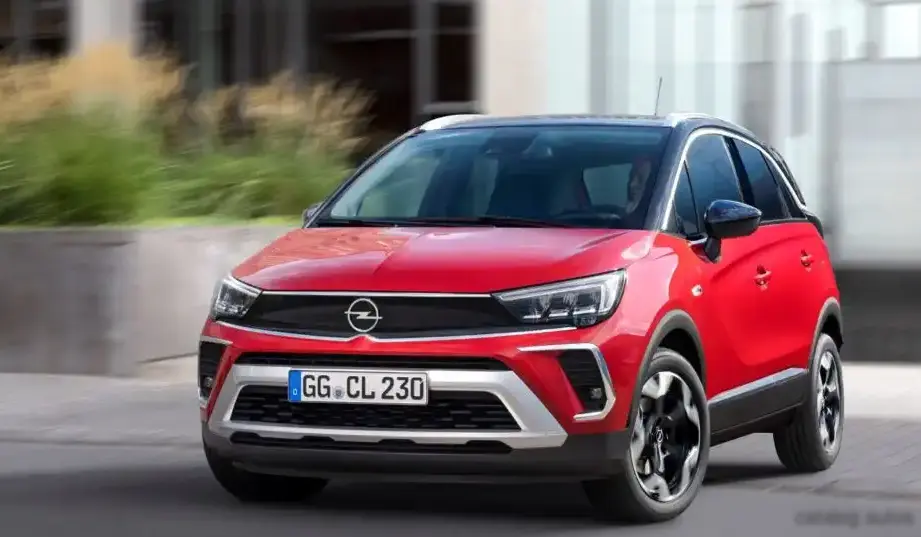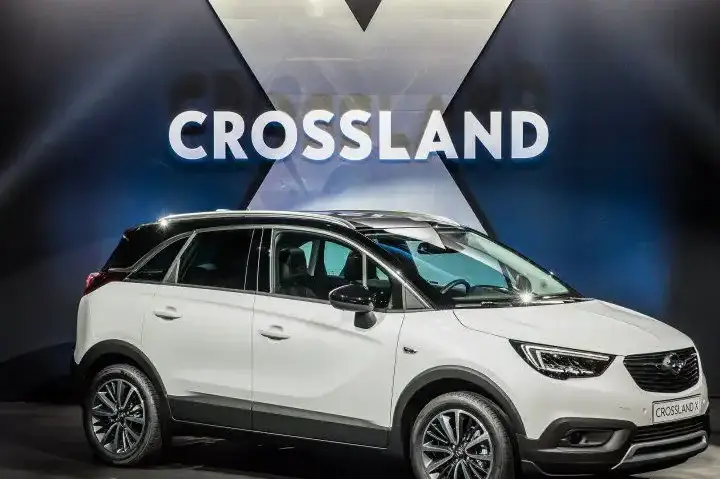
The Opel Crossland X 1.2 Turbo, producing 130 horsepower, was a key variant in Opel’s subcompact SUV lineup, sold primarily in Europe from June 2017 to June 2018. Positioned as a mid-range offering, it aimed to balance fuel efficiency with acceptable performance for everyday driving. The Crossland X, built on the PSA Group’s PF1 platform (shared with the Citroën C3 Aircross and Peugeot 2008), represented Opel’s entry into the rapidly growing B-segment SUV market. This particular engine and transmission combination was designed to appeal to buyers seeking a practical and economical family vehicle.
Technical Specifications
| Brand | Opel |
| Model | Crossland |
| Generation | Crossland X |
| Type (Engine) | 1.2 Turbo (130 Hp) |
| Start of production | June, 2017 |
| End of production | June, 2018 |
| Powertrain Architecture | Internal Combustion engine |
| Body type | SUV |
| Seats | 5 |
| Doors | 5 |
| Fuel consumption (urban) | 5.7-5.9 l/100 km (41.3 – 39.9 US mpg) |
| Fuel consumption (extra urban) | 4.6-4.7 l/100 km (51.1 – 50 US mpg) |
| Fuel consumption (combined) | 5.0-5.1 l/100 km (47 – 46.1 US mpg) |
| CO2 emissions | 114-116 g/km |
| Fuel Type | Petrol (Gasoline) |
| Acceleration 0 – 100 km/h | 9.1 sec |
| Acceleration 0 – 62 mph | 9.1 sec |
| Acceleration 0 – 60 mph | 8.6 sec |
| Maximum speed | 206 km/h (128 mph) |
| Emission standard | Euro 6 |
| Weight-to-power ratio | 9.2 kg/Hp, 108.4 Hp/tonne |
| Weight-to-torque ratio | 5.2 kg/Nm, 191.8 Nm/tonne |
| Power | 130 Hp @ 5500 rpm |
| Power per litre | 108.4 Hp/l |
| Torque | 230 Nm @ 1750 rpm (169.64 lb.-ft. @ 1750 rpm) |
| Engine layout | Front, Transverse |
| Engine Model/Code | B12XHT |
| Engine displacement | 1199 cm3 (73.17 cu. in.) |
| Number of cylinders | 3 |
| Engine configuration | Inline |
| Cylinder Bore | 75 mm (2.95 in.) |
| Piston Stroke | 90.5 mm (3.56 in.) |
| Compression ratio | 10.5:1 |
| Number of valves per cylinder | 4 |
| Fuel injection system | Direct injection |
| Engine aspiration | Turbocharger, Intercooler |
| Engine oil capacity | 3.5 l (3.7 US qt | 3.08 UK qt) |
| Coolant | 5.7 l (6.02 US qt | 5.02 UK qt) |
| Kerb Weight | 1199 kg (2643.34 lbs.) |
| Max. weight | 1790 kg (3946.27 lbs.) |
| Max load | 591 kg (1302.93 lbs.) |
| Trunk (boot) space – minimum | 410 l (14.48 cu. ft.) |
| Trunk (boot) space – maximum | 1255 l (44.32 cu. ft.) |
| Fuel tank capacity | 45 l (11.89 US gal | 9.9 UK gal) |
| Max. roof load | 50 kg (110.23 lbs.) |
| Permitted trailer load with brakes (12%) | 840 kg (1851.88 lbs.) |
| Permitted trailer load without brakes | 620 kg (1366.87 lbs.) |
| Permitted towbar download | 50 kg (110.23 lbs.) |
| Length | 4212 mm (165.83 in.) |
| Width | 1765 mm (69.49 in.) |
| Width with mirrors folded | 1825 mm (71.85 in.) |
| Width including mirrors | 1976 mm (77.8 in.) |
| Height | 1605 mm (63.19 in.) |
| Wheelbase | 2604 mm (102.52 in.) |
| Front track | 1513 mm (59.57 in.) |
| Rear (Back) track | 1491 mm (58.7 in.) |
| Minimum turning circle | 11.2 m (36.75 ft.) |
| Drivetrain Architecture | The Internal combustion engine (ICE) drives the front wheels of the vehicle. |
| Drive wheel | Front wheel drive |
| Number of gears and type of gearbox | 6 gears, manual transmission |
| Front brakes | Ventilated discs |
| Rear brakes | Disc |
| Assisting systems | ABS (Anti-lock braking system) |
| Steering type | Steering rack and pinion |
| Power steering | Electric Steering |
| Tires size | 195/60 R16 |
| Wheel rims size | 16 |
INTRODUCTION
The Opel Crossland X 1.2 Turbo (130 hp) was introduced in June 2017 as part of the first generation Crossland X (BU1P) model range. It occupied a crucial position within the lineup, offering a balance between affordability and performance. The Crossland X was Opel’s attempt to capitalize on the growing popularity of compact SUVs, providing a more spacious and versatile alternative to traditional hatchbacks. This variant, powered by the 1.2-liter turbocharged three-cylinder engine, was intended to appeal to families and individuals seeking a practical and fuel-efficient vehicle for urban and highway driving. The engine was part of Opel’s wider strategy to downsize and improve the efficiency of its powertrain offerings.
Powertrain & Engine Architecture
At the heart of the Crossland X 1.2 Turbo is the B12XHT engine, a 1.2-liter turbocharged three-cylinder petrol engine. This engine is part of Opel’s Small Displacement Family (SDF) and utilizes direct fuel injection and a single-scroll turbocharger with an intercooler. The engine produces 130 horsepower at 5500 rpm and 230 Nm (169.64 lb-ft) of torque at 1750 rpm. The engine’s aluminum block and cylinder head contribute to its relatively lightweight design. The engine features a timing chain for durability and reduced maintenance. The six-speed manual transmission was the standard offering for this variant, providing a good balance between fuel economy and driver engagement. The transmission’s gear ratios were tuned to maximize the engine’s torque output and provide smooth acceleration.
Driving Characteristics
The 1.2 Turbo engine, while not exceptionally powerful, provided adequate performance for everyday driving. Acceleration from 0 to 62 mph (0-100 km/h) took approximately 9.1 seconds. The turbocharger provides a noticeable boost in power, particularly at lower engine speeds, making it easy to navigate city traffic and overtake on the highway. Compared to the more powerful engine options available in the Crossland X range, such as the 1.6-liter diesel, the 1.2 Turbo felt less refined at higher speeds and required more downshifting when tackling steep inclines. However, its lighter weight and efficient engine contributed to better fuel economy. The manual transmission offered a more engaging driving experience than the optional automatic, allowing drivers to better control the engine’s power delivery.
Equipment & Trim Levels
The Crossland X 1.2 Turbo was typically offered in several trim levels, including Essentia, Enjoy, and Elite. The base Essentia trim included standard features such as air conditioning, electric front windows, a touchscreen infotainment system, and several safety features like ABS and ESP. The Enjoy trim added features like alloy wheels, cruise control, and a leather-wrapped steering wheel. The top-of-the-line Elite trim included features like automatic climate control, parking sensors, and a more advanced infotainment system. Optional extras included a panoramic sunroof, heated seats, and a rearview camera. Interior upholstery typically consisted of cloth seats, with leather options available on higher trims.
Chassis & Braking
The Crossland X utilized a MacPherson strut front suspension and a torsion beam rear suspension. This setup provided a comfortable ride quality, absorbing bumps and imperfections in the road effectively. The front brakes were ventilated discs, while the rear brakes were solid discs. ABS (Anti-lock Braking System) and ESP (Electronic Stability Program) were standard safety features, providing enhanced braking control and stability. The steering was electric power-assisted, offering light and precise steering feel. The suspension was tuned to prioritize comfort over sporty handling, making it well-suited for everyday driving.
Market Reception & Comparison
The Opel Crossland X 1.2 Turbo received generally positive reviews from automotive critics. It was praised for its fuel efficiency, comfortable ride, and spacious interior. However, some critics noted that the engine could feel underpowered when fully loaded or driving uphill. Compared to other B-segment SUVs like the Renault Captur and Peugeot 2008, the Crossland X offered a competitive level of equipment and practicality. The 1.2 Turbo engine provided comparable fuel economy to the diesel options available in the lineup, but with lower emissions. The manual transmission was generally preferred over the optional automatic due to its smoother operation and better fuel economy.
Legacy
The Opel Crossland X 1.2 Turbo remains a relatively common sight on the used car market. The B12XHT engine has proven to be generally reliable, although regular maintenance is essential to ensure its longevity. Common issues include turbocharger wear and potential oil leaks. The Crossland X’s spacious interior and practical features continue to appeal to buyers seeking a versatile and affordable family vehicle. While it may not offer the most exciting driving experience, its fuel efficiency, comfort, and practicality make it a solid choice in the used car market.