
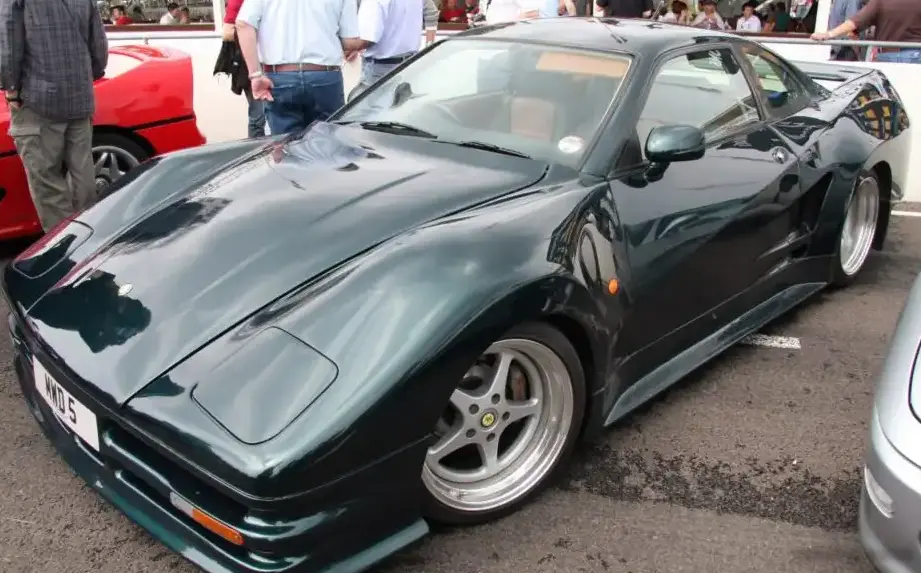
The Lister Storm 7.0 V12, produced between 1993 and 1994, represents a high-water mark in British grand touring car performance. Built by Lister Engineering, a company with a long history in motorsport, the Storm was essentially a heavily modified Jaguar XJS, transformed into a significantly more potent and exclusive machine. Only a handful of these cars were ever produced, making it a rare and highly sought-after vehicle today. The Storm aimed to deliver uncompromising performance and luxury, positioning itself as a competitor to cars like the Porsche 911 Turbo and the Ferrari 348. It was a statement of British engineering prowess, showcasing Lister’s capabilities beyond their racing endeavors.
Technical Specifications
| Brand | Lister |
| Model | Storm |
| Generation | Storm |
| Type (Engine) | 7.0 V12 (594 Hp) |
| Start of production | 1993 |
| End of production | 1994 |
| Powertrain Architecture | Internal Combustion engine |
| Body type | Coupe |
| Seats | 4 |
| Doors | 2 |
| Fuel Type | Petrol (Gasoline) |
| Acceleration 0 – 60 mph | 4.1 sec |
| Maximum speed | 322 km/h (200.08 mph) |
| Weight-to-power ratio | 2.4 kg/Hp, 413.1 Hp/tonne |
| Weight-to-torque ratio | 1.8 kg/Nm, 546.6 Nm/tonne |
| Power | 594 Hp @ 6100 rpm |
| Power per litre | 84.9 Hp/l |
| Torque | 786 Nm @ 3450 rpm (579.72 lb.-ft. @ 3450 rpm) |
| Maximum engine speed | 7000 rpm |
| Engine layout | Front, Longitudinal |
| Engine displacement | 6996 cm3 (426.92 cu. in.) |
| Number of cylinders | 12 |
| Engine configuration | V-engine |
| Cylinder Bore | 94 mm (3.7 in.) |
| Piston Stroke | 84 mm (3.31 in.) |
| Compression ratio | 10.5:1 |
| Number of valves per cylinder | 2 |
| Fuel injection system | Multi-port manifold injection |
| Engine aspiration | Supercharger, Intercooler |
| Valvetrain | SOHC |
| Kerb Weight | 1438 kg (3170.25 lbs.) |
| Fuel tank capacity | 139 l (36.72 US gal | 30.58 UK gal) |
| Length | 4547 mm (179.02 in.) |
| Width | 1975 mm (77.76 in.) |
| Height | 1321 mm (52.01 in.) |
| Wheelbase | 2591 mm (102.01 in.) |
| Front track | 1867 mm (73.5 in.) |
| Rear (Back) track | 1930 mm (75.98 in.) |
| Drag coefficient (Cd) | 0.32 |
| Drivetrain Architecture | The Internal combustion engine (ICE) drives the rear wheels of the vehicle. |
| Drive wheel | Rear wheel drive |
| Number of gears and type of gearbox | 6 gears, manual transmission |
| Front suspension | Double wishbone, Transverse stabilizer |
| Rear suspension | Independent multi-link suspension, Transverse stabilizer |
| Front brakes | Ventilated discs, 355.6×31.75 mm |
| Rear brakes | Disc, 317.5×19.05 mm |
| Steering type | Steering rack and pinion |
| Power steering | Hydraulic Steering |
| Front wheel tires | 245/40 R18 |
| Rear wheel tires | 335/35 R18 |
| Front wheel rims | 9.5J x 18 |
| Rear wheel rims | 12.5J x 18 |
Powertrain & Engine Architecture
The heart of the Lister Storm is its 7.0-liter Jaguar V12 engine, heavily modified by Lister Engineering. While based on the Jaguar block, the engine received significant upgrades including a supercharger and intercooler, increasing power output to a substantial 594 horsepower. The engine utilized a multi-port fuel injection system and a single overhead camshaft (SOHC) valvetrain. The supercharger, a crucial component of the performance enhancement, provided forced induction, dramatically increasing the engine’s power and torque. The engine’s longitudinal front-engine layout contributed to the car’s balanced handling characteristics. The Storm exclusively came with a 6-speed manual transmission, designed to handle the immense power output and provide the driver with full control.
Driving Characteristics
The Lister Storm delivered a truly exhilarating driving experience. The combination of the supercharged V12 and the 6-speed manual gearbox resulted in blistering acceleration – 0 to 60 mph in just 4.1 seconds – and a top speed exceeding 200 mph. The manual transmission allowed for precise gear selection, maximizing the engine’s power band. While the XJS platform was known for its grand touring comfort, Lister’s modifications, including a revised suspension and upgraded brakes, significantly improved handling and stopping power. The car felt planted and responsive, offering a level of performance that far exceeded the standard XJS. Compared to the naturally aspirated Jaguar V12, the Storm’s supercharged engine provided a much broader torque curve, making it more tractable and responsive at lower speeds.
Equipment & Trim Levels
Given its limited production run and high price point, the Lister Storm was a highly specified vehicle. The interior featured luxurious leather upholstery, often customized to the owner’s preferences. Standard equipment included power windows, power steering, and air conditioning. The dashboard retained the basic XJS layout but was often upgraded with custom gauges and trim. Optional extras included a premium sound system, upgraded interior trim materials, and bespoke paint finishes. The focus was on creating a luxurious and comfortable environment that complemented the car’s exceptional performance.
Chassis & Braking
Lister significantly upgraded the XJS chassis to cope with the increased power output. The suspension was revised with stiffer springs, upgraded dampers, and thicker anti-roll bars. This resulted in improved handling and reduced body roll. The braking system was also upgraded with larger ventilated discs and more powerful calipers, providing ample stopping power. The front brakes measured 355.6×31.75 mm, while the rear brakes were 317.5×19.05 mm. The Storm’s rear-wheel-drive layout and well-balanced chassis contributed to its neutral handling characteristics.
Market Reception & Comparison
The Lister Storm was generally well-received by automotive critics, who praised its exceptional performance and luxurious interior. However, its high price – significantly more than a standard XJS – limited its appeal to a small number of discerning buyers. Compared to other high-performance cars of the era, such as the Porsche 911 Turbo, the Storm offered a more luxurious and comfortable driving experience, but with comparable performance. Its rarity and exclusivity also added to its desirability. Fuel economy was unsurprisingly poor, reflecting the car’s large engine and high performance. Reliability was generally good, although maintenance costs were high due to the complexity of the engine and the limited availability of parts.
Legacy
The Lister Storm remains a highly collectible and sought-after vehicle today. Its rarity, performance, and luxurious appointments have ensured its status as a modern classic. The Storm showcased Lister Engineering’s ability to transform a grand touring car into a true supercar. While the powertrain is robust, maintenance requires specialized knowledge and can be expensive. The Storm’s legacy lies in its demonstration of British engineering excellence and its contribution to the pantheon of high-performance grand tourers. Values for well-maintained examples continue to rise, reflecting the car’s enduring appeal and historical significance.
