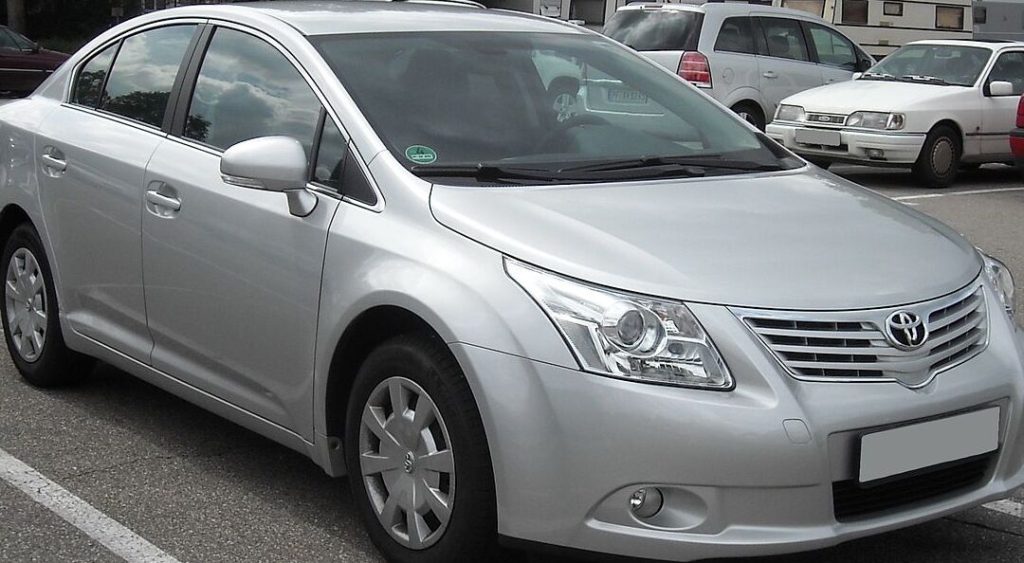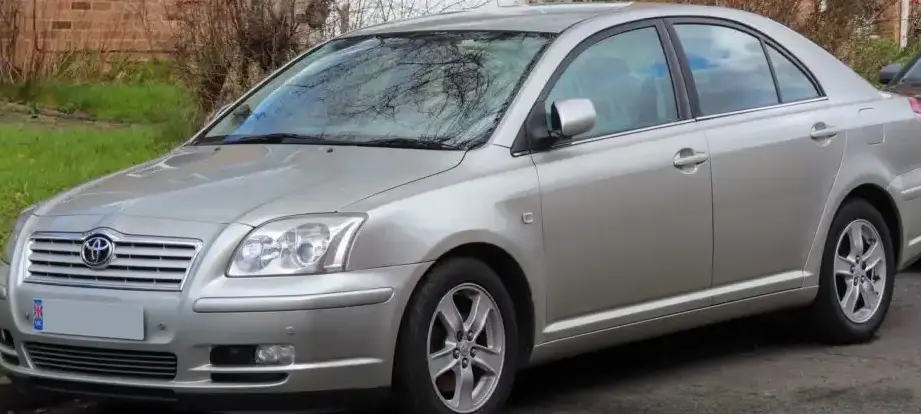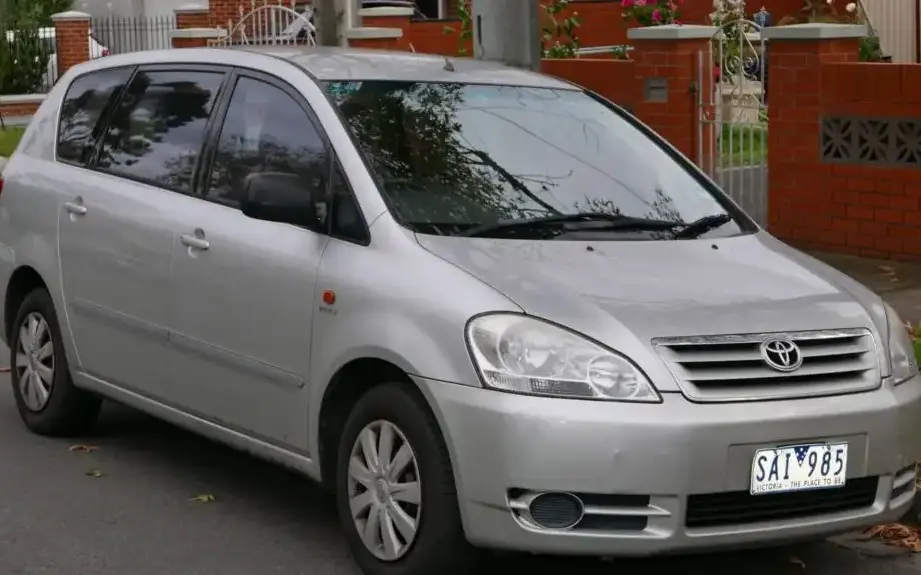
The Toyota Avensis Verso 2.0 (150 hp) Automatic, produced between August 2001 and October 2003, represents a significant offering in Toyota’s European MPV (Multi-Purpose Vehicle) lineup. Positioned as a versatile family vehicle, the Avensis Verso aimed to combine practicality with Toyota’s reputation for reliability. This particular variant, equipped with the 1AZ-FE 2.0-liter engine and a four-speed automatic transmission, served as a mid-range option within the Verso family, offering a balance between performance and ease of driving. It was primarily marketed in Europe, where the demand for seven-seat MPVs was strong, and competed with vehicles like the Renault Scenic and Citroën Xsara Picasso.
Technical Specifications
| Brand | Toyota |
| Model | Avensis Verso |
| Generation | Avensis Verso |
| Type (Engine) | 2.0 (150 Hp) Automatic |
| Start of production | August, 2001 |
| End of production | October, 2003 |
| Powertrain Architecture | Internal Combustion engine |
| Body type | MPV |
| Seats | 7 |
| Doors | 4 |
| Fuel consumption (urban) | 12.2 l/100 km (19.3 US mpg, 23.2 UK mpg, 8.2 km/l) |
| Fuel consumption (extra urban) | 7.2 l/100 km (32.7 US mpg, 39.2 UK mpg, 13.9 km/l) |
| Fuel consumption (combined) | 8.5 l/100 km (27.7 US mpg, 33.2 UK mpg, 11.8 km/l) |
| Fuel Type | Petrol (Gasoline) |
| Acceleration 0 – 100 km/h | 12.1 sec |
| Acceleration 0 – 62 mph | 12.1 sec |
| Acceleration 0 – 60 mph | 11.5 sec |
| Maximum speed | 175 km/h (108.74 mph) |
| Weight-to-power ratio | 10 kg/Hp, 100.3 Hp/tonne |
| Weight-to-torque ratio | 7.8 kg/Nm, 128.4 Nm/tonne |
| Power | 150 Hp @ 6000 rpm |
| Power per litre | 75.1 Hp/l |
| Torque | 192 Nm @ 4000 rpm (141.61 lb.-ft. @ 4000 rpm) |
| Engine layout | Front, Transverse |
| Engine Model/Code | 1AZ-FE |
| Engine displacement | 1998 cm3 (121.93 cu. in.) |
| Number of cylinders | 4 |
| Engine configuration | Inline |
| Cylinder Bore | 86 mm (3.39 in.) |
| Piston Stroke | 86 mm (3.39 in.) |
| Compression ratio | 9.8:1 |
| Number of valves per cylinder | 4 |
| Fuel injection system | Multi-port manifold injection |
| Engine aspiration | Naturally aspirated engine |
| Valvetrain | DOHC |
| Engine oil capacity | 4.2 l (4.44 US qt | 3.7 UK qt) |
| Coolant capacity | 5.9 l (6.23 US qt | 5.19 UK qt) |
| Kerb Weight | 1495 kg (3295.91 lbs.) |
| Max. weight | 2140 kg (4717.89 lbs.) |
| Max load | 645 kg (1421.98 lbs.) |
| Trunk (boot) space – minimum | 282 l (9.96 cu. ft.) |
| Trunk (boot) space – maximum | 2422 l (85.53 cu. ft.) |
| Fuel tank capacity | 60 l (15.85 US gal | 13.2 UK gal) |
| Length | 4650 mm (183.07 in.) |
| Width | 1760 mm (69.29 in.) |
| Height | 1675 mm (65.94 in.) |
| Wheelbase | 2825 mm (111.22 in.) |
| Front track | 1505 mm (59.25 in.) |
| Rear (Back) track | 1500 mm (59.06 in.) |
| Drivetrain Architecture | Front wheel drive |
| Number of gears and type of gearbox | 4 gears, automatic transmission |
| Front suspension | Wishbone |
| Rear suspension | Coil spring |
| Front brakes | Ventilated discs |
| Rear brakes | Disc |
| Assisting systems | ABS (Anti-lock braking system) |
| Steering type | Steering rack and pinion |
| Power steering | Hydraulic Steering |
| Tires size | 205/65 R15 |
| Wheel rims size | 15 |
Powertrain & Engine Architecture
The heart of the Avensis Verso 2.0 Automatic is the 1AZ-FE engine, a 1.998-liter (121.93 cubic inches) inline-four cylinder gasoline engine. This engine is part of Toyota’s AZ series, known for its durability and relatively simple design. The 1AZ-FE utilizes a multi-port fuel injection system, delivering fuel directly to the intake ports, and a double overhead camshaft (DOHC) valvetrain, optimizing airflow for improved performance. The engine produces 150 horsepower at 6000 rpm and 192 Nm (141.61 lb-ft) of torque at 4000 rpm. Paired with this engine is a four-speed automatic transmission, designed for smooth and convenient operation. This transmission, while not offering the efficiency of more modern gearboxes, provided adequate performance for everyday driving and was favored by buyers prioritizing comfort over sporty handling. The transmission’s gear ratios were tuned for a balance of acceleration and fuel economy, though the automatic nature did slightly diminish overall efficiency compared to the available manual transmission.
Driving Characteristics
The Avensis Verso 2.0 Automatic offered a comfortable, if not particularly exhilarating, driving experience. The 150 hp engine provided sufficient power for typical driving situations, including highway cruising and overtaking, but acceleration was noticeably slower than the higher-output versions or those equipped with a manual transmission. The four-speed automatic transmission, while smooth, lacked the responsiveness and efficiency of more modern transmissions. Gear changes were generally well-timed, but downshifts could sometimes feel hesitant. The focus was clearly on providing a relaxed and easy-to-drive experience, making it well-suited for family transportation. The relatively high kerb weight of 1495 kg (3295.91 lbs) further contributed to the less sporty feel.
Equipment & Trim Levels
The 2.0-liter Automatic variant of the Avensis Verso typically came with a reasonable level of standard equipment. This included power windows, central locking, air conditioning, and an integrated audio system. Interior upholstery was generally cloth, with options for upgraded materials available. Safety features such as ABS (Anti-lock Braking System) and driver and passenger airbags were standard. Optional extras included alloy wheels, a sunroof, and upgraded audio systems. The trim level often dictated the availability of features like rear parking sensors and climate control.
Chassis & Braking
The Avensis Verso utilized a front-wheel-drive layout with a wishbone front suspension and a coil spring rear suspension. This setup prioritized ride comfort and stability. The front brakes were ventilated discs, providing adequate stopping power, while the rear brakes were solid discs. The steering was rack and pinion with hydraulic power assistance, offering a reasonably light and responsive feel. The tires were typically 205/65 R15, providing a good balance of grip and comfort.
Market Reception & Comparison
The Avensis Verso 2.0 Automatic was generally well-received by critics as a practical and reliable family vehicle. However, some reviewers noted that the engine and transmission combination lacked the refinement and performance of some competitors. Fuel economy was considered average for its class. Compared to the manual transmission version, the automatic offered less fuel efficiency and slightly slower acceleration. Compared to other engine options within the Verso range, such as the diesel variants, the 2.0-liter petrol engine offered a smoother and quieter driving experience but at the cost of fuel economy.
Legacy
The Toyota Avensis Verso 2.0 Automatic has proven to be a durable and reliable vehicle in the used car market. The 1AZ-FE engine is known for its longevity, and the automatic transmission, while not cutting-edge, has generally proven to be dependable. However, as with any vehicle of this age, regular maintenance is crucial. Common issues include wear and tear on suspension components and potential oil leaks. Today, these vehicles represent an affordable and practical option for families seeking a spacious and reliable MPV, though finding well-maintained examples is becoming increasingly important.