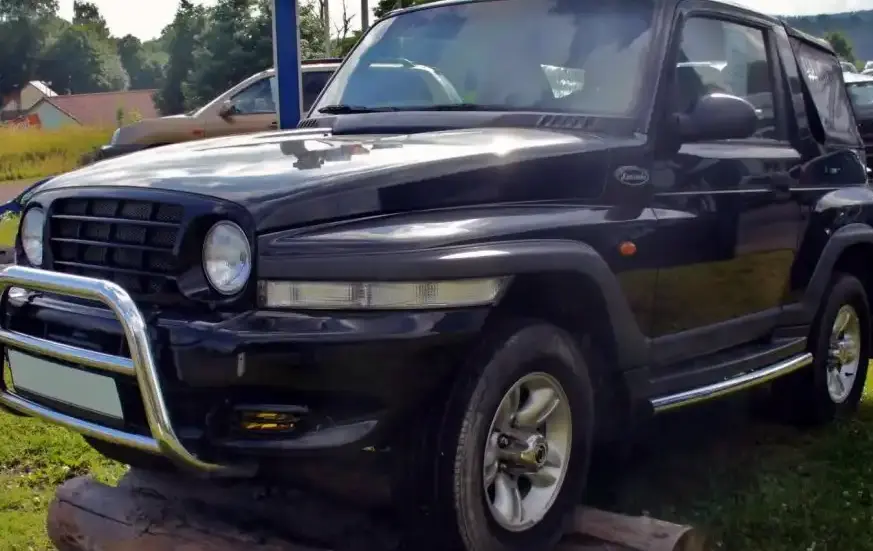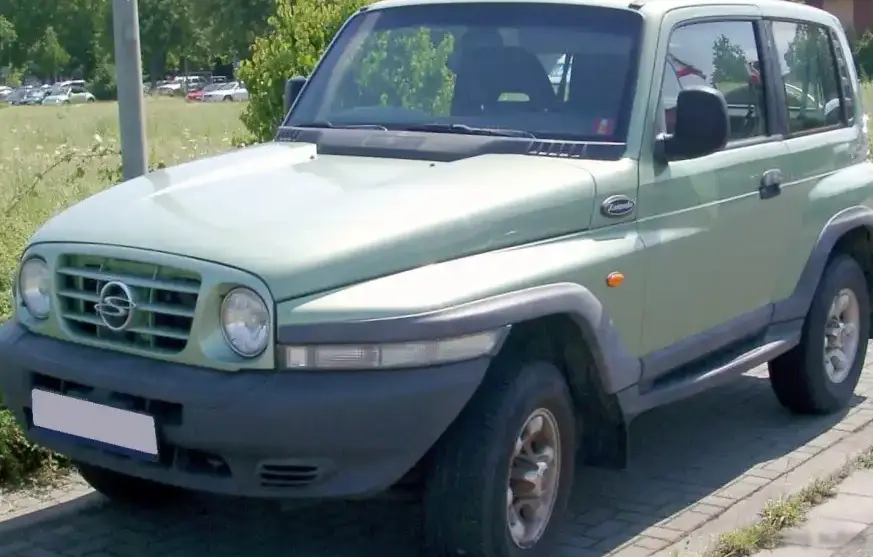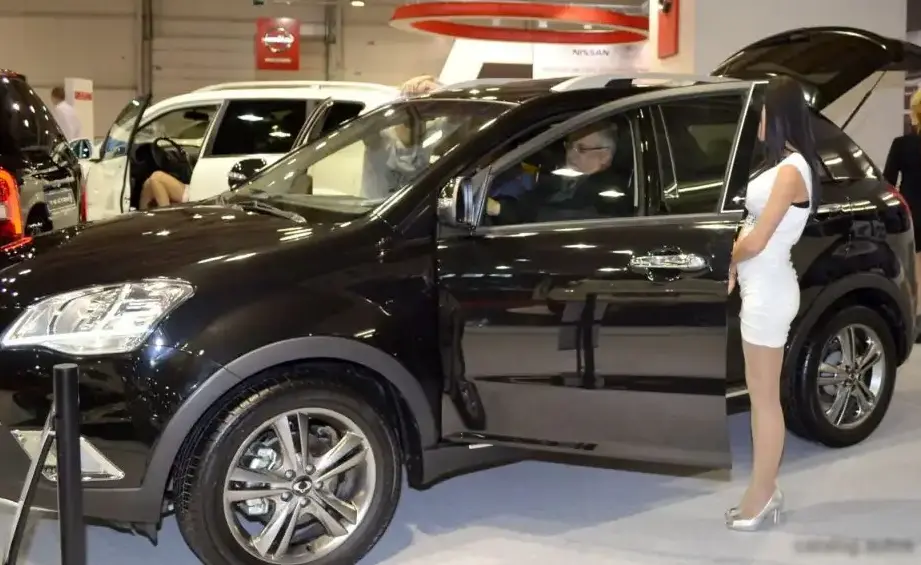
The SsangYong Korando III (C) 2.0 CDI AWD High Power, produced from 2010 to 2013, represented a significant step forward for the South Korean automaker. Positioned as a mid-range offering within the Korando III lineup, this variant aimed to balance fuel efficiency, respectable performance, and all-weather capability. Built on the Korando (C) platform, it was SsangYong’s attempt to compete in the increasingly popular compact SUV segment, primarily targeting European and Asian markets where diesel-powered, all-wheel-drive vehicles were in high demand. The “High Power” designation indicated the higher output version of the 2.0-liter diesel engine available at the time, differentiating it from lower-powered base models.
Technical Specifications
| Brand | SsangYong |
| Model | Korando |
| Generation | Korando III (C) |
| Type (Engine) | 2.0 CDI (175 Hp) AWD High Power |
| Start of production | 2010 |
| End of production | 2013 |
| Powertrain Architecture | Internal Combustion engine |
| Body type | SUV |
| Seats | 5 |
| Doors | 5 |
| Fuel consumption (combined) | 6.4 l/100 km (36.8 US mpg, 44.1 UK mpg, 15.6 km/l) |
| CO2 emissions | 169 g/km |
| Fuel Type | Diesel |
| Acceleration 0 – 100 km/h | 10.8 sec |
| Acceleration 0 – 62 mph | 10.8 sec |
| Acceleration 0 – 60 mph | 10.3 sec |
| Maximum speed | 195 km/h (121.17 mph) |
| Emission standard | Euro 5 |
| Weight-to-power ratio | 9.1 kg/Hp, 110 Hp/tonne |
| Weight-to-torque ratio | 4.4 kg/Nm, 226.3 Nm/tonne |
| Power | 175 Hp @ 4000 rpm |
| Power per litre | 87.6 Hp/l |
| Torque | 360 Nm @ 2000-3000 rpm (265.52 lb.-ft. @ 2000-3000 rpm) |
| Engine layout | Front, Longitudinal |
| Engine Model/Code | D20DTF |
| Engine displacement | 1998 cm3 (121.93 cu. in.) |
| Number of cylinders | 4 |
| Engine configuration | Inline |
| Fuel injection system | Diesel Commonrail |
| Engine aspiration | Turbocharger, Intercooler |
| Engine oil capacity | 6 l (6.34 US qt | 5.28 UK qt) |
| Coolant | 8.5 l (8.98 US qt | 7.48 UK qt) |
| Kerb Weight | 1591 kg (3507.55 lbs.) |
| Max. weight | 2100 kg (4629.71 lbs.) |
| Max load | 509 kg (1122.15 lbs.) |
| Trunk (boot) space – minimum | 486 l (17.16 cu. ft.) |
| Trunk (boot) space – maximum | 1312 l (46.33 cu. ft.) |
| Fuel tank capacity | 57 l (15.06 US gal | 12.54 UK gal) |
| Permitted trailer load with brakes (12%) | 2000 kg (4409.25 lbs.) |
| Permitted trailer load without brakes | 750 kg (1653.47 lbs.) |
| Length | 4410 mm (173.62 in.) |
| Width | 1830 mm (72.05 in.) |
| Height | 1675 mm (65.94 in.) |
| Wheelbase | 2650 mm (104.33 in.) |
| Ride height (ground clearance) | 180 mm (7.09 in.) |
| Minimum turning circle | 10.8 m (35.43 ft.) |
| Drive wheel | All wheel drive (4×4) |
| Number of gears and type of gearbox | 6 gears, manual transmission |
| Front suspension | Independent type McPherson |
| Rear suspension | Independent multi-link spring suspension with stabilizer |
| Front brakes | Ventilated discs |
| Rear brakes | Disc |
| Assisting systems | ABS (Anti-lock braking system) |
| Steering type | Steering rack and pinion |
| Tires size | 225/60 R17; 225/55 R18 |
| Wheel rims size | 6.5J x 17; 6.5J x 18 |
Powertrain & Engine Architecture
The heart of the Korando III 2.0 CDI High Power is the D20DTF engine, a 2.0-liter inline-four cylinder diesel. This engine utilizes a common rail direct injection system, delivering fuel at extremely high pressure for improved combustion efficiency and reduced emissions. A turbocharger with an intercooler further enhances performance by forcing more air into the cylinders. The D20DTF engine produces 175 horsepower at 4000 rpm and a substantial 360 Nm (265.52 lb-ft) of torque between 2000 and 3000 rpm. This torque output is particularly important for a diesel engine, providing strong pulling power and good acceleration, even when fully loaded. The engine is longitudinally mounted in the front of the vehicle. The transmission is a six-speed manual gearbox, chosen for its efficiency and driver engagement. While an automatic transmission was offered on other Korando III variants, the High Power model was primarily sold with the manual.
Driving Characteristics
The 2.0 CDI High Power Korando offers a competent driving experience. The 360 Nm of torque provides ample power for everyday driving and overtaking maneuvers. While not a sports SUV, the engine delivers a respectable 0-60 mph time of around 10.3 seconds. The six-speed manual transmission allows drivers to keep the engine in its optimal power band, maximizing efficiency and responsiveness. Compared to the lower-powered 2.0 CDI versions, the High Power model feels noticeably more energetic, especially when carrying passengers or cargo. The all-wheel-drive system provides enhanced traction in slippery conditions, making it a capable vehicle for inclement weather or light off-road use. The gear ratios are tuned for a balance between fuel economy and performance, with a relatively long sixth gear for highway cruising.
Equipment & Trim Levels
The “High Power” trim level generally included features such as air conditioning, power windows, central locking, and an audio system with CD player. Higher-spec versions could be equipped with options like leather upholstery, a sunroof, alloy wheels, and a navigation system. Interior materials were generally durable and functional, reflecting the Korando’s value-oriented positioning. The dashboard layout is straightforward and easy to use, with clearly labeled controls. Safety features included ABS brakes, airbags, and a stability control system.
Chassis & Braking
The Korando III utilizes an independent McPherson strut suspension at the front and an independent multi-link suspension at the rear, providing a comfortable ride and good handling characteristics. A stabilizer bar is included on both axles to reduce body roll during cornering. The braking system consists of ventilated discs at the front and solid discs at the rear. ABS (Anti-lock Braking System) is standard, enhancing braking performance and stability. The all-wheel-drive system is a part-time system, allowing the driver to select between two-wheel drive and four-wheel drive modes depending on road conditions.
Market Reception & Comparison
The SsangYong Korando III 2.0 CDI High Power received mixed reviews from automotive critics. It was generally praised for its spacious interior, comfortable ride, and capable all-wheel-drive system. However, some reviewers criticized its somewhat unrefined engine and interior materials compared to established competitors from European and Japanese manufacturers. Compared to the lower-powered 2.0 CDI Korando, the High Power model offered a significant performance boost, making it a more appealing option for drivers who frequently carry loads or drive on hilly terrain. Fuel economy was competitive for its class, averaging around 36.8 US mpg in combined driving. Reliability reports were generally positive, although some owners reported issues with the diesel particulate filter (DPF).
Legacy
The SsangYong Korando III 2.0 CDI High Power represents a pivotal moment for the brand, showcasing its ambition to compete in the global SUV market. While not a runaway success, it established the Korando name as a viable alternative to more established competitors. The D20DTF engine proved to be a relatively reliable unit, and well-maintained examples continue to be found on the used car market today. The Korando III paved the way for subsequent generations of the Korando, which have continued to improve in terms of refinement, technology, and overall quality. The 2.0 CDI High Power variant remains a popular choice for buyers seeking a practical, affordable, and capable all-wheel-drive SUV.