
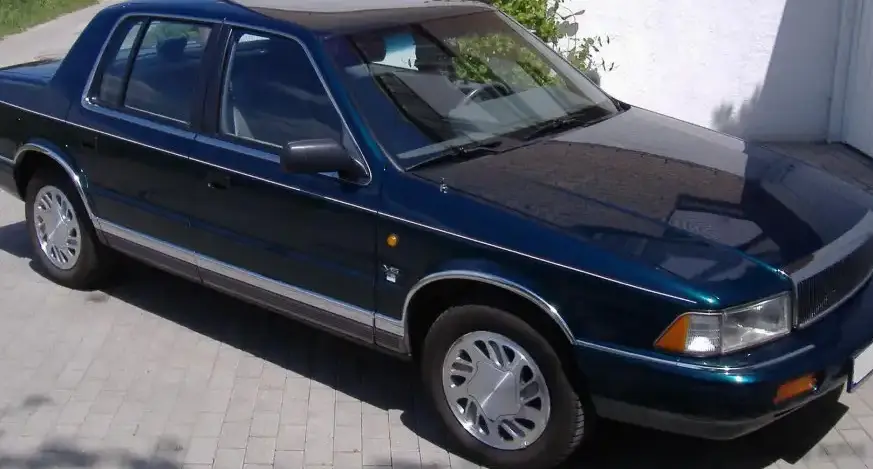
The Chrysler Saratoga 3.0i V6 Automatic, produced between 1989 and 1995, represented a mid-size offering from Chrysler during a period of significant change for the brand. Positioned as a comfortable and relatively affordable family sedan, the Saratoga aimed to provide a balance of space, features, and fuel efficiency. This particular variant, equipped with the 3.0-liter V6 engine paired with a four-speed automatic transmission, occupied a middle ground within the Saratoga lineup, offering more power than the base four-cylinder models but falling short of the performance offered by potential higher-trim options that were never fully realized. It was primarily sold within the North American market, competing with similar sedans from Ford, Chevrolet, and Toyota.
Technical Specifications
| Brand | Chrysler |
| Model | Saratoga |
| Generation | Saratoga |
| Type (Engine) | 3.0 i V6 (141 Hp) Automatic |
| Start of production | 1989 |
| End of production | 1995 |
| Powertrain Architecture | Internal Combustion engine |
| Body type | Sedan |
| Seats | 5 |
| Doors | 4 |
| Fuel consumption (urban) | 14.4 l/100 km (16.3 US mpg) |
| Fuel consumption (extra urban) | 7.1 l/100 km (33.1 US mpg) |
| Fuel Type | Petrol (Gasoline) |
| Acceleration 0 – 100 km/h | 11.5 sec |
| Acceleration 0 – 62 mph | 11.5 sec |
| Acceleration 0 – 60 mph | 10.9 sec |
| Maximum speed | 182 km/h (113.09 mph) |
| Weight-to-power ratio | 9.6 kg/Hp |
| Weight-to-torque ratio | 5.9 kg/Nm |
| Power | 141 Hp @ 5200 rpm |
| Torque | 228 Nm @ 2400 rpm (168.16 lb.-ft. @ 2400 rpm) |
| Engine layout | Front, Transverse |
| Engine Model/Code | 6G72 |
| Engine displacement | 2972 cm3 (181.36 cu. in.) |
| Number of cylinders | 6 |
| Engine configuration | V-engine |
| Cylinder Bore | 91.1 mm (3.59 in.) |
| Piston Stroke | 76 mm (2.99 in.) |
| Compression ratio | 8.9:1 |
| Number of valves per cylinder | 2 |
| Fuel injection system | Multi-port manifold injection |
| Engine aspiration | Naturally aspirated engine |
| Valvetrain | OHC |
| Kerb Weight | 1350 kg (2976.24 lbs.) |
| Max. weight | 1870 kg (4122.64 lbs.) |
| Max load | 520 kg (1146.4 lbs.) |
| Trunk (boot) space – minimum | 408 l (14.41 cu. ft.) |
| Fuel tank capacity | 61 l (16.11 US gal) |
| Permitted trailer load with brakes (12%) | 1200 kg (2645.55 lbs.) |
| Length | 4602 mm (181.18 in.) |
| Width | 1731 mm (68.15 in.) |
| Height | 1410 mm (55.51 in.) |
| Wheelbase | 2624 mm (103.31 in.) |
| Front track | 1463 mm (57.6 in.) |
| Rear (Back) track | 1453 mm (57.2 in.) |
| Minimum turning circle | 13.10 m (42.98 ft.) |
| Drivetrain Architecture | Front wheel drive |
| Number of gears and type of gearbox | 4 gears, automatic transmission |
| Front suspension | Independent, type McPherson with coil spring and anti-roll bar |
| Front brakes | Ventilated discs |
| Rear brakes | Disc |
| Tires size | 205/60 R15 |
| Wheel rims size | 15 |
Powertrain & Engine Architecture
The heart of the Saratoga 3.0i was the 6G72 engine, a 2.97-liter (181.36 cubic inches) V6. This engine utilized a single overhead camshaft (OHC) design with two valves per cylinder. Fuel delivery was managed by a multi-port fuel injection system, contributing to improved efficiency and smoother operation compared to earlier carbureted engines. The 6G72 was known for its relatively smooth power delivery and reasonable reliability, though it wasn’t considered a particularly high-performance engine. The four-speed automatic transmission, while providing convenience, was a somewhat dated design by the early 1990s. It featured standard torque converter lock-up to improve fuel economy at highway speeds. The transmission’s gear ratios were geared towards comfortable cruising rather than spirited acceleration.
Driving Characteristics
The 141 horsepower and 168 lb-ft of torque produced by the 3.0-liter V6 and automatic transmission combination resulted in adequate, but not exhilarating, performance. Acceleration from 0-60 mph took around 10.9 seconds, and top speed was limited to approximately 113 mph. The automatic transmission, while smooth, could feel somewhat sluggish during quick acceleration or when attempting to pass on the highway. Compared to a manual transmission equipped Saratoga, the automatic version felt noticeably less responsive. The focus was clearly on providing a comfortable and easy driving experience, rather than sporty handling. The suspension was tuned for ride comfort, absorbing bumps and imperfections in the road reasonably well.
Equipment & Trim Levels
The Saratoga 3.0i Automatic typically came standard with features such as air conditioning, power steering, power windows, and an AM/FM stereo. Interior upholstery was generally cloth, with optional leather available. Higher trim levels, though not consistently offered throughout the production run, could include features like a sunroof, upgraded sound system, and alloy wheels. The dashboard layout was fairly straightforward, with easy-to-read gauges and logically placed controls. The overall interior design was functional but lacked the sophistication of some of its European and Japanese competitors.
Chassis & Braking
The Saratoga utilized a front-wheel-drive layout with an independent McPherson strut suspension in the front and a semi-independent suspension in the rear. Front brakes were ventilated discs, providing adequate stopping power, while rear brakes were solid discs. The suspension was tuned for comfort, prioritizing a smooth ride over sharp handling. The steering was power-assisted, making it easy to maneuver at low speeds. The standard tire size was 205/60R15, providing a good balance of grip and ride comfort.
Market Reception & Comparison
The Chrysler Saratoga 3.0i Automatic received mixed reviews from automotive critics. It was generally praised for its spacious interior, comfortable ride, and reasonable fuel economy (around 16-33 mpg depending on driving conditions). However, it was often criticized for its lack of performance, dated automatic transmission, and somewhat bland styling. Compared to other mid-size sedans of the era, such as the Ford Taurus and Honda Accord, the Saratoga offered a more affordable price point but lacked the refinement and driving dynamics of its competitors. The 3.0L V6 automatic was often seen as a good compromise for buyers who didn’t want the lower power of the base four-cylinder but weren’t willing to pay for a potentially unavailable higher-performance trim.
Legacy
The Chrysler Saratoga, and specifically the 3.0i V6 Automatic variant, has become a relatively affordable and accessible classic car in the used market. The 6G72 engine is generally considered reliable, although regular maintenance is crucial to prevent issues such as oil leaks and timing belt failure. The automatic transmission, while not particularly sophisticated, is also generally durable if properly maintained. Parts availability is decent, although some components may be becoming increasingly difficult to find. Today, the Saratoga 3.0i Automatic represents a nostalgic reminder of a bygone era of American automotive design, offering a comfortable and relatively affordable entry point into the world of classic cars.
