
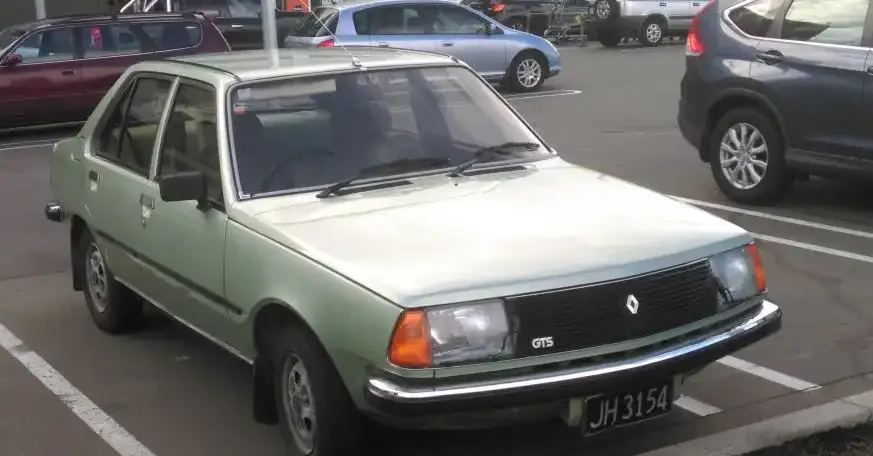
The Renault 18, specifically the 2.0-liter (1343) variant producing 105 horsepower, was a significant model for Renault during the early to mid-1980s. Produced from 1982 to 1986, this version of the 18 occupied a middle-ground position within the range, offering a step up in performance from the base models while remaining more accessible than the higher-specification versions. It was a key component of Renault’s strategy to offer a modern, comfortable, and relatively affordable family sedan in the European market. The 18 was based on Renault’s new platform, aiming for improved space efficiency and driving dynamics compared to its predecessors.
Technical Specifications
| Brand | Renault |
| Model | 18 |
| Generation | 18 (134) |
| Type (Engine) | 2.0 (1343) (105 Hp) |
| Start of production | 1982 |
| End of production | 1986 |
| Powertrain Architecture | Internal Combustion engine |
| Body type | Sedan |
| Seats | 5 |
| Doors | 4 |
| Fuel Type | Petrol (Gasoline) |
| Power | 105 Hp |
| Engine Model/Code | J6R 714-5 |
| Engine aspiration | Naturally aspirated engine |
| Engine oil capacity | 5.3 l (5.6 US qt | 4.66 UK qt) |
| Coolant capacity | 8 l (8.45 US qt | 7.04 UK qt) |
| Fuel tank capacity | 53 l (14 US gal | 11.66 UK gal) |
Powertrain & Engine Architecture
The heart of the Renault 18 2.0 was the J6R 714-5 engine, a 1,995 cc (121.6 cubic inches) inline-four cylinder gasoline engine. This engine featured a cast iron block and an aluminum cylinder head. It utilized a single overhead camshaft (SOHC) valvetrain, operating two valves per cylinder. Fuel delivery was managed by a Bosch mechanical fuel injection system, a relatively sophisticated setup for the time, offering improved efficiency and driveability compared to carbureted engines. The engine’s design prioritized smooth operation and reasonable power output rather than outright performance. The 105 horsepower peak was achieved at approximately 5,800 rpm, with a torque output of around 138 lb-ft (187 Nm) at 3,500 rpm. This engine was paired with a four-speed automatic transmission, offering convenience but at the expense of some performance and fuel economy compared to the available five-speed manual.
Driving Characteristics
The Renault 18 2.0 with the automatic transmission provided a comfortable and relaxed driving experience. Acceleration was adequate for everyday driving, with a 0-60 mph time estimated around 11-12 seconds. However, the automatic transmission did noticeably dull the engine’s performance compared to the manual version. The gear ratios were tuned for fuel efficiency and smooth cruising, rather than spirited acceleration. The automatic transmission, while convenient, lacked the responsiveness of more modern automatic gearboxes. In comparison to the base 1.4-liter models, the 2.0-liter offered a significant improvement in power and torque, making it more capable on inclines and during overtaking maneuvers. Compared to the later Renault 18 Turbo, the 2.0-liter was considerably less powerful, but also more predictable and less prone to turbo lag.
Equipment & Trim Levels
The 2.0-liter Renault 18 typically came with a reasonable level of standard equipment. This included cloth upholstery, a basic instrument cluster, and manual windows. Power steering was often included, but air conditioning was usually an optional extra. Higher trim levels, denoted by designations like “GTS” or “TS”, added features such as upgraded interior trim, alloy wheels, a sunroof, and more sophisticated audio systems. The dashboard layout was functional and straightforward, with clearly marked gauges and controls. The interior space was considered generous for its class, offering comfortable seating for five adults. Optional extras included a radio/cassette player, central locking, and electric windows.
Chassis & Braking
The Renault 18 utilized a MacPherson strut front suspension and a torsion beam rear suspension. This setup provided a good balance between ride comfort and handling. The steering was rack and pinion, offering precise control. The braking system consisted of disc brakes on the front wheels and drum brakes on the rear wheels. While adequate for normal driving conditions, the rear drum brakes were a point of criticism, as they lacked the stopping power and fade resistance of disc brakes. Stabilizer bars were fitted to both the front and rear axles, helping to reduce body roll during cornering. The chassis was relatively lightweight, contributing to the car’s overall agility.
Market Reception & Comparison
The Renault 18 2.0 was generally well-received by automotive critics. It was praised for its comfortable ride, spacious interior, and relatively affordable price. However, the automatic transmission was often criticized for its lack of responsiveness. Compared to rivals such as the Ford Escort and Opel Kadett, the Renault 18 offered a more refined and comfortable driving experience, but lacked the sporty image of the Escort. Fuel economy was reasonable for the time, averaging around 25-30 mpg in mixed driving conditions. Reliability was generally good, although the Bosch fuel injection system could occasionally require maintenance. The 2.0-liter engine proved to be durable and long-lasting, provided it was properly maintained.
Legacy
The Renault 18, and particularly the 2.0-liter variant, holds a nostalgic place in the hearts of many European car enthusiasts. The J6R engine, while not a high-performance unit, was known for its robustness and relatively simple maintenance requirements. Today, well-maintained examples of the Renault 18 2.0 are becoming increasingly collectible. The automatic transmission version, while not as sought after as the manual, offers a comfortable and easy-to-drive classic car experience. Parts availability can be a challenge, but many components are still available through specialist suppliers. The Renault 18 represents a significant chapter in Renault’s history, showcasing the company’s commitment to producing affordable and reliable family cars.

