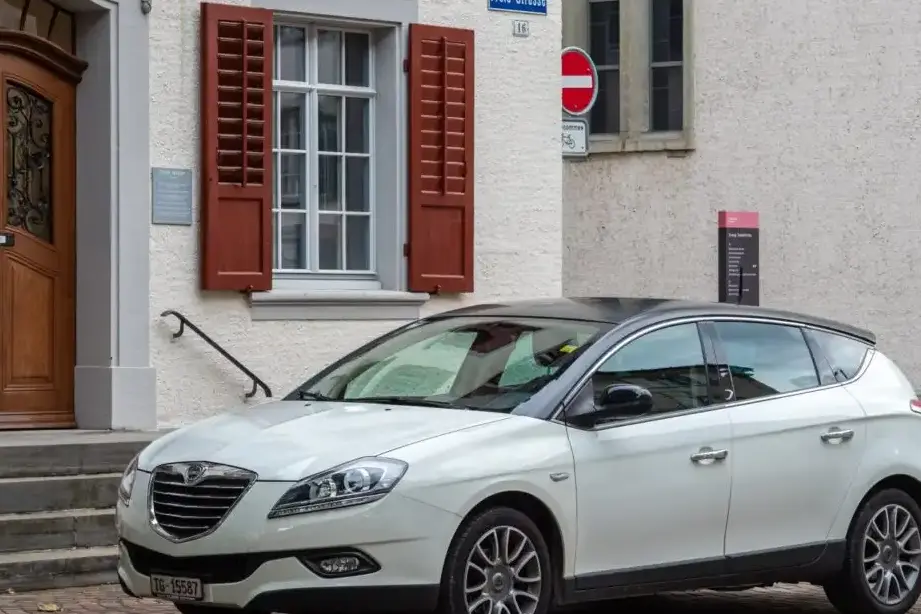
The Lancia Delta III, specifically the 844 series facelift introduced in June 2011, represented a significant attempt to revive the iconic Delta nameplate. This generation, produced through 2014, aimed to blend practicality with a touch of Italian flair. The 1.4 T-Jet 16V (120 hp) LPG variant occupied a crucial position in the Delta lineup as an entry-level offering, designed to appeal to buyers seeking a balance between fuel efficiency, reasonable performance, and a lower purchase price. It was positioned below the more powerful 1.9 T-Jet and the diesel options, targeting a broader, more cost-conscious segment of the market. The Delta III was built on the Fiat C-segment platform, shared with the Fiat Bravo and, with modifications, the Alfa Romeo Giulietta.
Technical Specifications
| Brand | Lancia |
| Model | Delta |
| Generation | Delta III (844, facelift 2011) |
| Type (Engine) | 1.4 T-Jet 16V (120 Hp) LPG |
| Start of production | June, 2011 |
| End of production | 2014 |
| Powertrain Architecture | Internal Combustion engine |
| Body type | Hatchback |
| Seats | 5 |
| Doors | 5 |
| Fuel consumption (economy) – urban (NEDC) | 8.1 l/100 km (29 US mpg, 34.9 UK mpg, 12.3 km/l) |
| Fuel consumption (economy) – urban (LPG) (NEDC) | 10.5 l/100 km |
| Fuel consumption (economy) – extra urban (NEDC) | 5.2 l/100 km (45.2 US mpg, 54.3 UK mpg, 19.2 km/l) |
| Fuel consumption (economy) – extra urban (LPG) (NEDC) | 6.7 l/100 km |
| Fuel consumption (economy) – combined (NEDC) | 6.3 l/100 km (37.3 US mpg, 44.8 UK mpg, 15.9 km/l) |
| Fuel consumption (economy) – combined (LPG) (NEDC) | 8.1 l/100 km |
| CO2 emissions (NEDC) | 131 g/km |
| CO2 emissions (LPG) (NEDC) | 146 g/km |
| Fuel Type | Petrol / LPG |
| Acceleration 0 – 100 km/h | 9.8 sec |
| Acceleration 0 – 62 mph | 9.8 sec |
| Acceleration 0 – 100 km/h (LPG) | 10.5 sec |
| Acceleration 0 – 60 mph (Calculated) | 9.3 sec |
| Maximum speed | 195 km/h (121.17 mph) |
| Emission standard | Euro 5 |
| Weight-to-power ratio | 11 kg/Hp, 90.9 Hp/tonne |
| Weight-to-torque ratio | 6.4 kg/Nm, 156.1 Nm/tonne |
| Power | 120 Hp @ 5000 rpm |
| Power per litre | 87.7 Hp/l |
| Torque | 206 Nm @ 1750 rpm (151.94 lb.-ft. @ 1750 rpm) |
| Engine layout | Front, Transverse |
| Engine Model/Code | 198A4000 |
| Engine displacement | 1368 cm3 (83.48 cu. in.) |
| Number of cylinders | 4 |
| Engine configuration | Inline |
| Cylinder Bore | 72 mm (2.83 in.) |
| Piston Stroke | 84 mm (3.31 in.) |
| Compression ratio | 9.8:1 |
| Number of valves per cylinder | 4 |
| Fuel injection system | Multi-port manifold injection |
| Engine aspiration | Turbocharger, Intercooler |
| Valvetrain | DOHC |
| Engine oil capacity | 2.9 l (3.06 US qt, 2.55 UK qt) |
| Coolant | 6 l (6.34 US qt, 5.28 UK qt) |
| Kerb Weight | 1320 kg (2910.1 lbs.) |
| Trunk (boot) space – minimum | 420 l (14.83 cu. ft.) |
| Trunk (boot) space – maximum | 1190 l (42.02 cu. ft.) |
| Fuel tank capacity | 58 l (15.32 US gal, 12.76 UK gal) |
| Fuel tank capacity (LPG) | 42 l |
| Max. roof load | 80 kg (176.37 lbs.) |
| Permitted trailer load with brakes (12%) | 1300 kg (2866.01 lbs.) |
| Permitted trailer load without brakes | 500 kg (1102.31 lbs.) |
| Permitted towbar download | 60 kg (132.28 lbs.) |
| Length | 4520 mm (177.95 in.) |
| Width | 1797 mm (70.75 in.) |
| Height | 1499 mm (59.02 in.) |
| Wheelbase | 2700 mm (106.3 in.) |
| Front track | 1538 mm (60.55 in.) |
| Rear track | 1531 mm (60.28 in.) |
| Front overhang | 1017 mm (40.04 in.) |
| Rear overhang | 803 mm (31.61 in.) |
| Minimum turning circle | 10.6 m (34.78 ft.) |
| Drivetrain Architecture | ICE, Front wheel drive |
| Drive wheel | Front wheel drive |
| Number of gears and type of gearbox | 6 gears, manual transmission |
| Front suspension | Independent, McPherson with coil spring and anti-roll bar |
| Rear suspension | Transverse stabilizer, Torsion |
| Front brakes | Ventilated discs, 281×26 mm |
| Rear brakes | Disc, 251×10 mm |
| Assisting systems | ABS (Anti-lock braking system) |
| Steering type | Steering rack and pinion |
| Power steering | Electric |
| Tires size | 205/55 R16; 225/45 R17; 225/40 R18 |
| Wheel rims size | 7J x 16; 7J x 17; 7.5J x 18 |
INTRODUCTION
The Lancia Delta III 1.4 T-Jet 16V (120 hp) LPG, launched in June 2011, was a key component of the revitalized Delta range. Built on the Fiat-derived C-segment platform (1HX0/A3), it aimed to offer a more affordable and fuel-efficient entry point into the Delta lineup. The addition of LPG capability was a strategic move to appeal to markets where alternative fuels were gaining popularity and offered tax incentives. This variant was intended to attract buyers who prioritized practicality and running costs over outright performance, offering a comfortable and reasonably equipped hatchback.
Powertrain & Engine Architecture
At the heart of this Delta variant lies the 198A4000 1.4-liter turbocharged four-cylinder engine. This engine, part of Fiat’s T-Jet family, utilizes a multi-point fuel injection system and a single scroll turbocharger with an intercooler. The 16-valve DOHC (Double Overhead Camshaft) configuration contributes to its relatively efficient operation. The LPG conversion is a factory-installed system, integrated with the engine management to seamlessly switch between petrol and autogas. The engine produces 120 horsepower at 5000 rpm and 206 Nm (151.94 lb-ft) of torque at 1750 rpm. The engine is transversely mounted, driving the front wheels. The standard transmission for this model was a 6-speed manual gearbox, optimized for fuel economy and smooth operation.
Driving Characteristics
The 1.4 T-Jet 16V with 120 hp and a manual transmission delivers adequate, though not exhilarating, performance. Acceleration from 0 to 100 km/h (0-62 mph) takes approximately 9.8 seconds. The turbocharger provides a noticeable boost in power, but the engine doesn’t feel particularly stressed when cruising. The gear ratios are tuned for efficiency, meaning the engine operates at lower revolutions during highway driving. Compared to the more powerful 1.9 T-Jet, this variant feels noticeably slower, particularly during overtaking maneuvers. However, the LPG system provides a cost-effective alternative fuel source, slightly impacting performance when running on gas. The steering is light and precise, making it easy to maneuver in urban environments.
Equipment & Trim Levels
The 1.4 T-Jet 16V LPG typically came equipped with a reasonable level of standard features. These included air conditioning, electric front windows, a basic audio system with USB connectivity, and ABS brakes. Interior upholstery was typically cloth, with a functional, if not luxurious, dashboard layout. Optional extras included alloy wheels, a more advanced audio system, rear parking sensors, and climate control. The trim level often dictated the availability of these options, with higher trims offering more standard equipment. Safety features included multiple airbags and electronic stability control.
Chassis & Braking
The Delta III utilized an independent McPherson strut suspension setup at the front, providing a comfortable ride and decent handling. The rear suspension employed a torsion beam arrangement, which prioritized space efficiency and cost-effectiveness. Braking duties were handled by ventilated discs at the front and solid discs at the rear. ABS (Anti-lock Braking System) was standard, enhancing safety during emergency braking situations. The suspension tuning was geared towards comfort rather than sporty handling, making it well-suited for everyday driving. Stabilizer bars were fitted front and rear to reduce body roll during cornering.
Market Reception & Comparison
The 1.4 T-Jet 16V LPG variant was generally well-received as a practical and economical option within the Delta range. Critics praised its fuel efficiency, particularly when running on LPG, and its comfortable ride. However, some reviewers noted its lack of outright performance compared to the more powerful engine options. Compared to the 1.9 T-Jet, the 1.4 offered significantly lower running costs but sacrificed performance. The diesel variants provided even better fuel economy but came with a higher purchase price. The LPG conversion was seen as a positive feature in markets with favorable LPG infrastructure and tax incentives.
Legacy
The Lancia Delta III, despite its attempt to revive a legendary nameplate, ultimately failed to achieve significant sales success. Production ended in 2014. The 1.4 T-Jet 16V LPG variant, while not the most sought-after model, offers a relatively affordable entry point into Delta ownership on the used car market. The engine itself is generally considered reliable, although regular maintenance is crucial. The LPG system requires periodic inspection and servicing to ensure optimal performance and safety. Today, these Deltas are appreciated by enthusiasts who value their unique styling and Italian heritage, offering a distinctive alternative to more mainstream hatchback options.