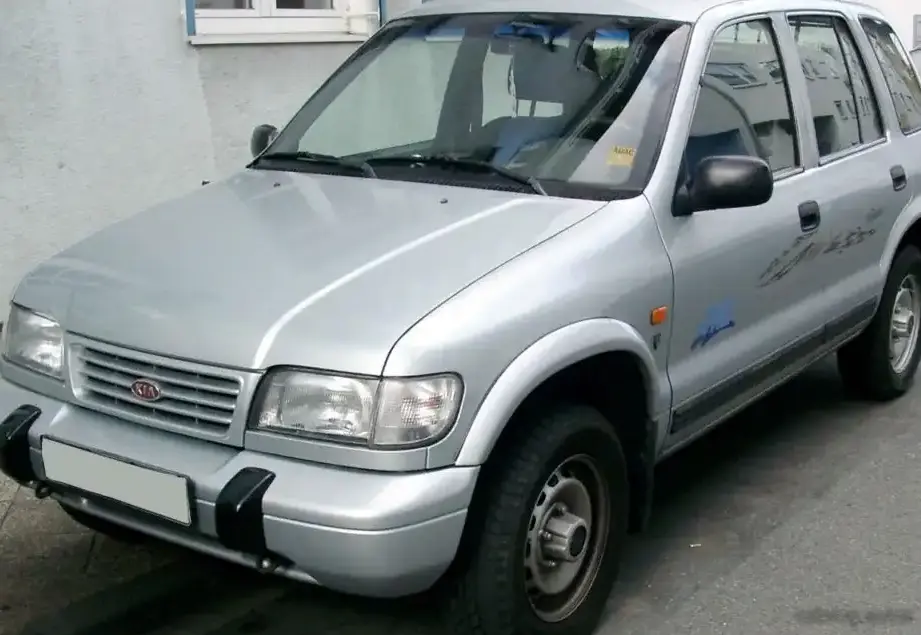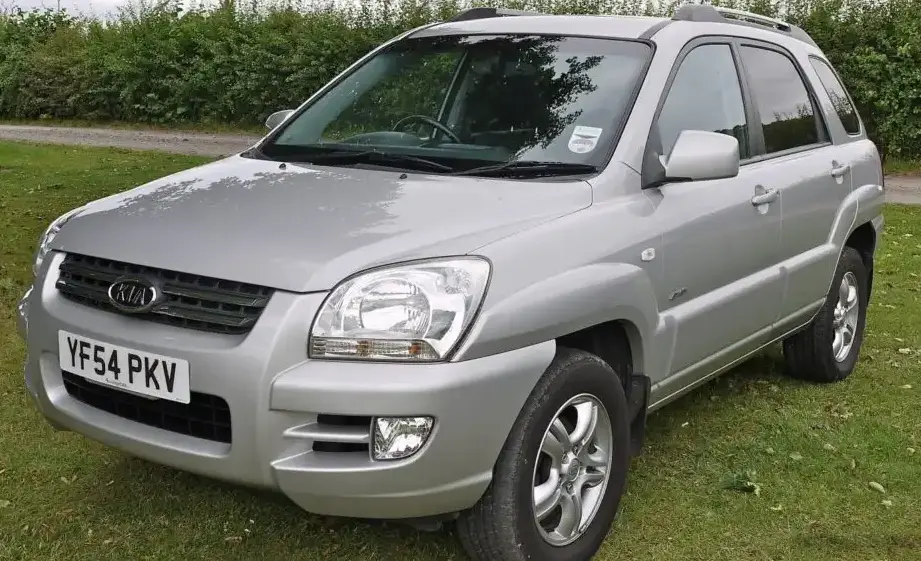
The Kia Sportage Soft Top I 2.0i 16V, produced from 1997 to 2006, represents a unique offering in the early compact SUV market. This variant, characterized by its removable soft top, aimed to blend the practicality of a small SUV with the open-air experience of a convertible. It was primarily marketed in Europe and other regions outside of North America, where the demand for this type of vehicle was stronger. The Sportage Soft Top I was based on the first generation Sportage (codenamed KX-01), sharing its chassis and mechanical components with the hardtop version, but distinguished itself with its distinctive body style. This 2.0-liter, 16-valve engine paired with a five-speed manual transmission occupied a mid-range position within the Sportage lineup, offering a balance between affordability and performance.
Technical Specifications
| Brand | Kia |
| Model | Sportage |
| Generation | Sportage Soft Top I |
| Type (Engine) | 2.0i 16V (128 Hp) |
| Start of production | 1997 |
| End of production | 2006 |
| Powertrain Architecture | Internal Combustion engine |
| Body type | SUV |
| Seats | 4 |
| Doors | 3 |
| Fuel consumption (urban) | 15.4 l/100 km (15.3 US mpg, 18.3 UK mpg, 6.5 km/l) |
| Fuel consumption (extra urban) | 9.4 l/100 km (25 US mpg, 30.1 UK mpg, 10.6 km/l) |
| Fuel consumption (combined) | 11.1 l/100 km (21.2 US mpg, 25.4 UK mpg, 9 km/l) |
| Fuel Type | Petrol (Gasoline) |
| Acceleration 0 – 100 km/h | 14.7 sec |
| Acceleration 0 – 62 mph | 14.7 sec |
| Acceleration 0 – 60 mph | 14 sec |
| Maximum speed | 172 km/h (106.88 mph) |
| Weight-to-power ratio | 11.4 kg/Hp, 88.1 Hp/tonne |
| Weight-to-torque ratio | 8.3 kg/Nm, 120.4 Nm/tonne |
| Power | 128 Hp @ 5300 rpm |
| Power per litre | 64.1 Hp/l |
| Torque | 175 Nm @ 4700 rpm (129.07 lb.-ft. @ 4700 rpm) |
| Engine layout | Front, Longitudinal |
| Engine Model/Code | FE |
| Engine displacement | 1998 cm3 (121.93 cu. in.) |
| Number of cylinders | 4 |
| Engine configuration | Inline |
| Cylinder Bore | 86 mm (3.39 in.) |
| Piston Stroke | 86 mm (3.39 in.) |
| Compression ratio | 9.2:1 |
| Number of valves per cylinder | 4 |
| Fuel injection system | Multi-port manifold injection |
| Engine aspiration | Naturally aspirated engine |
| Engine oil capacity | 4.3 l (4.54 US qt | 3.78 UK qt) |
| Coolant capacity | 7.5 l (7.93 US qt | 6.6 UK qt) |
| Kerb Weight | 1453 kg (3203.32 lbs.) |
| Max. weight | 1850 kg (4078.55 lbs.) |
| Max load | 397 kg (875.24 lbs.) |
| Trunk (boot) space – minimum | 247 l (8.72 cu. ft.) |
| Trunk (boot) space – maximum | 1032 l (36.44 cu. ft.) |
| Fuel tank capacity | 60 l (15.85 US gal | 13.2 UK gal) |
| Length | 4025 mm (158.46 in.) |
| Width | 1764 mm (69.45 in.) |
| Height | 1650 mm (64.96 in.) |
| Wheelbase | 2360 mm (92.91 in.) |
| Front track | 1440 mm (56.69 in.) |
| Rear (Back) track | 1440 mm (56.69 in.) |
| Drive wheel | All wheel drive (4×4) |
| Number of gears and type of gearbox | 5 gears, manual transmission |
| Front suspension | Double wishbone |
| Rear suspension | Spring Strut |
| Front brakes | Ventilated discs |
| Rear brakes | Drum |
| Assisting systems | ABS (Anti-lock braking system) |
| Steering type | Steering rack and pinion |
| Power steering | Hydraulic Steering |
| Tires size | 205/70 R15 |
| Wheel rims size | 7J x 15 |
Powertrain & Engine Architecture
The heart of the Sportage Soft Top I 2.0i 16V is the Kia FE engine, a 1.998-liter inline-four cylinder gasoline engine. This engine, part of Kia’s early engine family, featured a cast iron block and an aluminum cylinder head with dual overhead camshafts (DOHC) and four valves per cylinder. The 16-valve configuration contributed to improved breathing and a relatively high output for its displacement. Fuel delivery was managed by a multi-point fuel injection system, providing precise fuel metering for optimal combustion. The FE engine produced 128 horsepower at 5300 rpm and 175 Nm (129 lb-ft) of torque at 4700 rpm. This power was then sent to all four wheels through a robust five-speed manual transmission. The longitudinal engine layout was typical for all-wheel-drive vehicles of this era, allowing for a more efficient drivetrain configuration.
Driving Characteristics
The 2.0-liter engine, while adequate, didn’t deliver particularly brisk acceleration. The 0-60 mph time of around 14 seconds reflects this. The manual transmission offered drivers more control over the engine’s power band, but the relatively low torque output meant frequent gear changes were necessary, especially when tackling hills or overtaking. Compared to the later 2.4-liter engine options, the 2.0i felt noticeably less powerful. However, it provided a more economical driving experience. The all-wheel-drive system provided enhanced traction in slippery conditions, making it a capable vehicle for varied terrain. The suspension, tuned for comfort, offered a reasonably smooth ride, although body roll was noticeable during cornering.
Equipment & Trim Levels
The Sportage Soft Top I 2.0i 16V typically came with a fairly basic level of equipment, reflecting its position as a relatively affordable SUV. Standard features included power steering, ABS brakes, and a basic audio system. Interior upholstery was typically cloth, and the dashboard featured a functional, if somewhat utilitarian, design. Optional extras included air conditioning, power windows, and upgraded audio systems. The soft top itself was manually operated, requiring physical effort to raise and lower. The interior space was comparable to other compact SUVs of the time, offering comfortable seating for four adults, although rear legroom was somewhat limited.
Chassis & Braking
The Sportage Soft Top I utilized a body-on-frame construction, providing a robust and durable chassis. The front suspension featured a double wishbone setup, while the rear employed a spring strut arrangement. This suspension configuration aimed to balance ride comfort with handling stability. Braking duties were handled by ventilated discs at the front and drum brakes at the rear. While adequate for everyday driving, the braking system lacked the stopping power of more modern vehicles. The all-wheel-drive system was typically a part-time system, allowing drivers to switch between two-wheel drive and four-wheel drive depending on road conditions.
Market Reception & Comparison
The Sportage Soft Top I received mixed reviews. Critics praised its unique styling and all-wheel-drive capability, but noted its relatively modest performance and basic interior. Compared to other SUVs in its class, such as the Suzuki Vitara or the Honda CR-V, the Sportage offered a more rugged aesthetic and a more affordable price point. However, it lacked the refinement and fuel efficiency of some of its competitors. Fuel economy was a notable weakness, with combined fuel consumption averaging around 11.1 l/100 km (21.2 US mpg). Reliability was generally considered to be good, although some owners reported issues with the soft top mechanism and minor electrical problems.
Legacy
The Kia Sportage Soft Top I 2.0i 16V remains a relatively rare and collectible vehicle today. Its unique combination of SUV practicality and convertible fun has garnered a following among enthusiasts. While the powertrain is generally reliable, age-related issues such as corrosion and wear and tear on rubber components are common. Parts availability can be challenging, as many components are specific to this model. Despite these challenges, the Sportage Soft Top I represents a distinctive chapter in Kia’s history and a testament to the brand’s willingness to experiment with unconventional designs. In the used car market, well-maintained examples command a premium, appealing to those seeking a nostalgic and characterful vehicle.