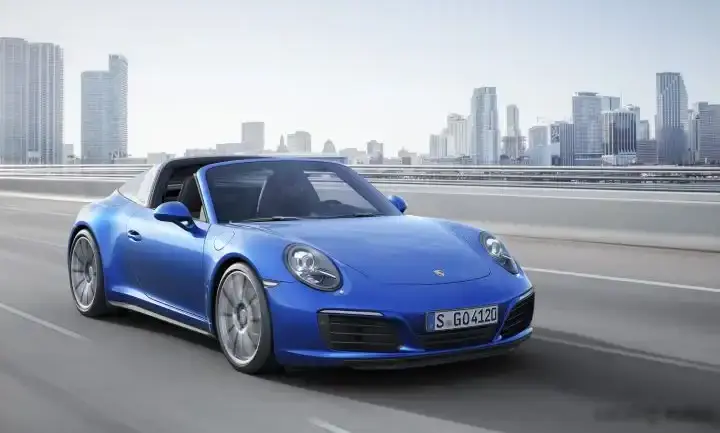
The Porsche 911 Targa 4 GTS 3.0 (991 II), produced from 2017 to 2020, represents a compelling blend of performance, open-air driving enjoyment, and everyday usability within the iconic 911 lineage. Positioned as a high-performance variant of the 991.2 generation Targa, the 4 GTS bridged the gap between the Carrera models and the more focused Turbo variants. It offered a significant step up in power and handling while retaining the unique Targa top mechanism – a nod to Porsche’s heritage. This model is part of the 991.2 series, which introduced significant engine updates including turbocharging across the board, and refinements to the Porsche Communication Management (PCM) system.
Technical Specifications
| Brand | Porsche |
| Model | 911 |
| Generation | 911 Targa (991 II) |
| Type (Engine) | 4 GTS 3.0 (450 Hp) PDK |
| Start of production | 2017 |
| End of production | 2020 |
| Powertrain Architecture | Internal Combustion engine |
| Body type | Targa |
| Seats | 4 |
| Doors | 2 |
| Fuel consumption (economy) – urban | 11.2 l/100 km (21 US mpg, 25.2 UK mpg, 8.9 km/l) |
| Fuel consumption (economy) – extra urban | 7.3 l/100 km (32.2 US mpg, 38.7 UK mpg, 13.7 km/l) |
| Fuel consumption (economy) – combined | 8.7 l/100 km (27 US mpg, 32.5 UK mpg, 11.5 km/l) |
| CO2 emissions | 196 g/km |
| Fuel Type | Petrol (Gasoline) |
| Acceleration 0 – 100 km/h | 3.7 sec |
| Acceleration 0 – 62 mph | 3.7 sec |
| Acceleration 0 – 60 mph | 3.5 sec |
| Acceleration 0 – 200 km/h | 13.2 sec |
| Maximum speed | 306 km/h (190.14 mph) |
| Emission standard | Euro 6 |
| Weight-to-power ratio | 3.6 kg/Hp, 280.4 Hp/tonne |
| Weight-to-torque ratio | 2.9 kg/Nm, 342.7 Nm/tonne |
| Power | 450 Hp @ 6500 rpm |
| Power per litre | 151 Hp/l |
| Torque | 550 Nm @ 2150-5000 rpm (405.66 lb.-ft. @ 2150-5000 rpm) |
| Maximum engine speed | 7500 rpm |
| Engine layout | Rear, Longitudinal |
| Engine Model/Code | MDC.JA |
| Engine displacement | 2981 cm3 (181.91 cu. in.) |
| Number of cylinders | 6 |
| Engine configuration | Boxer |
| Cylinder Bore | 91 mm (3.58 in.) |
| Piston Stroke | 76.4 mm (3.01 in.) |
| Compression ratio | 10:1 |
| Number of valves per cylinder | 4 |
| Fuel injection system | Direct injection |
| Engine aspiration | BiTurbo, Intercooler |
| Engine oil capacity | 8 l (8.45 US qt | 7.04 UK qt) |
| Kerb Weight | 1605 kg (3538.42 lbs.) |
| Max. weight | 2040 kg (4497.43 lbs.) |
| Max load | 435 kg (959.01 lbs.) |
| Trunk (boot) space – maximum | 285 l (10.06 cu. ft.) |
| Fuel tank capacity | 67 l (17.7 US gal | 14.74 UK gal) |
| Length | 4528 mm (178.27 in.) |
| Width | 1852 mm (72.91 in.) |
| Width including mirrors | 1978 mm (77.87 in.) |
| Height | 1291 mm (50.83 in.) |
| Wheelbase | 2450 mm (96.46 in.) |
| Front track | 1539 mm (60.59 in.) |
| Rear (Back) track | 1544 mm (60.79 in.) |
| Drag coefficient (Cd) | 0.32 |
| Minimum turning circle | 11.1 m (36.42 ft.) |
| Drive wheel | All wheel drive (4×4) |
| Number of gears and type of gearbox | 7 gears, automatic transmission PDK |
| Front suspension | Independent type McPherson |
| Rear suspension | Independent multi-link suspension |
| Front brakes | Ventilated discs |
| Rear brakes | Ventilated discs |
| Assisting systems | ABS (Anti-lock braking system) |
| Steering type | Steering rack and pinion |
| Power steering | Electric Steering |
| Tires size | 245/35 ZR 20; 305/30 ZR 20 |
| Wheel rims size | 9J x 20; 12J x 20 |
Powertrain & Engine Architecture
The heart of the 911 Targa 4 GTS is the 3.0-liter twin-turbocharged flat-six engine, designated as the MDC.JA. This engine represents a significant departure from the naturally aspirated engines of previous 911 generations. The twin-turbocharging system utilizes two BorgWarner turbochargers, providing increased power and torque across a wider RPM range. Direct fuel injection is employed for precise fuel delivery and optimized combustion. The engine produces 450 horsepower at 6500 rpm and 550 Nm (405.66 lb-ft) of torque between 2150 and 5000 rpm. The engine’s layout is rear-mounted and longitudinal, a defining characteristic of the 911. The engine oil capacity is 8 liters, and Porsche specifies a particular oil formulation for optimal performance and longevity.
The “PDK” in the model name refers to Porsche’s dual-clutch transmission. This 7-speed automatic transmission offers incredibly fast and smooth gear changes, contributing to the car’s impressive acceleration. The PDK transmission allows for both fully automatic operation and manual gear selection via steering wheel-mounted paddles, providing the driver with a choice between convenience and control. The transmission is specifically tuned for the GTS model to provide quicker response and more aggressive shift points.
Driving Characteristics
The 911 Targa 4 GTS with the PDK transmission delivers a thrilling driving experience. The twin-turbocharged engine provides immediate and substantial power, resulting in a 0-60 mph time of around 3.5 seconds. The all-wheel-drive system ensures excellent traction, particularly in challenging conditions. The PDK transmission’s quick shifts contribute to the car’s responsiveness and overall performance. Compared to the base Carrera models, the GTS offers a noticeably more engaging and powerful driving experience. While not as raw or track-focused as the GT3, the GTS strikes a balance between performance and everyday usability. Compared to the 911 Targa 4S, the GTS offers a more aggressive suspension tune and a slightly more powerful engine.
Equipment & Trim Levels
The 911 Targa 4 GTS came standard with a comprehensive list of features, including a power-retractable Targa top, Porsche Active Suspension Management (PASM), Porsche Torque Vectoring Plus (PTV Plus), and a sport exhaust system. The interior featured sport seats upholstered in leather and Alcantara, a sport steering wheel, and aluminum trim. Optional extras included adaptive cruise control, a Bose sound system, and various customization options for interior and exterior finishes. The GTS trim level generally included features that were optional on lower trims, making it a well-equipped and desirable variant.
Chassis & Braking
The 911 Targa 4 GTS utilizes an independent suspension system with McPherson struts at the front and a multi-link setup at the rear. Porsche Active Suspension Management (PASM) electronically adjusts the damping characteristics based on driving conditions and driver input. The braking system consists of ventilated discs on all four wheels, providing ample stopping power. The GTS model typically features larger brake rotors and calipers compared to the base Carrera models. The all-wheel-drive system distributes power between the front and rear axles, enhancing traction and stability.
Market Reception & Comparison
The 911 Targa 4 GTS was well-received by automotive critics, who praised its performance, handling, and unique Targa top. It was often lauded as a sweet spot in the 911 lineup, offering a compelling combination of performance and open-air driving enjoyment. Fuel economy was reasonable for a high-performance sports car, with combined fuel consumption around 27 US mpg. Reliability has generally been good, although maintenance costs can be high due to the complexity of the engine and drivetrain. Compared to the 911 Targa 4, the GTS offered a significant performance upgrade, while remaining more accessible than the more expensive Turbo models.
Legacy
The 911 Targa 4 GTS (991 II) remains a highly sought-after model in the used car market. Its combination of performance, style, and exclusivity has ensured its continued desirability. The 3.0-liter twin-turbocharged engine has proven to be relatively reliable, although regular maintenance is crucial. The PDK transmission is also known for its durability. As a representative of the 991.2 generation, the Targa 4 GTS embodies Porsche’s commitment to innovation and driving pleasure, and it continues to be appreciated by enthusiasts worldwide.