Technical Specifications
| Brand | Opel |
| Model | Crossland |
| Generation | Crossland X |
| Type (Engine) | 1.5d (120 Hp) Automatic |
| Start of production | July, 2018 |
| End of production | October, 2020 |
| Powertrain Architecture | Internal Combustion engine |
| Body type | SUV |
| Seats | 5 |
| Doors | 5 |
| Fuel consumption (urban) | 4.3-4.4 l/100 km (54.7 – 53.5 US mpg) |
| Fuel consumption (extra urban) | 3.7-3.8 l/100 km (63.6 – 61.9 US mpg) |
| Fuel consumption (combined) | 4 l/100 km (58.8 US mpg) |
| CO2 emissions | 104-105 g/km |
| Fuel Type | Diesel |
| Acceleration 0 – 100 km/h | 11.5 sec |
| Acceleration 0 – 62 mph | 11.5 sec |
| Acceleration 0 – 60 mph | 10.9 sec |
| Maximum speed | 183 km/h (113.71 mph) |
| Emission standard | Euro 6d-Temp |
| Weight-to-power ratio | 10.7 kg/Hp |
| Weight-to-torque ratio | 4.3 kg/Nm |
| Power | 120 Hp @ 3750 rpm |
| Torque | 300 Nm @ 1750 rpm (221.27 lb.-ft. @ 1750 rpm) |
| Engine layout | Front, Transverse |
| Engine Model/Code | D15DTH, F15DTH |
| Engine displacement | 1499 cm3 (91.47 cu. in.) |
| Number of cylinders | 4 |
| Engine configuration | Inline |
| Cylinder Bore | 75 mm (2.95 in.) |
| Piston Stroke | 84.8 mm (3.34 in.) |
| Compression ratio | 16.5:1 |
| Number of valves per cylinder | 4 |
| Fuel injection system | Diesel Commonrail |
| Engine aspiration | Turbocharger, Intercooler |
| Engine oil capacity | 4 l (4.23 US qt | 3.52 UK qt) |
| Kerb Weight | 1286 kg (2835.14 lbs.) |
| Max. weight | 1855 kg (4089.57 lbs.) |
| Max load | 569 kg (1254.43 lbs.) |
| Trunk (boot) space – minimum | 410 l (14.48 cu. ft.) |
| Trunk (boot) space – maximum | 1255 l (44.32 cu. ft.) |
| Fuel tank capacity | 45 l (11.89 US gal | 9.9 UK gal) |
| Max. roof load | 50 kg (110.23 lbs.) |
| Permitted trailer load with brakes (12%) | 870 kg (1918.02 lbs.) |
| Permitted trailer load without brakes | 650 kg (1433 lbs.) |
| Permitted towbar download | 50 kg (110.23 lbs.) |
| Length | 4212 mm (165.83 in.) |
| Width | 1765 mm (69.49 in.) |
| Width including mirrors | 1976 mm (77.8 in.) |
| Height | 1605 mm (63.19 in.) |
| Wheelbase | 2604 mm (102.52 in.) |
| Front track | 1513 mm (59.57 in.) |
| Rear (Back) track | 1491 mm (58.7 in.) |
| Minimum turning circle | 11.2 m (36.75 ft.) |
| Drivetrain Architecture | Front wheel drive |
| Number of gears and type of gearbox | 6 gears, automatic transmission |
| Front brakes | Disc |
| Rear brakes | Disc |
| Tires size | 195/60 R16; 215/50 R17 |
| Wheel rims size | 6.5J x 16; 6.5J x 17 |
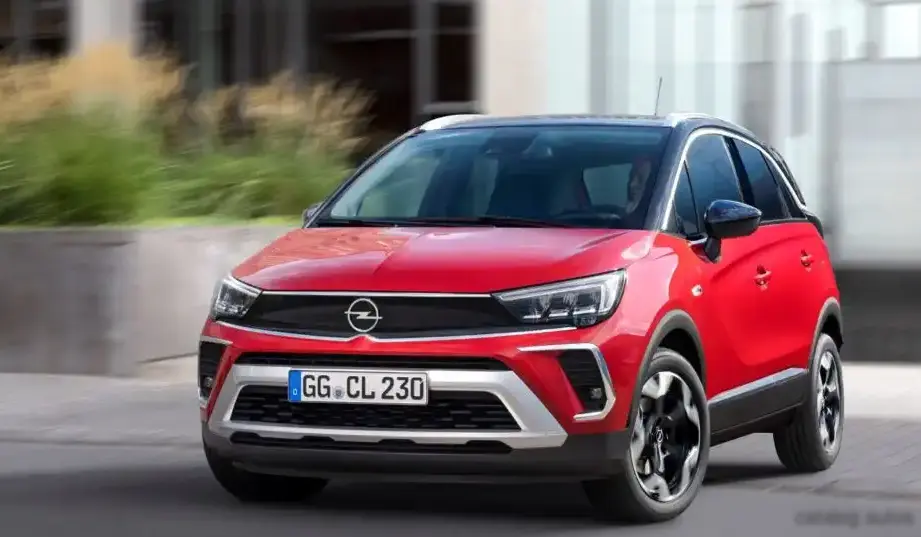
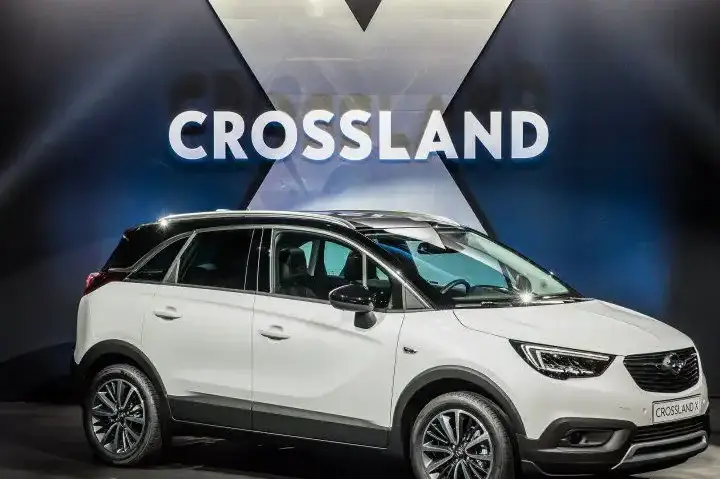
The Opel Crossland X 1.5d (120 Hp) Automatic, produced from July 2018 to October 2020, represents a key variant within the first generation of the Crossland X model line. Positioned as a subcompact crossover SUV, the Crossland X was Opel’s entry into a rapidly growing segment, designed to appeal to families and individuals seeking a practical and versatile vehicle. This particular diesel-powered automatic version aimed to provide a balance between fuel efficiency and ease of driving. Built on the PSA Group’s PF1 platform (shared with the Peugeot 2008 and Citroën C3 Aircross), the Crossland X was intended to compete with established players like the Nissan Juke and Renault Captur in the European market. The 1.5-liter diesel engine with 120 horsepower, coupled with a six-speed automatic transmission, was a mid-range offering, slotting below the more powerful petrol variants and above the base-level engine options.
Powertrain & Engine Architecture
The heart of the Crossland X 1.5d Automatic is the D15DTH or F15DTH engine, a 1.5-liter inline-four cylinder diesel. This engine is a member of Opel/PSA’s DV5 family of diesel engines, known for its relatively compact size and efficiency. It utilizes a common-rail direct injection system, delivering fuel at extremely high pressure for optimized combustion. The engine is turbocharged and intercooled, enhancing power output and torque. The turbocharger provides increased air intake, while the intercooler cools the compressed air, further improving efficiency. The engine boasts 4 valves per cylinder, contributing to improved breathing and performance. The six-speed automatic transmission is a conventional torque converter type, prioritizing smooth shifts and ease of use over outright performance. It’s designed to work in harmony with the engine’s torque curve, providing adequate acceleration and comfortable cruising. The engine’s control unit (ECU) manages fuel injection timing, turbocharger boost, and other parameters to optimize performance and emissions.
Driving Characteristics
The 1.5d (120 Hp) Automatic Crossland X delivers a comfortable, if not particularly sporty, driving experience. With 120 horsepower and 300 Nm (221 lb-ft) of torque, acceleration from 0-60 mph takes around 10.9 seconds, making it adequate for everyday driving but not exceptionally quick. The automatic transmission contributes to a relaxed driving style, particularly in urban environments. Gear changes are generally smooth, although they can sometimes feel slightly hesitant during quick acceleration. The engine’s peak torque is available from 1750 rpm, providing good low-end grunt for overtaking and hill climbing. However, the engine can feel somewhat strained at higher speeds, and the automatic transmission may downshift frequently to maintain momentum. Compared to the manual transmission versions of the same engine, the automatic offers less driver engagement but greater convenience. The higher-output petrol engines provide significantly more spirited performance, while the lower-powered diesel options prioritize fuel economy even further.
Equipment & Trim Levels
The Crossland X 1.5d Automatic was typically offered in several trim levels, including Business Edition, Energy, and Elite. Standard equipment generally included air conditioning, a touchscreen infotainment system with Bluetooth connectivity, cruise control, and a suite of safety features such as ABS, ESP, and multiple airbags. Higher trim levels added features like alloy wheels, parking sensors, a rearview camera, automatic climate control, and upgraded interior upholstery. The interior design is functional and modern, with a focus on practicality. Dashboard materials are generally of good quality, and the layout is intuitive. Optional extras included a panoramic sunroof, heated seats, and a more advanced navigation system. The interior space is well-utilized, offering ample headroom and legroom for passengers.
Chassis & Braking
The Crossland X utilizes a front-wheel-drive chassis with a MacPherson strut suspension at the front and a torsion beam suspension at the rear. This setup provides a good balance between ride comfort and handling. The steering is electrically assisted, offering light and precise control. Braking duties are handled by disc brakes on all four wheels, providing adequate stopping power. ABS (Anti-lock Braking System) and ESP (Electronic Stability Program) are standard features, enhancing safety and stability. The suspension is tuned for comfort, absorbing bumps and imperfections in the road surface effectively. However, the torsion beam rear suspension can sometimes feel less refined than a more sophisticated independent setup, particularly when cornering at higher speeds. Stabilizer bars are fitted to both the front and rear axles to reduce body roll.
Market Reception & Comparison
The Opel Crossland X 1.5d Automatic received generally positive reviews from automotive critics. It was praised for its fuel efficiency, comfortable ride, and practical interior. However, some critics noted that the engine could feel underpowered, particularly when fully loaded or driving uphill. Compared to other trims in the Crossland X lineup, the 1.5d Automatic offered a good compromise between performance and economy. The petrol engines provided more power but consumed more fuel, while the lower-powered diesel options prioritized fuel efficiency above all else. In terms of reliability, the DV5 engine family has a generally good reputation, although some owners have reported issues with the diesel particulate filter (DPF). Fuel economy figures of around 58.8 US mpg (4.0 l/100 km) were competitive for its class.
Legacy
The Opel Crossland X, including the 1.5d Automatic variant, remains a relatively common sight on European roads. The powertrain, while not groundbreaking, has proven to be reasonably reliable, provided it is properly maintained. The 1.5-liter diesel engine is known for its longevity, and the automatic transmission is generally durable. On the used car market, the Crossland X 1.5d Automatic represents a good value proposition for buyers seeking a practical and fuel-efficient crossover SUV. However, potential buyers should be aware of the potential for DPF issues and ensure that the vehicle has been regularly serviced. The Crossland X paved the way for Opel’s continued expansion into the crossover SUV segment, and its success helped to establish the brand as a major player in the European market.