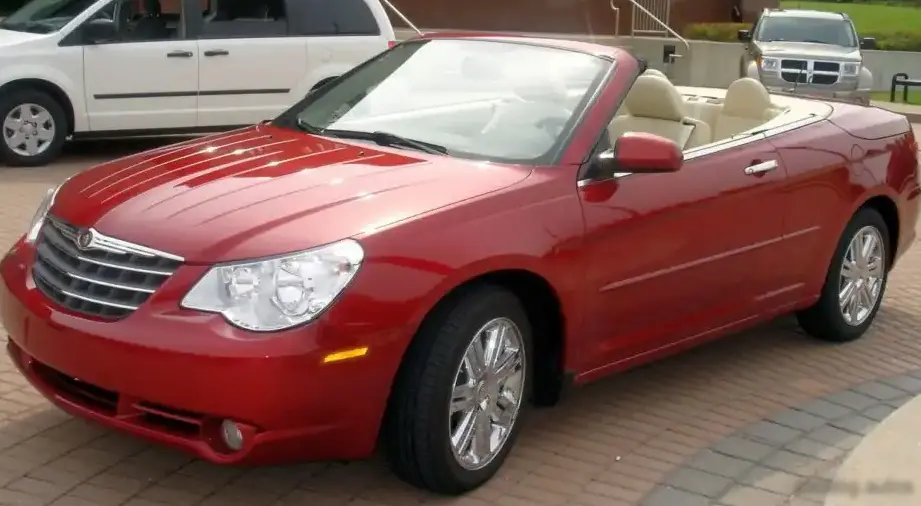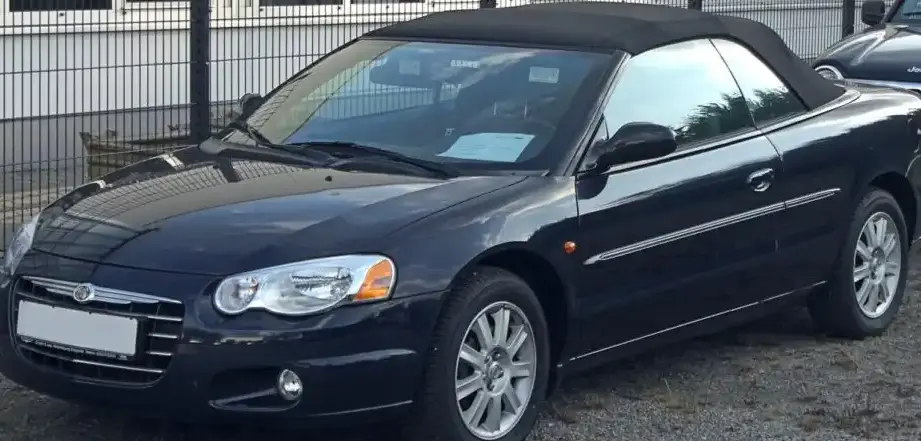
The Chrysler Sebring Convertible (JR) 2.7i V6 24V, produced from 2000 to 2007, represented a key offering in Chrysler’s mid-size convertible lineup. Positioned as a more upscale alternative to some of its domestic competitors, the JR Sebring Convertible aimed to deliver open-air enjoyment with a blend of style and performance. This particular variant, equipped with the 2.7-liter V6 engine and a four-speed automatic transmission, occupied a middle ground within the Sebring Convertible range, offering a balance between affordability and power. It was built on the JR platform, shared with the Dodge Stratus Convertible.
Technical Specifications
| Brand | Chrysler |
| Model | Sebring |
| Generation | Sebring Convertible (JR) |
| Type (Engine) | 2.7 i V6 24V (203 Hp) |
| Start of production | 2000 year |
| End of production | 2007 year |
| Powertrain Architecture | Internal Combustion engine |
| Body type | Cabriolet |
| Seats | 4 |
| Doors | 2 |
| Fuel consumption (urban) | 14.7 l/100 km (16 US mpg, 19.2 UK mpg, 6.8 km/l) |
| Fuel consumption (extra urban) | 8.4 l/100 km (28 US mpg, 33.6 UK mpg, 11.9 km/l) |
| Fuel consumption (combined) | 10.7 l/100 km (22 US mpg, 26.4 UK mpg, 9.3 km/l) |
| Fuel Type | Petrol (Gasoline) |
| Acceleration 0 – 100 km/h | 11.4 sec |
| Acceleration 0 – 62 mph | 11.4 sec |
| Acceleration 0 – 60 mph | 10.8 sec |
| Maximum speed | 210 km/h (130.49 mph) |
| Weight-to-power ratio | 7.8 kg/Hp, 128.1 Hp/tonne |
| Weight-to-torque ratio | 6 kg/Nm, 165.3 Nm/tonne |
| Power | 203 Hp @ 5900 rpm |
| Power per litre | 74.2 Hp/l |
| Torque | 262 Nm @ 4300 rpm (193.24 lb.-ft. @ 4300 rpm) |
| Engine layout | Front, Transverse |
| Engine Model/Code | EER |
| Engine displacement | 2736 cm3 (166.96 cu. in.) |
| Number of cylinders | 6 |
| Engine configuration | V-engine |
| Cylinder Bore | 86 mm (3.39 in.) |
| Piston Stroke | 78.5 mm (3.09 in.) |
| Compression ratio | 9.9:1 |
| Number of valves per cylinder | 4 |
| Fuel injection system | Multi-port manifold injection |
| Engine aspiration | Naturally aspirated engine |
| Valvetrain | DOHC |
| Engine oil capacity | 4.7 l (4.97 US qt | 4.14 UK qt) |
| Coolant capacity | 9 l (9.51 US qt | 7.92 UK qt) |
| Kerb Weight | 1585 kg (3494.33 lbs.) |
| Max. weight | 1990 kg (4387.2 lbs.) |
| Max load | 405 kg (892.87 lbs.) |
| Trunk (boot) space – minimum | 320 l (11.3 cu. ft.) |
| Fuel tank capacity | 65 l (17.17 US gal | 14.3 UK gal) |
| Length | 4920 mm (193.7 in.) |
| Width | 1760 mm (69.29 in.) |
| Height | 1400 mm (55.12 in.) |
| Wheelbase | 2690 mm (105.91 in.) |
| Front track | 1530 mm (60.24 in.) |
| Rear (Back) track | 1530 mm (60.24 in.) |
| Drivetrain Architecture | Front wheel drive |
| Number of gears and type of gearbox | 4 gears, automatic transmission |
| Front suspension | Spring Strut |
| Rear suspension | Coil spring |
| Front brakes | Ventilated discs |
| Rear brakes | Disc |
| Assisting systems | ABS (Anti-lock braking system) |
| Steering type | Steering rack and pinion |
| Power steering | Hydraulic Steering |
| Tires size | 205/60 R16 |
Powertrain & Engine Architecture
The heart of this Sebring Convertible variant is the Chrysler’s 2.7-liter EER V6 engine. This engine, part of Chrysler’s modular engine family, featured a 60-degree V-angle and a double overhead camshaft (DOHC) valvetrain with four valves per cylinder. The engine utilized a multi-port fuel injection system, delivering fuel directly into the intake ports. The 2.7L V6 was known for its relatively smooth operation and decent power output for its size. Paired with this engine was a four-speed automatic transmission, providing convenient shifting for everyday driving. This transmission, while not offering the most advanced gear ratios, was reliable and well-suited to the engine’s torque curve. The automatic transmission was a key factor in appealing to a broader audience seeking ease of use over outright performance.
Driving Characteristics
The 2.7L V6 with the four-speed automatic delivered adequate, though not exhilarating, performance. Acceleration from 0-60 mph took around 10.8 seconds, making it competitive with other mid-size convertibles of the era. The automatic transmission’s gear ratios were geared towards comfortable cruising rather than aggressive acceleration. Power delivery was relatively linear, with peak torque arriving at 4300 rpm. Compared to the more powerful V6 options available on the Sebring Convertible, this 2.7L version felt less responsive, particularly during overtaking maneuvers. However, the automatic transmission made it a more relaxed and user-friendly driving experience, especially in city traffic. The front-wheel-drive configuration provided predictable handling, but lacked the dynamic capabilities of rear-wheel-drive alternatives.
Equipment & Trim Levels
The 2.7i V6 Automatic Sebring Convertible typically came standard with features like air conditioning, power windows and locks, a CD player, and cloth upholstery. Optional extras included leather upholstery, a premium sound system, alloy wheels, and a power-operated convertible top. The specific trim level (LX, LE, Limited) dictated the level of standard equipment. The LE trim, for example, often added features like upgraded interior trim and a more comprehensive sound system. The convertible top was a manually operated soft top, though power-operated versions were available as an option on higher trims.
Chassis & Braking
The JR Sebring Convertible utilized a front-engine, front-wheel-drive layout. The front suspension consisted of a spring strut setup, while the rear employed a coil spring arrangement. Braking duties were handled by ventilated discs at the front and solid discs at the rear. Anti-lock braking system (ABS) was standard, enhancing safety and control during hard braking. The suspension tuning prioritized ride comfort over sporty handling, resulting in a relatively soft and compliant ride quality. Stabilizer bars were included to reduce body roll during cornering, but the overall handling characteristics were geared towards comfortable cruising rather than aggressive driving.
Market Reception & Comparison
The 2.7L V6 Automatic Sebring Convertible was generally well-received as a stylish and affordable convertible option. Critics praised its comfortable ride and user-friendly automatic transmission. However, some reviewers noted that the engine lacked the punch of its larger V6 counterparts. Fuel economy was considered average for the class, with combined figures around 22 US mpg. Compared to the more powerful 3.0L V6 Sebring Convertible, the 2.7L version offered a lower price point but sacrificed some performance. Against competitors like the Mazda MX-5 Miata, the Sebring Convertible offered more interior space and practicality, but lacked the Miata’s sporty handling characteristics.
Legacy
The 2.7L V6 engine, while generally reliable, has been known to exhibit some common issues over time, including oil leaks and potential timing chain wear. The four-speed automatic transmission is also relatively durable, but may require servicing as it ages. Today, the JR Sebring Convertible 2.7i V6 24V can be found on the used car market at relatively affordable prices. It represents a reasonably priced entry point into the world of open-top motoring, offering a blend of style, comfort, and convenience. Its enduring appeal lies in its classic convertible design and relatively simple mechanicals, making it a potentially rewarding project for enthusiasts willing to address any age-related maintenance issues.