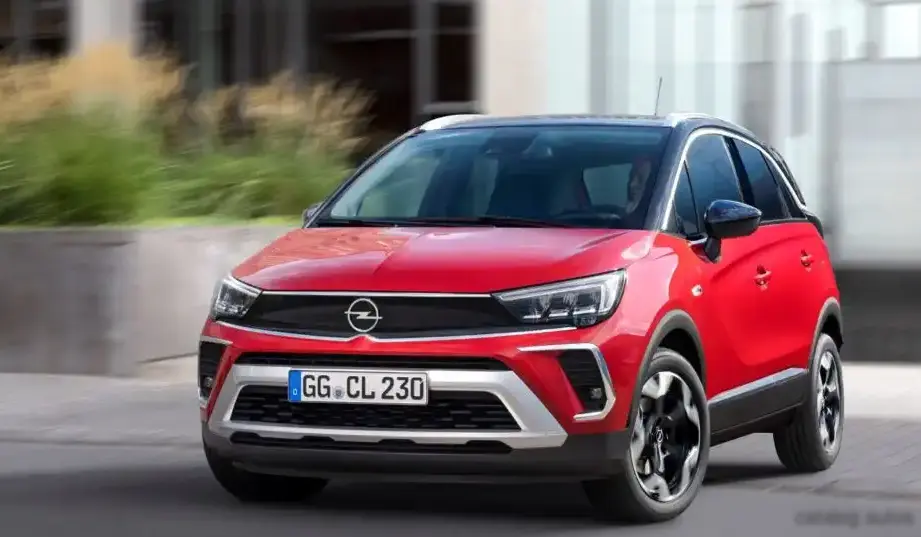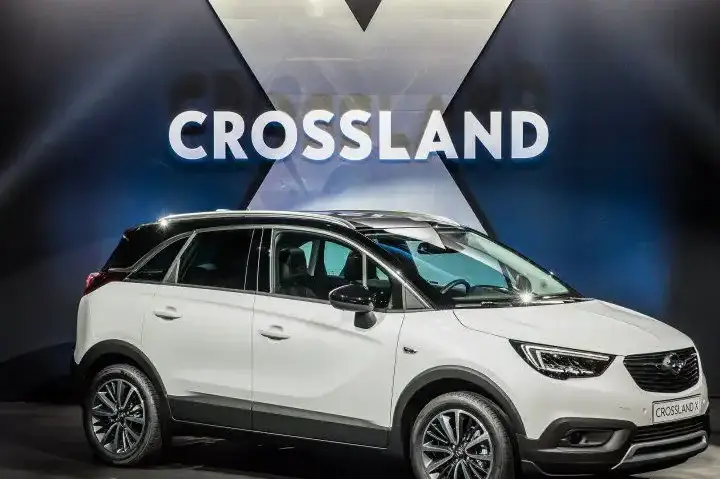
The Opel Crossland X 1.6 (120 hp) was a subcompact SUV produced from June 2017 to June 2018, representing a key variant within the first generation (Crossland X) of the Crossland model line. Positioned as a mainstream offering, it aimed to provide a practical and fuel-efficient option for families and urban drivers. The Crossland X, developed in collaboration with PSA Peugeot Citroën, was Opel’s entry into the rapidly growing B-segment SUV market, competing with vehicles like the Renault Captur and Peugeot 2008. This particular 1.6-liter diesel variant was designed to balance affordability with reasonable performance and economy.
Technical Specifications
| Brand | Opel |
| Model | Crossland |
| Generation | Crossland X |
| Type (Engine) | 1.6 (120 Hp) |
| Start of production | June, 2017 |
| End of production | June, 2018 |
| Powertrain Architecture | Internal Combustion engine |
| Body type | SUV |
| Seats | 5 |
| Doors | 5 |
| Fuel consumption (urban) | 4.6-4.7 l/100 km (51.1 – 50 US mpg) |
| Fuel consumption (extra urban) | 3.6 l/100 km (65.3 US mpg) |
| Fuel consumption (combined) | 4 l/100 km (58.8 US mpg) |
| CO2 emissions | 103-105 g/km |
| Fuel Type | Diesel |
| Acceleration 0 – 100 km/h | 9.9 sec |
| Acceleration 0 – 62 mph | 9.9 sec |
| Acceleration 0 – 60 mph | 9.4 sec |
| Maximum speed | 187 km/h (116.2 mph) |
| Emission standard | Euro 6 |
| Weight-to-power ratio | 10.4 kg/Hp |
| Weight-to-torque ratio | 4.1 kg/Nm |
| Power | 120 Hp @ 3500 rpm |
| Torque | 300 Nm @ 1750 rpm (221.27 lb.-ft. @ 1750 rpm) |
| Engine layout | Front, Transverse |
| Engine Model/Code | B16DTH |
| Engine displacement | 1560 cm3 (95.2 cu. in.) |
| Number of cylinders | 4 |
| Engine configuration | Inline |
| Cylinder Bore | 75 mm (2.95 in.) |
| Piston Stroke | 88.3 mm (3.48 in.) |
| Compression ratio | 17:1 |
| Number of valves per cylinder | 4 |
| Fuel injection system | Diesel Commonrail |
| Engine aspiration | Turbocharger, Intercooler |
| Engine oil capacity | 3.8 l (4.02 US qt | 3.34 UK qt) |
| Coolant | 5.3 l (5.6 US qt | 4.66 UK qt) |
| Kerb Weight | 1244 kg (2742.55 lbs.) |
| Max. weight | 1840 kg (4056.51 lbs.) |
| Max load | 596 kg (1313.96 lbs.) |
| Trunk (boot) space – minimum | 410 l (14.48 cu. ft.) |
| Trunk (boot) space – maximum | 1255 l (44.32 cu. ft.) |
| Fuel tank capacity | 45 l (11.89 US gal | 9.9 UK gal) |
| Max. roof load | 50 kg (110.23 lbs.) |
| Permitted trailer load with brakes (12%) | 870 kg (1918.02 lbs.) |
| Permitted trailer load without brakes | 640 kg (1410.96 lbs.) |
| Permitted towbar download | 50 kg (110.23 lbs.) |
| Length | 4212 mm (165.83 in.) |
| Width | 1765 mm (69.49 in.) |
| Width with mirrors folded | 1825 mm (71.85 in.) |
| Width including mirrors | 1976 mm (77.8 in.) |
| Height | 1605 mm (63.19 in.) |
| Wheelbase | 2604 mm (102.52 in.) |
| Front track | 1513 mm (59.57 in.) |
| Rear (Back) track | 1491 mm (58.7 in.) |
| Minimum turning circle | 11.2 m (36.75 ft.) |
| Drivetrain Architecture | Front wheel drive |
| Number of gears and type of gearbox | 6 gears, manual transmission |
| Front brakes | Ventilated discs |
| Rear brakes | Disc |
| Tires size | 195/60 R16 |
| Wheel rims size | 16 |
Powertrain & Engine Architecture
The Opel Crossland X 1.6 (120 hp) was powered by the B16DTH engine, a 1.6-liter inline-four cylinder diesel engine. This engine was part of Opel’s/Vauxhall’s ‘Whisper Diesel’ family, known for its relatively quiet operation and fuel efficiency. The B16DTH utilized a common rail direct injection system, delivering fuel at high pressure directly into the combustion chamber for improved combustion and reduced emissions. It featured a turbocharger with an intercooler to boost power output and improve throttle response. The engine produced 120 horsepower at 3500 rpm and 300 Nm (221 lb-ft) of torque at 1750 rpm. The engine’s 17:1 compression ratio was typical for a diesel engine, contributing to its efficiency. The Crossland X 1.6 was equipped with a six-speed manual transmission, sending power to the front wheels.
Driving Characteristics
The 1.6-liter diesel engine in the Crossland X provided adequate performance for everyday driving. Acceleration from 0 to 60 mph took approximately 9.4 seconds, and the top speed was 116.2 mph. While not particularly sporty, the engine offered sufficient torque for comfortable cruising and overtaking maneuvers. The six-speed manual transmission allowed drivers to keep the engine in its optimal power band. Compared to higher-output gasoline versions of the Crossland X, the 1.6 diesel prioritized fuel economy over outright performance. The gear ratios were tuned for efficiency, resulting in a relaxed driving experience at highway speeds. The manual transmission offered more driver engagement than the optional automatic, but also required more effort in stop-and-go traffic.
Equipment & Trim Levels
The Crossland X 1.6 (120 hp) typically came with a reasonable level of standard equipment. This included air conditioning, a touchscreen infotainment system with Bluetooth connectivity, power windows and mirrors, and ABS brakes. Higher trim levels added features such as alloy wheels, a rearview camera, parking sensors, and upgraded interior upholstery. Interior materials were generally durable and practical, reflecting the vehicle’s value-oriented positioning. Optional extras included a panoramic sunroof, navigation system, and advanced driver-assistance systems like lane departure warning and automatic emergency braking.
Chassis & Braking
The Crossland X featured a front-wheel-drive chassis with MacPherson strut suspension in the front and a torsion beam suspension in the rear. The torsion beam setup was a cost-effective solution for the rear suspension, prioritizing space efficiency over outright handling performance. The braking system consisted of ventilated discs on the front wheels and solid discs on the rear wheels. ABS (Anti-lock Braking System) was standard. The suspension was tuned for comfort, providing a reasonably smooth ride over most road surfaces. The steering was electrically assisted, offering light and easy steering feel.
Market Reception & Comparison
The Opel Crossland X 1.6 (120 hp) was generally well-received by automotive critics as a practical and fuel-efficient subcompact SUV. It was praised for its spacious interior, comfortable ride, and competitive fuel economy. However, some reviewers noted that the engine could feel underpowered when fully loaded or driving uphill. Compared to the gasoline-powered versions of the Crossland X, the 1.6 diesel offered significantly better fuel economy but less overall performance. It also had a higher purchase price due to the more complex diesel engine technology. The Crossland X competed directly with other popular subcompact SUVs like the Renault Captur, Peugeot 2008, and Nissan Juke.
Legacy
The B16DTH engine, while generally reliable, is known to require regular maintenance, particularly regarding the diesel particulate filter (DPF). Proper servicing and the use of high-quality diesel fuel are crucial to prevent DPF issues. On the used car market, the Crossland X 1.6 (120 hp) represents a relatively affordable and practical option for buyers seeking a fuel-efficient and spacious subcompact SUV. Its longevity and overall reliability are considered good, provided it has been well-maintained. The Crossland X, while not a groundbreaking vehicle, played a significant role in expanding Opel’s presence in the competitive B-segment SUV market.