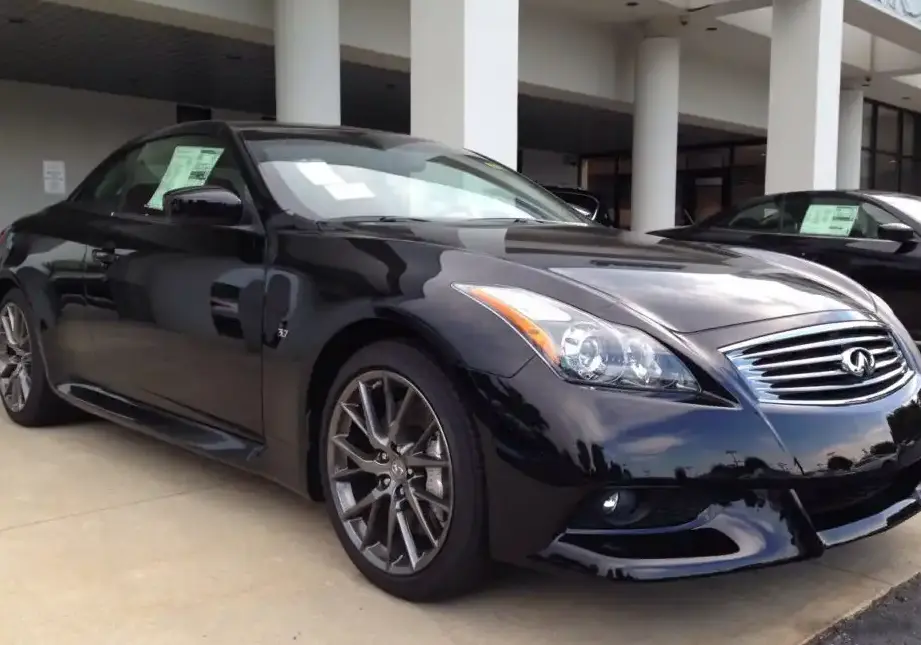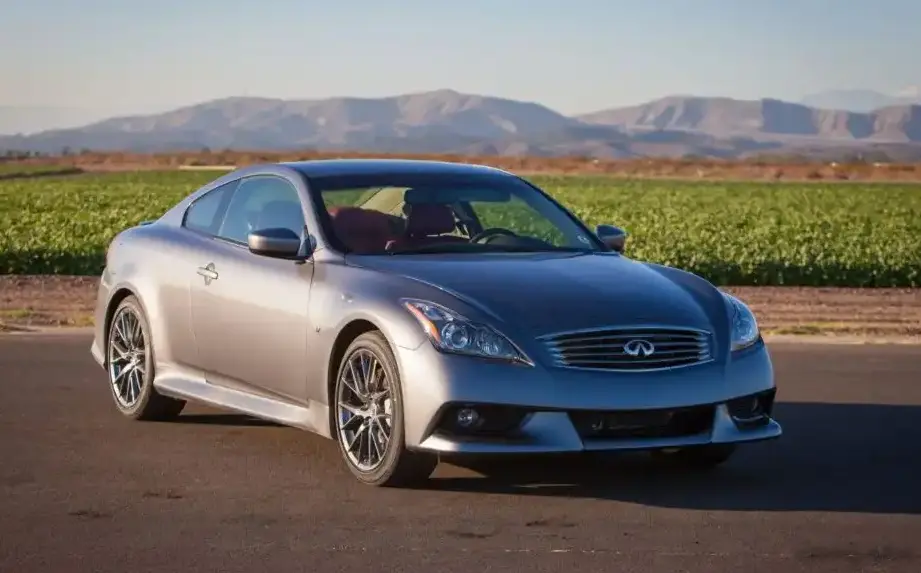
The Infiniti Q60 I Coupe, specifically the 3.7 V6 AWD Automatic variant, represented a significant offering in the luxury sports coupe segment. Produced from 2014 through 2016, this model served as a successor to the G37 Coupe, embodying Infiniti’s commitment to performance and refined styling. Positioned as a mid-range to premium trim within the Q60 lineup, it offered a compelling blend of power, all-weather capability, and relative comfort. The Q60 I Coupe was built on the FM platform, shared with other Nissan/Infiniti models, and aimed to compete with established rivals like the BMW 4 Series, Audi A5, and Lexus RC.
Technical Specifications
| Brand | Infiniti |
| Model | Q60 |
| Generation | Q60 I Coupe |
| Type (Engine) | 3.7 V6 (335 Hp) AWD Automatic |
| Start of production | 2014 |
| End of production | 2016 |
| Powertrain Architecture | Internal Combustion engine |
| Body type | Coupe |
| Seats | 4 |
| Doors | 2 |
| Fuel consumption (urban) | 13.1 l/100 km (18 US mpg, 21.6 UK mpg, 7.6 km/l) |
| Fuel consumption (extra urban) | 9.4 l/100 km (25 US mpg, 30.1 UK mpg, 10.6 km/l) |
| Fuel consumption (combined) | 10.7 l/100 km (22 US mpg, 26.4 UK mpg, 9.3 km/l) |
| Fuel Type | Petrol (Gasoline) |
| Weight-to-power ratio | 5.2 kg/Hp, 192.6 Hp/tonne |
| Weight-to-torque ratio | 4.8 kg/Nm, 210.5 Nm/tonne |
| Power | 335 Hp @ 7000 rpm |
| Power per litre | 90.6 Hp/l |
| Torque | 366 Nm @ 5200 rpm (269.95 lb.-ft. @ 5200 rpm) |
| Engine layout | Front, Longitudinal |
| Engine Model/Code | VQ37VHR |
| Engine displacement | 3696 cm3 (225.54 cu. in.) |
| Number of cylinders | 6 |
| Engine configuration | V-engine |
| Cylinder Bore | 95.5 mm (3.76 in.) |
| Piston Stroke | 86 mm (3.39 in.) |
| Compression ratio | 11:1 |
| Number of valves per cylinder | 4 |
| Fuel injection system | Multi-port manifold injection |
| Engine aspiration | Naturally aspirated engine |
| Valvetrain | DOHC |
| Engine oil capacity | 4.9 l (5.18 US qt | 4.31 UK qt) |
| Coolant | 8.5 l (8.98 US qt | 7.48 UK qt) |
| Kerb Weight | 1739 kg (3833.84 lbs.) |
| Max. weight | 2191 kg (4830.33 lbs.) |
| Max load | 452 kg (996.49 lbs.) |
| Fuel tank capacity | 75 l (19.81 US gal | 16.5 UK gal) |
| Length | 4651 mm (183.11 in.) |
| Width | 1824 mm (71.81 in.) |
| Height | 1405 mm (55.31 in.) |
| Wheelbase | 2850 mm (112.2 in.) |
| Front track | 1544 mm (60.79 in.) |
| Rear track | 1560 mm (61.42 in.) |
| Drag coefficient (Cd) | 0.31 |
| Minimum turning circle | 11.2 m (36.75 ft.) |
| Drive wheel | All wheel drive (4×4) |
| Number of gears | 7 |
| Gearbox type | Automatic transmission |
| Front brakes | Ventilated discs |
| Rear brakes | Ventilated discs |
| Assisting systems | ABS (Anti-lock braking system) |
| Steering type | Steering rack and pinion |
| Power steering | Electric Steering |
| Tires size | 225/50 R18 94V |
| Wheel rims size | 18 |
Powertrain & Engine Architecture
At the heart of the Q60 3.7 AWD Automatic lies the VQ37VHR 3.7-liter V6 engine. This engine is a member of Nissan’s highly regarded VQ engine family, known for its smooth operation, reliability, and strong performance. The “VHR” designation stands for “Variable Valve Timing and lift with high response.” This engine utilizes continuously variable valve timing and lift on both the intake and exhaust valves, optimizing performance across the rev range. It features a multi-port fuel injection system and a compression ratio of 11:1. The engine produces 335 horsepower at 7000 rpm and 270 lb-ft of torque at 5200 rpm. The power is then sent to all four wheels via a seven-speed automatic transmission. This transmission, while not offering the quickest shifts, provides smooth and predictable gear changes, well-suited for both daily driving and spirited performance. The all-wheel-drive system employs a rear-biased setup, enhancing handling characteristics and providing improved traction in various conditions.
Driving Characteristics
The Q60 3.7 AWD Automatic delivers a confident and engaging driving experience. While not as overtly sporty as some of its European competitors, it offers a comfortable ride and ample power for most driving situations. The automatic transmission is programmed for smooth shifts, prioritizing comfort over aggressive downshifts. Acceleration is brisk, with the Q60 capable of reaching 60 mph in around 5.5 seconds. The all-wheel-drive system provides excellent grip, particularly in inclement weather. Compared to the rear-wheel-drive Q60 models, the AWD variant offers increased stability and predictability. The 3.7-liter V6 provides a linear power delivery, making it easy to modulate throttle inputs. However, compared to the manual transmission versions, the automatic does slightly diminish the sense of driver involvement.
Equipment & Trim Levels
The Q60 3.7 AWD Automatic typically came well-equipped, reflecting its positioning as a premium coupe. Standard features included leather upholstery, heated front seats, a power-adjustable driver’s seat, a rearview camera, a premium audio system, and automatic climate control. Optional extras included a navigation system, a sunroof, upgraded leather, and a suite of driver-assistance features such as lane departure warning and blind-spot monitoring. Interior trim options varied, with choices ranging from aluminum accents to wood grain finishes. The dashboard layout was driver-focused, with intuitive controls and a clear instrument cluster.
Chassis & Braking
The Q60 I Coupe utilizes a front-engine, rear-wheel-drive (with AWD options) chassis layout. The suspension consists of independent double wishbones at all four corners, providing a comfortable ride and good handling characteristics. The AWD variant typically featured slightly stiffer spring rates to compensate for the added weight of the all-wheel-drive system. Braking duties are handled by ventilated discs at all four corners, providing ample stopping power. The Q60 also incorporates an Anti-lock Braking System (ABS) and Electronic Brake-force Distribution (EBD) for enhanced safety.
Market Reception & Comparison
The Infiniti Q60 3.7 AWD Automatic received generally positive reviews from automotive critics. It was praised for its powerful engine, comfortable ride, and well-appointed interior. However, some critics noted that the handling wasn’t as sharp as some of its European rivals. Fuel economy was also a point of concern, with the Q60’s combined fuel consumption of 22 mpg being relatively low for its class. Compared to the Q60 3.7 RWD, the AWD variant offered increased traction and stability but came with a slight penalty in fuel economy and price. The Q60 also faced competition from the Lexus RC 350 AWD, which offered a similar blend of luxury and performance.
Legacy
The VQ37VHR engine, in general, has proven to be a remarkably durable and reliable powerplant. The Q60 3.7 AWD Automatic, when properly maintained, is known for its longevity. Common maintenance items include regular oil changes, coolant flushes, and spark plug replacements. While the seven-speed automatic transmission is generally reliable, some owners have reported minor issues with shift quality as the vehicle ages. On the used car market, the Q60 3.7 AWD Automatic remains a popular choice for buyers seeking a stylish and powerful coupe. Its combination of performance, luxury, and all-weather capability continues to appeal to a wide range of drivers.