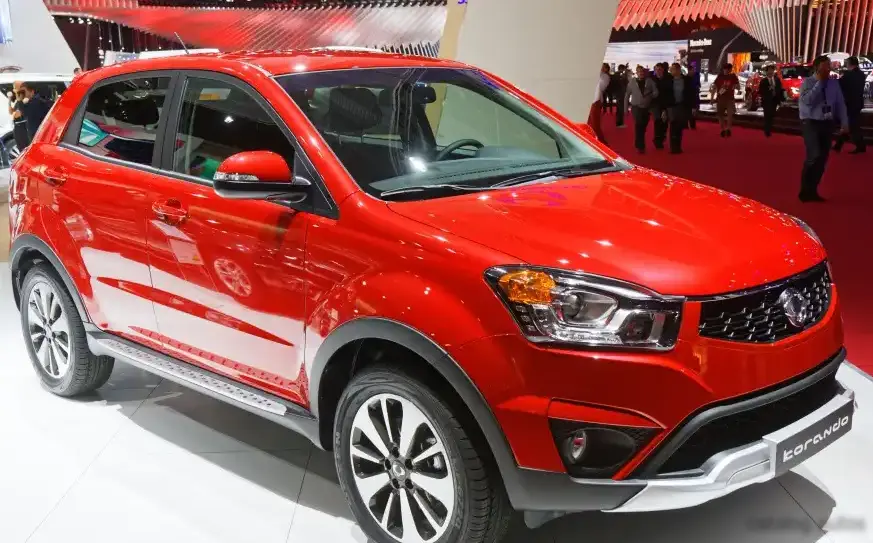
The SsangYong Korando III (C), particularly the facelifted version introduced in 2013, represented a significant step forward for the South Korean automaker in terms of design, refinement, and technology. Produced from 2013 to 2017, this generation Korando aimed to compete more effectively in the increasingly popular compact SUV segment, primarily in the European market. The 2.2 e-XDi variant, producing 178 horsepower and equipped with all-wheel drive (AWD), was positioned as a mid-range offering, balancing performance, fuel efficiency, and practicality. It served as a key model in SsangYong’s lineup, offering a diesel-powered, AWD option for buyers seeking a capable and versatile vehicle.
Technical Specifications
| Brand | SsangYong |
| Model | Korando |
| Generation | Korando III (C, facelift 2013) |
| Type (Engine) | 2.2 e-XDi (178 Hp) AWD |
| Start of production | 2013 |
| End of production | 2017 |
| Powertrain Architecture | Internal Combustion engine |
| Body type | SUV |
| Seats | 5 |
| Doors | 5 |
| Fuel consumption (urban) | 7.2 l/100 km (32.7 US mpg) |
| Fuel consumption (extra urban) | 5 l/100 km (47 US mpg) |
| Fuel consumption (combined) | 5.8 l/100 km (40.6 US mpg) |
| CO2 emissions | 152 g/km |
| Fuel Type | Diesel |
| Maximum speed | 185 km/h (114.95 mph) |
| Emission standard | Euro 6 |
| Weight-to-power ratio | 9.5 kg/Hp |
| Weight-to-torque ratio | 4.2 kg/Nm |
| Power | 178 Hp @ 4000 rpm |
| Torque | 400 Nm @ 1400-2800 rpm (295.02 lb.-ft.) |
| Engine layout | Front, Longitudinal |
| Engine Model/Code | D22DTR |
| Engine displacement | 2157 cm3 (131.63 cu. in.) |
| Number of cylinders | 4 |
| Engine configuration | Inline |
| Cylinder Bore | 86.2 mm (3.39 in.) |
| Piston Stroke | 92.4 mm (3.64 in.) |
| Compression ratio | 15.5:1 |
| Number of valves per cylinder | 4 |
| Fuel injection system | Diesel Commonrail |
| Engine aspiration | Turbocharger, Intercooler |
| Engine oil capacity | 6 l (6.34 US qt | 5.28 UK qt) |
| Coolant | 8.5 l (8.98 US qt | 7.48 UK qt) |
| Kerb Weight | 1688 kg (3721.4 lbs.) |
| Max. weight | 2260 kg (4982.45 lbs.) |
| Max load | 572 kg (1261.04 lbs.) |
| Trunk (boot) space – minimum | 486 l (17.16 cu. ft.) |
| Trunk (boot) space – maximum | 1312 l (46.33 cu. ft.) |
| Fuel tank capacity | 57 l (15.06 US gal | 12.54 UK gal) |
| Permitted trailer load with brakes (12%) | 2000 kg (4409.25 lbs.) |
| Permitted trailer load without brakes | 750 kg (1653.47 lbs.) |
| Length | 4410 mm (173.62 in.) |
| Width | 1830 mm (72.05 in.) |
| Height | 1675 mm (65.94 in.) |
| Wheelbase | 2650 mm (104.33 in.) |
| Front track | 1573 mm (61.93 in.) |
| Rear track | 1558 mm (61.34 in.) |
| Front overhang | 920 mm (36.22 in.) |
| Rear overhang | 840 mm (33.07 in.) |
| Ride height (ground clearance) | 180 mm (7.09 in.) |
| Minimum turning circle | 10.6 m (34.78 ft.) |
| Drive wheel | All wheel drive (4×4) |
| Number of gears and type of gearbox | 6 gears, manual transmission |
| Front brakes | Ventilated discs |
| Rear brakes | Disc |
INTRODUCTION
The 2013 facelift of the SsangYong Korando III brought with it revised styling, improved interior materials, and updated technology. The 2.2 e-XDi AWD model was a key component of this refresh, offering a compelling package for buyers seeking a practical and capable SUV. Built on the Korando’s robust platform, this variant aimed to provide a balance between on-road comfort and off-road capability. The ‘e-XDi’ designation signified SsangYong’s advanced diesel technology, focusing on efficiency and reduced emissions. This model was primarily targeted towards European markets where diesel SUVs were highly popular, offering a competitive alternative to established players like the Kia Sportage and Hyundai ix35.
Powertrain & Engine Architecture
At the heart of the Korando 2.2 e-XDi AWD lies the D22DTR engine, a 2.2-liter inline-four cylinder diesel. This engine utilizes a common-rail direct injection system, delivering fuel directly into the combustion chamber at extremely high pressure for improved combustion efficiency and reduced noise. A turbocharger with an intercooler further enhances performance by forcing more air into the engine, boosting power and torque. The engine produces 178 horsepower at 4000 rpm and a substantial 400 Nm (295 lb-ft) of torque between 1400 and 2800 rpm. This broad torque curve provides strong pulling power, particularly useful for towing or navigating challenging terrain. The engine features a compression ratio of 15.5:1 and 16 valves (four per cylinder). The six-speed manual transmission was standard, offering precise gear changes and contributing to the vehicle’s overall efficiency. The all-wheel-drive system is typically a part-time system, engaging the rear wheels when traction is needed, enhancing stability and off-road performance.
Driving Characteristics
The Korando 2.2 e-XDi AWD delivers a competent and comfortable driving experience. The engine’s strong low-end torque makes it feel responsive in everyday driving situations, providing ample power for overtaking and climbing hills. While not a sports SUV, the 178 horsepower output is sufficient for most drivers. The six-speed manual transmission allows for good control over the engine’s power band. Compared to the lower-powered 2.0-liter diesel variants, the 2.2 e-XDi offers noticeably more performance, especially when fully loaded or towing. The AWD system provides enhanced grip and stability, particularly on slippery surfaces. However, the Korando’s relatively high weight (1688 kg) does impact its agility, and it doesn’t feel as nimble as some of its lighter competitors. The suspension is tuned for comfort, absorbing bumps and imperfections in the road well, but this can result in some body roll during cornering.
Equipment & Trim Levels
The 2.2 e-XDi AWD Korando typically came well-equipped, even in base trim. Standard features often included air conditioning, power windows and mirrors, a CD/MP3 stereo system, and alloy wheels. Higher trim levels added features such as leather upholstery, a sunroof, a navigation system, and parking sensors. Safety features included ABS brakes, electronic stability control, and multiple airbags. Interior materials were generally of good quality, although not as premium as some of its rivals. The dashboard layout is functional and straightforward, with easy-to-use controls. The spacious cabin offers comfortable seating for five adults, and the large trunk provides ample cargo space (486-1312 liters depending on the rear seats being up or folded down).
Chassis & Braking
The Korando III utilizes a body-on-frame construction, providing a robust and durable chassis. The front suspension consists of MacPherson struts, while the rear suspension features a multi-link setup. This combination provides a good balance between ride comfort and handling. The steering is a rack-and-pinion system with electric power assistance, offering a light and precise feel. Braking duties are handled by ventilated discs at the front and solid discs at the rear. ABS (Anti-lock Braking System) is standard, enhancing braking performance and stability. The Korando’s relatively high ground clearance (180 mm) contributes to its off-road capability.
Market Reception & Comparison
The SsangYong Korando 2.2 e-XDi AWD received generally positive reviews from automotive critics. It was praised for its spacious interior, strong diesel engine, and capable AWD system. However, it was also criticized for its somewhat unrefined ride and less-than-stellar fuel economy compared to some of its competitors. Compared to the 2.0-liter diesel variants, the 2.2 e-XDi offered a significant performance upgrade, but at a higher price point. Against rivals like the Kia Sportage and Hyundai ix35, the Korando offered a more rugged and utilitarian appeal, but lacked the brand recognition and refinement of its Korean counterparts. Reliability reports suggest that the D22DTR engine is generally durable, but regular maintenance is crucial to prevent issues.
Legacy
The SsangYong Korando III (C) 2.2 e-XDi AWD remains a relatively affordable and capable SUV in the used car market. The D22DTR engine, when properly maintained, is known for its longevity and reliability. However, potential buyers should be aware of the potential for diesel particulate filter (DPF) issues, particularly if the vehicle has been primarily used for short trips. The Korando’s robust construction and capable AWD system make it a good choice for buyers seeking a practical and versatile vehicle for all-weather conditions. While it may not offer the same level of refinement or brand prestige as some of its rivals, the Korando 2.2 e-XDi AWD represents a solid value proposition for those seeking a capable and affordable SUV.