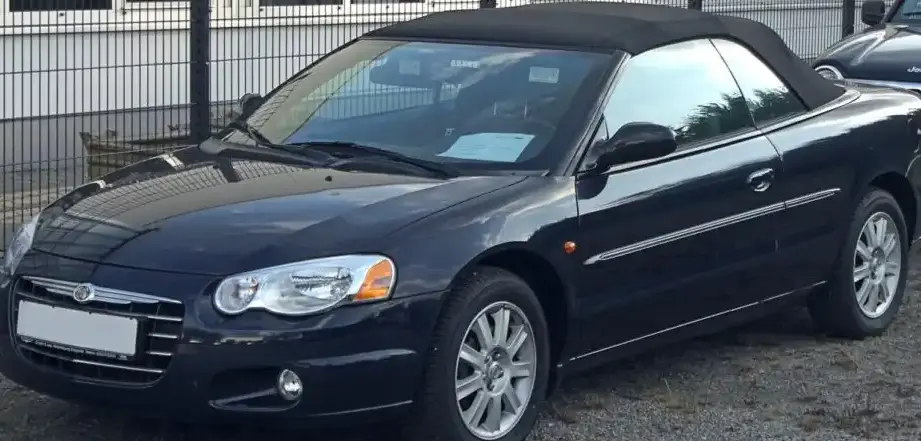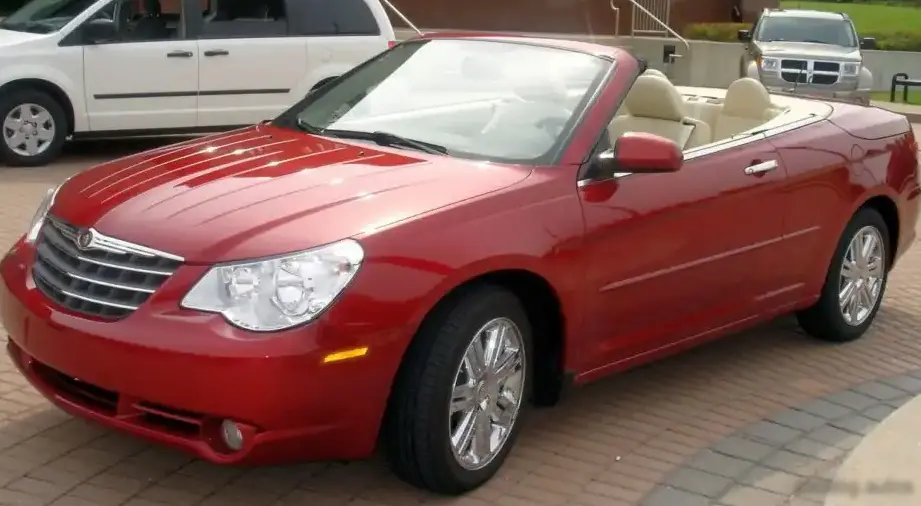
The Chrysler Sebring Convertible (JS) 2.4i 16V Automatic, produced between 2007 and 2010, represented a mid-cycle offering within the second generation of the Sebring convertible. Positioned as a mainstream, affordable open-air vehicle, it aimed to provide a balance of style, comfort, and convenience. This variant occupied a middle ground in the Sebring Convertible lineup, slotting between the base 2.0L engine and the more powerful 2.7L V6 options. It was primarily marketed towards buyers seeking a stylish convertible experience without the higher price tag or performance focus of the V6 models. The JS generation Sebring Convertible was built on the Chrysler RS platform, shared with other Chrysler and Dodge models of the era.
Technical Specifications
| Brand | Chrysler |
| Model | Sebring |
| Generation | Sebring Convertible (JS) |
| Type (Engine) | 2.4i 16V (172 Hp) Automatic |
| Start of production | 2007 |
| End of production | 2010 |
| Powertrain Architecture | Internal Combustion engine |
| Body type | Cabriolet |
| Seats | 4 |
| Doors | 2 |
| Fuel consumption (urban) | 11.8 l/100 km (19.9 US mpg) |
| Fuel consumption (extra urban) | 8.1 l/100 km (29 US mpg) |
| Fuel Type | Petrol (Gasoline) |
| Emission standard | Euro 5 |
| Power | 172 Hp @ 5200 rpm |
| Torque | 222 Nm @ 4000 rpm (163.74 lb.-ft. @ 4000 rpm) |
| Engine layout | Front, Transverse |
| Engine Model/Code | EDG |
| Engine displacement | 2429 cm3 (148.23 cu. in.) |
| Number of cylinders | 4 |
| Engine configuration | Inline |
| Cylinder Bore | 87.5 mm (3.44 in.) |
| Piston Stroke | 101 mm (3.98 in.) |
| Compression ratio | 9.4:1 |
| Number of valves per cylinder | 4 |
| Fuel injection system | Multi-port manifold injection |
| Engine aspiration | Naturally aspirated engine |
| Valvetrain | DOHC |
| Engine oil capacity | 4.26 l (4.5 US qt | 3.75 UK qt) |
| Coolant | 7.3 l (7.71 US qt | 6.42 UK qt) |
| Fuel tank capacity | 64 l (16.91 US gal | 14.08 UK gal) |
| Length | 4850 mm (190.94 in.) |
| Width | 1843 mm (72.56 in.) |
| Height | 1497 mm (58.94 in.) |
| Wheelbase | 2765 mm (108.86 in.) |
| Drivetrain Architecture | Front wheel drive |
| Number of gears and type of gearbox | 4 gears, automatic transmission |
| Front suspension | Independent type McPherson |
| Rear suspension | Several levers and rods |
| Front brakes | Ventilated discs |
| Rear brakes | Disc |
| Assisting systems | ABS (Anti-lock braking system) |
| Steering type | Steering rack and pinion |
| Power steering | Hydraulic Steering |
Powertrain & Engine Architecture
The heart of the Sebring Convertible 2.4i was the Chrysler EDG engine, a 2.4-liter inline-four cylinder powerplant. This engine utilized a dual overhead camshaft (DOHC) valvetrain with four valves per cylinder, contributing to its relatively efficient breathing. Fuel delivery was managed by a multi-port fuel injection system, providing precise fuel metering for optimal combustion. The engine produced 172 horsepower at 5200 rpm and 222 Nm (163.74 lb-ft) of torque at 4000 rpm. The engine’s design prioritized smooth operation and adequate power for everyday driving rather than outright performance. Paired with the engine was a four-speed automatic transmission. While not the most modern transmission available at the time, it provided convenient and relatively smooth gear changes, catering to the target audience’s preference for ease of use. The transmission was tuned for comfortable cruising and acceptable acceleration.
Driving Characteristics
The 2.4L engine and four-speed automatic combination in the Sebring Convertible delivered a driving experience focused on comfort and ease. Acceleration was adequate for merging onto highways and navigating city streets, but it wasn’t particularly brisk. The automatic transmission’s gear ratios were optimized for fuel efficiency and smooth transitions, rather than aggressive downshifts or quick acceleration. Compared to the 2.7L V6 models, the 2.4L felt noticeably less powerful, especially when fully loaded with passengers or cargo. However, the 2.4L offered better fuel economy and a lighter front-end feel, which some drivers appreciated. The steering was light and easy, making maneuvering in tight spaces simple, but it lacked the precision and feedback found in more performance-oriented vehicles.
Equipment & Trim Levels
The Sebring Convertible 2.4i typically came standard with features such as air conditioning, power windows and locks, a CD player with auxiliary input, and a basic cloth interior. Safety features included ABS brakes and front airbags. Optional extras included leather upholstery, a premium sound system, alloy wheels, and a power-operated convertible top. The trim level often dictated the availability of these options. Higher trim levels, such as the Limited, included more standard features and offered a more luxurious experience. The interior design was generally functional and straightforward, with a focus on usability rather than high-end aesthetics.
Chassis & Braking
The Sebring Convertible utilized an independent McPherson strut suspension in the front and a multi-link suspension in the rear. This setup aimed to provide a comfortable ride while maintaining reasonable handling characteristics. The front brakes were ventilated discs, offering good stopping power, while the rear brakes were solid discs. The steering system employed a hydraulic power steering rack and pinion, providing assisted steering with a relatively light feel. Stabilizer bars were included both front and rear to reduce body roll during cornering. The suspension tuning prioritized ride comfort over sporty handling, making it well-suited for cruising and everyday driving.
Market Reception & Comparison
The Sebring Convertible 2.4i was generally well-received as an affordable and stylish convertible option. Critics praised its comfortable ride and user-friendly features, but noted that its performance was not particularly exciting. Compared to the V6 models, the 2.4L offered significantly better fuel economy, achieving around 19-29 mpg depending on driving conditions. However, the V6 models provided a more engaging driving experience and quicker acceleration. In terms of reliability, the 2.4L engine was generally considered to be more reliable than the 2.7L V6, which was known to have some issues with timing chain tensioners. The Sebring Convertible competed with other affordable convertibles such as the Mazda MX-5 Miata and the Volkswagen Eos.
Legacy
The Chrysler Sebring Convertible 2.4i 16V Automatic, while not a standout performer, remains a relatively affordable and accessible entry point into the world of open-top motoring. The EDG engine, while not known for exceptional longevity, proved to be reasonably durable with proper maintenance. Today, these vehicles can be found on the used car market at attractive price points. Common issues include wear and tear on convertible top mechanisms and potential for corrosion in areas exposed to harsh weather. However, with careful inspection and maintenance, these Sebring Convertibles can provide years of enjoyable driving. The model represents a specific era of Chrysler design and engineering, offering a glimpse into the company’s efforts to compete in the mainstream convertible segment.