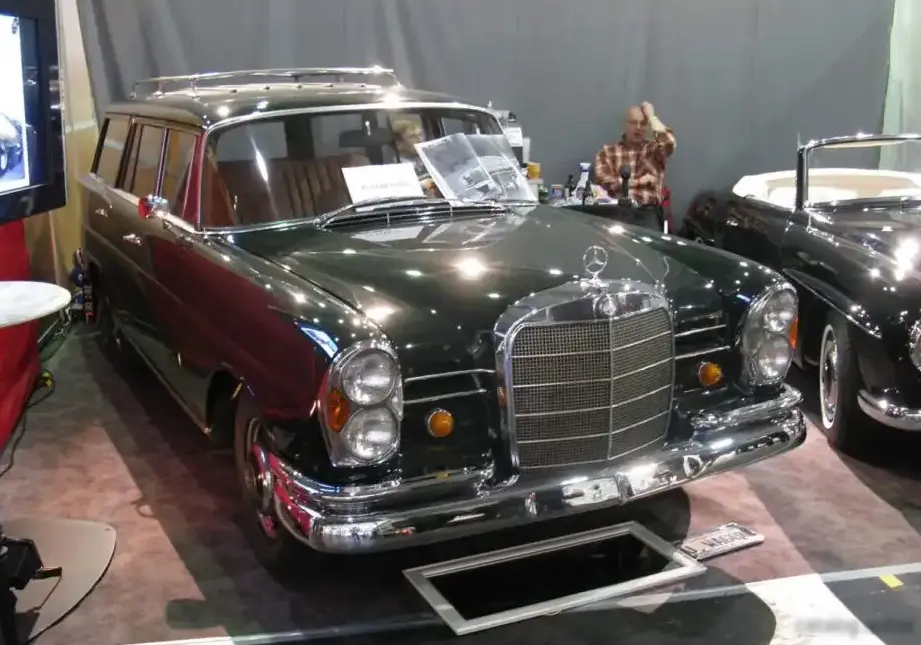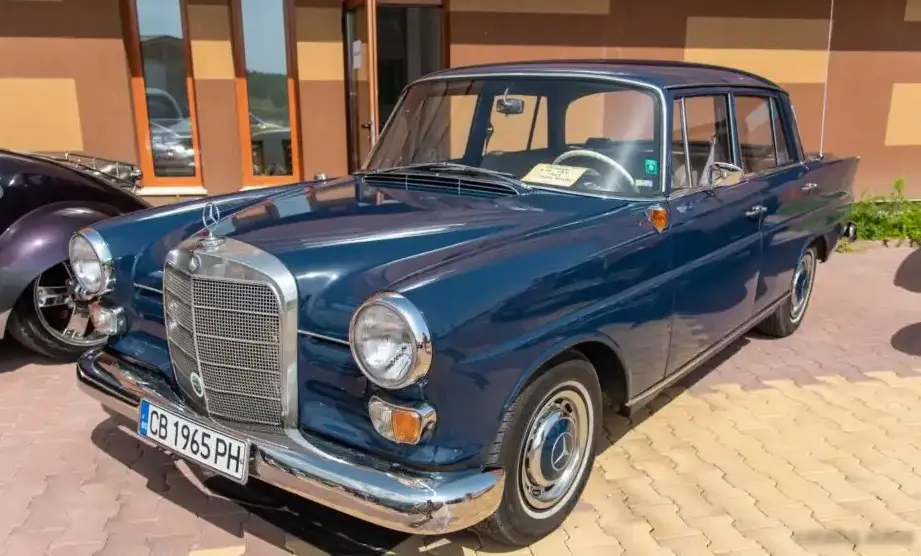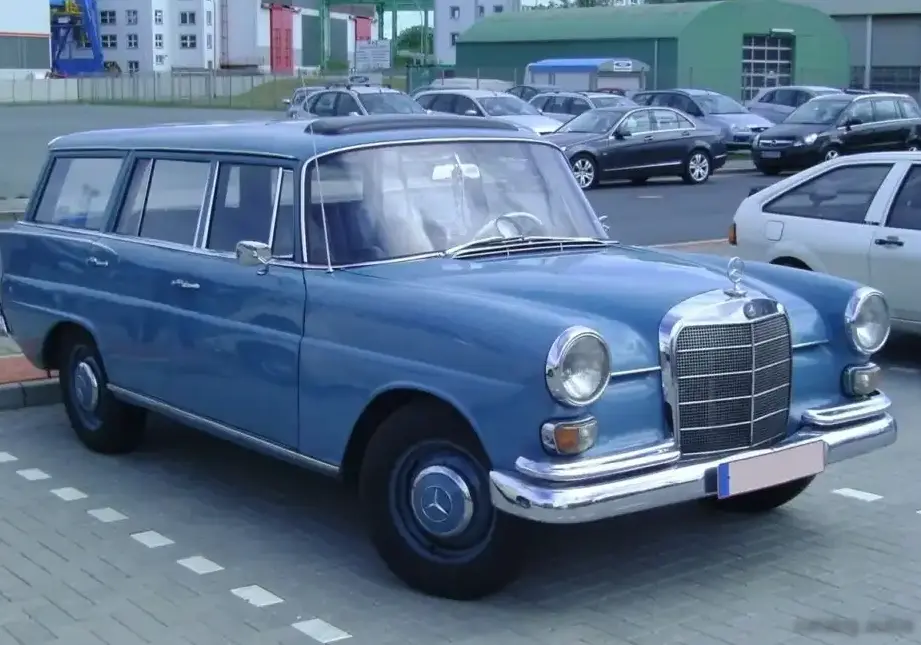
The Mercedes-Benz W110 “Fintail” Universal, specifically the 190 Dc variant with its 55 horsepower diesel engine and automatic transmission, represents a unique and often overlooked chapter in the storied history of Mercedes-Benz. Produced from July 1963 to 1965, this model occupied the entry-level position within the Fintail Universal (estate) range, offering a practical and economical option for families and businesses. It was built upon the W110 chassis, known for its distinctive tailfin styling – hence the “Fintail” nickname – and represented a significant step forward in diesel technology for the brand. This particular configuration aimed to provide comfortable, if not particularly rapid, transportation with the convenience of an automatic gearbox.
Technical Specifications
| Brand | Mercedes-Benz |
| Model | Fintail |
| Generation | Fintail Universal (W110) |
| Type (Engine) | 190 Dc (55 Hp) Automatic |
| Start of production | July, 1963 |
| End of production | 1965 |
| Powertrain Architecture | Internal Combustion engine |
| Body type | Station wagon (estate) |
| Seats | 5 |
| Doors | 5 |
| Fuel consumption (economy) – combined | 7.6 l/100 km |
| Fuel consumption (economy) – combined | 30.9 US mpg |
| Fuel consumption (economy) – combined | 37.2 UK mpg |
| Fuel consumption (economy) – combined | 13.2 km/l |
| Fuel Type | Diesel |
| Acceleration 0 – 100 km/h | 30.7 sec |
| Acceleration 0 – 62 mph | 30.7 sec |
| Acceleration 0 – 60 mph | 29.2 sec |
| Maximum speed | 123 km/h |
| Maximum speed | 76.43 mph |
| Weight-to-power ratio | 27.8 kg/Hp |
| Weight-to-power ratio | 35.9 Hp/tonne |
| Weight-to-torque ratio | 13 kg/Nm |
| Weight-to-torque ratio | 77.1 Nm/tonne |
| Power | 55 Hp @ 4200 rpm |
| Power per litre | 27.7 Hp/l |
| Torque | 118 Nm @ 2400 rpm |
| Torque | 87.03 lb.-ft. @ 2400 rpm |
| Engine layout | Front, Longitudinal |
| Engine Model/Code | OM 621 III / 621.912 |
| Engine displacement | 1988 cm3 |
| Engine displacement | 121.32 cu. in. |
| Number of cylinders | 4 |
| Engine configuration | Inline |
| Cylinder Bore | 87 mm |
| Cylinder Bore | 3.43 in. |
| Piston Stroke | 83.6 mm |
| Piston Stroke | 3.29 in. |
| Compression ratio | 21:1 |
| Number of valves per cylinder | 2 |
| Fuel injection system | Precombustion chamber injection |
| Engine aspiration | Naturally aspirated engine |
| Valvetrain | SOHC |
| Kerb Weight | 1530 kg |
| Kerb Weight | 3373.07 lbs |
| Max. weight | 2130 kg |
| Max. weight | 4695.85 lbs |
| Max load | 600 kg |
| Max load | 1322.77 lbs |
| Fuel tank capacity | 52 l |
| Fuel tank capacity | 13.74 US gal | 11.44 UK gal |
| Length | 4740 mm |
| Length | 186.61 in. |
| Width | 1795 mm |
| Width | 70.67 in. |
| Height | 1530 mm |
| Height | 60.24 in. |
| Wheelbase | 2700 mm |
| Wheelbase | 106.3 in. |
| Front track | 1482 mm |
| Front track | 58.35 in. |
| Rear (Back) track | 1485 mm |
| Rear (Back) track | 58.46 in. |
| Drivetrain Architecture | The Internal combustion engine (ICE) drives the rear wheels of the vehicle. |
| Drive wheel | Rear wheel drive |
| Number of gears and type of gearbox | 4 gears, automatic transmission |
| Front suspension | Double wishbone, Transverse stabilizer |
| Rear suspension | Air suspension, Trailing arm |
| Front brakes | Disc |
| Rear brakes | Drum |
| Steering type | Cone worm with recirculation balls |
| Wheel rims size | 5J x 15 |
Powertrain & Engine Architecture
The heart of the 190 Dc Universal was the Mercedes-Benz OM 621 III diesel engine, a 1.988-liter (121.32 cubic inches) inline-four cylinder unit. This engine, designated with the code 621.912, was a naturally aspirated diesel employing precombustion chamber injection. This system, common for diesel engines of the era, involved injecting fuel into a small precombustion chamber within the cylinder head, where it ignited and then ignited the main charge in the cylinder. The engine produced 55 horsepower at 4200 rpm and 118 Nm (87.03 lb-ft) of torque at 2400 rpm. The relatively high compression ratio of 21:1 was typical for diesel engines, contributing to their efficiency. The single overhead camshaft (SOHC) valvetrain operated two valves per cylinder. The engine was mounted longitudinally in the front of the vehicle. The four-speed automatic transmission, while offering convenience, was a relatively early design and not known for its responsiveness or efficiency compared to later automatic gearboxes.
Driving Characteristics
The 190 Dc Automatic offered a decidedly unhurried driving experience. With only 55 horsepower propelling a kerb weight of 1530 kg (3373.07 lbs), acceleration was slow, taking approximately 30.7 seconds to reach 100 km/h (62 mph). Top speed was limited to 123 km/h (76.43 mph). The automatic transmission, while providing ease of use, further diminished performance, with noticeable delays in gear changes and a tendency to hunt for the correct gear on inclines. Compared to the manual transmission versions of the 190 D, the automatic was significantly slower. However, the diesel engine’s strong low-end torque made it reasonably tractable for everyday driving, and the air suspension on the rear provided a comfortable ride, even when fully loaded.
Equipment & Trim Levels
The 190 Dc Automatic was positioned as the entry-level Fintail Universal. Standard equipment included basic cloth upholstery, a simple dashboard layout with minimal instrumentation, and relatively small hubcaps. While not lavishly appointed, the interior was functional and durable. Optional extras included a sunroof, upgraded upholstery, a radio, and whitewall tires. The focus was on practicality and affordability rather than luxury.
Chassis & Braking
The W110 chassis featured independent front suspension with double wishbones and a transverse stabilizer, providing reasonable handling. The rear suspension utilized an air suspension system with trailing arms, offering a comfortable ride quality. Braking was accomplished via disc brakes on the front wheels and drum brakes on the rear. The steering system was a cone worm with recirculation balls, providing a somewhat indirect steering feel.
Market Reception & Comparison
The 190 Dc Automatic was generally viewed as a sensible and economical choice for those needing a practical family vehicle. Critics acknowledged its fuel efficiency – around 7.6 l/100 km (30.9 US mpg) – but often lamented its lack of performance. Compared to the more powerful 190 D with a manual transmission, the automatic version was significantly slower and less engaging to drive. However, it appealed to buyers who prioritized comfort and convenience over outright performance. It also offered a more affordable entry point into the Mercedes-Benz range compared to the petrol-powered models.
Legacy
The Mercedes-Benz W110 Fintail Universal 190 Dc Automatic, while not a performance icon, holds a significant place in automotive history as an early example of a diesel-powered station wagon with an automatic transmission. The OM 621 engine proved to be remarkably durable, and many examples remain on the road today. While finding a well-maintained example can be challenging, these cars are increasingly sought after by enthusiasts and collectors who appreciate their unique character and historical significance. The automatic transmission, while not known for its refinement, represents a pioneering effort in applying automatic technology to diesel engines. Today, the 190 Dc Automatic is a testament to Mercedes-Benz’s commitment to innovation and its ability to create practical and reliable vehicles that stood the test of time.