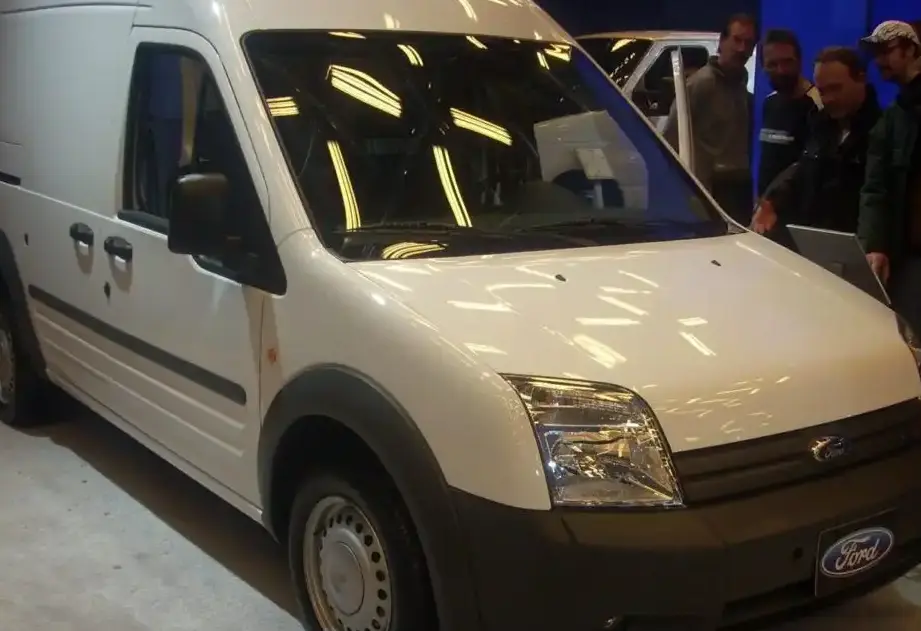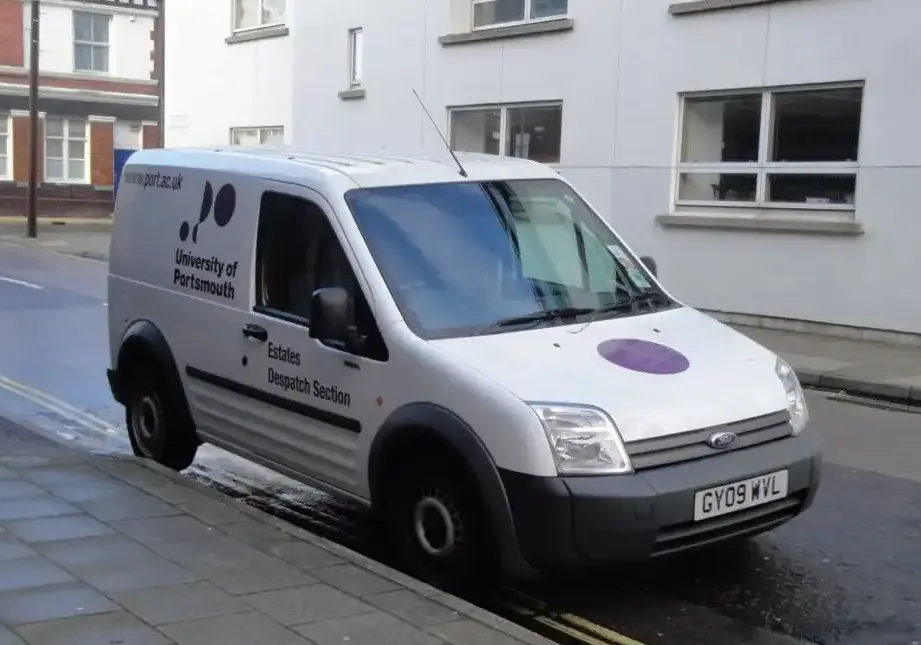
The Ford Transit Connect, introduced in Europe in 2002 and arriving in North America in 2009, represented a significant shift in the small commercial van segment. The first generation, particularly the facelifted version launched in 2006, offered a more car-like driving experience compared to traditional vans, making it popular with small businesses and families alike. This article focuses on the 2006-2009 facelifted first-generation Transit Connect Panel Van L1H1 equipped with the 1.8 TDCi engine producing 90 horsepower, a configuration primarily sold in the European market. This variant occupied the entry-level position in the Transit Connect lineup, prioritizing affordability and fuel efficiency over outright performance.
Technical Specifications
| Brand | Ford |
| Model | Transit Connect |
| Generation | Transit Connect I (facelift 2006) Panel Van L1H1 |
| Type (Engine) | 1.8 TDCi (90 Hp) |
| Start of production | 2006 |
| End of production | 2009 |
| Powertrain Architecture | Internal Combustion engine |
| Body type | Minivan |
| Seats | 2 |
| Doors | 3-5 |
| Fuel Type | Diesel |
| Emission standard | Euro 4 |
| Weight-to-power ratio | 15.5 kg/Hp, 64.4 Hp/tonne |
| Weight-to-torque ratio | 5.8 kg/Nm, 171.7 Nm/tonne |
| Power | 90 Hp @ 4000 rpm |
| Power per litre | 51.3 Hp/l |
| Torque | 240 Nm @ 1750 rpm (177.01 lb.-ft. @ 1750 rpm) |
| Engine layout | Front, Transverse |
| Engine Model/Code | Duratorq / HCPA, P9PA, R3PA |
| Engine displacement | 1753 cm3 (106.97 cu. in.) |
| Number of cylinders | 4 |
| Engine configuration | Inline |
| Cylinder Bore | 82.5 mm (3.25 in.) |
| Piston Stroke | 82 mm (3.23 in.) |
| Compression ratio | 19.4:1 |
| Number of valves per cylinder | 2 |
| Fuel injection system | Diesel Commonrail |
| Engine aspiration | Turbocharger, Intercooler |
| Valvetrain | SOHC |
| Engine oil capacity | 5.6 l (5.92 US qt | 4.93 UK qt) |
| Coolant | 7 l (7.4 US qt | 6.16 UK qt) |
| Kerb Weight | 1398-1472 kg (3082.06 – 3245.2 lbs.) |
| Max. weight | 2035-2240 kg (4486.41 – 4938.35 lbs.) |
| Max load | 637-768 kg (1404.34 – 1693.15 lbs.) |
| Trunk (boot) space – minimum | 2800 l (98.88 cu. ft.) |
| Trunk (boot) space – maximum | 3400 l (120.07 cu. ft.) |
| Fuel tank capacity | 60 l (15.85 US gal | 13.2 UK gal) |
| Max. roof load | 100 kg (220.46 lbs.) |
| Length | 4308 mm (169.61 in.) |
| Width | 1795 mm (70.67 in.) |
| Width including mirrors | 2044 mm (80.47 in.) |
| Height | 1814 mm (71.42 in.) |
| Wheelbase | 2664 mm (104.88 in.) |
| Front track | 1505 mm (59.25 in.) |
| Rear (Back) track | 1552 mm (61.1 in.) |
| Front overhang | 894 mm (35.2 in.) |
| Rear overhang | 749 mm (29.49 in.) |
| Ride height (ground clearance) | 166 mm (6.54 in.) |
| Minimum turning circle (turning diameter) | 11 m (36.09 ft.) |
| Drivetrain Architecture | The Internal combustion engine (ICE) drives the front wheels of the vehicle. |
| Drive wheel | Front wheel drive |
| Number of gears and type of gearbox | 5 gears, manual transmission |
| Front suspension | Independent, type McPherson with coil spring and anti-roll bar |
| Rear suspension | Transverse stabilizer, Leaf spring |
| Front brakes | Disc |
| Rear brakes | Drum |
| Assisting systems | ABS (Anti-lock braking system) |
| Steering type | Steering rack and pinion |
| Power steering | Hydraulic Steering |
| Tires size | 195/65 R15 |
| Wheel rims size | 6J x 15 |
INTRODUCTION
The 2006-2009 Ford Transit Connect L1H1 1.8 TDCi 90 hp was a key offering in Ford’s European commercial vehicle range. Built on the Ford Focus C-Max platform (internally designated 1HX0/A3), it aimed to bridge the gap between small car-derived vans and larger, more traditional commercial vehicles. The facelift in 2006 brought revised styling, improved interior materials, and refinements to the 1.8-liter Duratorq diesel engine. This particular 90 horsepower version was positioned as the entry point to the Transit Connect range, appealing to budget-conscious buyers and those prioritizing fuel economy. It was primarily marketed towards small businesses, tradespeople, and those needing a versatile vehicle for both work and leisure.
Powertrain & Engine Architecture
The heart of this Transit Connect variant is the 1.8-liter Duratorq TDCi diesel engine, specifically the HCPA, P9PA, or R3PA engine code depending on the specific market and year. This engine is a four-cylinder, inline configuration with a displacement of 1753cc. It features a single overhead camshaft (SOHC) valvetrain with two valves per cylinder. A key feature is its common-rail direct fuel injection system, which delivers fuel directly into the combustion chamber at high pressure, optimizing combustion efficiency and reducing emissions. The engine is turbocharged and intercooled, boosting power output and improving torque delivery. The 90 hp output is achieved at 4000 rpm, while peak torque of 240 Nm (177 lb-ft) is available from 1750 rpm. The engine is paired with a five-speed manual transmission, chosen for its simplicity and fuel efficiency. While an automatic transmission was offered in some markets, it was less common with this specific engine output.
Driving Characteristics
The 90 hp 1.8 TDCi Transit Connect, while not a performance machine, offered a surprisingly capable driving experience for its class. The relatively low weight of the vehicle (1398-1472 kg) helped to mitigate the modest power output. Acceleration was adequate for urban and highway driving, though overtaking required careful planning. The five-speed manual transmission was well-matched to the engine’s torque curve, providing reasonable flexibility. Compared to the higher-output 110 hp version of the 1.8 TDCi, the 90 hp model felt noticeably slower, particularly when fully loaded. However, the lower power output also contributed to improved fuel economy. The gear ratios were optimized for maximizing fuel efficiency rather than outright speed. The steering was light and precise, making it easy to maneuver in tight spaces.
Equipment & Trim Levels
The base-level Transit Connect 1.8 TDCi 90 hp typically came with a fairly basic level of equipment. Standard features included power steering, ABS brakes, a driver’s airbag, and a basic audio system. The interior was functional and durable, with hard-wearing plastics and cloth upholstery. The van configuration featured only two seats and a large cargo area behind the driver and passenger. Optional extras included air conditioning, electric windows, a passenger airbag, and upgraded audio systems. Higher trim levels, such as the Limited, added more comfort and convenience features, but the 90 hp engine was generally reserved for the more basic trims.
Chassis & Braking
The Transit Connect’s chassis was based on the Ford Focus C-Max, providing a comfortable and stable ride. The front suspension utilized an independent McPherson strut setup with coil springs and an anti-roll bar, while the rear suspension employed a transverse leaf spring arrangement. This combination offered a good balance between ride comfort and load-carrying capacity. Braking duties were handled by front disc brakes and rear drum brakes. ABS (Anti-lock Braking System) was standard, enhancing safety during emergency braking situations. The relatively light weight of the vehicle contributed to its respectable braking performance.
Market Reception & Comparison
The 1.8 TDCi 90 hp Transit Connect was generally well-received by critics as a practical and economical small van. It was praised for its car-like driving experience, fuel efficiency, and spacious cargo area. However, some reviewers noted that the engine could feel underpowered, especially when carrying a full load or driving uphill. Compared to the 110 hp version, the 90 hp model offered a lower purchase price but sacrificed performance. Against competitors like the Citroën Berlingo and Renault Kangoo, the Transit Connect offered a compelling combination of practicality, affordability, and reliability. Fuel economy was a strong point, typically achieving around 45-55 mpg in mixed driving conditions.
Legacy
The 1.8 TDCi Duratorq engine proved to be a reliable and durable unit, and many examples of the 90 hp Transit Connect are still on the road today. While not known for blistering performance, the engine is relatively straightforward to maintain and repair. Common issues include turbocharger wear and potential problems with the fuel injection system, but these are generally manageable with regular maintenance. In the used car market, the 90 hp Transit Connect represents an affordable and practical option for small businesses and individuals needing a versatile van. Its simplicity and fuel efficiency continue to make it a popular choice, even after more modern competitors have emerged.