
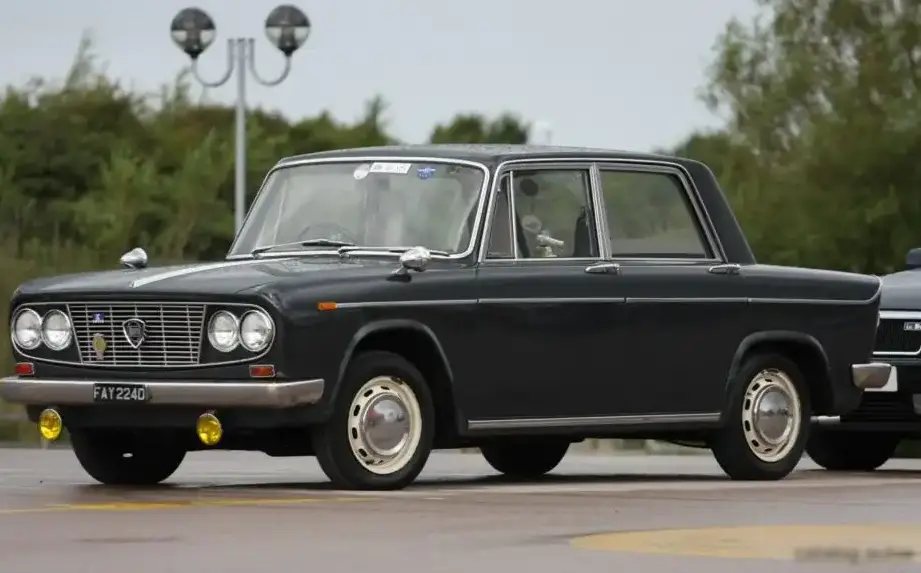
The Lancia Fulvia 1.3 S, produced between 1968 and 1975, represents a pivotal point in Lancia’s history, blending sporting aspirations with everyday usability. This variant, distinguished by its 1.3-liter engine producing 88 horsepower, occupied a sweet spot in the Fulvia lineup, offering a balance between performance and affordability. It was a key component of the second series Fulvia (often referred to as the 110.84 series), building upon the foundation laid by the earlier 1.2-liter models. The Fulvia, as a whole, was a sophisticated vehicle for its time, notable for its innovative engineering, particularly its narrow-angle V4 engine and fully independent suspension.
Technical Specifications
| Brand | Lancia |
| Model | Fulvia |
| Generation | Fulvia |
| Type (Engine) | 1.3 S (88 Hp) |
| Start of Production | 1968 |
| End of Production | 1975 |
| Powertrain Architecture | Internal Combustion Engine |
| Body Type | Sedan |
| Fuel Type | Petrol (Gasoline) |
| Power | 88 Hp |
| Engine Model/Code | 138 |
| Engine Aspiration | Naturally Aspirated |
| Engine Oil Capacity | 4.3 l (4.54 US qt | 3.78 UK qt) |
| Coolant Capacity | 6.3 l (6.66 US qt | 5.54 UK qt) |
Powertrain & Engine Architecture
The heart of the Fulvia 1.3 S is its 138 engine, a 1298cc narrow-angle V4. This engine, a Lancia hallmark, was designed to offer smoothness and a relatively compact size. The narrow V-angle (only 12.5 degrees) allowed for a more balanced engine, reducing vibrations. The 1.3 S featured a single overhead camshaft, operating two valves per cylinder. Fuel delivery was handled by a Weber 32 ADF carburetor, providing a responsive throttle response for the era. The engine produced 88 horsepower at 6200 rpm and 86 lb-ft of torque at 4000 rpm. The engine block was cast iron, while the cylinder head was aluminum, contributing to weight reduction. The transmission was typically a four-speed manual, although a three-speed automatic was also available, albeit less common. The automatic transmission, while offering convenience, did impact performance somewhat.
Driving Characteristics
The Fulvia 1.3 S offered a refined driving experience, particularly for a car of its era. The narrow-angle V4 provided a unique engine note and surprisingly good performance for its displacement. The 88 horsepower, while not overwhelming, was sufficient to provide brisk acceleration and comfortable cruising speeds. The four-speed manual transmission allowed for precise control, while the optional automatic, though less engaging, offered ease of use in city driving. The car’s fully independent suspension – double wishbones at the front and a trailing arm setup at the rear – contributed to excellent handling and a comfortable ride. Compared to the earlier 1.2-liter Fulvia, the 1.3 S offered a noticeable improvement in performance, particularly in terms of mid-range torque. However, it wasn’t as overtly sporty as the later 1.6 HF models, which were designed for competition. The automatic transmission version, while comfortable, noticeably reduced acceleration times and overall responsiveness.
Equipment & Trim Levels
The Fulvia 1.3 S was generally well-equipped for its time, though not lavishly so. Standard features included comfortable cloth seats, a wood-rimmed steering wheel, and a comprehensive instrument panel. The interior was typically finished in a combination of vinyl and fabric. The dashboard layout was clean and functional, with clearly marked gauges. Optional extras included a sunroof, upgraded upholstery, and a radio. The “S” designation indicated a slightly more sporting trim level compared to the base model, often including features like a more detailed instrument cluster and improved interior finishes. The exterior was typically finished in a range of solid colors, with chrome trim adding a touch of elegance.
Chassis & Braking
The Fulvia 1.3 S utilized a monocoque chassis, providing a strong and rigid platform. The fully independent suspension, as mentioned previously, was a key feature, contributing to the car’s excellent handling. The front suspension featured double wishbones with coil springs and hydraulic dampers, while the rear suspension employed a trailing arm setup with coil springs and hydraulic dampers. Braking was initially accomplished with Dunlop disc brakes at the front and drum brakes at the rear. Later models often featured disc brakes all around, improving stopping power. The steering was a recirculating ball system, providing a reasonably precise feel. Stabilizer bars were fitted to both the front and rear axles, further enhancing handling stability.
Market Reception & Comparison
The Lancia Fulvia 1.3 S was generally well-received by automotive critics. It was praised for its sophisticated engineering, comfortable ride, and engaging handling. It was often compared to other European sedans of the time, such as the Alfa Romeo Giulia and the BMW New Class. The Fulvia offered a unique blend of Italian style and engineering, setting it apart from its competitors. Fuel economy was reasonable for the era, averaging around 28-32 mpg. Reliability was generally good, although the narrow-angle V4 engine required regular maintenance. Compared to the 1.2-liter Fulvia, the 1.3 S offered a noticeable performance improvement, making it a more appealing option for drivers seeking a more spirited driving experience. The automatic transmission version, while convenient, was often criticized for its sluggish performance and reduced fuel economy.
Legacy
The Lancia Fulvia 1.3 S remains a highly regarded classic car today. Its innovative engineering and elegant styling have earned it a dedicated following among enthusiasts. The narrow-angle V4 engine, while requiring regular maintenance, is known for its durability and unique character. Finding well-maintained examples can be challenging, as many have succumbed to rust or neglect. However, the Fulvia 1.3 S continues to offer a rewarding driving experience for those willing to invest in its upkeep. In the used car market, prices for well-preserved examples have been steadily increasing in recent years, reflecting the car’s growing desirability. The 1.3 S is often seen as the most accessible entry point into the Fulvia world, offering a balance of performance, affordability, and classic Italian charm. Its influence can be seen in later Lancia models, and it remains a testament to Lancia’s engineering prowess during the 1960s and 1970s.
