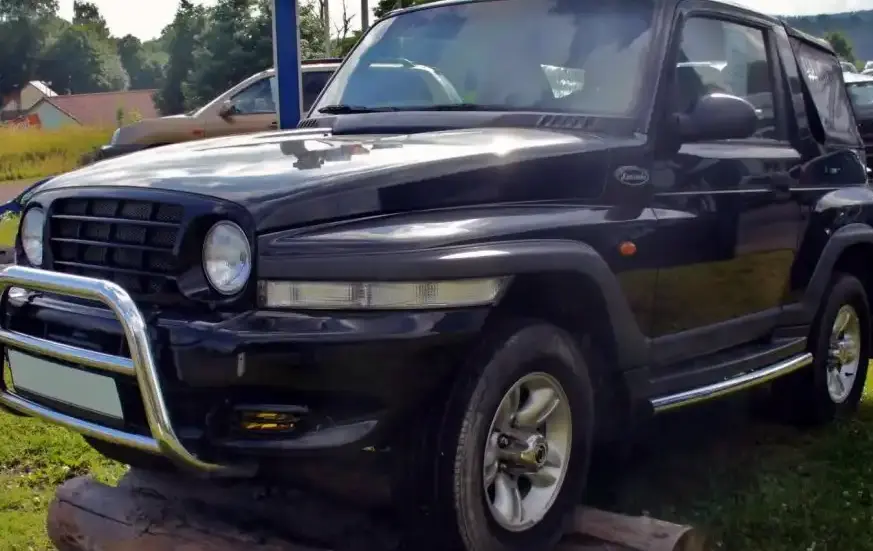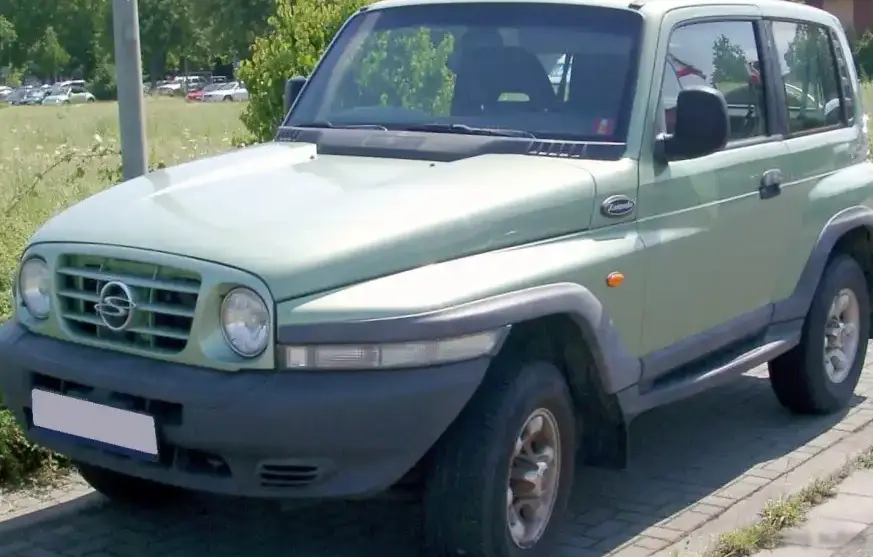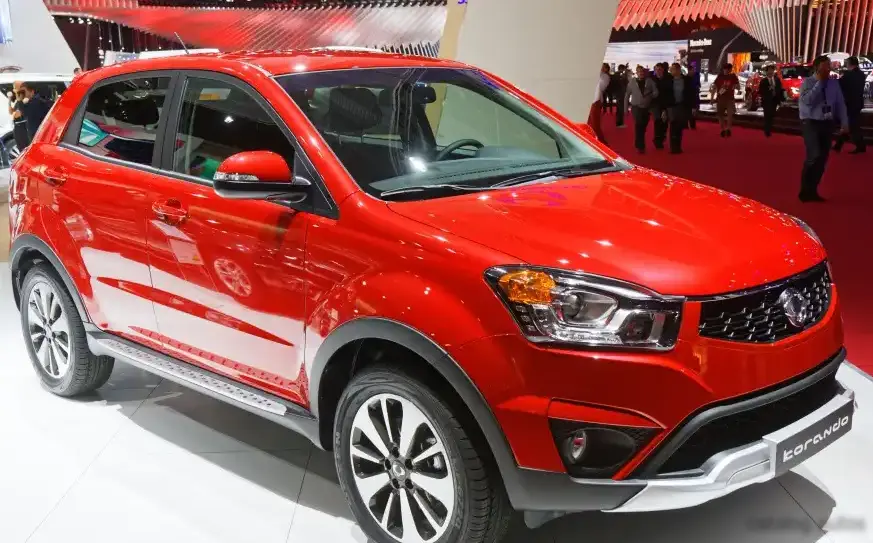
The SsangYong Korando III (C), particularly the facelifted version introduced in 2013, represented a significant step forward for the South Korean automaker in terms of design, refinement, and technology. This generation Korando, built from 2010-2019, aimed to compete directly with established European and Japanese SUVs. The 2.2 e-XDi AWD Automatic variant, produced from 2013 to 2017, was positioned as a mid-to-upper trim level, offering a balance of performance, practicality, and features for buyers seeking a capable and comfortable SUV. It was primarily marketed in Europe and select international markets, with limited presence in North America. The Korando III utilized a modified platform derived from the previous generation, but with substantial improvements to the chassis and interior.
Technical Specifications
| Brand | SsangYong |
| Model | Korando |
| Generation | Korando III (C, facelift 2013) |
| Type | 2.2 e-XDi (178 Hp) AWD Automatic |
| Start of production | 2013 |
| End of production | 2017 |
| Powertrain Architecture | Internal Combustion engine |
| Body type | SUV |
| Seats | 5 |
| Doors | 5 |
| Fuel consumption (urban) | 8.6 l/100 km (27.4 US mpg) |
| Fuel consumption (extra urban) | 5.7 l/100 km (41.3 US mpg) |
| Fuel consumption (combined) | 6.8 l/100 km (34.6 US mpg) |
| CO2 emissions | 177 g/km |
| Fuel Type | Diesel |
| Maximum speed | 185 km/h (114.95 mph) |
| Emission standard | Euro 6 |
| Weight-to-power ratio | 9.9 kg/Hp |
| Weight-to-torque ratio | 4.4 kg/Nm |
| Power | 178 Hp @ 4000 rpm |
| Torque | 400 Nm @ 1400-2800 rpm (295.02 lb.-ft.) |
| Engine layout | Front, Longitudinal |
| Engine Model/Code | D22DTR |
| Engine displacement | 2157 cm3 (131.63 cu. in.) |
| Number of cylinders | 4 |
| Engine configuration | Inline |
| Cylinder Bore | 86.2 mm (3.39 in.) |
| Piston Stroke | 92.4 mm (3.64 in.) |
| Compression ratio | 15.5:1 |
| Number of valves per cylinder | 4 |
| Fuel injection system | Diesel Commonrail |
| Engine aspiration | Turbocharger, Intercooler |
| Engine oil capacity | 6 l (6.34 US qt | 5.28 UK qt) |
| Coolant capacity | 8.5 l (8.98 US qt | 7.48 UK qt) |
| Kerb Weight | 1769 kg (3899.98 lbs.) |
| Max. weight | 2260 kg (4982.45 lbs.) |
| Max load | 491 kg (1082.47 lbs.) |
| Trunk (boot) space – minimum | 486 l (17.16 cu. ft.) |
| Trunk (boot) space – maximum | 1312 l (46.33 cu. ft.) |
| Fuel tank capacity | 57 l (15.06 US gal | 12.54 UK gal) |
| Permitted trailer load with brakes (12%) | 2000 kg (4409.25 lbs.) |
| Permitted trailer load without brakes | 750 kg (1653.47 lbs.) |
| Length | 4410 mm (173.62 in.) |
| Width | 1830 mm (72.05 in.) |
| Height | 1675 mm (65.94 in.) |
| Wheelbase | 2650 mm (104.33 in.) |
| Front track | 1573 mm (61.93 in.) |
| Rear track | 1558 mm (61.34 in.) |
| Front overhang | 920 mm (36.22 in.) |
| Rear overhang | 840 mm (33.07 in.) |
| Ride height (ground clearance) | 180 mm (7.09 in.) |
| Minimum turning circle | 10.6 m (34.78 ft.) |
| Drive wheel | All wheel drive (4×4) |
| Number of gears | 6 |
| Gearbox type | Automatic transmission |
| Front brakes | Ventilated discs |
| Rear brakes | Disc |
| Assisting systems | ABS (Anti-lock braking system) |
| Steering type | Steering rack and pinion |
| Power steering | Electric |
Powertrain & Engine Architecture
The heart of the Korando 2.2 e-XDi was the D22DTR engine, a 2.2-liter inline-four cylinder diesel. This engine was a key component of SsangYong’s efforts to modernize its powertrain offerings. It featured a common-rail direct injection system, delivering fuel at extremely high pressure for improved combustion efficiency and reduced emissions. A variable geometry turbocharger (VGT) and intercooler were employed to boost power and torque across a broad RPM range. The engine produced 178 horsepower at 4,000 rpm and a substantial 400 Nm (295 lb-ft) of torque between 1,400 and 2,800 rpm. This torque output was particularly beneficial for towing and off-road driving. The engine also incorporated a diesel particulate filter (DPF) to meet stringent Euro 6 emission standards. The automatic transmission was a six-speed unit, providing smooth shifts and contributing to the vehicle’s overall refinement. While not a cutting-edge transmission in terms of gear count compared to some competitors, it was well-matched to the engine’s characteristics.
Driving Characteristics
The 2.2 e-XDi Automatic Korando offered a comfortable and capable driving experience. The abundance of low-end torque made it feel surprisingly responsive in everyday driving situations, with ample power for overtaking and merging onto highways. The automatic transmission, while smooth, wasn’t particularly quick to downshift, so drivers sometimes needed to anticipate acceleration needs. Compared to the manual transmission versions, the automatic offered less driver engagement but greater convenience. The all-wheel-drive system provided enhanced traction in slippery conditions, making it a suitable vehicle for inclement weather or light off-road use. The ride quality was generally good, absorbing bumps and imperfections in the road reasonably well, although it wasn’t as refined as some of its European rivals. The steering was light and easy to use, but lacked significant feedback.
Equipment & Trim Levels
The 2.2 e-XDi Automatic trim typically included features such as air conditioning, power windows and mirrors, a CD/MP3 stereo system, and alloy wheels. Higher-spec versions added features like leather upholstery, heated front seats, a sunroof, and a navigation system. Safety equipment included ABS, electronic stability control (ESC), and multiple airbags. The interior design was functional and reasonably well-built, although the materials used weren’t as premium as those found in some competing SUVs. The Korando offered a spacious cabin with ample headroom and legroom for passengers.
Chassis & Braking
The Korando III utilized a body-on-frame construction, which contributed to its robust feel and off-road capability. The suspension consisted of independent double wishbones at the front and a multi-link setup at the rear. The braking system featured ventilated discs at the front and solid discs at the rear. ABS (Anti-lock Braking System) was standard, providing enhanced stopping power and control. The all-wheel-drive system was typically a part-time system, allowing drivers to switch between two-wheel drive and four-wheel drive modes as needed.
Market Reception & Comparison
The SsangYong Korando III 2.2 e-XDi Automatic received mixed reviews from automotive critics. It was generally praised for its spacious interior, strong diesel engine, and competitive price. However, it was often criticized for its somewhat dated design, lack of brand recognition, and less refined driving experience compared to established European competitors like the Kia Sportage or Hyundai Tucson. Fuel economy was respectable for its class, offering a good balance between performance and efficiency. Reliability reports were generally positive, although some owners reported minor issues with the electronic systems.
Legacy
The SsangYong Korando III, including the 2.2 e-XDi Automatic variant, played a role in establishing SsangYong as a more credible player in the European SUV market. While it didn’t achieve mainstream success, it offered a compelling alternative for buyers seeking a capable and affordable SUV. The D22DTR engine proved to be a relatively durable and reliable unit, and many examples are still on the road today. On the used car market, these Korandos represent a good value proposition for those seeking a practical and well-equipped SUV at a reasonable price. However, potential buyers should be aware of the potential for DPF issues and ensure that the vehicle has been properly maintained.