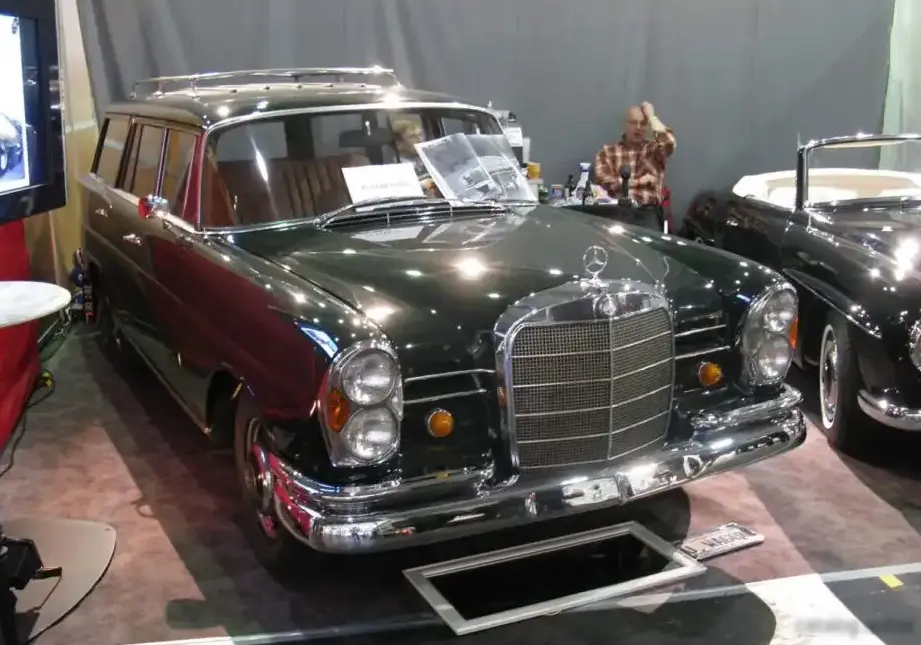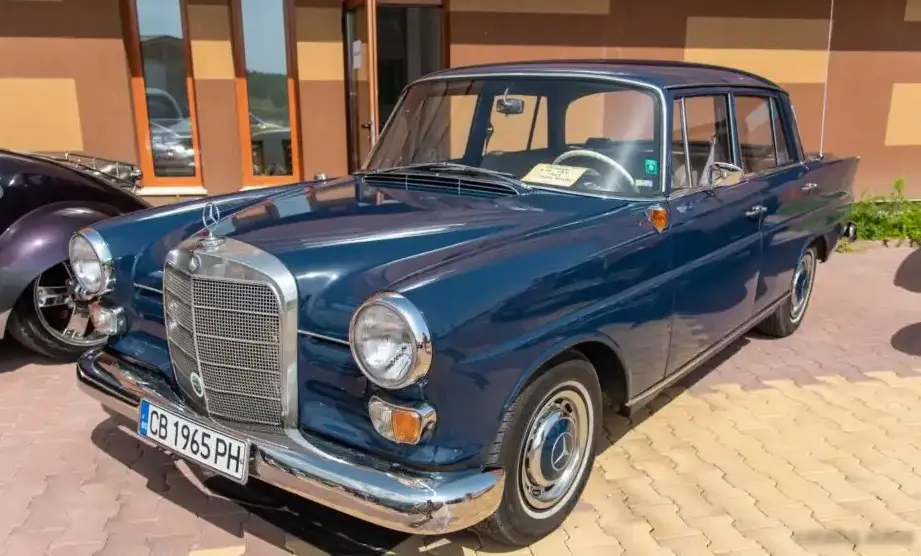
The Mercedes-Benz W110 “Fintail” Universal 200, produced between 1966 and 1968, represents a significant evolution of the mid-size Mercedes-Benz lineup. Positioned as a practical and comfortable family vehicle, the Universal (estate/station wagon) body style offered increased cargo capacity compared to the sedan. The 200 variant, equipped with a 2.0-liter engine producing 95 horsepower, occupied a middle ground within the W110 range, offering a balance between performance and affordability. It was part of the broader W110 generation, known for its distinctive “fintail” rear end styling – a design cue that gave the model its popular nickname. This model played a crucial role in expanding Mercedes-Benz’s appeal to families in Europe, offering a premium alternative to more utilitarian wagons.
Technical Specifications
| Brand | Mercedes-Benz |
| Model | Fintail |
| Generation | Fintail Universal (W110) |
| Type (Engine) | 200 (95 Hp) |
| Start of production | 1966 |
| End of production | 1968 |
| Powertrain Architecture | Internal Combustion engine |
| Body type | Station wagon (estate) |
| Seats | 5 |
| Doors | 5 |
| Fuel Type | Petrol (Gasoline) |
| Maximum speed | 160 km/h (99.42 mph) |
| Weight-to-power ratio | 15.3 kg/Hp, 65.3 Hp/tonne |
| Weight-to-torque ratio | 9.4 kg/Nm, 105.8 Nm/tonne |
| Power | 95 Hp @ 5200 rpm |
| Power per litre | 47.8 Hp/l |
| Torque | 154 Nm @ 3600 rpm (113.58 lb.-ft. @ 3600 rpm) |
| Engine layout | Front, Longitudinal |
| Engine Model/Code | M 121 B XI / 121.940 |
| Engine displacement | 1988 cm3 (121.32 cu. in.) |
| Number of cylinders | 4 |
| Engine configuration | Inline |
| Cylinder Bore | 87 mm (3.43 in.) |
| Piston Stroke | 83.6 mm (3.29 in.) |
| Compression ratio | 9:1 |
| Number of valves per cylinder | 2 |
| Fuel injection system | Carburettor |
| Engine aspiration | Naturally aspirated engine |
| Valvetrain | SOHC |
| Kerb Weight | 1455 kg (3207.73 lbs.) |
| Max. weight | 2105 kg (4640.73 lbs.) |
| Max load | 650 kg (1433 lbs.) |
| Fuel tank capacity | 65 l (17.17 US gal | 14.3 UK gal) |
| Length | 4740 mm (186.61 in.) |
| Width | 1795 mm (70.67 in.) |
| Height | 1530 mm (60.24 in.) |
| Wheelbase | 2700 mm (106.3 in.) |
| Front track | 1482 mm (58.35 in.) |
| Rear (Back) track | 1485 mm (58.46 in.) |
| Drivetrain Architecture | The Internal combustion engine (ICE) drives the rear wheels of the vehicle. |
| Drive wheel | Rear wheel drive |
| Number of gears and type of gearbox | 4 gears, manual transmission |
| Front suspension | Double wishbone, Transverse stabilizer |
| Rear suspension | Air suspension, Trailing arm |
| Front brakes | Disc |
| Rear brakes | Drum |
| Steering type | Cone worm with recirculation balls |
| Wheel rims size | 5J x 15 |
Powertrain & Engine Architecture
The heart of the W110 Universal 200 was the M121 B XI engine, a 1,988 cc (121.32 cubic inches) inline-four cylinder unit. This engine featured a single overhead camshaft (SOHC) valvetrain operating two valves per cylinder. Fuel delivery was managed by a Solex carburetor, a common setup for the era. The engine produced 95 horsepower at 5,200 rpm and 154 Nm (113.58 lb-ft) of torque at 3,600 rpm. The engine was mounted longitudinally in the front of the vehicle, driving the rear wheels. The four-speed manual transmission was the standard offering for this variant, providing a relatively direct connection between the engine and the drivetrain. The engine block was constructed from cast iron, while the cylinder head was made of aluminum, contributing to a reasonable weight for its size. This engine was a development of earlier Mercedes-Benz four-cylinder designs, known for its robustness and relatively simple maintenance requirements.
Driving Characteristics
The 95 hp output of the 200 Universal translated to adequate, but not exhilarating, performance. Acceleration was respectable for the time, but the car was not designed for sporty driving. The four-speed manual transmission offered a reasonable spread of gears, allowing the driver to keep the engine in its optimal power band. Compared to the more powerful 230 and 250 variants, the 200 felt noticeably less responsive, particularly when fully loaded with passengers and cargo. However, the lower power output also contributed to better fuel economy. The rear-wheel drive configuration provided predictable handling, but the relatively soft suspension setup prioritized ride comfort over sharp cornering. The steering, utilizing a cone worm and recirculation balls system, was known for its feel but required a fair amount of effort, especially at low speeds. The overall driving experience was one of refined comfort and practicality, rather than outright performance.
Equipment & Trim Levels
The W110 Universal 200 was generally equipped with a fairly standard level of features for a mid-range vehicle of the 1960s. The interior typically featured cloth upholstery, although optional leather was available. The dashboard was functional and straightforward, with a focus on providing essential information to the driver. Standard equipment included a heater, basic instrumentation (speedometer, fuel gauge, temperature gauge), and a steering wheel. Optional extras included a radio, whitewall tires, and upgraded interior trim. The Universal body style itself was a significant feature, offering a large cargo area accessible through a rear tailgate. The rear seats could be folded down to further increase cargo capacity. This trim level was positioned as the entry-level offering within the Universal range, appealing to buyers seeking a practical and affordable family vehicle.
Chassis & Braking
The W110 Universal featured a robust chassis construction, utilizing a separate body-on-frame design. The front suspension employed a double wishbone setup with a transverse stabilizer bar, providing a comfortable ride and reasonable handling. The rear suspension utilized a trailing arm design with air suspension, a relatively advanced feature for the time, further enhancing ride quality. Braking duties were handled by disc brakes at the front and drum brakes at the rear. The braking system was hydraulic, providing adequate stopping power for the vehicle’s weight and performance. Steering was accomplished via a cone worm and recirculation balls system, offering a degree of feedback but requiring some physical effort. The air suspension on the rear was a notable feature, providing a smoother ride, especially when the vehicle was loaded.
Market Reception & Comparison
The W110 Universal 200 was generally well-received by critics and buyers alike. It was praised for its practicality, comfort, and build quality. Compared to the more expensive 230 and 250 variants, the 200 offered a more affordable entry point into the Mercedes-Benz range. However, some critics noted that the 200’s performance was somewhat underwhelming, particularly when compared to its more powerful siblings. Fuel economy was considered good for the time, and the car proved to be relatively reliable. The Universal body style was particularly popular with families and those who required a versatile vehicle for both passenger and cargo transport. The 200 offered a compelling package for those prioritizing practicality and comfort over outright performance.
Legacy
The Mercedes-Benz W110 “Fintail” Universal 200 holds a respected place in automotive history. The M121 engine, while not a powerhouse, proved to be durable and relatively easy to maintain. Today, well-maintained examples of the W110 Universal are sought after by classic car enthusiasts. The car’s simple mechanical design and readily available parts make it a relatively straightforward vehicle to restore and keep on the road. While not as common as the sedan version, the Universal body style is particularly prized for its rarity and practicality. The W110 series, as a whole, is remembered as a pivotal model for Mercedes-Benz, solidifying the brand’s reputation for quality and engineering excellence. The 200 Universal, in particular, represents a practical and affordable entry point into the world of classic Mercedes-Benz ownership.