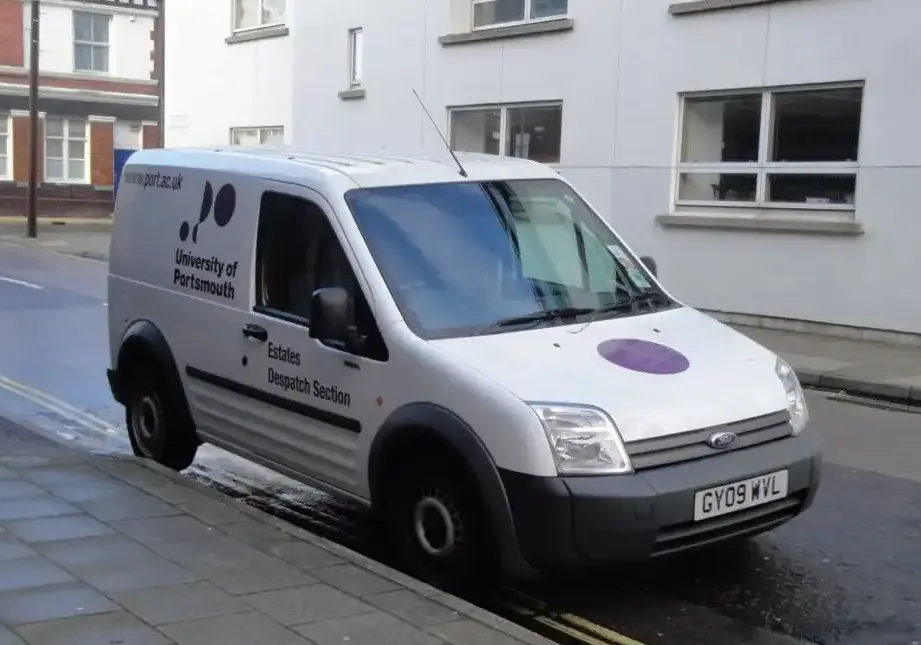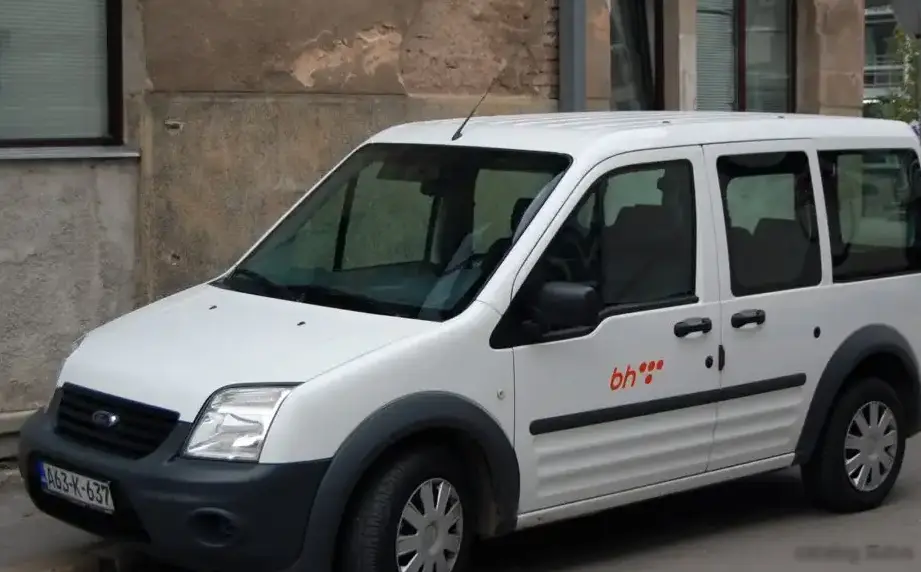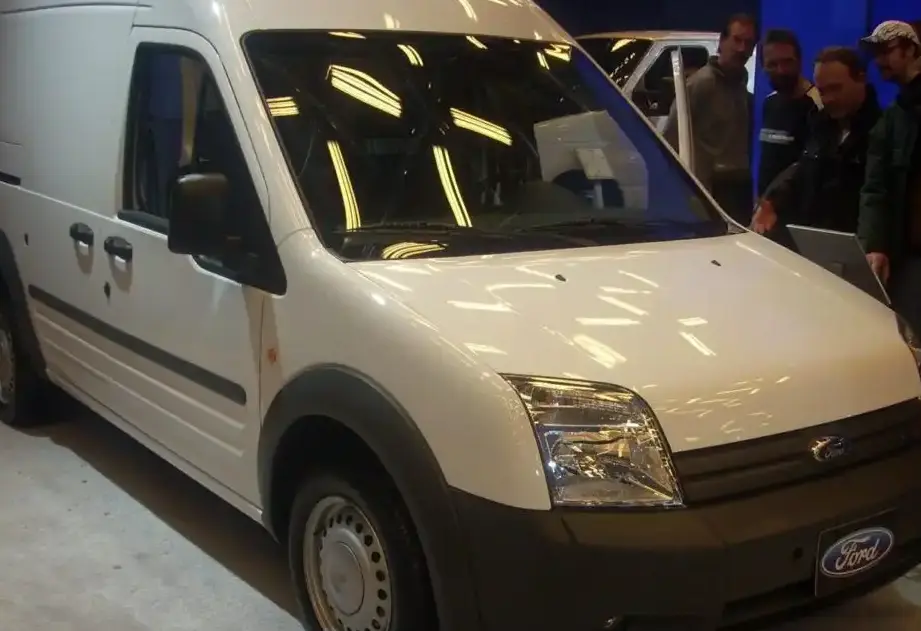
The Ford Transit Connect, introduced in 2002, represented Ford’s entry into the compact commercial van segment in Europe. Designed and initially built in Turkey, it was based on the Ford Focus C-Max platform. The first generation, and specifically the facelifted version launched in 2006, offered a practical and efficient solution for small businesses and tradespeople. This article focuses on the L2H2 Panel Van configuration equipped with the 1.8 TDCi engine producing 90 horsepower, paired with a five-speed manual transmission – a common configuration within the European market during its 2006-2009 production run. This variant occupied the entry-level position in the Transit Connect lineup, prioritizing affordability and fuel economy over outright performance.
Technical Specifications
| Brand | Ford |
| Model | Transit Connect |
| Generation | Transit Connect I (facelift 2006) Panel Van L2H2 |
| Type (Engine) | 1.8 TDCi (90 Hp) |
| Start of production | 2006 |
| End of production | 2009 |
| Powertrain Architecture | Internal Combustion engine |
| Body type | Minivan |
| Seats | 2 |
| Doors | 3-5 |
| Fuel Type | Diesel |
| Emission standard | Euro 4 |
| Weight-to-power ratio | 15.5 kg/Hp, 64.3 Hp/tonne |
| Weight-to-torque ratio | 5.8 kg/Nm, 171.6 Nm/tonne |
| Power | 90 Hp @ 4000 rpm |
| Power per litre | 51.3 Hp/l |
| Torque | 240 Nm @ 1750 rpm (177.01 lb.-ft. @ 1750 rpm) |
| Engine layout | Front, Transverse |
| Engine Model/Code | Duratorq / HCPA, P9PA, R3PA |
| Engine displacement | 1753 cm3 (106.97 cu. in.) |
| Number of cylinders | 4 |
| Engine configuration | Inline |
| Cylinder Bore | 82.5 mm (3.25 in.) |
| Piston Stroke | 82 mm (3.23 in.) |
| Compression ratio | 19.4:1 |
| Number of valves per cylinder | 2 |
| Fuel injection system | Diesel Commonrail |
| Engine aspiration | Turbocharger, Intercooler |
| Valvetrain | SOHC |
| Engine oil capacity | 5.6 l (5.92 US qt | 4.93 UK qt) |
| Coolant | 7 l (7.4 US qt | 6.16 UK qt) |
| Kerb Weight | 1399 kg (3084.27 lbs) |
| Max. weight | 2340 kg (5158.82 lbs) |
| Max load | 941 kg (2074.55 lbs) |
| Trunk (boot) space – minimum | 3700 l (130.66 cu. ft.) |
| Trunk (boot) space – maximum | 4400 l (155.38 cu. ft.) |
| Fuel tank capacity | 60 l (15.85 US gal | 13.2 UK gal) |
| Max. roof load | 100 kg (220.46 lbs) |
| Length | 4555 mm (179.33 in.) |
| Width | 1795 mm (70.67 in.) |
| Width including mirrors | 2044 mm (80.47 in.) |
| Height | 1981 mm (77.99 in.) |
| Wheelbase | 2912 mm (114.65 in.) |
| Front track | 1505 mm (59.25 in.) |
| Rear (Back) track | 1552 mm (61.1 in.) |
| Front overhang | 894 mm (35.2 in.) |
| Rear overhang | 749 mm (29.49 in.) |
| Ride height (ground clearance) | 166 mm (6.54 in.) |
| Minimum turning circle (turning diameter) | 11.9 m (39.04 ft.) |
| Drivetrain Architecture | The Internal combustion engine (ICE) drives the front wheels of the vehicle. |
| Drive wheel | Front wheel drive |
| Number of gears and type of gearbox | 5 gears, manual transmission |
| Front suspension | Independent, type McPherson with coil spring and anti-roll bar |
| Rear suspension | Transverse stabilizer, Leaf spring |
| Front brakes | Disc |
| Rear brakes | Drum |
| Assisting systems | ABS (Anti-lock braking system) |
| Steering type | Steering rack and pinion |
| Power steering | Hydraulic Steering |
| Tires size | 195/65 R15 |
| Wheel rims size | 6J x 15 |
INTRODUCTION
The 2006 facelift of the Ford Transit Connect brought subtle styling revisions and, more importantly, improvements to the Duratorq diesel engine range. The 1.8 TDCi 90 hp variant was a mainstay of the lineup, aimed at businesses seeking a cost-effective and reliable van for urban deliveries and service applications. Built on the 1HX0/A3 platform shared with the Ford Focus, the Transit Connect offered a car-like driving experience combined with the practicality of a small commercial vehicle. The L2H2 designation indicates a long wheelbase and high roof, maximizing cargo capacity within the compact van segment. This specific configuration was particularly popular in Europe, where fuel efficiency and maneuverability are highly valued.
Powertrain & Engine Architecture
The heart of this Transit Connect is the 1.8-liter Duratorq diesel engine, specifically the HCPA, P9PA, or R3PA engine code depending on the specific market and production date. This engine is a four-cylinder, inline configuration with a single overhead camshaft (SOHC) operating two valves per cylinder. The Duratorq engine family was known for its robust construction and relatively simple design, contributing to its reliability. A turbocharger with an intercooler is employed to boost power output, providing 90 horsepower at 4000 rpm and 240 Nm (177 lb-ft) of torque at a low 1750 rpm. The engine utilizes a Diesel Commonrail fuel injection system, delivering precise fuel metering for improved efficiency and reduced emissions. The five-speed manual transmission was the standard offering for this variant, providing a balance between fuel economy and usability. The gear ratios were tuned for maximizing torque delivery in the lower gears, aiding in load carrying and urban driving conditions.
Driving Characteristics
The 1.8 TDCi 90 hp Transit Connect, while not a performance vehicle, offered adequate power for its intended purpose. Acceleration was modest, but the readily available torque at low engine speeds made it well-suited for city driving and carrying moderate loads. Compared to the higher-output 110 hp version of the 1.8 TDCi, this variant felt noticeably slower, particularly when fully loaded. The manual transmission allowed for precise control, and the gear ratios were well-matched to the engine’s torque curve. The suspension, tuned for comfort and load-carrying capacity, provided a reasonably smooth ride even on uneven surfaces. However, the rear leaf spring suspension could become unsettled when the vehicle was unloaded, resulting in a somewhat bouncy ride. Compared to petrol-powered alternatives, the diesel engine offered significantly better fuel economy, a key selling point for commercial operators.
Equipment & Trim Levels
The 1.8 TDCi 90 hp Transit Connect L2H2 typically came with a basic level of equipment, reflecting its position as an entry-level work van. Standard features included power steering, ABS brakes, a driver’s airbag, and a basic audio system. The interior was functional and durable, with hard-wearing plastic trim and cloth upholstery. Optional extras included air conditioning, electric windows, a passenger airbag, and upgraded audio systems. The L2H2 configuration provided a generous cargo space of 3700-4400 liters, making it suitable for a wide range of applications. The van’s interior was designed for practicality, with numerous tie-down points and a flat load floor.
Chassis & Braking
The Transit Connect’s chassis was based on the Ford Focus platform, providing a stable and predictable driving experience. The front suspension utilized independent McPherson struts with coil springs and an anti-roll bar, while the rear suspension employed a transverse stabilizer and leaf springs. This combination offered a good balance between ride comfort and load-carrying capacity. The braking system featured disc brakes on the front wheels and drum brakes on the rear. ABS (Anti-lock Braking System) was standard, enhancing safety during emergency braking situations. The steering was rack and pinion, providing precise and responsive handling.
Market Reception & Comparison
The Ford Transit Connect 1.8 TDCi 90 hp was generally well-received by critics as a practical and economical commercial vehicle. It was praised for its fuel efficiency, maneuverability, and car-like driving experience. However, some reviewers noted that the engine could feel underpowered when fully loaded, and the ride quality could be compromised when the vehicle was empty. Compared to the 110 hp version, the 90 hp model offered lower running costs but at the expense of performance. Against competitors like the Volkswagen Caddy and Citroën Berlingo, the Transit Connect offered a competitive package in terms of price, practicality, and reliability.
Legacy
The Duratorq 1.8 TDCi engine, in its various iterations, proved to be a reliable and durable powerplant. While not without its occasional issues (such as potential turbocharger wear and injector problems), the engine generally offered good longevity with proper maintenance. Today, used examples of the 2006-2009 Transit Connect 1.8 TDCi 90 hp are still relatively common, and they continue to be valued for their practicality and affordability. They represent a cost-effective option for small businesses and individuals seeking a reliable and fuel-efficient van for light commercial duties. The Transit Connect’s success paved the way for subsequent generations, solidifying Ford’s position in the compact commercial van market.