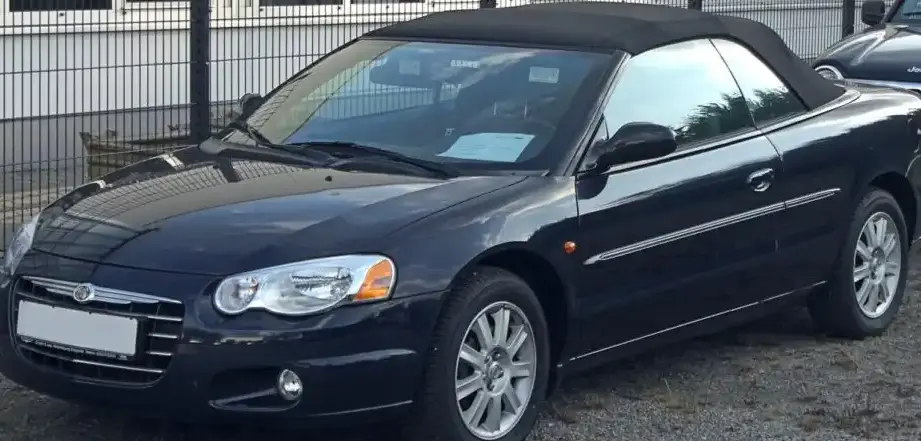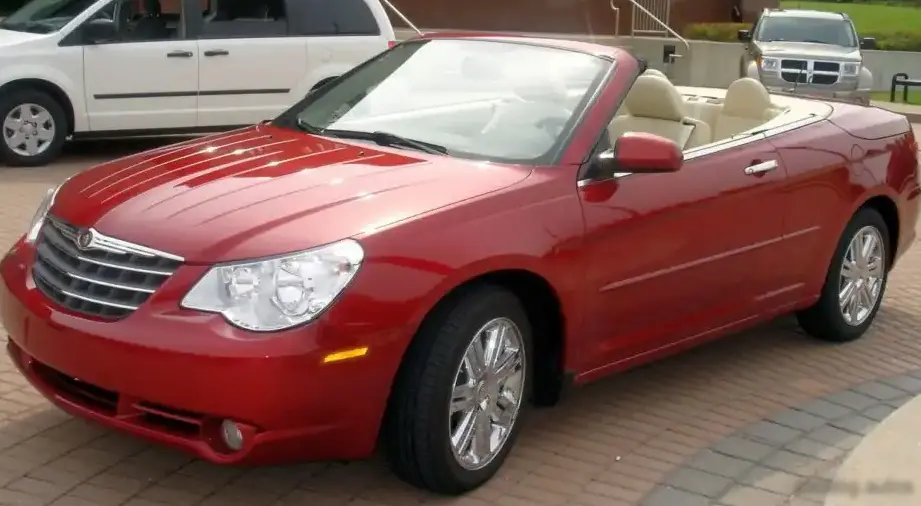
The Chrysler Sebring Convertible (JS) 3.5i V6, produced from 2007 to 2010, represented the top-tier engine option for the JS generation of the Sebring convertible. Positioned as the premium offering within the lineup, it aimed to provide a more spirited driving experience compared to the base 2.4L four-cylinder models. This variant was a key part of Chrysler’s attempt to revitalize the Sebring nameplate, offering a blend of open-air enjoyment and respectable performance in the mid-size convertible segment. It competed directly with vehicles like the Ford Mustang Convertible, Mazda MX-5 Miata, and the Chevrolet Corvette in terms of providing an affordable and accessible convertible experience.
Technical Specifications
| Brand | Chrysler |
| Model | Sebring |
| Generation | Sebring Convertible (JS) |
| Type (Engine) | 3.5i V6 (235 Hp) |
| Start of production | 2007 |
| End of production | 2010 |
| Powertrain Architecture | Internal Combustion engine |
| Body type | Cabriolet |
| Seats | 4 |
| Doors | 2 |
| Fuel Type | Petrol (Gasoline) |
| Emission standard | Euro 5 |
| Power | 235 Hp @ 6000 rpm |
| Power per litre | 66.8 Hp/l |
| Torque | 339 Nm @ 4400 rpm / 250.03 lb.-ft. @ 4400 rpm |
| Engine layout | Front, Longitudinal |
| Engine Model/Code | EGG |
| Engine displacement | 3518 cm3 / 214.68 cu. in. |
| Number of cylinders | 6 |
| Engine configuration | V-engine |
| Cylinder Bore | 96 mm / 3.78 in. |
| Piston Stroke | 81 mm / 3.19 in. |
| Compression ratio | 10:1 |
| Number of valves per cylinder | 4 |
| Fuel injection system | Multi-port manifold injection |
| Engine aspiration | Naturally aspirated engine |
| Engine oil capacity | 5.2 l / 5.49 US qt | 4.58 UK qt |
| Fuel tank capacity | 64 l / 16.91 US gal | 14.08 UK gal |
| Length | 4850 mm / 190.94 in. |
| Width | 1843 mm / 72.56 in. |
| Height | 1497 mm / 58.94 in. |
| Wheelbase | 2765 mm / 108.86 in. |
| Drivetrain Architecture | The Internal combustion engine (ICE) drives the front wheels of the vehicle. |
| Drive wheel | Front wheel drive |
| Number of gears and type of gearbox | 6 gears, manual transmission |
| Front suspension | Independent type McPherson |
| Rear suspension | Several levers and rods |
| Front brakes | Ventilated discs |
| Rear brakes | Disc |
| Assisting systems | ABS (Anti-lock braking system) |
| Steering type | Steering rack and pinion |
| Power steering | Hydraulic Steering |
Powertrain & Engine Architecture
The heart of the Sebring Convertible 3.5i V6 is the EGG engine, a 3.5-liter (3518 cc) naturally aspirated V6. This engine utilizes a 60-degree V-angle configuration, contributing to a relatively smooth power delivery. The engine employs multi-port fuel injection, delivering fuel directly into the intake ports just before the intake valves. This system, while not as advanced as direct injection, was effective for its time in optimizing fuel combustion and power output. The valvetrain features four valves per cylinder (DOHC), enhancing breathing and contributing to the engine’s 235 horsepower at 6,000 rpm and 250 lb-ft of torque at 4,400 rpm. The engine’s longitudinal mounting allowed for a more balanced weight distribution, though the front-wheel-drive configuration still presented inherent handling challenges. The six-speed manual transmission provided precise gear changes and allowed drivers to fully exploit the engine’s power band.
Driving Characteristics
The 3.5L V6 significantly altered the driving experience compared to the base four-cylinder Sebring Convertible. Acceleration was noticeably quicker, allowing for more confident merging and overtaking maneuvers. The six-speed manual transmission offered a more engaging driving experience, allowing drivers to maintain optimal engine speed for power or fuel efficiency. While not a sports car, the 3.5i V6 provided a respectable level of performance for a mid-size convertible. The front-wheel-drive layout, however, could lead to torque steer under hard acceleration. The gear ratios were tuned to balance acceleration and highway cruising, with sixth gear providing a comfortable and fuel-efficient experience at higher speeds. Compared to the four-cylinder, the V6 offered a more refined and powerful driving experience, but at the cost of increased fuel consumption.
Equipment & Trim Levels
The 3.5i V6 Sebring Convertible typically came standard with features such as air conditioning, power windows and locks, a premium sound system, and alloy wheels. Leather upholstery was often standard or available as an option, along with features like heated seats and a power-operated convertible top. Optional extras included a navigation system, upgraded audio systems, and various cosmetic enhancements. The interior design was generally considered comfortable and functional, though the materials used were not always of the highest quality. The dashboard layout was straightforward and easy to use, with clearly labeled controls. The trim level often included unique badging and exterior accents to distinguish it from the lower-spec models.
Chassis & Braking
The Sebring Convertible utilized an independent McPherson strut suspension in the front and a multi-link suspension in the rear. This setup aimed to provide a comfortable ride while maintaining reasonable handling characteristics. The front brakes were ventilated discs, providing ample stopping power, while the rear brakes were solid discs. ABS (Anti-lock Braking System) was standard, enhancing safety and control during emergency braking situations. The steering system was a hydraulic rack-and-pinion setup, offering responsive and precise steering feel. Stabilizer bars were included both front and rear to reduce body roll during cornering. The chassis was designed to provide adequate rigidity for a convertible, but some flex was noticeable over uneven road surfaces.
Market Reception & Comparison
Critics generally praised the Sebring Convertible 3.5i V6 for its improved performance compared to the base models. However, the car was often criticized for its interior quality and handling, which were considered less refined than some of its competitors. Fuel economy was also a concern, as the V6 engine consumed significantly more fuel than the four-cylinder option. Compared to the four-cylinder Sebring, the 3.5i V6 offered a substantial performance upgrade, but at a higher price point and with reduced fuel efficiency. The manual transmission was appreciated by driving enthusiasts, but the automatic transmission was more popular among mainstream buyers. Overall, the 3.5i V6 was seen as a decent option for those seeking a stylish and relatively powerful convertible, but it didn’t quite reach the level of refinement offered by some of its rivals.
Legacy
The Chrysler Sebring Convertible 3.5i V6, while not a groundbreaking vehicle, holds a place as a capable and enjoyable convertible of its era. The EGG V6 engine proved to be relatively reliable, though regular maintenance is crucial to prevent issues such as oil leaks and timing chain wear. In the used car market, these convertibles are often available at affordable prices, making them an attractive option for those seeking an open-air driving experience on a budget. However, potential buyers should be aware of potential issues with the convertible top mechanism and the car’s overall build quality. The Sebring Convertible 3.5i V6 represents a chapter in Chrysler’s history, showcasing their attempt to compete in the competitive convertible segment with a blend of style, performance, and affordability.