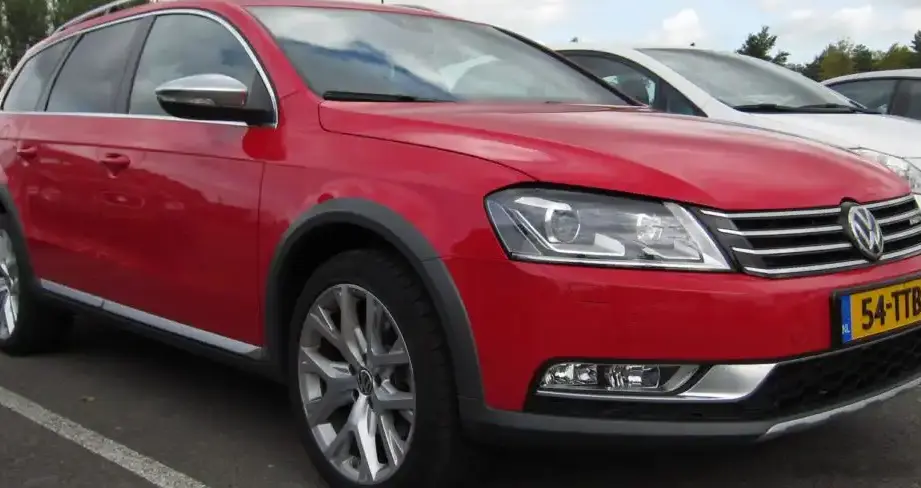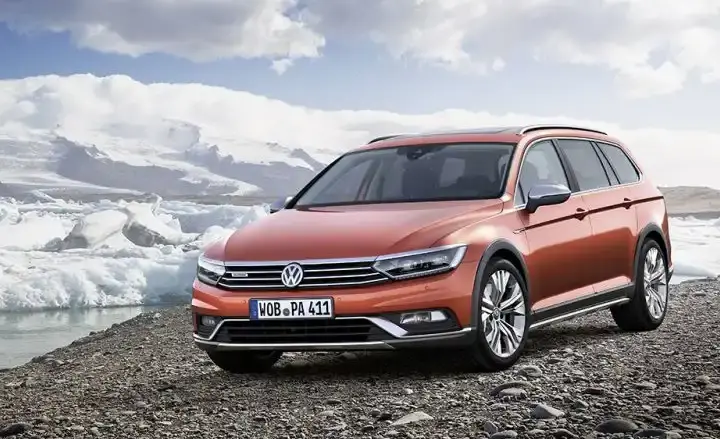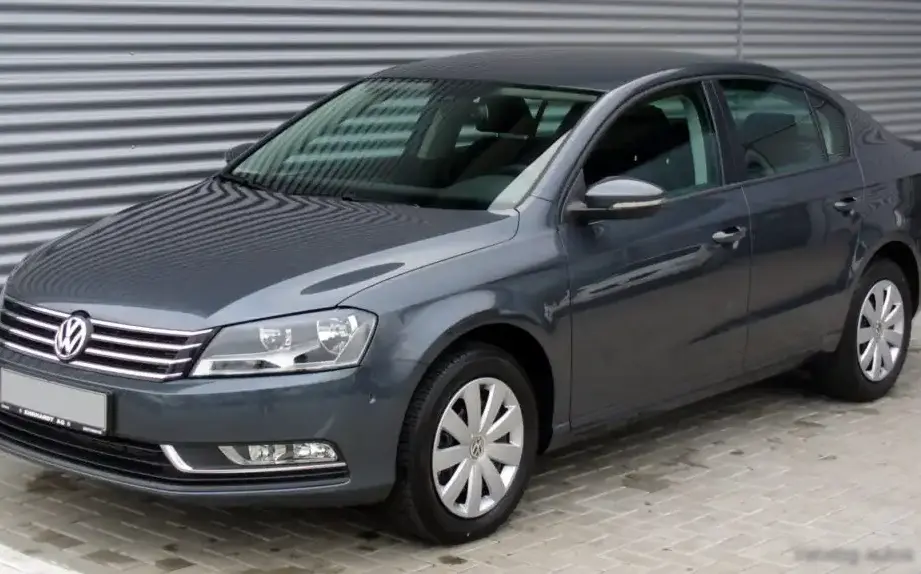
The Volkswagen Passat B7 2.0 TDI BMT (170 hp) represents a significant iteration of Volkswagen’s popular mid-size sedan, produced between 2010 and 2012. Positioned as a mid-range offering within the B7 generation (2010-2014), this variant aimed to balance fuel efficiency with respectable performance, appealing to drivers seeking a practical and economical family vehicle. It built upon the success of the B6 Passat, offering refinements in styling, technology, and driving dynamics. The “BMT” designation stands for “BlueMotion Technology,” signifying Volkswagen’s efforts to improve fuel economy and reduce emissions. This model was primarily sold in the European market, where diesel engines held a dominant share of the automotive landscape.
Technical Specifications
| Brand | Volkswagen |
| Model | Passat |
| Generation | Passat (B7) |
| Type (Engine) | 2.0 TDI BMT (170 Hp) |
| Start of production | 2010 |
| End of production | 2012 |
| Powertrain Architecture | Internal Combustion engine |
| Body type | Sedan |
| Seats | 5 |
| Doors | 4 |
| Fuel consumption (economy) – urban (NEDC) | 5.4 l/100 km (43.6 US mpg, 52.3 UK mpg, 18.5 km/l) |
| Fuel consumption (economy) – extra urban (NEDC) | 4.1 l/100 km (57.4 US mpg, 68.9 UK mpg, 24.4 km/l) |
| Fuel consumption (economy) – combined (NEDC) | 4.6 l/100 km (51.1 US mpg, 61.4 UK mpg, 21.7 km/l) |
| CO2 emissions (NEDC) | 120 g/km |
| Fuel Type | Diesel |
| Acceleration 0 – 100 km/h | 8.6 sec |
| Acceleration 0 – 62 mph | 8.6 sec |
| Acceleration 0 – 60 mph | 8.2 sec |
| Maximum speed | 227 km/h (141.05 mph) |
| Emission standard | Euro 5 |
| Weight-to-power ratio | 8.7 kg/Hp, 114.5 Hp/tonne |
| Weight-to-torque ratio | 4.2 kg/Nm, 235.7 Nm/tonne |
| Power | 170 Hp @ 4200 rpm |
| Power per litre | 86.4 Hp/l |
| Torque | 350 Nm @ 1750-2500 rpm (258.15 lb.-ft. @ 1750-2500 rpm) |
| Engine layout | Front, Transverse |
| Engine Model/Code | EA189 / CFGB |
| Engine displacement | 1968 cm3 (120.09 cu. in.) |
| Number of cylinders | 4 |
| Engine configuration | Inline |
| Cylinder Bore | 81 mm (3.19 in.) |
| Piston Stroke | 95.5 mm (3.76 in.) |
| Compression ratio | 16:1 |
| Number of valves per cylinder | 4 |
| Fuel injection system | Diesel Commonrail |
| Engine aspiration | Turbocharger, Intercooler |
| Valvetrain | DOHC |
| Engine oil capacity | 4.3 l (4.54 US qt | 3.78 UK qt) |
| Kerb Weight | 1485 kg (3273.86 lbs.) |
| Max. weight | 2100 kg (4629.71 lbs.) |
| Max load | 615 kg (1355.84 lbs.) |
| Trunk (boot) space – minimum | 565 l (19.95 cu. ft.) |
| Fuel tank capacity | 70 l (18.49 US gal | 15.4 UK gal) |
| Max. roof load | 100 kg (220.46 lbs.) |
| Permitted trailer load with brakes (8%) | 2000 kg (4409.25 lbs.) |
| Permitted trailer load with brakes (12%) | 1800 kg (3968.32 lbs.) |
| Permitted trailer load without brakes | 750 kg (1653.47 lbs.) |
| Permitted towbar download | 90 kg (198.42 lbs.) |
| Length | 4769 mm (187.76 in.) |
| Width | 1820 mm (71.65 in.) |
| Width including mirrors | 2062 mm (81.18 in.) |
| Height | 1470 mm (57.87 in.) |
| Wheelbase | 2712 mm (106.77 in.) |
| Front track | 1552 mm (61.1 in.) |
| Rear (Back) track | 1551 mm (61.06 in.) |
| Front overhang | 941 mm (37.05 in.) |
| Rear overhang | 1116 mm (43.94 in.) |
| Ride height (ground clearance) | 135 mm (5.31 in.) |
| Minimum turning circle (turning diameter) | 11.4 m (37.4 ft.) |
| Drivetrain Architecture | The Internal combustion engine (ICE) drives the front wheels of the vehicle. |
| Drive wheel | Front wheel drive |
| Number of gears and type of gearbox | 6 gears, manual transmission |
| Front suspension | Independent, type McPherson with coil spring and anti-roll bar |
| Rear suspension | Independent multi-link spring suspension with stabilizer |
| Front brakes | Ventilated discs, 312×25 mm |
| Rear brakes | Disc, 286×12 mm |
| Assisting systems | ABS (Anti-lock braking system) |
| Steering type | Steering rack and pinion |
| Power steering | Electric Steering |
| Tires size | 215/55 R16; 235/45 R17; 235/40 R18 |
| Wheel rims size | 7J x 16; 7.5J x 17; 8J x 18 |
Powertrain & Engine Architecture
The heart of the Passat B7 2.0 TDI BMT is the EA189 series 2.0-liter inline-four diesel engine, specifically the CFGB code. This engine utilizes a common rail direct injection system, delivering fuel at extremely high pressures for optimized combustion. The turbocharger, coupled with an intercooler, provides increased air density for improved power output. The engine features a double overhead camshaft (DOHC) valvetrain with four valves per cylinder, enhancing volumetric efficiency. The “BMT” designation incorporates features like start-stop technology and optimized aerodynamics to reduce fuel consumption. The engine produces 170 horsepower at 4200 rpm and 350 Nm (258 lb-ft) of torque between 1750 and 2500 rpm. This power is delivered to the front wheels through a six-speed manual transmission, although a Direct-Shift Gearbox (DSG) was also available as an option.
Driving Characteristics
The 2.0 TDI BMT with the manual transmission offers a balanced driving experience. While not overtly sporty, the engine provides sufficient torque for confident overtaking and comfortable cruising. The six-speed gearbox is well-matched to the engine’s characteristics, allowing for relaxed highway driving. Compared to the more powerful 2.0 TDI variants (often exceeding 170 hp), this version prioritizes fuel economy over outright performance. The manual transmission provides more driver engagement than the optional DSG, but requires more effort in stop-and-go traffic. The gear ratios are tuned for efficiency, meaning the engine doesn’t rev as freely as some gasoline counterparts. Acceleration from 0-100 km/h (0-62 mph) takes approximately 8.6 seconds, which is respectable for a diesel-powered family sedan.
Equipment & Trim Levels
The 2.0 TDI BMT typically came equipped with a solid base level of features. Standard equipment often included air conditioning, power windows, power mirrors, a CD/MP3 stereo system, and alloy wheels. Higher trim levels, such as Trendline, Comfortline, and Highline, added features like automatic climate control, a touchscreen infotainment system, parking sensors, and leather upholstery. Optional extras included a sunroof, navigation system, and advanced driver-assistance systems. Interior upholstery was typically cloth on the base models, with leather options available on higher trims. The dashboard layout was functional and well-designed, with a focus on ergonomics.
Chassis & Braking
The Passat B7 utilizes an independent suspension setup, with a McPherson strut front suspension and a multi-link rear suspension. This configuration provides a comfortable ride and good handling characteristics. The front suspension incorporates a stabilizer bar to reduce body roll. Braking duties are handled by ventilated discs at the front and solid discs at the rear. Anti-lock Braking System (ABS) is standard. The chassis was tuned to prioritize comfort and stability, rather than outright sportiness. The weight distribution is relatively balanced, contributing to predictable handling.
Market Reception & Comparison
The Passat B7 2.0 TDI BMT was generally well-received by automotive critics. It was praised for its fuel efficiency, comfortable ride, and spacious interior. However, some critics noted that the engine could be somewhat noisy and that the performance wasn’t as exhilarating as some of its competitors. Compared to the higher-output TDI variants, the BMT offered significantly better fuel economy but at the expense of some performance. Compared to gasoline-powered Passats, the TDI BMT provided superior fuel economy and torque, making it a popular choice for drivers who covered long distances.
Legacy
The EA189 engine family, including the CFGB code used in the Passat B7 2.0 TDI BMT, has a generally good reputation for reliability, although it was subject to a diesel emissions scandal (“Dieselgate”) that affected many Volkswagen Group vehicles. Proper maintenance, including regular oil changes and filter replacements, is crucial for long-term reliability. On the used car market, these Passats represent a good value proposition, offering a blend of practicality, fuel efficiency, and comfort. However, potential buyers should be aware of the potential for issues related to the diesel emissions system and ensure that any necessary software updates have been performed. The B7 Passat, and particularly this 2.0 TDI BMT variant, remains a popular choice for those seeking a dependable and economical mid-size sedan.