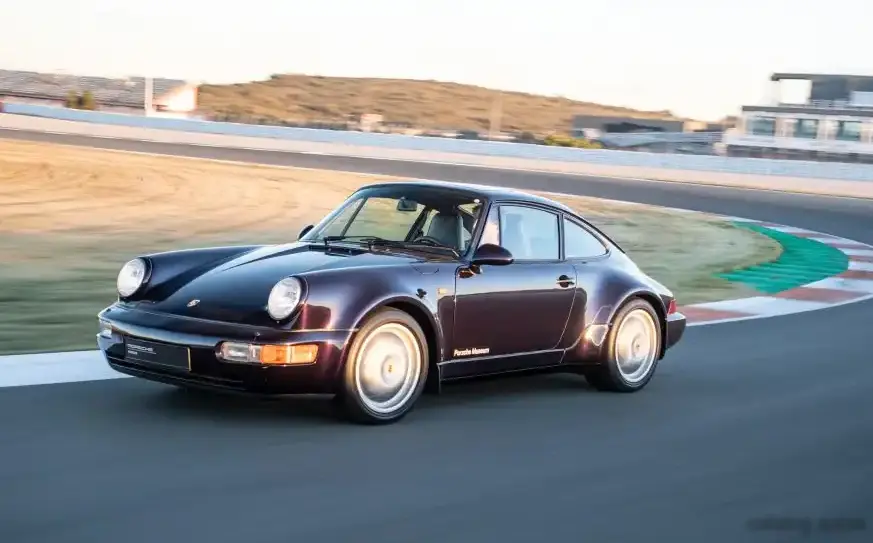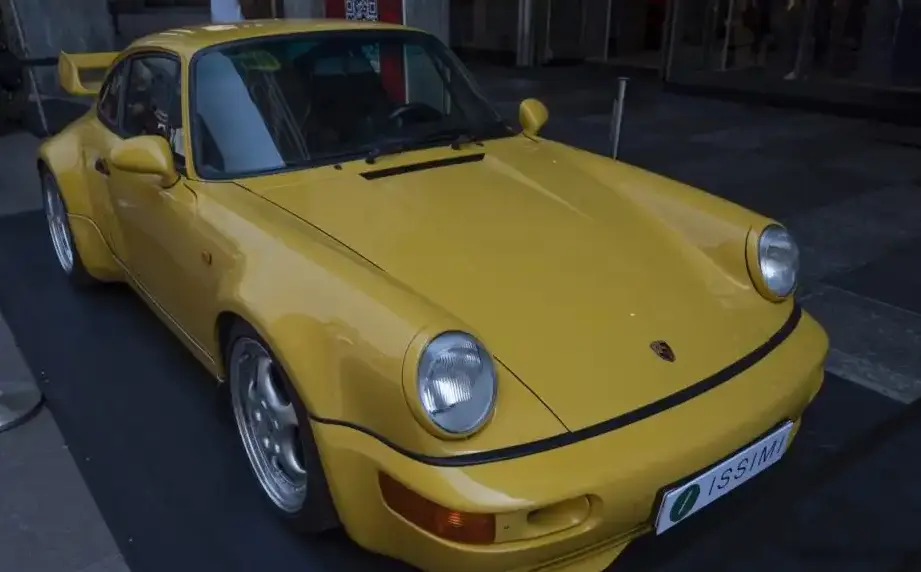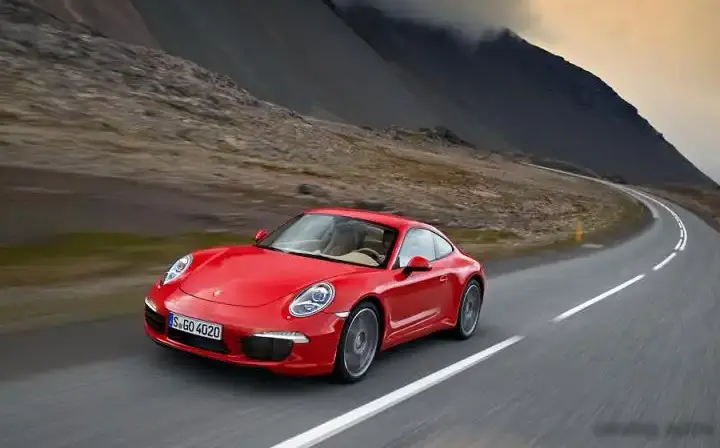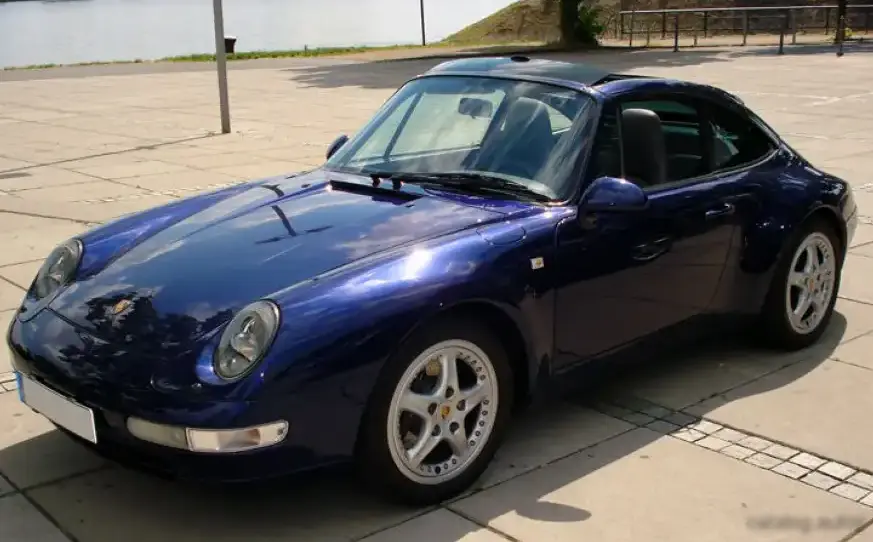
The Porsche 911 Targa (993) 3.6, produced from 1996 to 1997, represents a pivotal moment in the 911 lineage. It was the final iteration of the air-cooled 911 before the introduction of the 996 generation, marking the end of an era. The 993 Targa combined the classic 911 silhouette with Porsche’s innovative Targa top – a semi-automatic retractable glass roof – offering open-air driving enjoyment with added security and refinement. This 3.6-liter variant sat towards the upper end of the 993 Targa range, offering a significant performance upgrade over the base 3.0-liter models, but remained more accessible than the high-performance Turbo variants.
Technical Specifications
| Brand | Porsche |
| Model | 911 |
| Generation | 911 Targa (993) |
| Type (Engine) | 3.6 (285 Hp) |
| Start of production | 1996 |
| End of production | 1997 |
| Powertrain Architecture | Internal Combustion engine |
| Body type | Targa |
| Seats | 4 |
| Doors | 2 |
| Fuel consumption (urban) | 18.2 l/100 km (12.9 US mpg, 15.5 UK mpg, 5.5 km/l) |
| Fuel consumption (extra urban) | 9.1 l/100 km (25.8 US mpg, 31 UK mpg, 11 km/l) |
| Fuel consumption (combined) | 12.4 l/100 km (19 US mpg, 22.8 UK mpg, 8.1 km/l) |
| CO2 emissions | 289 g/km |
| Fuel Type | Petrol (Gasoline) |
| Acceleration 0 – 100 km/h | 5.4 sec |
| Acceleration 0 – 62 mph | 5.4 sec |
| Acceleration 0 – 60 mph | 5.1 sec |
| Maximum speed | 275 km/h (170.88 mph) |
| Weight-to-power ratio | 4.9 kg/Hp, 203.6 Hp/tonne |
| Weight-to-torque ratio | 4.1 kg/Nm, 242.9 Nm/tonne |
| Power | 285 Hp @ 6100 rpm |
| Power per litre | 79.2 Hp/l |
| Torque | 340 Nm @ 5250 rpm (250.77 lb.-ft. @ 5250 rpm) |
| Engine layout | Rear, Longitudinal |
| Engine Model/Code | M64.21 |
| Engine displacement | 3600 cm3 (219.69 cu. in.) |
| Number of cylinders | 6 |
| Engine configuration | Boxer |
| Cylinder Bore | 100 mm (3.94 in.) |
| Piston Stroke | 76.4 mm (3.01 in.) |
| Compression ratio | 11.3:1 |
| Number of valves per cylinder | 2 |
| Fuel injection system | Multi-port manifold injection |
| Engine aspiration | Naturally aspirated engine |
| Valvetrain | SOHC |
| Engine oil capacity | 9 l (9.51 US qt | 7.92 UK qt) |
| Kerb Weight | 1400 kg (3086.47 lbs.) |
| Max. weight | 1740 kg (3836.04 lbs.) |
| Max load | 340 kg (749.57 lbs.) |
| Trunk (boot) space – maximum | 123 l (4.34 cu. ft.) |
| Length | 4245 mm (167.13 in.) |
| Width | 1735 mm (68.31 in.) |
| Height | 1300 mm (51.18 in.) |
| Wheelbase | 2275 mm (89.57 in.) |
| Front track | 1405 mm (55.31 in.) |
| Rear (Back) track | 1474 mm (58.03 in.) |
| Drivetrain Architecture | The Internal combustion engine (ICE) drives the rear wheels of the vehicle. |
| Drive wheel | Rear wheel drive |
| Number of gears and type of gearbox | 6 gears, manual transmission |
| Front suspension | Independent type McPherson |
| Rear suspension | Independent multi-link suspension |
| Front brakes | Ventilated discs |
| Rear brakes | Ventilated discs |
| Assisting systems | ABS (Anti-lock braking system) |
| Steering type | Steering rack and pinion |
| Power steering | Hydraulic Steering |
| Tires size | 205/55 R16; 245/45 R16 |
| Wheel rims size | 7J x 16; 9J x 16 |
Powertrain & Engine Architecture
The heart of the 993 Targa 3.6 is the M64.21 engine, a 3.6-liter naturally aspirated flat-six. This engine represents a significant evolution of the air-cooled 911 powerplant. It featured hydraulic chain tensioners, addressing a common reliability concern in earlier 911s. The engine utilized a multi-port fuel injection system, carefully tuned to deliver a balance of performance and drivability. The valvetrain employed a single overhead camshaft (SOHC) design, operating two valves per cylinder. The engine’s boxer configuration – with cylinders opposed horizontally – contributed to a low center of gravity, enhancing handling. The 993 Targa 3.6 was exclusively offered with a six-speed manual transmission, providing precise gear changes and allowing the driver to fully exploit the engine’s powerband. This transmission was a significant upgrade over the five-speed units found in earlier 911s, offering closer ratios and improved shift quality.
Driving Characteristics
The 993 Targa 3.6 offered a compelling driving experience. With 285 horsepower and 250 lb-ft of torque, it delivered brisk acceleration – 0 to 60 mph in around 5.1 seconds – and a top speed of 171 mph. The six-speed manual transmission allowed for precise control and encouraged spirited driving. Compared to the base 3.0-liter Targa, the 3.6 offered a noticeable increase in power and torque throughout the rev range, making it more enjoyable for both everyday driving and spirited weekend excursions. While not as raw or visceral as earlier 911s, the 993 Targa 3.6 provided a refined and engaging driving experience, blending performance with comfort and usability. The rear-wheel drive configuration and the engine’s rearward placement contributed to a distinctive handling balance, requiring attentive driving but rewarding skilled drivers with exceptional cornering ability.
Equipment & Trim Levels
The 993 Targa 3.6 came reasonably well-equipped as standard. Interior features included leather upholstery, power windows, power steering, and an upgraded audio system. The Targa top itself was a key feature, offering a unique open-air experience. Optional extras were plentiful, allowing buyers to personalize their vehicles. Popular options included heated seats, a limited-slip differential, and various cosmetic enhancements. The interior trim could be customized with different leather colors and wood or carbon fiber accents. While not as lavishly appointed as some contemporary grand tourers, the 993 Targa 3.6 offered a comfortable and well-designed interior that prioritized driver engagement.
Chassis & Braking
The 993 Targa 3.6 utilized a sophisticated chassis design. It featured independent suspension all around, with McPherson struts at the front and a multi-link setup at the rear. This suspension configuration provided a good balance of ride comfort and handling precision. Braking duties were handled by ventilated disc brakes on all four wheels, providing ample stopping power. An Anti-lock Braking System (ABS) was standard, enhancing safety and control. The chassis was relatively lightweight, contributing to the car’s agile handling characteristics. The steering was a rack-and-pinion system with hydraulic power assistance, offering precise and responsive steering feel.
Market Reception & Comparison
The 993 Targa 3.6 was generally well-received by automotive critics. It was praised for its performance, handling, and refined driving experience. The Targa top was seen as a stylish and practical alternative to the coupe and cabriolet body styles. Compared to the base 3.0-liter Targa, the 3.6 offered a significant performance upgrade, making it the preferred choice for enthusiasts. Fuel economy was reasonable for a sports car of its era, averaging around 19 mpg combined. Reliability was generally good, although maintenance costs could be high due to the car’s complex engineering and the need for specialized Porsche service.
Legacy
The Porsche 993 Targa 3.6 holds a special place in Porsche history as the last of the air-cooled 911s. It represents a culmination of decades of engineering refinement and a transition to a new era of water-cooled technology. Today, the 993 Targa 3.6 is a highly sought-after collectible, prized by enthusiasts for its classic design, engaging driving experience, and historical significance. Well-maintained examples command high prices in the used car market. The M64.21 engine is known for its durability, but regular maintenance is essential to ensure its continued reliability. The 993 Targa 3.6 remains a testament to Porsche’s commitment to performance, innovation, and timeless design.