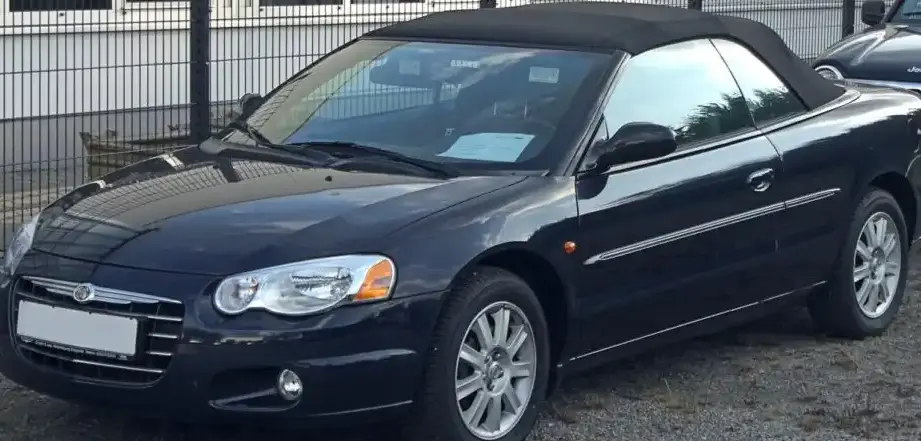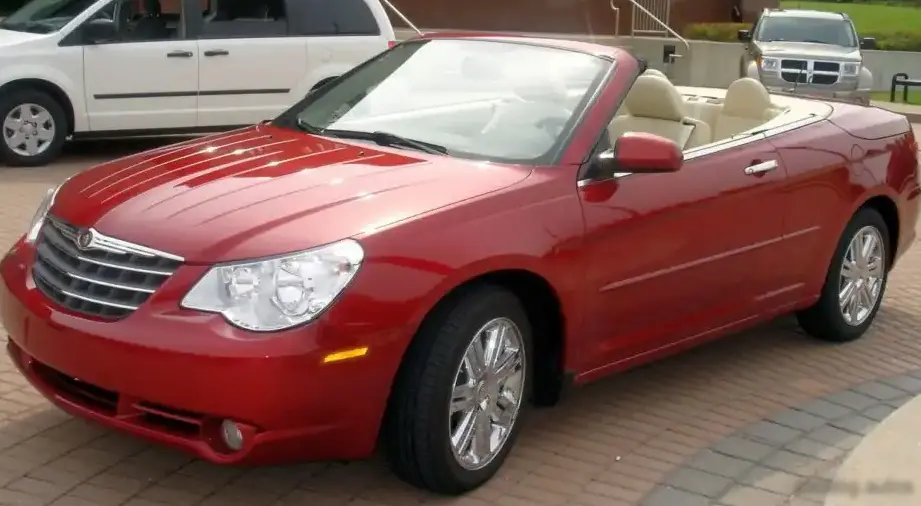
The Chrysler Sebring Convertible (JS) Hard Top 2.0 CRD, produced between 2007 and 2010, represented a somewhat unusual offering in the American convertible market. While the Sebring name had a long history, the JS generation, and particularly this diesel-powered variant, was primarily aimed at European markets where diesel engines enjoyed greater popularity and stricter fuel economy standards. This model sought to blend the appeal of open-top motoring with the efficiency of a modern turbodiesel engine. It occupied a middle ground in the Sebring Convertible lineup, positioned below the more powerful gasoline-fueled options but offering a more economical alternative. The “Hard Top” designation refers to the retractable metal roof, a feature becoming increasingly common in convertibles at the time.
Technical Specifications
| Brand | Chrysler |
| Model | Sebring |
| Generation | Sebring Convertible (JS) |
| Type (Engine) | Hard Top 2.0 CRD (140 Hp) |
| Start of production | 2007 |
| End of production | 2010 |
| Powertrain Architecture | Internal Combustion engine |
| Body type | Cabriolet |
| Seats | 4 |
| Doors | 2 |
| Fuel consumption (urban) | 8.7 l/100 km (27 US mpg, 32.5 UK mpg, 11.5 km/l) |
| Fuel consumption (extra urban) | 5.6 l/100 km (42 US mpg, 50.4 UK mpg, 17.9 km/l) |
| Fuel consumption (combined) | 6.8 l/100 km (34.6 US mpg, 41.5 UK mpg, 14.7 km/l) |
| CO2 emissions | 183 g/km |
| Fuel Type | Diesel |
| Acceleration 0 – 100 km/h | 11.8 sec |
| Acceleration 0 – 62 mph | 11.8 sec |
| Acceleration 0 – 60 mph | 11.2 sec |
| Maximum speed | 185 km/h (114.95 mph) |
| Emission standard | Euro 4 |
| Weight-to-power ratio | 12.7 kg/Hp, 78.9 Hp/tonne |
| Weight-to-torque ratio | 5.7 kg/Nm, 174.6 Nm/tonne |
| Power | 140 Hp @ 4000 rpm |
| Power per litre | 71.1 Hp/l |
| Torque | 310 Nm @ 1750-2500 rpm (228.64 lb.-ft. @ 1750-2500 rpm) |
| Engine layout | Front, Transverse |
| Engine Model/Code | ECD |
| Engine displacement | 1968 cm3 (120.09 cu. in.) |
| Number of cylinders | 4 |
| Engine configuration | Inline |
| Cylinder Bore | 81 mm (3.19 in.) |
| Piston Stroke | 95.5 mm (3.76 in.) |
| Compression ratio | 18.5:1 |
| Number of valves per cylinder | 4 |
| Fuel injection system | Pump-nozzle (Unit Injector) |
| Engine aspiration | Turbocharger, Intercooler |
| Engine oil capacity | 4 l (4.23 US qt | 3.52 UK qt) |
| Coolant | 7.8 l (8.24 US qt | 6.86 UK qt) |
| Kerb Weight | 1775-1850 kg (3913.21 – 4078.55 lbs.) |
| Max. weight | 2175 kg (4795.05 lbs.) |
| Max load | 325-400 kg (716.5 – 881.85 lbs.) |
| Trunk (boot) space – maximum | 371 l (13.1 cu. ft.) |
| Fuel tank capacity | 63 l (16.64 US gal | 13.86 UK gal) |
| Permitted trailer load with brakes (12%) | 1425 kg (3141.59 lbs.) |
| Permitted trailer load without brakes | 450 kg (992.08 lbs.) |
| Permitted towbar download | 75 kg (165.35 lbs.) |
| Length | 4930 mm (194.09 in.) |
| Width | 1843 mm (72.56 in.) |
| Height | 1500 mm (59.06 in.) |
| Wheelbase | 2765 mm (108.86 in.) |
| Front track | 1570 mm (61.81 in.) |
| Rear (Back) track | 1570 mm (61.81 in.) |
| Drivetrain Architecture | The Internal combustion engine (ICE) drives the front wheels of the vehicle. |
| Drive wheel | Front wheel drive |
| Number of gears and type of gearbox | 6 gears, manual transmission |
| Front suspension | Independent type McPherson |
| Rear suspension | Several levers and rods |
| Front brakes | Ventilated discs |
| Rear brakes | Disc |
| Assisting systems | ABS (Anti-lock braking system) |
| Steering type | Steering rack and pinion |
| Power steering | Hydraulic Steering |
| Tires size | 215/60 R17; 215/55 R18 |
| Wheel rims size | 6; 5J x 17; 7; 0J x 18 |
Powertrain & Engine Architecture
The heart of this Sebring Convertible variant is the 2.0-liter four-cylinder diesel engine, designated ECD. This engine utilizes a common-rail direct injection system with pump-nozzle (unit injector) technology. This system allows for precise fuel delivery, contributing to both efficiency and reduced emissions. The engine is turbocharged and intercooled, boosting power output to 140 horsepower at 4000 rpm and 310 Nm (228.64 lb-ft) of torque between 1750 and 2500 rpm. The engine’s inline-four configuration and transverse mounting were typical for front-wheel-drive vehicles of this class. The 18.5:1 compression ratio is indicative of a diesel engine designed for efficient combustion. The engine’s oil capacity is 4 liters, and it requires 7.8 liters of coolant.
Driving Characteristics
The 2.0 CRD engine, paired with a 6-speed manual transmission, provided a different driving experience compared to the gasoline-powered Sebring Convertibles. While not offering the outright acceleration of the larger engines, the diesel delivered strong low-end torque, making it relatively easy to drive in everyday situations. The 0-60 mph time of around 11.2 seconds and a top speed of 114.95 mph were respectable, but the focus was more on fuel economy and relaxed cruising. The manual transmission allowed for greater driver control, but the gear ratios were tuned for efficiency rather than sporty performance. The diesel engine’s power delivery was linear, but the engine could feel strained at higher RPMs.
Equipment & Trim Levels
The 2.0 CRD Hard Top typically came with a reasonable level of standard equipment, though it wasn’t as lavishly equipped as the higher-end gasoline models. Standard features generally included air conditioning, power windows and locks, a basic audio system, and alloy wheels. The interior upholstery was typically cloth, though leather options were available. The dashboard layout was similar across the Sebring Convertible range, featuring a straightforward design with easy-to-read gauges. Optional extras could include a premium audio system, upgraded interior trim, and a navigation system.
Chassis & Braking
The Sebring Convertible JS utilized an independent McPherson strut suspension in the front and a multi-link suspension in the rear. This setup aimed to provide a balance between ride comfort and handling. The braking system consisted of ventilated discs at the front and solid discs at the rear, equipped with ABS (Anti-lock Braking System) as standard. The steering was rack-and-pinion with hydraulic power assistance. Tire sizes varied depending on the trim level, with 215/60 R17 and 215/55 R18 being common options.
Market Reception & Comparison
The 2.0 CRD Sebring Convertible received mixed reviews. Critics generally praised its fuel economy and torque, but some found the engine to be somewhat noisy and lacking the refinement of some European diesel offerings. Compared to the gasoline-powered Sebring Convertibles, the diesel offered significantly better fuel economy but less overall performance. The diesel variant was often seen as a more practical choice for drivers who prioritized efficiency and long-distance cruising over sporty driving. Reliability reports were generally average, with some owners reporting issues with the diesel particulate filter (DPF) and fuel injection system.
Legacy
The Chrysler Sebring Convertible 2.0 CRD remains a relatively uncommon vehicle, particularly in the United States. Its diesel engine and European focus limited its appeal in the American market. However, it represents an interesting attempt by Chrysler to offer a more fuel-efficient convertible option. On the used car market, these models tend to be relatively affordable, but potential buyers should be aware of the potential maintenance costs associated with diesel engines, particularly the DPF and fuel injection system. The engine, while not known for being exceptionally durable, can provide reliable service with proper maintenance. Its legacy lies in being a niche offering that showcased Chrysler’s willingness to experiment with alternative powertrains in a segment traditionally dominated by gasoline engines.