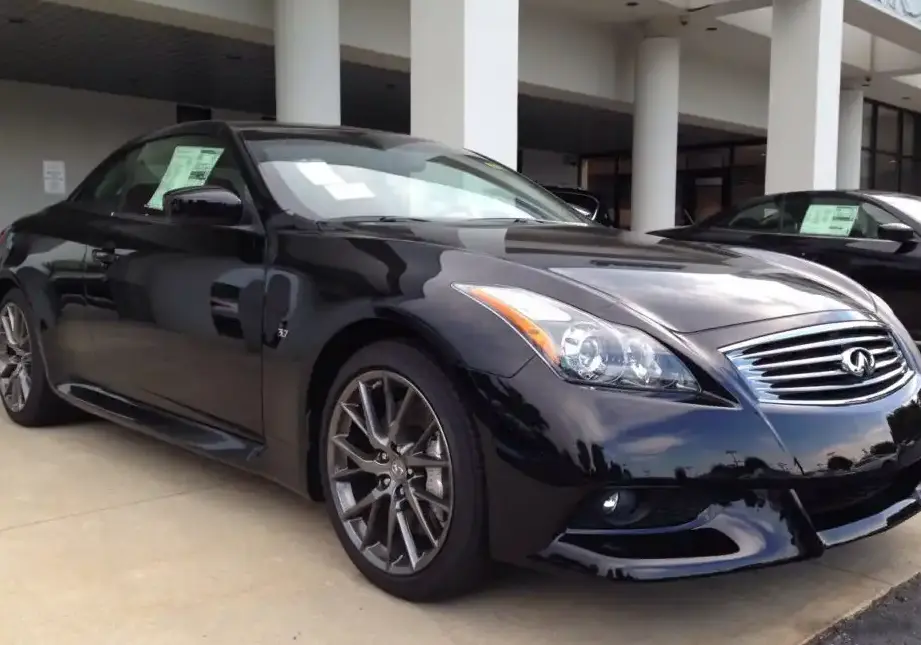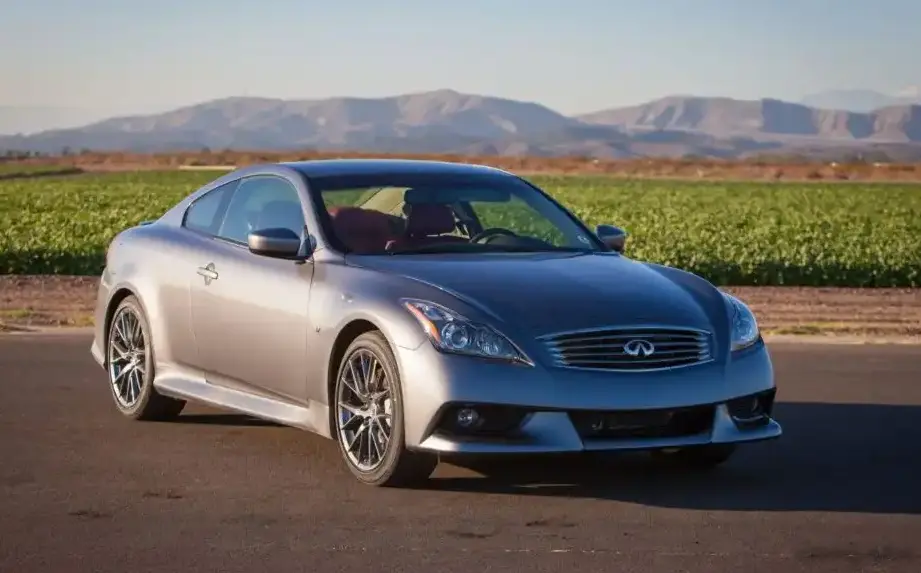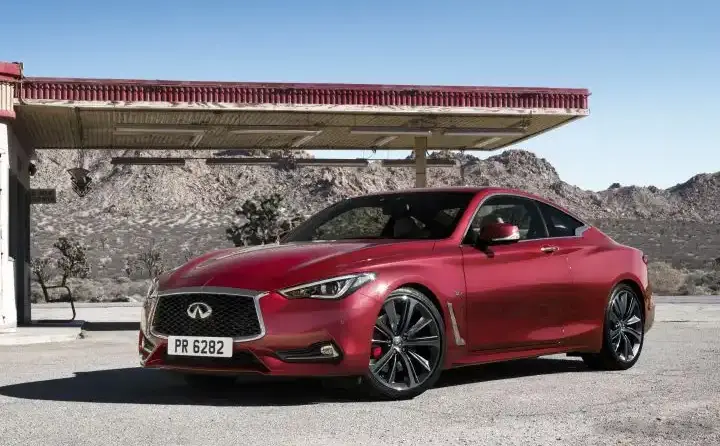
The Infiniti Q60 II Coupe 2.0, produced from 2016 to 2018, represented the entry point into the second generation of Infiniti’s stylish coupe. Positioned within the Q60 lineup – which also included the 3.0-liter V6 models – the 2.0-liter turbocharged variant aimed to deliver a balance of performance, fuel efficiency, and accessible luxury. It was primarily marketed in North America and select international markets as a competitor to vehicles like the BMW 4 Series, Audi A5, and Lexus RC. The Q60 II Coupe built upon the foundation of the earlier Infiniti G37 coupe, offering a more refined design and updated technology.
Technical Specifications
| Brand | Infiniti |
| Model | Q60 |
| Generation | Q60 II Coupe |
| Type (Engine) | 2.0 (211 Hp) Automatic |
| Start of production | 2016 |
| End of production | 2018 |
| Powertrain Architecture | Internal Combustion engine |
| Body type | Coupe |
| Seats | 4 |
| Doors | 2 |
| Fuel consumption (urban) | 9.2 l/100 km (25.6 US mpg) |
| Fuel consumption (extra urban) | 5.4 l/100 km (43.6 US mpg) |
| Fuel consumption (combined) | 6.8 l/100 km (34.6 US mpg) |
| CO2 emissions | 156 g/km |
| Fuel Type | Petrol (Gasoline) |
| Acceleration 0 – 100 km/h | 7.3 sec |
| Acceleration 0 – 62 mph | 7.3 sec |
| Acceleration 0 – 60 mph | 6.9 sec |
| Maximum speed | 235 km/h (146.02 mph) |
| Weight-to-power ratio | 7.8 kg/Hp |
| Weight-to-torque ratio | 4.7 kg/Nm |
| Power | 211 Hp @ 5500 rpm |
| Torque | 350 Nm @ 1500-3500 rpm (258.15 lb.-ft.) |
| Engine layout | Front, Longitudinal |
| Engine Model/Code | M 274 |
| Engine displacement | 1991 cm3 (121.5 cu. in.) |
| Number of cylinders | 4 |
| Engine configuration | Inline |
| Cylinder Bore | 83 mm (3.27 in.) |
| Piston Stroke | 92 mm (3.62 in.) |
| Compression ratio | 9.8:1 |
| Number of valves per cylinder | 4 |
| Fuel injection system | Direct injection |
| Engine aspiration | Turbocharger, Intercooler |
| Valvetrain | DOHC-CVVT |
| Engine oil capacity | 6.3 l (6.66 US qt | 5.54 UK qt) |
| Coolant capacity | 9 l (9.51 US qt | 7.92 UK qt) |
| Kerb Weight | 1647-1678 kg (3631.01 – 3699.36 lbs.) |
| Max. weight | 2140 kg (4717.89 lbs.) |
| Max load | 462-493 kg (1018.54 – 1086.88 lbs.) |
| Trunk (boot) space | 246 l (8.69 cu. ft.) |
| Fuel tank capacity | 76 l (20.08 US gal | 16.72 UK gal) |
| Length | 4684 mm (184.41 in.) |
| Width | 1849 mm (72.8 in.) |
| Height | 1394 mm (54.88 in.) |
| Wheelbase | 2850 mm (112.2 in.) |
| Drag coefficient (Cd) | 0.29 |
| Minimum turning circle | 11.2 m (36.75 ft.) |
| Drivetrain Architecture | Rear wheel drive |
| Number of gears | 7 |
| Gearbox type | Automatic transmission |
| Front suspension | Double wishbone |
| Rear suspension | Independent multi-link with stabilizer |
| Front brakes | Ventilated discs |
| Rear brakes | Ventilated discs |
| Assisting systems | ABS |
| Steering type | Steering rack and pinion |
| Power steering | Electric |
| Tires size | 255/40 R19 |
| Wheel rims size | 9J x 19 |
INTRODUCTION
The Infiniti Q60 II Coupe 2.0, launched in 2016, served as the gateway to the Q60 model range. It was built on the same platform (the VH platform, shared with the earlier G37) as its more powerful siblings, but distinguished itself with a smaller, turbocharged four-cylinder engine. This variant was designed to appeal to buyers seeking a stylish and comfortable coupe with reasonable running costs, without sacrificing the Infiniti brand’s emphasis on performance and luxury. Production continued through the 2018 model year, after which Infiniti focused on the 3.0-liter V6 powered models.
Powertrain & Engine Architecture
At the heart of the Q60 2.0 lies the Mercedes-Benz M274 2.0-liter inline-four cylinder engine. This engine was part of a collaboration between Daimler AG (Mercedes-Benz) and Renault-Nissan, and also saw use in various Mercedes-Benz and other Renault-Nissan vehicles. The M274 features direct fuel injection, a single turbocharger with an intercooler, and a double overhead camshaft (DOHC) valvetrain with continuously variable valve timing (CVVT) on both intake and exhaust sides. This configuration allows for a broad torque curve and responsive power delivery. The engine produces 211 horsepower at 5500 rpm and 350 Nm (258 lb-ft) of torque between 1500 and 3500 rpm. The engine is paired with a seven-speed automatic transmission, which sends power to the rear wheels. This transmission is known for its smooth shifts and relatively quick response times.
Driving Characteristics
The Q60 2.0 Automatic offers a comfortable and refined driving experience. While not as overtly sporty as the V6 models, the turbocharged four-cylinder provides adequate acceleration for everyday driving and highway merging. The 0-60 mph sprint takes approximately 6.9 seconds. The seven-speed automatic transmission is well-tuned, offering smooth gear changes and contributing to a relaxed cruising experience. Compared to the manual transmission options available on other Q60 trims, the automatic prioritizes convenience and ease of use. The gear ratios are optimized for fuel efficiency and smooth acceleration, rather than outright performance. The 2.0-liter engine feels less strained at higher speeds than one might expect, thanks to the turbocharger, but it lacks the immediate punch and exhaust note of the V6 variants.
Equipment & Trim Levels
The Q60 2.0 typically came standard with features such as leatherette upholstery, a seven-inch touchscreen display for infotainment, Bluetooth connectivity, a rearview camera, and automatic climate control. Available options included genuine leather upholstery, a Bose premium audio system, navigation, heated front seats, and a power-adjustable steering column. Infiniti offered various packages that bundled these options together, allowing buyers to customize their Q60 to their preferences. The interior design was generally considered modern and well-appointed, with a focus on comfort and ergonomics. Exterior styling cues included the signature Infiniti crescent-shaped C-pillar and sleek LED headlights.
Chassis & Braking
The Q60 2.0 utilizes a double wishbone front suspension and an independent multi-link rear suspension, providing a comfortable ride and predictable handling. Stabilizer bars are fitted to both axles to reduce body roll during cornering. Braking duties are handled by ventilated discs on all four wheels, providing ample stopping power. Anti-lock braking system (ABS) is standard. The Q60 2.0’s suspension tuning is geared towards comfort, resulting in a slightly softer ride compared to the sport-tuned suspension found on some of the V6 models. The steering is electrically assisted, offering a light and precise feel.
Market Reception & Comparison
Critics generally praised the Q60 2.0 for its stylish design, comfortable interior, and fuel efficiency. However, some reviewers noted that the four-cylinder engine lacked the performance and refinement of the V6 options. Fuel economy was a strong point, with the Q60 2.0 achieving around 34.6 US mpg in combined driving. Compared to the Q60 3.0t, the 2.0-liter model offered a more affordable entry point into the Q60 lineup, but at the expense of performance. The 2.0-liter engine also required less expensive maintenance than the twin-turbo V6, making it an attractive option for budget-conscious buyers.
Legacy
The Infiniti Q60 2.0, while not the most sought-after variant, has proven to be a relatively reliable vehicle in the used car market. The Mercedes-Benz sourced engine has a generally good reputation for durability, and the seven-speed automatic transmission is known for its smooth operation. Common issues reported by owners include minor electrical glitches and occasional turbocharger-related problems. However, these issues are typically not major and can be addressed with routine maintenance. Today, the Q60 2.0 represents a stylish and affordable option for buyers seeking a luxury coupe with reasonable running costs. Its blend of comfort, fuel efficiency, and modern features continues to appeal to a wide range of drivers.