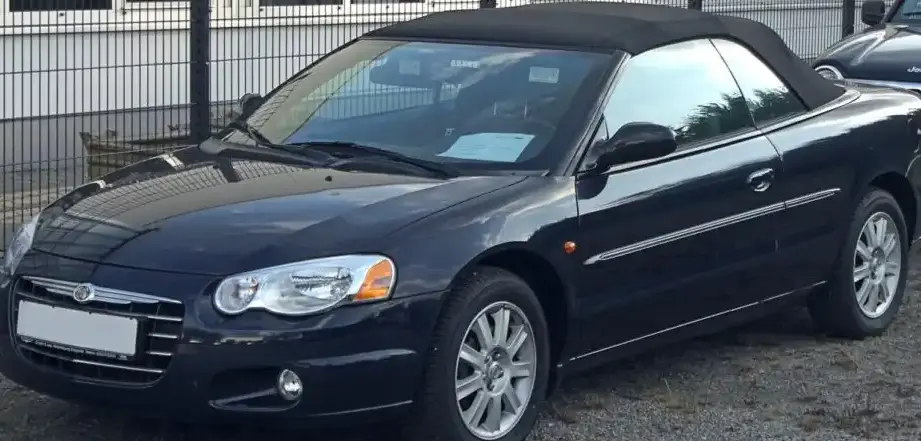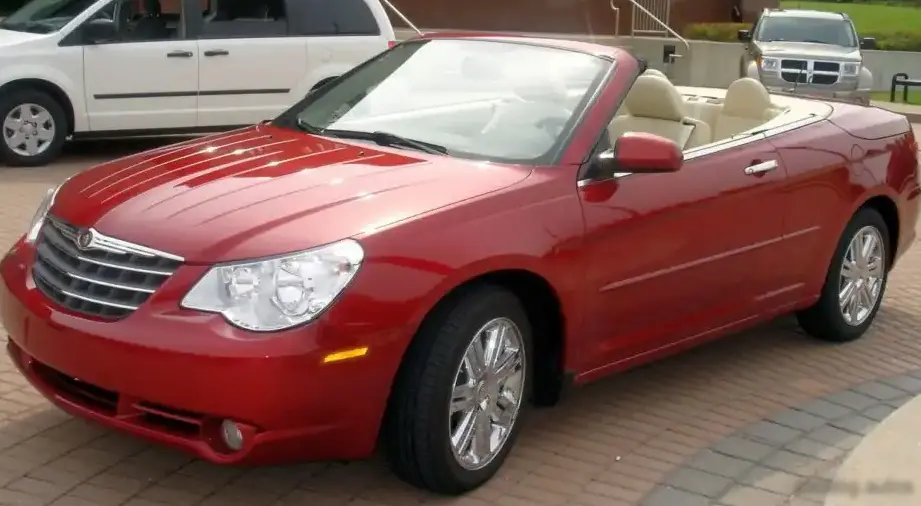
The Chrysler Sebring Convertible (JS) 2.0 CRD, produced between 2007 and 2010, represented a somewhat unusual offering in the American convertible market. While the Sebring nameplate had a long history, the JS generation, and particularly the diesel-powered convertible, was primarily aimed at European markets where diesel engines enjoyed greater popularity. This variant occupied a niche position within the Sebring lineup, offering a blend of fuel efficiency and reasonable performance not typically found in American convertibles of the era. It was built on the Chrysler JS platform, sharing components with the Dodge Caliber. The 2.0 CRD model aimed to provide a more economical alternative to the gasoline-powered Sebring convertibles.
Technical Specifications
| Brand | Chrysler |
| Model | Sebring |
| Generation | Sebring Convertible (JS) |
| Type | Soft Top 2.0 CRD (140 Hp) |
| Start of production | 2007 |
| End of production | 2010 |
| Powertrain Architecture | Internal Combustion engine |
| Body type | Cabriolet |
| Seats | 4 |
| Doors | 2 |
| Fuel consumption (urban) | 8.7 l/100 km (27 US mpg, 32.5 UK mpg, 11.5 km/l) |
| Fuel consumption (extra urban) | 5.6 l/100 km (42 US mpg, 50.4 UK mpg, 17.9 km/l) |
| Fuel consumption (combined) | 6.8 l/100 km (34.6 US mpg, 41.5 UK mpg, 14.7 km/l) |
| CO2 emissions | 183 g/km |
| Fuel Type | Diesel |
| Acceleration 0 – 100 km/h | 11.8 sec |
| Acceleration 0 – 62 mph | 11.8 sec |
| Acceleration 0 – 60 mph | 11.2 sec |
| Maximum speed | 195 km/h (121.17 mph) |
| Emission standard | Euro 4 |
| Weight-to-power ratio | 12.7 kg/Hp, 78.9 Hp/tonne |
| Weight-to-torque ratio | 5.7 kg/Nm, 174.6 Nm/tonne |
| Power | 140 Hp @ 4000 rpm |
| Power per litre | 71.1 Hp/l |
| Torque | 310 Nm @ 1750-2500 rpm (228.64 lb.-ft. @ 1750-2500 rpm) |
| Engine layout | Front, Transverse |
| Engine Model/Code | ECD |
| Engine displacement | 1968 cm3 (120.09 cu. in.) |
| Number of cylinders | 4 |
| Engine configuration | Inline |
| Cylinder Bore | 81 mm (3.19 in.) |
| Piston Stroke | 95.5 mm (3.76 in.) |
| Compression ratio | 18.5:1 |
| Number of valves per cylinder | 4 |
| Fuel injection system | Pump-nozzle (Unit Injector) |
| Engine aspiration | Turbocharger, Intercooler |
| Engine oil capacity | 4 l (4.23 US qt | 3.52 UK qt) |
| Coolant | 7.8 l (8.24 US qt | 6.86 UK qt) |
| Kerb Weight | 1775-1850 kg (3913.21 – 4078.55 lbs.) |
| Max. weight | 2175 kg (4795.05 lbs.) |
| Max load | 325-400 kg (716.5 – 881.85 lbs.) |
| Trunk (boot) space – maximum | 369 l (13.03 cu. ft.) |
| Fuel tank capacity | 63 l (16.64 US gal | 13.86 UK gal) |
| Permitted trailer load with brakes (12%) | 1425 kg (3141.59 lbs.) |
| Permitted trailer load without brakes | 450 kg (992.08 lbs.) |
| Permitted towbar download | 75 kg (165.35 lbs.) |
| Length | 4930 mm (194.09 in.) |
| Width | 1843 mm (72.56 in.) |
| Height | 1482 mm (58.35 in.) |
| Wheelbase | 2765 mm (108.86 in.) |
| Front track | 1570 mm (61.81 in.) |
| Rear (Back) track | 1570 mm (61.81 in.) |
| Drivetrain Architecture | Front wheel drive |
| Drive wheel | Front wheel drive |
| Number of gears and type of gearbox | 6 gears, manual transmission |
| Front suspension | Independent type McPherson |
| Rear suspension | Several levers and rods |
| Front brakes | Ventilated discs |
| Rear brakes | Disc |
| Assisting systems | ABS (Anti-lock braking system) |
| Steering type | Steering rack and pinion |
| Power steering | Hydraulic Steering |
| Tires size | 215/60 R17; 215/55 R18 |
| Wheel rims size | 6; 5J x 17; 7; 0J x 18 |
Powertrain & Engine Architecture
The heart of the Sebring Convertible 2.0 CRD was the ECD engine, a 1.968-liter inline-four cylinder diesel. This engine utilized a pump-nozzle (unit injector) fuel injection system, a technology known for its precision and efficiency. The engine was turbocharged and intercooled, allowing it to produce 140 horsepower at 4000 rpm and 310 Nm (228.64 lb-ft) of torque between 1750 and 2500 rpm. The relatively high compression ratio of 18.5:1 was typical for diesel engines, contributing to their thermal efficiency. The engine was transversely mounted in the front of the vehicle. The 6-speed manual transmission was the only transmission option available with this engine, providing a reasonable balance between fuel economy and driver control.
Driving Characteristics
The 2.0 CRD Sebring Convertible offered a different driving experience compared to its gasoline counterparts. While not particularly quick – 0-60 mph took around 11.2 seconds – the engine’s torque output provided adequate acceleration for everyday driving. The manual transmission allowed for a degree of driver engagement, but the relatively long gearing emphasized fuel economy over outright performance. The car felt more relaxed on the highway, where the engine’s torque made for effortless cruising. Compared to the higher-horsepower gasoline engines, the 2.0 CRD prioritized fuel efficiency and lower running costs over sporty performance.
Equipment & Trim Levels
The 2.0 CRD trim level typically included standard features such as air conditioning, power windows and locks, and a basic audio system. Upholstery was generally cloth, though leather options were available. Optional extras included premium audio systems, alloy wheels, and a power-operated convertible top. The specific trim level and available options varied depending on the market. The focus was on providing a well-equipped, comfortable convertible at a competitive price point, appealing to buyers who valued fuel economy and practicality.
Chassis & Braking
The Sebring Convertible utilized an independent McPherson strut suspension in the front and a multi-link setup in the rear. This suspension configuration aimed to provide a comfortable ride while maintaining reasonable handling characteristics. Front brakes were ventilated discs, while rear brakes were solid discs. Anti-lock Braking System (ABS) was standard. The suspension was tuned for comfort rather than sporty handling, reflecting the car’s intended market position. The steering was rack and pinion with hydraulic power assistance.
Market Reception & Comparison
The 2.0 CRD Sebring Convertible received mixed reviews. Critics generally praised its fuel economy and comfortable ride, but noted its lack of outright performance. Compared to the gasoline-powered Sebring models, the diesel offered significantly better fuel efficiency, making it an attractive option for drivers who covered long distances. However, the diesel engine added to the vehicle’s weight, slightly impacting handling. The diesel variant was more popular in Europe, where diesel fuel was more readily available and less expensive than gasoline.
Legacy
The Chrysler Sebring Convertible 2.0 CRD represents an interesting footnote in the Sebring’s history. While not a mainstream success in the US market, it offered a unique combination of features that appealed to a niche audience. The ECD diesel engine proved to be relatively reliable, though maintenance costs could be higher than those of gasoline engines. Today, these cars are relatively rare, and well-maintained examples are sought after by enthusiasts who appreciate their fuel efficiency and unique character. The 2.0 CRD Sebring Convertible serves as a reminder of Chrysler’s attempts to diversify its offerings and cater to different market demands.