
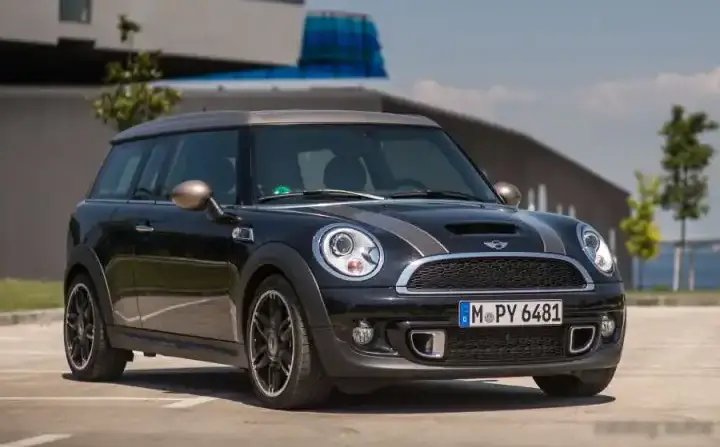
The Mini Clubman (F54) Cooper 1.5, producing 136 horsepower, was a key variant in the second generation of the modern Clubman, produced from 2018 to 2019. Positioned as the entry-level engine option for the F54, it offered a balance between affordability and the brand’s signature driving experience. This model represented Mini’s attempt to broaden the Clubman’s appeal beyond the more performance-oriented JCW trims, targeting buyers seeking a stylish and practical wagon with reasonable running costs. It sat within the broader F54 lineup, which also included more powerful Cooper S and John Cooper Works (JCW) models, as well as diesel variants in some markets.
Technical Specifications
| Brand | Mini |
| Model | Clubman |
| Generation | Clubman (F54) |
| Type (Engine) | Cooper 1.5 (136 Hp) |
| Start of production | 2018 |
| End of production | 2019 |
| Powertrain Architecture | Internal Combustion engine |
| Body type | Station wagon (estate) |
| Seats | 5 |
| Doors | 5 |
| Fuel consumption (urban) | 7.1 l/100 km (33.1 US mpg, 39.8 UK mpg, 14.1 km/l) |
| Fuel consumption (extra urban) | 5 l/100 km (47 US mpg, 56.5 UK mpg, 20 km/l) |
| Fuel consumption (combined) | 5.8 l/100 km (40.6 US mpg, 48.7 UK mpg, 17.2 km/l) |
| CO2 emissions | 131 g/km |
| Fuel Type | Petrol (Gasoline) |
| Acceleration 0 – 100 km/h | 9.2 sec |
| Acceleration 0 – 62 mph | 9.2 sec |
| Acceleration 0 – 60 mph | 8.7 sec |
| Maximum speed | 205 km/h (127.38 mph) |
| Emission standard | Euro 6 d |
| Weight-to-power ratio | 9.7 kg/Hp, 103 Hp/tonne |
| Weight-to-torque ratio | 6 kg/Nm, 166.7 Nm/tonne |
| Power | 136 Hp @ 4500-6500 rpm |
| Power per litre | 90.7 Hp/l |
| Torque | 220 Nm @ 1580-4100 rpm (162.26 lb.-ft. @ 1580-4100 rpm) |
| Engine layout | Front, Transverse |
| Engine Model/Code | B38A15A |
| Engine displacement | 1499 cm3 (91.47 cu. in.) |
| Number of cylinders | 3 |
| Engine configuration | Inline |
| Cylinder Bore | 82 mm (3.23 in.) |
| Piston Stroke | 94.6 mm (3.72 in.) |
| Compression ratio | 11:1 |
| Number of valves per cylinder | 4 |
| Fuel injection system | Direct injection |
| Engine aspiration | Twin-power turbo, Intercooler |
| Engine oil capacity | 4.25 l (4.49 US qt | 3.74 UK qt) |
| Coolant | 4.9 l (5.18 US qt | 4.31 UK qt) |
| Kerb Weight | 1320 kg (2910.1 lbs.) |
| Max. weight | 1865 kg (4111.62 lbs.) |
| Max load | 545 kg (1201.52 lbs.) |
| Trunk (boot) space – minimum | 360 l (12.71 cu. ft.) |
| Trunk (boot) space – maximum | 1250 l (44.14 cu. ft.) |
| Fuel tank capacity | 48 l (12.68 US gal | 10.56 UK gal) |
| Max. roof load | 75 kg (165.35 lbs.) |
| Permitted trailer load with brakes (12%) | 1300 kg (2866.01 lbs.) |
| Permitted trailer load without brakes | 680 kg (1499.14 lbs.) |
| Permitted towbar download | 75 kg (165.35 lbs.) |
| Length | 4253 mm (167.44 in.) |
| Width | 1800 mm (70.87 in.) |
| Height | 1441 mm (56.73 in.) |
| Wheelbase | 2670 mm (105.12 in.) |
| Front track | 1563 mm (61.54 in.) |
| Rear (Back) track | 1565 mm (61.61 in.) |
| Ride height (ground clearance) | 141 mm (5.55 in.) |
| Drag coefficient (Cd) | 0.32 |
| Minimum turning circle (turning diameter) | 11.3 m (37.07 ft.) |
| Drivetrain Architecture | The Internal combustion engine (ICE) drives the front wheels of the vehicle. |
| Drive wheel | Front wheel drive |
| Number of gears and type of gearbox | 6 gears, manual transmission |
| Front suspension | Independent, type McPherson with coil spring and anti-roll bar |
| Rear suspension | Independent multi-link suspension |
| Front brakes | Ventilated discs |
| Rear brakes | Disc |
| Assisting systems | ABS (Anti-lock braking system) |
| Steering type | Steering rack and pinion |
| Power steering | Electric Steering |
| Tires size | 205/55 R16 91W |
| Wheel rims size | 7J x 16 |
INTRODUCTION
The F54 Clubman, launched in 2015, represented a departure from the earlier, more compact Clubman models. It adopted a more traditional wagon (estate) body style, aiming to compete with premium compact wagons like the Audi A4 Avant and Volkswagen Golf SportWagen. The 1.5-liter Cooper variant, introduced in 2018, was designed to offer a more accessible entry point into the Clubman range. It provided a balance of fuel efficiency and performance, appealing to buyers who prioritized practicality and affordability over outright speed. The F54 platform, based on the UKL2 architecture shared with other Mini and BMW models, allowed for a spacious interior and a versatile cargo area.
Powertrain & Engine Architecture
The heart of the Clubman Cooper 1.5 is the BMW B38A15A engine, a 1.5-liter turbocharged inline-three cylinder petrol engine. This engine is part of BMW’s modular engine family and features direct fuel injection, a single twin-scroll turbocharger, and variable valve timing (VANOS) on both the intake and exhaust sides. The B38 engine is known for its responsiveness and relatively smooth operation for a three-cylinder unit. The engine’s output of 136 hp at 4500-6500 rpm and 220 Nm (162 lb-ft) of torque between 1580-4100 rpm is achieved through precise control of the turbocharger and fuel injection system. The engine is transversely mounted at the front of the vehicle. The standard transmission for this variant was a 6-speed manual, but a 6-speed Aisin-sourced automatic transmission was also available, and often preferred by US buyers. This automatic transmission is known for its smooth shifts and reasonable efficiency, though it doesn’t offer the sporty responsiveness of some dual-clutch transmissions.
Driving Characteristics
The Clubman Cooper 1.5 with the automatic transmission delivers a comfortable and refined driving experience. Acceleration from 0-60 mph takes around 8.7 seconds, which is adequate for everyday driving but doesn’t provide particularly brisk performance. The automatic transmission is well-matched to the engine’s torque curve, providing smooth and predictable gear changes. However, it can sometimes feel hesitant during quick overtaking maneuvers. Compared to the Cooper S models, the 1.5-liter engine lacks the outright punch and responsiveness. The manual transmission version offers a more engaging driving experience, allowing for greater control over the engine’s power. The Clubman’s suspension provides a good balance between comfort and handling, absorbing bumps and imperfections in the road while still offering a reasonably stable and controlled feel in corners.
Equipment & Trim Levels
The Clubman Cooper 1.5 typically came standard with features such as air conditioning, power windows and locks, a 6.5-inch infotainment system with Bluetooth connectivity, and a leather-wrapped steering wheel. Higher trim levels, such as the Iconic trim, added features like a larger 8.8-inch infotainment screen with navigation, a panoramic sunroof, heated seats, and a premium sound system. Optional extras included adaptive cruise control, parking assist, and a head-up display. Interior upholstery was typically cloth, with leather options available on higher trims. The dashboard layout was modern and stylish, with a centrally mounted infotainment screen and a distinctive toggle switch-style controls.
Chassis & Braking
The Clubman F54 utilizes a McPherson strut front suspension and a multi-link rear suspension, providing a comfortable ride and good handling characteristics. The front suspension incorporates a stabilizer bar to reduce body roll during cornering. Braking duties are handled by ventilated discs at the front and solid discs at the rear. Anti-lock braking system (ABS) is standard, along with electronic brake-force distribution (EBD) and corner brake control (CBC). The Clubman Cooper 1.5’s chassis is relatively lightweight, contributing to its agility and fuel efficiency.
Market Reception & Comparison
Critics generally praised the Clubman Cooper 1.5 for its stylish design, spacious interior, and comfortable ride. However, some reviewers noted that the 1.5-liter engine felt underpowered, particularly when compared to the more potent Cooper S models. Fuel economy was generally considered to be good, with combined figures around 40.6 US mpg. Compared to the Cooper S, the 1.5-liter variant offered a lower price point and better fuel efficiency, but at the expense of performance. The diesel variants, available in some markets, offered even better fuel economy but were often more expensive to purchase. Reliability reports for the B38 engine have been generally positive, with few major issues reported.
Legacy
The Clubman Cooper 1.5, while not the most performance-focused variant, remains a popular choice in the used car market. Its combination of style, practicality, and affordability makes it an attractive option for buyers seeking a premium compact wagon. The B38 engine has proven to be a reliable and durable unit, and maintenance costs are generally reasonable. As the Clubman F54 has aged, the 1.5-liter variant has become increasingly sought after by buyers who prioritize fuel efficiency and value over outright performance. The model represents a key step in Mini’s evolution, demonstrating the brand’s ability to offer a wider range of vehicles to appeal to a broader audience.
