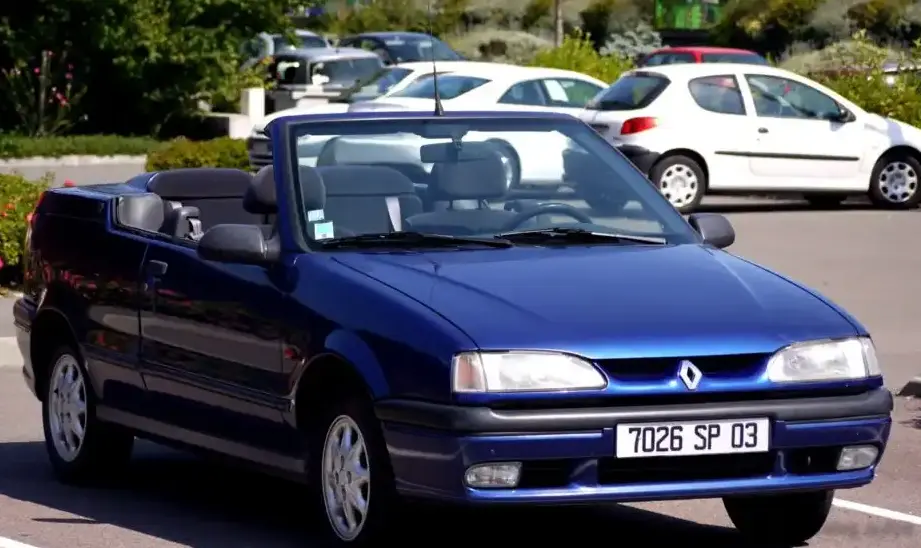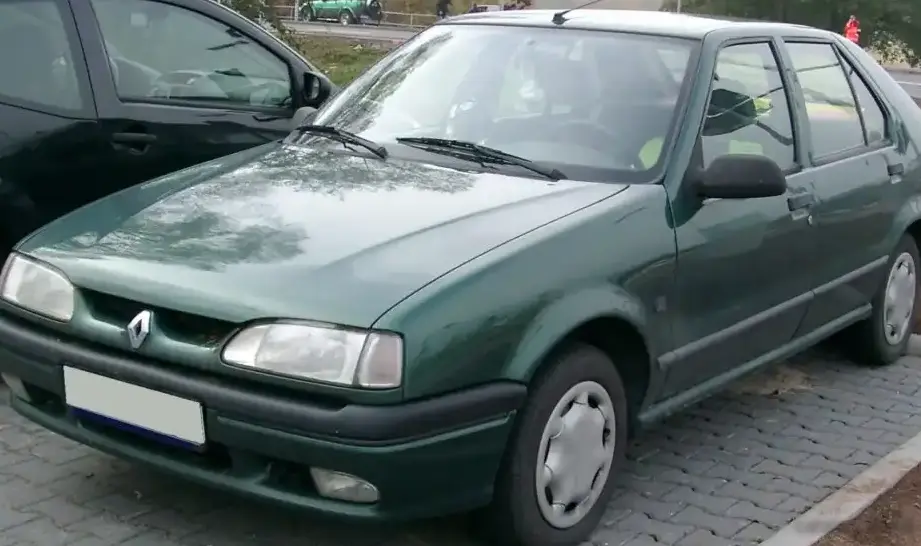
The Renault 19, specifically the 1.4 i (80 hp) variant produced from 1992 to 1995, represents a significant iteration of Renault’s popular compact hatchback. Part of the B/C53 generation, which received a notable facelift in 1992, this model occupied an entry-level position within the 19 lineup, offering a balance of affordability and practicality. It was primarily marketed in Europe, where compact hatchbacks were – and continue to be – a dominant force in the automotive market. This version aimed at buyers seeking economical transportation with the reliability of a well-established brand.
Technical Specifications
| Brand | Renault |
| Model | 19 |
| Generation | 19 (B/C53) (facelift 1992) |
| Type (Engine) | 1.4 i (80 Hp) |
| Start of production | 1992 |
| End of production | 1995 |
| Powertrain Architecture | Internal Combustion engine |
| Body type | Hatchback |
| Seats | 5 |
| Doors | 3-5 |
| Fuel consumption (urban) | 8.1 l/100 km (29 US mpg, 34.9 UK mpg) |
| Fuel consumption (extra urban) | 5.1 l/100 km (46.1 US mpg, 55.4 UK mpg) |
| Fuel consumption (combined) | 6.6 l/100 km (35.6 US mpg, 42.8 UK mpg) |
| Fuel Type | Petrol (Gasoline) |
| Acceleration 0 – 100 km/h | 12.2 sec |
| Acceleration 0 – 62 mph | 12.2 sec |
| Acceleration 0 – 60 mph | 11.6 sec |
| Maximum speed | 173 km/h (107.5 mph) |
| Weight-to-power ratio | 12.1 kg/Hp |
| Weight-to-torque ratio | 8.9 kg/Nm |
| Power | 80 Hp @ 5750 rpm |
| Torque | 109 Nm @ 2750 rpm (80.39 lb.-ft. @ 2750 rpm) |
| Engine layout | Front, Transverse |
| Engine Model/Code | E6J |
| Engine displacement | 1390 cm3 (84.82 cu. in.) |
| Number of cylinders | 4 |
| Engine configuration | Inline |
| Cylinder Bore | 75.8 mm (2.98 in.) |
| Piston Stroke | 77 mm (3.03 in.) |
| Compression ratio | 9.5:1 |
| Number of valves per cylinder | 2 |
| Fuel injection system | Single-point injection |
| Engine aspiration | Naturally aspirated |
| Valvetrain | OHC |
| Engine oil capacity | 4 l (4.23 US qt | 3.52 UK qt) |
| Coolant capacity | 5.2 l (5.49 US qt | 4.58 UK qt) |
| Kerb Weight | 970 kg (2138.48 lbs.) |
| Max. weight | 1470 kg (3240.8 lbs.) |
| Max load | 500 kg (1102.31 lbs.) |
| Trunk (boot) space – minimum | 386 l (13.63 cu. ft.) |
| Trunk (boot) space – maximum | 865 l (30.55 cu. ft.) |
| Fuel tank capacity | 55 l (14.53 US gal | 12.1 UK gal) |
| Length | 4162 mm (163.86 in.) |
| Width | 1696 mm (66.77 in.) |
| Height | 1412 mm (55.59 in.) |
| Wheelbase | 2544 mm (100.16 in.) |
| Front track | 1426 mm (56.14 in.) |
| Rear track | 1417 mm (55.79 in.) |
| Drivetrain Architecture | Front wheel drive |
| Number of gears | 5 |
| Gearbox type | Manual transmission |
| Front suspension | Wishbone |
| Rear suspension | Torsion |
| Front brakes | Disc |
| Rear brakes | Drum |
| Assisting systems | ABS (Anti-lock braking system) |
| Steering type | Steering rack and pinion |
| Power steering | Hydraulic |
| Tires size | 165/70 R13 |
| Wheel rims size | 13 |
INTRODUCTION
The Renault 19 1.4 i, launched in 1992 following the facelift of the B/C53 series, was a key model in Renault’s lineup. It built upon the success of the original Renault 19, offering a refreshed design and improved features. Positioned as the entry point to the 19 range, it catered to buyers prioritizing fuel efficiency and affordability. The facelift brought subtle but noticeable changes to the exterior styling, including revised headlights and a redesigned grille, while the interior received minor updates to enhance comfort and ergonomics. This variant was a common sight on European roads throughout the mid-1990s, serving as a practical and reliable daily driver.
Powertrain & Engine Architecture
At the heart of the Renault 19 1.4 i lies the E6J engine, a 1390cc inline-four cylinder petrol engine. This engine utilized a single-point fuel injection system, a relatively simple and cost-effective technology for the time. The engine featured an overhead camshaft (OHC) valvetrain with two valves per cylinder. Its 9.5:1 compression ratio contributed to a reasonable balance between power and fuel economy. The 80 horsepower peak was achieved at 5750 rpm, while the 109 Nm (80.39 lb.-ft.) of torque was available at 2750 rpm. The engine was transversely mounted in the front of the vehicle, driving the front wheels. The standard transmission was a five-speed manual gearbox, designed for smooth and efficient operation. While an automatic transmission was offered on some 19 models, it was less common with the 1.4-liter engine.
Driving Characteristics
The Renault 19 1.4 i, with its 80 hp output and five-speed manual transmission, offered adequate, though not exhilarating, performance. Acceleration from 0 to 60 mph took around 11.6 seconds, and the top speed was approximately 107.5 mph. The engine’s torque curve provided reasonable responsiveness in everyday driving situations, making it suitable for urban commutes and highway cruising. Compared to higher-spec 19 models equipped with larger engines (like the 1.8 or 2.0-liter variants), the 1.4 i felt noticeably less powerful. However, this trade-off was offset by improved fuel economy. The gear ratios were tuned for efficiency, prioritizing lower engine speeds at cruising speeds. The steering was light and precise, making the car easy to maneuver in tight spaces.
Equipment & Trim Levels
The Renault 19 1.4 i typically came with a fairly basic level of equipment, reflecting its position as the entry-level model. Standard features generally included power steering, central locking, and a basic stereo system. Interior upholstery was typically cloth, with a simple dashboard layout. Optional extras included electric windows, a sunroof, and upgraded audio systems. Higher trim levels, such as the “Si” or “RT” variants, offered additional features like alloy wheels, fog lights, and more luxurious interior trim. The 3-door and 5-door body styles were available, with the 5-door version offering greater practicality for families.
Chassis & Braking
The Renault 19 1.4 i utilized a relatively simple chassis design. The front suspension featured independent wishbones, providing a comfortable ride and decent handling. The rear suspension employed a torsion beam setup, which was cost-effective and space-efficient. The braking system consisted of disc brakes on the front wheels and drum brakes on the rear wheels. Anti-lock braking system (ABS) was available as an option, enhancing safety by preventing wheel lockup during hard braking. The car’s relatively light weight (around 970 kg or 2138 lbs) contributed to its nimble handling characteristics.
Market Reception & Comparison
The Renault 19 1.4 i was generally well-received by automotive critics as a practical and affordable hatchback. It was praised for its fuel efficiency, comfortable ride, and ease of driving. However, it was also criticized for its relatively modest performance compared to some of its rivals. Compared to other 1.4-liter hatchbacks of the era, such as the Volkswagen Golf or Opel Astra, the Renault 19 offered a competitive level of equipment and a slightly more affordable price point. The 1.8-liter Renault 19 offered significantly more power but came at a higher cost and with slightly reduced fuel economy. The diesel-powered Renault 19 models (like the 1.9 TDI) provided even better fuel economy but lacked the refinement of the petrol engines.
Legacy
The Renault 19 1.4 i has proven to be a relatively reliable and durable vehicle, with many examples still on the road today. The E6J engine is known for its robustness, although regular maintenance is essential to prevent issues. Common problems include oil leaks and wear on the single-point injection system. In the used car market, the Renault 19 1.4 i remains an affordable option for those seeking a classic European hatchback. Its simplicity and relatively low running costs make it an attractive choice for enthusiasts and budget-conscious buyers alike. While not a performance icon, the 1.4 i variant represents a significant part of Renault’s history and continues to be appreciated for its practicality and charm.