Technical Specifications
| Brand | Volkswagen |
| Model | Passat |
| Generation | Passat (B7) |
| Type (Engine) | 2.0 TDI BMT (177 Hp) DSG |
| Start of production | 2012 |
| End of production | 2014 |
| Powertrain Architecture | Internal Combustion engine |
| Body type | Sedan |
| Seats | 5 |
| Doors | 4 |
| Fuel consumption (economy) – urban (NEDC) | 6.2 l/100 km (37.9 US mpg, 45.6 UK mpg, 16.1 km/l) |
| Fuel consumption (economy) – extra urban (NEDC) | 4.6 l/100 km (51.1 US mpg, 61.4 UK mpg, 21.7 km/l) |
| Fuel consumption (economy) – combined (NEDC) | 5.2 l/100 km (45.2 US mpg, 54.3 UK mpg, 19.2 km/l) |
| CO2 emissions (NEDC) | 136 g/km |
| Fuel Type | Diesel |
| Acceleration 0 – 100 km/h | 8.4 sec |
| Acceleration 0 – 62 mph | 8.4 sec |
| Acceleration 0 – 60 mph | 8 sec |
| Maximum speed | 223 km/h (138.57 mph) |
| Emission standard | Euro 5 |
| Weight-to-power ratio | 8.4 kg/Hp, 119.3 Hp/tonne |
| Weight-to-torque ratio | 3.9 kg/Nm, 256.1 Nm/tonne |
| Power | 177 Hp @ 4200 rpm |
| Torque | 380 Nm @ 1750-2500 rpm (280.27 lb.-ft. @ 1750-2500 rpm) |
| Engine layout | Front, Transverse |
| Engine Model/Code | EA189 / CFGC |
| Engine displacement | 1968 cm3 (120.09 cu. in.) |
| Number of cylinders | 4 |
| Engine configuration | Inline |
| Cylinder Bore | 81 mm (3.19 in.) |
| Piston Stroke | 95.5 mm (3.76 in.) |
| Compression ratio | 16:1 |
| Number of valves per cylinder | 4 |
| Fuel injection system | Diesel Commonrail |
| Engine aspiration | Turbocharger, Intercooler |
| Valvetrain | DOHC |
| Engine oil capacity | 4.3 l (4.54 US qt | 3.78 UK qt) |
| Kerb Weight | 1484 kg (3271.66 lbs.) |
| Max. weight | 2120 kg (4673.8 lbs.) |
| Max load | 636 kg (1402.14 lbs.) |
| Trunk (boot) space – minimum | 565 l (19.95 cu. ft.) |
| Fuel tank capacity | 70 l (18.49 US gal | 15.4 UK gal) |
| Length | 4769 mm (187.76 in.) |
| Width | 1820 mm (71.65 in.) |
| Height | 1470 mm (57.87 in.) |
| Wheelbase | 2712 mm (106.77 in.) |
| Number of gears and type of gearbox | 6 gears, automatic transmission DSG |
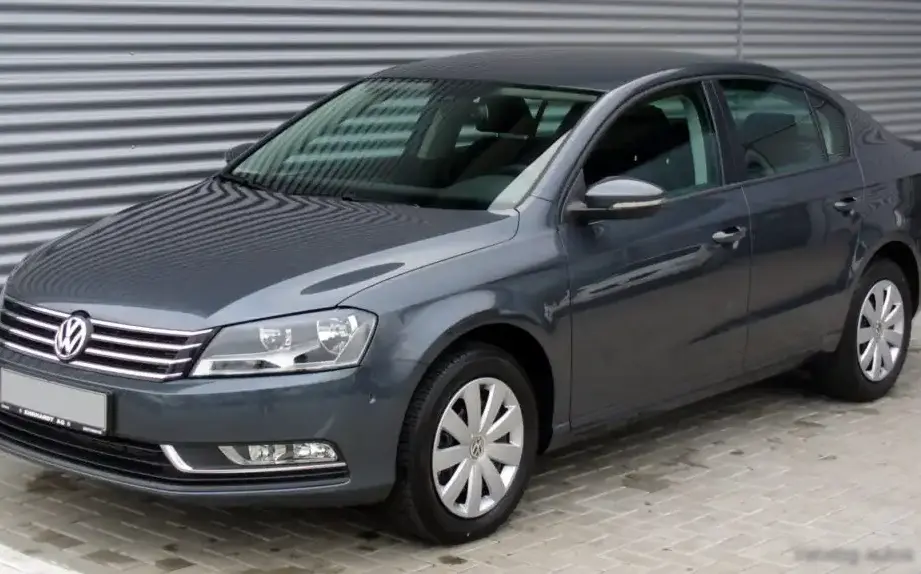
The Volkswagen Passat B7 2.0 TDI BMT (177 hp) with the Dual Clutch Gearbox (DSG) represents a notable version of Volkswagen’s popular mid-size sedan, manufactured between 2012 and 2014. Positioned as a mid-range offering within the B7 Passat lineup, this variant aimed to strike a balance between fuel efficiency and respectable performance, appealing to drivers looking for a comfortable and practical vehicle for both daily commutes and longer trips. It was primarily sold in Europe, where diesel engines were dominant, and offered as a more economical alternative to gasoline-powered options and higher-performance TDI models.
Powertrain & Engine Architecture
At the core of this Passat variant lies the 2.0-liter four-cylinder diesel engine, designated with the engine code CFGC, belonging to the EA189 engine family. This engine employs a common rail direct injection system, delivering fuel at very high pressures for optimized combustion. The “BMT” (BlueMotion Technology) designation signifies the inclusion of fuel-saving technologies like start-stop functionality and optimized engine mapping. A single turbocharger, coupled with an intercooler, provides forced induction, enhancing both power and torque output. The engine features a double overhead camshaft (DOHC) valvetrain with four valves per cylinder, improving airflow and overall efficiency. This engine is paired with Volkswagen’s well-regarded 6-speed DSG (Direct-Shift Gearbox), a dual-clutch transmission known for its rapid and smooth gear changes. The DSG provides both fully automatic operation and the option for manual gear selection through steering wheel-mounted paddles or the gear selector.
Driving Characteristics
The 177 hp and 380 Nm (280 lb-ft) of torque produced by the 2.0 TDI BMT engine, combined with the DSG transmission, delivers a well-rounded driving experience. Acceleration from 0-60 mph is achieved in around 8 seconds, which is sufficient for everyday driving and overtaking. The DSG transmission contributes to a responsive feel, with quick shifts and minimal interruption of torque delivery. Compared to the more powerful TDI variants (such as the 190 hp or 210 hp versions), this model offers slightly less outright performance, but it compensates with improved fuel economy. The automatic transmission also makes it more accessible to drivers who prefer the convenience of not having to operate a clutch and shift gears manually. The gear ratios are tuned for a blend of fuel efficiency and usable power, prioritizing strong low-end torque for effortless cruising.
Equipment & Trim Levels
The 2.0 TDI BMT (177 hp) DSG typically came equipped with a solid set of standard features. These generally included air conditioning, a multi-function steering wheel, an infotainment system with a touchscreen display, alloy wheels, and electric windows and mirrors. Higher trim levels, such as Trendline, Comfortline, and Highline, offered additional features like leather upholstery, a sunroof, parking sensors, and more advanced infotainment options. Optional extras could include navigation systems, upgraded sound systems, and various driver assistance features.
Chassis & Braking
The Passat B7 utilizes an independent suspension system, featuring a McPherson strut setup at the front and a multi-link suspension at the rear. This configuration provides a comfortable ride quality and good handling characteristics. The front brakes are ventilated discs, while the rear brakes are typically solid discs, providing adequate stopping power for the vehicle’s weight and performance. An Anti-lock Braking System (ABS) is standard, enhancing safety during emergency braking. Stabilizer bars are fitted to both the front and rear axles to minimize body roll during cornering.
Market Reception & Comparison
The Passat B7 2.0 TDI BMT (177 hp) DSG was generally well-received by automotive reviewers. It was praised for its fuel efficiency, comfortable ride, and refined driving experience. Compared to the higher-output TDI models, it offered a more affordable entry point into the Passat range, while still providing a good level of performance and practicality. The DSG transmission was also a popular feature, enhancing the overall driving experience. Some critics noted that the engine could be somewhat noisy during hard acceleration. In terms of reliability, the EA189 engine family faced scrutiny due to the “Dieselgate” emissions scandal, but well-maintained examples of this variant have proven to be relatively reliable.
Legacy
The Volkswagen Passat B7 2.0 TDI BMT (177 hp) DSG remains a popular choice in the used car market, especially in Europe. Its combination of fuel efficiency, practicality, and comfort makes it an attractive option for buyers seeking a dependable and affordable mid-size sedan. While the EA189 engine has been replaced by newer, more efficient designs, this variant continues to offer a good balance of performance and economy. The DSG transmission, while requiring periodic maintenance, is generally considered a durable and reliable unit. The B7 Passat, overall, is considered a well-built and refined vehicle, and this particular variant represents a sweet spot in the lineup for those prioritizing fuel efficiency and a comfortable driving experience.