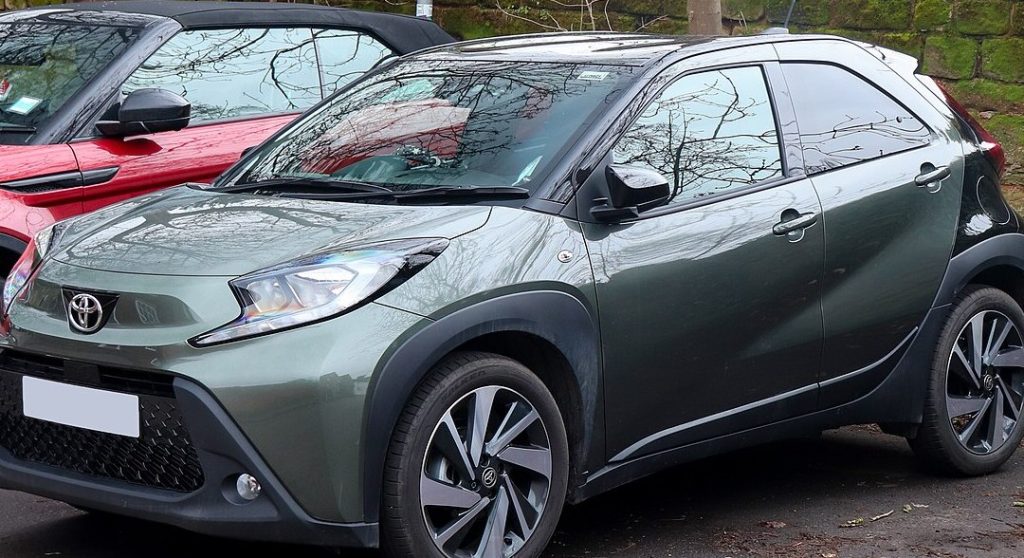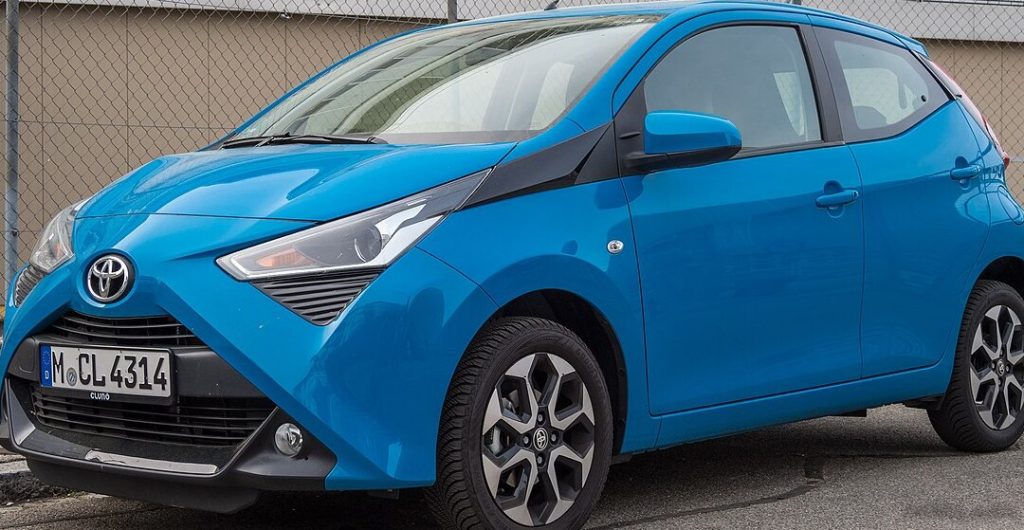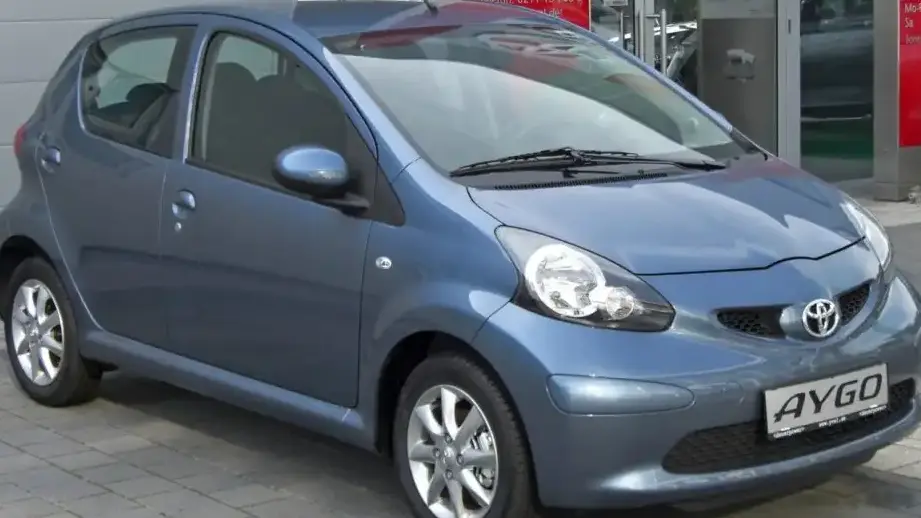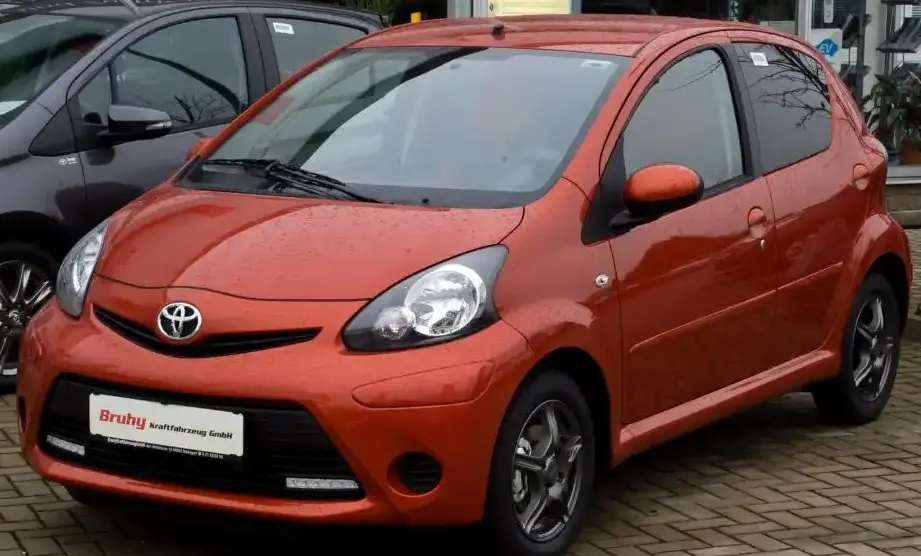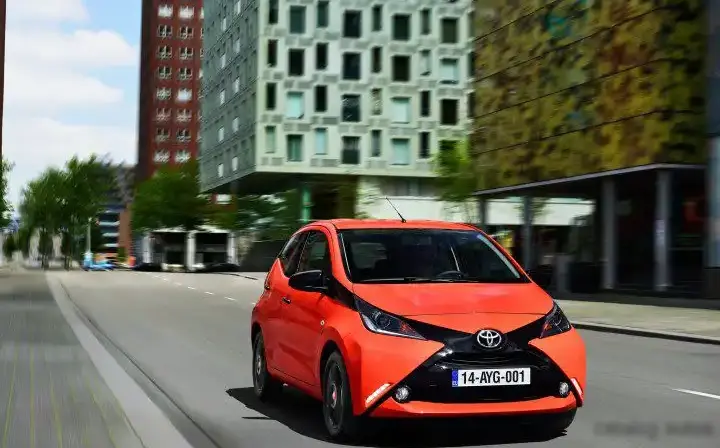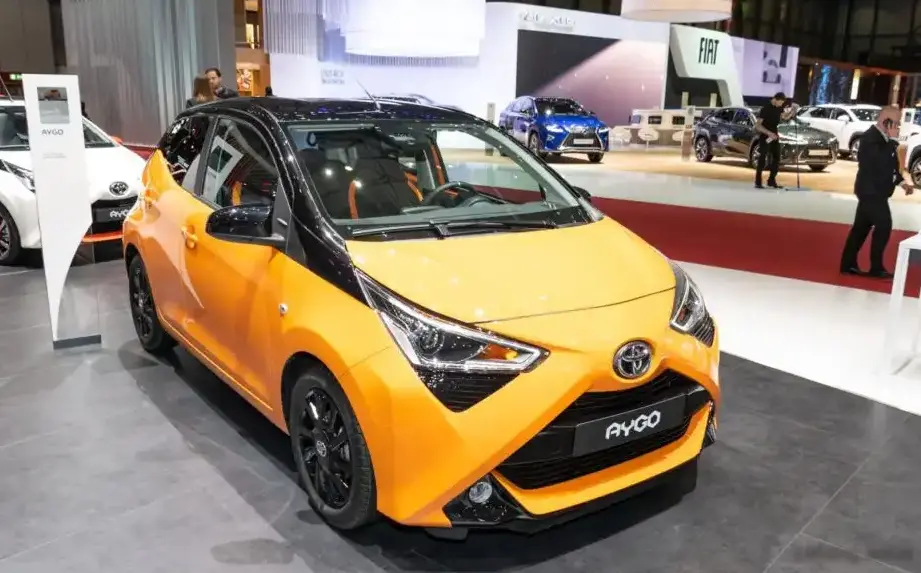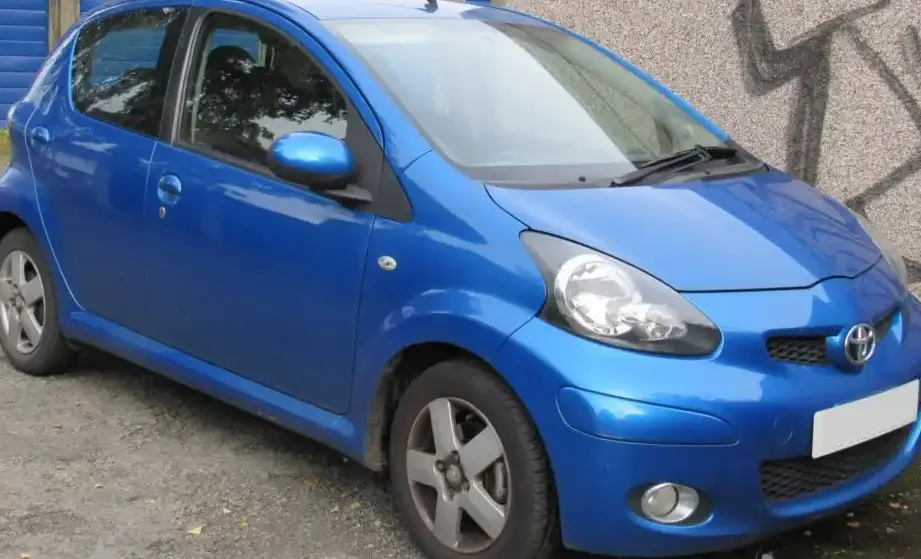
The Toyota Aygo (facelift, produced from 2009 to 2012) 1.0 VVT-i, generating 68 horsepower, represented the entry point into the Aygo range during its first generation (P10). Positioned as a city car, the Aygo was Toyota’s contribution to the collaborative pan-European city car project with PSA Peugeot Citroën, resulting in the closely related Peugeot 107 and Citroën C1. The 2009 facelift brought cosmetic updates to the front fascia and interior, aiming to refresh the model and maintain its appeal in a competitive segment. This particular 1.0-liter variant was specifically targeted at buyers prioritizing fuel efficiency and low running costs over outright performance.
Technical Specifications
| Brand | Toyota |
| Model | Aygo |
| Generation | Aygo (facelift 2009) |
| Type (Engine) | 1.0 VVT-i (68 Hp) |
| Start of production | 2009 |
| End of production | 2012 |
| Powertrain Architecture | Internal Combustion engine |
| Body type | Hatchback |
| Seats | 5 |
| Doors | 5 |
| Fuel consumption (urban) | 5.5 l/100 km (42.8 US mpg, 51.4 UK mpg, 18.2 km/l) |
| Fuel consumption (extra urban) | 3.9 l/100 km (60.3 US mpg, 72.4 UK mpg, 25.6 km/l) |
| Fuel consumption (combined) | 4.6 l/100 km (51.1 US mpg, 61.4 UK mpg, 21.7 km/l) |
| Fuel Type | Petrol (Gasoline) |
| Acceleration 0 – 100 km/h | 14.2 sec |
| Acceleration 0 – 62 mph | 14.2 sec |
| Acceleration 0 – 60 mph | 13.5 sec |
| Maximum speed | 157 km/h (97.56 mph) |
| Weight-to-power ratio | 12.2 kg/Hp |
| Weight-to-torque ratio | 8.9 kg/Nm |
| Power | 68 Hp @ 6000 rpm |
| Torque | 93 Nm @ 3600 rpm (68.59 lb.-ft. @ 3600 rpm) |
| Engine layout | Front, Transverse |
| Engine Model/Code | 1KR-FE |
| Engine displacement | 998 cm3 (60.9 cu. in.) |
| Number of cylinders | 3 |
| Engine configuration | Inline |
| Cylinder Bore | 71 mm (2.8 in.) |
| Piston Stroke | 84 mm (3.31 in.) |
| Compression ratio | 10.5:1 |
| Number of valves per cylinder | 4 |
| Fuel injection system | Multi-port manifold injection |
| Engine aspiration | Naturally aspirated |
| Engine oil capacity | 3.1 l (3.28 US qt, 2.73 UK qt) |
| Coolant capacity | 4 l (4.23 US qt, 3.52 UK qt) |
| Kerb Weight | 830 kg (1829.84 lbs.) |
| Max. weight | 1190 kg (2623.5 lbs.) |
| Max load | 360 kg (793.66 lbs.) |
| Trunk (boot) space (minimum) | 139 l (4.91 cu. ft.) |
| Fuel tank capacity | 35 l (9.25 US gal, 7.7 UK gal) |
| Length | 3415 mm (134.45 in.) |
| Width | 1615 mm (63.58 in.) |
| Height | 1465 mm (57.68 in.) |
| Wheelbase | 2340 mm (92.13 in.) |
| Front track | 1415 mm (55.71 in.) |
| Rear track | 1405 mm (55.31 in.) |
| Drivetrain Architecture | Front wheel drive |
| Number of gears | 5 |
| Gearbox type | Manual transmission |
| Front suspension | Independent type McPherson |
| Rear suspension | Torsion |
| Front brakes | Ventilated discs |
| Rear brakes | Drum |
| Assisting systems | ABS (Anti-lock braking system) |
| Steering type | Steering rack and pinion |
Powertrain & Engine Architecture
The Aygo 1.0 VVT-i utilizes the Toyota 1KR-FE engine, a 998cc inline-three cylinder petrol engine. This engine is known for its simplicity and efficiency. The ‘VVT-i’ designation stands for Variable Valve Timing – intelligent, and is a key feature contributing to the engine’s fuel economy and smooth operation. The 1KR-FE employs a multi-point fuel injection system, delivering fuel directly to the intake ports. The engine’s modest output is achieved through a relatively low compression ratio of 10.5:1 and a focus on minimizing internal friction. The engine is transversely mounted at the front of the vehicle, driving the front wheels. The standard transmission for this variant was a five-speed manual gearbox, optimized for maximizing fuel efficiency and providing adequate acceleration for urban driving. The engine’s design prioritized reliability and low maintenance costs, making it a popular choice for first-time car buyers and those seeking economical transportation.
Driving Characteristics
The 68 hp output of the 1.0 VVT-i engine translates to modest, but adequate, performance for city driving. Acceleration from 0-60 mph takes around 13.5 seconds, and top speed is approximately 97.56 mph. The five-speed manual transmission is geared to prioritize fuel economy, meaning the engine needs to be revved relatively high to achieve brisk acceleration. Compared to higher-spec Aygo models with more powerful engines, this variant feels noticeably slower, particularly when fully loaded or tackling inclines. However, the light weight of the Aygo (around 830 kg) helps to mitigate the lack of power. The steering is light and responsive, making it easy to maneuver in tight urban environments. The suspension is tuned for comfort, providing a reasonably smooth ride on typical city roads, although it can feel somewhat unsettled at higher speeds.
Equipment & Trim Levels
The 1.0 VVT-i Aygo typically came with a basic, but functional, level of equipment. Standard features generally included power steering, central locking, electric front windows, and an ABS anti-lock braking system. Interior upholstery was typically cloth, with a simple dashboard layout. Optional extras available for this trim level included air conditioning, alloy wheels, and a CD player. The Aygo was designed to be affordable, so the focus was on providing essential features rather than luxury items. The trim level often dictated the availability of body-colored door handles and mirrors, as well as the style of the wheel covers.
Chassis & Braking
The Aygo utilizes a McPherson strut independent suspension system at the front, providing a good balance of comfort and handling. The rear suspension employs a torsion beam setup, which is a cost-effective and space-saving solution. The front brakes are ventilated discs, offering adequate stopping power for the vehicle’s weight and performance. However, the rear brakes are drums, which are less effective than discs and can fade under heavy use. The steering is a rack and pinion system, providing precise and responsive control. The relatively narrow tires contribute to fuel efficiency but limit grip in cornering.
Market Reception & Comparison
The Aygo 1.0 VVT-i was generally well-received by critics as an affordable and economical city car. Its fuel efficiency was a major selling point, and its compact size made it easy to park and maneuver in urban areas. Compared to other trims in the Aygo lineup, the 1.0 VVT-i offered the lowest price point, making it accessible to a wider range of buyers. However, its lack of power was a common criticism. Compared to the Peugeot 107 and Citroën C1, which shared the same platform and engine, the Aygo was often perceived as having a slightly more refined interior and a more distinctive exterior styling. Reliability was generally good, with the 1KR-FE engine proving to be durable and long-lasting.
Legacy
The Toyota Aygo 1.0 VVT-i (2009-2012) remains a popular choice in the used car market, particularly for buyers seeking an affordable and reliable city car. The 1KR-FE engine is known for its longevity and relatively low maintenance costs. While not a performance car, the Aygo 1.0 VVT-i provides adequate transportation for urban driving and is highly regarded for its fuel efficiency. Its simple design and robust construction contribute to its continued appeal, making it a practical and economical option for those on a budget. Parts availability is generally good, and the Aygo’s widespread popularity means that there is a large network of mechanics familiar with the model.