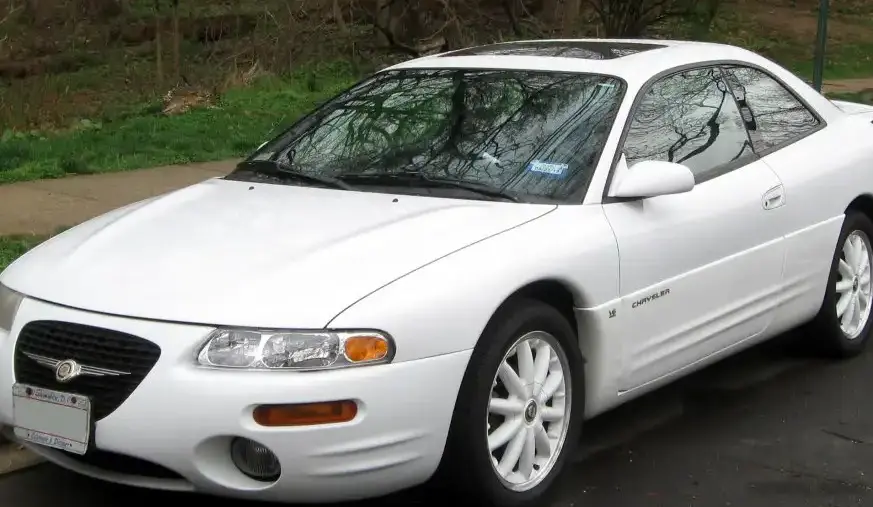
The Chrysler Sebring Coupe (FJ) 2.0i 16V, produced between 1994 and 2000, represented a distinct offering within the broader Sebring lineup. Positioned as a more sporting alternative to the Sebring convertible and sedan, the coupe aimed to attract buyers seeking a stylish and relatively affordable two-door vehicle. This variant, powered by a 2.0-liter inline-four engine producing 141 horsepower, typically served as a mid-range option, bridging the gap between the base models and any potential higher-performance trims. It was primarily marketed towards the North American market, where the coupe body style held significant appeal.
Technical Specifications
| Brand | Chrysler |
| Model | Sebring |
| Generation | Sebring Coupe (FJ) |
| Type (Engine) | 2.0 i 16V (141 Hp) |
| Start of production | 1994 |
| End of production | 2000 |
| Powertrain Architecture | Internal Combustion engine |
| Body type | Coupe |
| Seats | 5 |
| Doors | 2 |
| Fuel consumption (urban) | 12 l/100 km (19.6 US mpg) |
| Fuel consumption (extra urban) | 8 l/100 km (29.4 US mpg) |
| Fuel Type | Petrol (Gasoline) |
| Acceleration 0 – 100 km/h | 11 sec |
| Acceleration 0 – 62 mph | 11 sec |
| Acceleration 0 – 60 mph | 10.5 sec |
| Maximum speed | 200 km/h (124.27 mph) |
| Weight-to-power ratio | 9.5 kg/Hp |
| Weight-to-torque ratio | 7.1 kg/Nm |
| Power | 141 Hp @ 6000 rpm |
| Power per litre | 70.6 Hp/l |
| Torque | 188 Nm @ 4350 rpm (138.66 lb.-ft. @ 4350 rpm) |
| Engine layout | Front, Transverse |
| Engine displacement | 1996 cm3 (121.8 cu. in.) |
| Number of cylinders | 4 |
| Engine configuration | Inline |
| Cylinder Bore | 87.5 mm (3.44 in.) |
| Piston Stroke | 83 mm (3.27 in.) |
| Compression ratio | 9.6:1 |
| Number of valves per cylinder | 4 |
| Fuel injection system | Multi-port manifold injection |
| Engine aspiration | Naturally aspirated engine |
| Valvetrain | DOHC |
| Engine oil capacity | 4.4 l (4.65 US qt | 3.87 UK qt) |
| Coolant | 7 l (7.4 US qt | 6.16 UK qt) |
| Kerb Weight | 1335 kg (2943.17 lbs.) |
| Trunk (boot) space – minimum | 370 l (13.07 cu. ft.) |
| Fuel tank capacity | 64 l (16.91 US gal | 14.08 UK gal) |
| Length | 4850 mm (190.94 in.) |
| Width | 1770 mm (69.69 in.) |
| Height | 1340 mm (52.76 in.) |
| Wheelbase | 2635 mm (103.74 in.) |
| Front track | 1510 mm (59.45 in.) |
| Rear (Back) track | 1505 mm (59.25 in.) |
| Drivetrain Architecture | Front wheel drive |
| Number of gears and type of gearbox | 5 gears, manual transmission |
| Front suspension | Double wishbone |
| Rear suspension | Coil spring |
| Front brakes | Ventilated discs |
| Rear brakes | Disc |
| Assisting systems | ABS (Anti-lock braking system) |
| Steering type | Steering rack and pinion |
| Power steering | Hydraulic Steering |
| Tires size | 195/70 R14 |
Powertrain & Engine Architecture
The heart of the Sebring Coupe 2.0i was the Chrysler 2.0-liter inline-four engine, internally designated with various codes depending on the specific year and market. This engine was a member of Chrysler’s four-cylinder family, featuring a double overhead camshaft (DOHC) valvetrain and multi-port fuel injection. The 16 valves (four per cylinder) contributed to its relatively high output for its displacement. The engine’s design prioritized smooth operation and reasonable fuel efficiency over outright performance. The 5-speed manual transmission was the standard offering, providing drivers with a degree of control over the engine’s power band. The engine’s transverse mounting within the front-wheel-drive chassis contributed to a compact engine bay layout.
Driving Characteristics
The 141 horsepower and 138.66 lb-ft of torque delivered by the 2.0-liter engine provided adequate, but not exhilarating, performance. Acceleration from 0-60 mph took around 10.5 seconds, making it competitive with other coupes in its class. The 5-speed manual transmission allowed drivers to keep the engine in its optimal power range, but the engine lacked the low-end grunt of larger displacement alternatives. Compared to potential higher-output versions (if offered in some markets), the 2.0i felt less responsive, particularly during overtaking maneuvers. The gear ratios were tuned for a balance between fuel economy and usability, rather than outright speed. The front-wheel-drive configuration provided predictable handling, but could exhibit some torque steer under hard acceleration.
Equipment & Trim Levels
The Sebring Coupe 2.0i typically came standard with features such as air conditioning, power steering, and an AM/FM stereo. Interior upholstery was generally cloth, with options for upgraded materials available. Dashboard configuration was fairly straightforward, with clearly marked gauges and controls. Optional extras included features like a sunroof, upgraded sound system, and alloy wheels. The trim level often dictated the availability of these options, with higher trims offering more standard features and a wider range of customization possibilities. The focus was on providing a comfortable and well-equipped interior without excessive luxury.
Chassis & Braking
The Sebring Coupe utilized a front-wheel-drive chassis with a double wishbone suspension at the front and a coil spring suspension at the rear. This setup aimed to provide a comfortable ride while maintaining reasonable handling characteristics. Ventilated disc brakes were fitted to the front wheels, providing adequate stopping power, while the rear wheels utilized disc brakes. An anti-lock braking system (ABS) was standard, enhancing safety by preventing wheel lockup during hard braking. The suspension tuning was geared towards everyday driving comfort, rather than aggressive cornering. Stabilizer bars were included to reduce body roll, but were not particularly substantial.
Market Reception & Comparison
The Sebring Coupe 2.0i received mixed reviews from automotive critics. It was generally praised for its styling and value for money, but criticized for its lack of performance compared to some competitors. Fuel economy was considered average for its class. Compared to other Sebring trims, the 2.0i offered a more affordable entry point, but at the expense of performance. The higher-output engines, if available, provided a more engaging driving experience, but came with a higher price tag. Reliability was generally considered acceptable, with the 2.0-liter engine proving to be relatively durable.
Legacy
The Chrysler Sebring Coupe 2.0i 16V has become a relatively affordable and accessible classic car in the used market. The 2.0-liter engine is known for its reasonable reliability, although regular maintenance is crucial to prevent issues. Parts availability is generally good, as many components were shared with other Chrysler models of the era. While not a particularly sought-after performance car, the Sebring Coupe 2.0i remains a popular choice for those seeking a stylish and affordable two-door vehicle with a touch of 1990s flair. Its enduring appeal lies in its blend of practicality, affordability, and distinctive design.