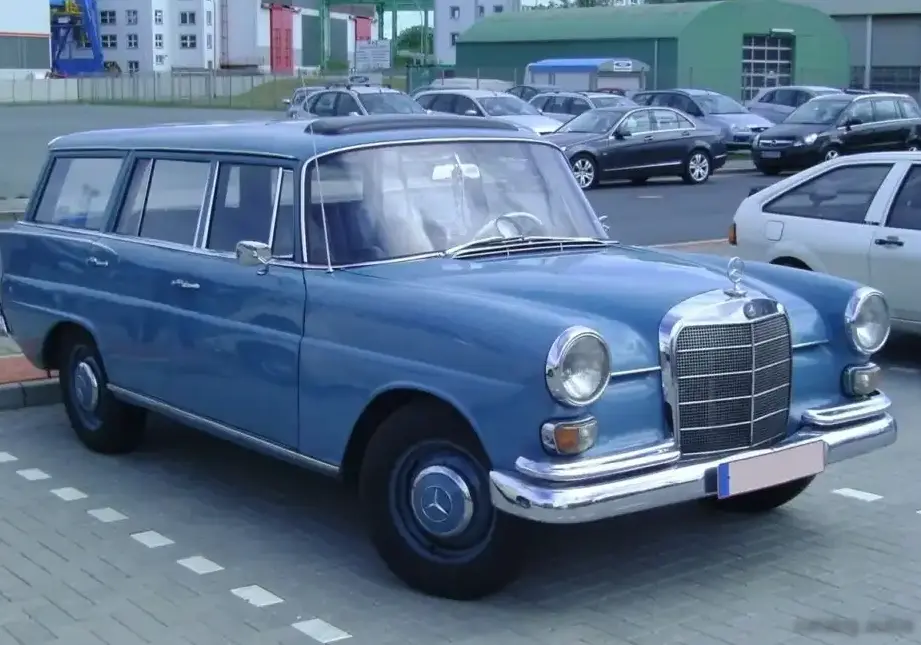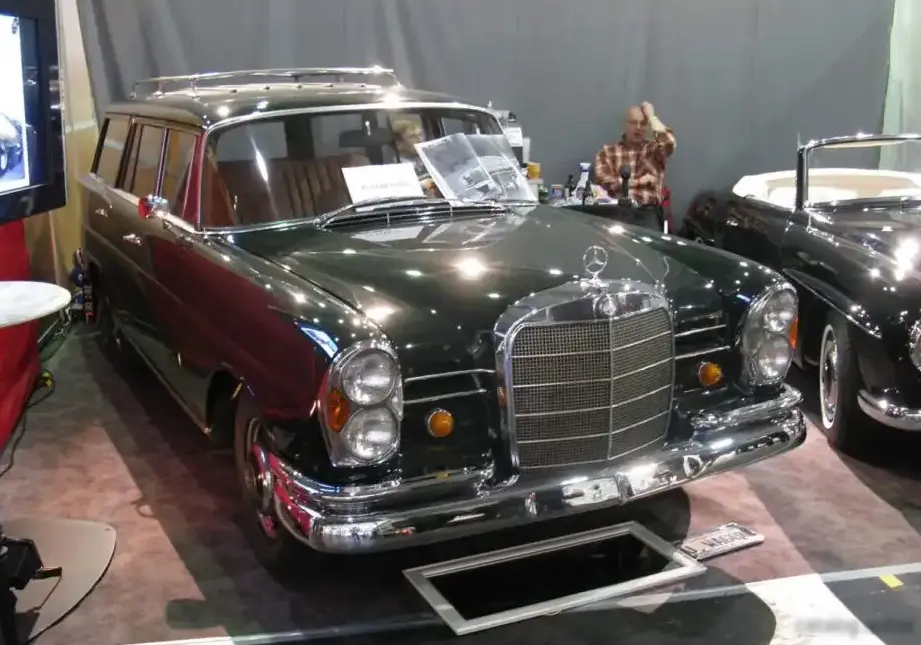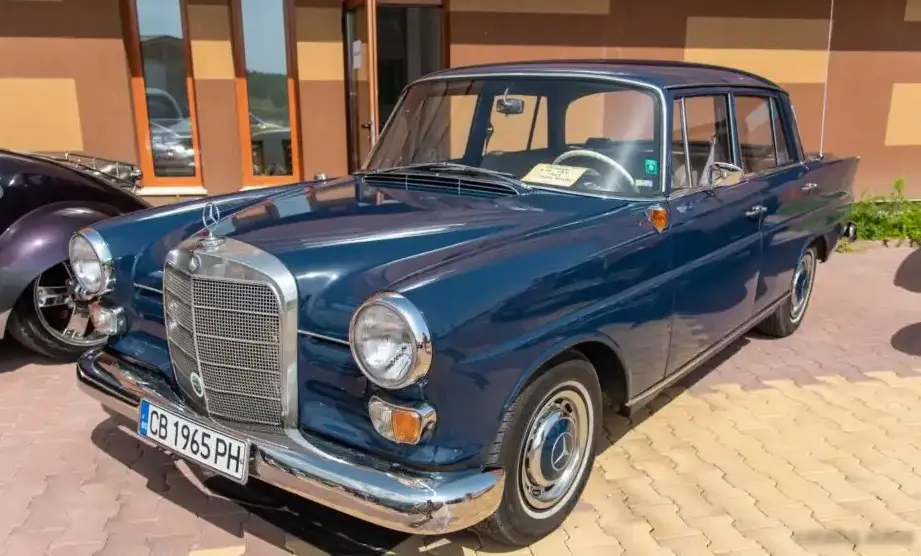
The Mercedes-Benz W110 “Fintail” 190 c, produced from April 1961 to August 1965, represented a significant step forward for Mercedes-Benz in offering a more affordable and modern sedan. Positioned as the entry-level model within the W110 range, the 190 c, with its 1.9-liter engine producing 80 horsepower, aimed to broaden the brand’s appeal beyond the traditionally luxury-focused clientele. It was a key component of the company’s strategy to capture a larger share of the burgeoning post-war automotive market, particularly in Europe and increasingly in North America. The “Fintail” designation comes from the distinctive, gently sloping tailfins that characterized the model’s rear styling, a design element that became synonymous with this generation of Mercedes-Benz vehicles.
Technical Specifications
| Brand | Mercedes-Benz |
| Model | Fintail |
| Generation | Fintail (W110) |
| Type (Engine) | 190 c (80 Hp) |
| Start of production | April, 1961 |
| End of production | August, 1965 |
| Powertrain Architecture | Internal Combustion engine |
| Body type | Sedan |
| Seats | 5 |
| Doors | 4 |
| Fuel consumption (combined) | 10.8 l/100 km (21.8 US mpg, 26.2 UK mpg, 9.3 km/l) |
| Fuel Type | Petrol (Gasoline) |
| Acceleration 0 – 100 km/h | 17.7 sec |
| Acceleration 0 – 62 mph | 17.7 sec |
| Acceleration 0 – 60 mph | 16.8 sec |
| Maximum speed | 145 km/h (90.1 mph) |
| Weight-to-power ratio | 15.6 kg/Hp, 64 Hp/tonne |
| Weight-to-torque ratio | 8.8 kg/Nm, 113.6 Nm/tonne |
| Power | 80 Hp @ 5000 rpm |
| Power per litre | 42.2 Hp/l |
| Torque | 142 Nm @ 2500 rpm (104.73 lb.-ft. @ 2500 rpm) |
| Engine layout | Front, Longitudinal |
| Engine Model/Code | M 121 B V / 121.924 |
| Engine displacement | 1897 cm3 (115.76 cu. in.) |
| Number of cylinders | 4 |
| Engine configuration | Inline |
| Cylinder Bore | 85 mm (3.35 in.) |
| Piston Stroke | 83.6 mm (3.29 in.) |
| Compression ratio | 8.7:1 |
| Number of valves per cylinder | 2 |
| Fuel injection system | Carburettor |
| Engine aspiration | Naturally aspirated engine |
| Valvetrain | SOHC |
| Engine oil capacity | 4 l (4.23 US qt | 3.52 UK qt) |
| Coolant | 9 l (9.51 US qt | 7.92 UK qt) |
| Kerb Weight | 1250 kg (2755.78 lbs.) |
| Max. weight | 1700 kg (3747.86 lbs.) |
| Max load | 450 kg (992.08 lbs.) |
| Fuel tank capacity | 52 l (13.74 US gal | 11.44 UK gal) |
| Length | 4730 mm (186.22 in.) |
| Width | 1795 mm (70.67 in.) |
| Height | 1495 mm (58.86 in.) |
| Wheelbase | 2700 mm (106.3 in.) |
| Front track | 1468 mm (57.8 in.) |
| Rear (Back) track | 1485 mm (58.46 in.) |
| Drivetrain Architecture | The Internal combustion engine (ICE) drives the rear wheels of the vehicle. |
| Drive wheel | Rear wheel drive |
| Number of gears and type of gearbox | 4 gears, manual transmission |
| Front suspension | Double wishbone, Transverse stabilizer |
| Rear suspension | Trailing arm |
| Front brakes | Disc |
| Rear brakes | Drum |
| Steering type | Cone worm with recirculation balls |
| Wheel rims size | 5J x 13 |
Powertrain & Engine Architecture
The heart of the 190 c was the M121 B V engine, a 1.9-liter (1897 cc) inline-four cylinder unit. This engine, identifiable by its code 121.924, featured a single overhead camshaft (SOHC) valvetrain and utilized a Solex 32 PA carburetor for fuel delivery. The engine produced 80 horsepower at 5000 rpm and 142 Nm (104.73 lb-ft) of torque at 2500 rpm. The engine’s design was relatively conservative for the time, prioritizing durability and ease of maintenance over outright performance. The engine was mounted longitudinally in the front of the vehicle, driving the rear wheels. The standard transmission was a four-speed manual gearbox, although an optional four-speed automatic transmission was available, albeit less common in the 190 c compared to higher-spec models.
Driving Characteristics
The 190 c’s performance was modest by modern standards. Acceleration from 0 to 60 mph took approximately 16.8 seconds, and the top speed was around 90 mph. The 80 hp engine, coupled with the car’s weight of around 2756 lbs, meant that spirited driving required careful planning. The manual transmission offered a more engaging driving experience and allowed the driver to extract the most from the engine, while the optional automatic transmission prioritized comfort and ease of use. Compared to the more powerful 190 D (diesel) or the larger-engined 200 and 220 models, the 190 c felt noticeably less responsive. However, its lighter weight and simpler mechanicals contributed to a more nimble feel in city driving.
Equipment & Trim Levels
The 190 c was positioned as the entry-level Fintail, and its standard equipment reflected this. It typically featured cloth upholstery, a basic dashboard layout, and minimal chrome trim. Standard features included hydraulic brakes, a steering wheel, and basic instrumentation. Optional extras included a sunroof, whitewall tires, a radio, and upgraded upholstery materials. The interior was functional and well-built, typical of Mercedes-Benz quality, but lacked the luxurious appointments found in the higher-end models. The focus was on providing a comfortable and reliable transportation experience at an accessible price point.
Chassis & Braking
The W110 Fintail chassis utilized a traditional body-on-frame construction. The front suspension employed a double wishbone design with a transverse stabilizer bar, while the rear suspension featured a trailing arm setup. The 190 c was equipped with disc brakes on the front wheels and drum brakes on the rear. This braking configuration was adequate for the car’s performance capabilities, but lacked the stopping power of fully disc-braked systems found on some contemporary vehicles. The steering system was a cone worm with recirculation balls, providing a relatively direct but somewhat heavy steering feel.
Market Reception & Comparison
The 190 c was generally well-received by critics as a practical and reliable family sedan. It offered a taste of Mercedes-Benz ownership to a wider audience. However, its modest performance was often noted. Compared to the 190 D, the 190 c offered better acceleration but lower fuel economy. The larger-engined 200 and 220 models provided significantly more power and refinement, but at a higher price. The 190 c’s fuel consumption was around 21.8 US mpg, which was reasonable for the early 1960s. Reliability was a strong point, with the M121 engine proving to be durable and long-lasting.
Legacy
The Mercedes-Benz W110 Fintail 190 c holds a significant place in the company’s history as a pivotal model that broadened its appeal. The M121 engine, while not a powerhouse, proved to be exceptionally reliable, and many examples are still on the road today. In the used car market, the 190 c is valued for its classic styling, build quality, and relative affordability. Parts availability is generally good, making it a viable option for enthusiasts and collectors. While not as sought-after as some of the higher-spec Fintail models, the 190 c represents a charming and historically important piece of Mercedes-Benz heritage.