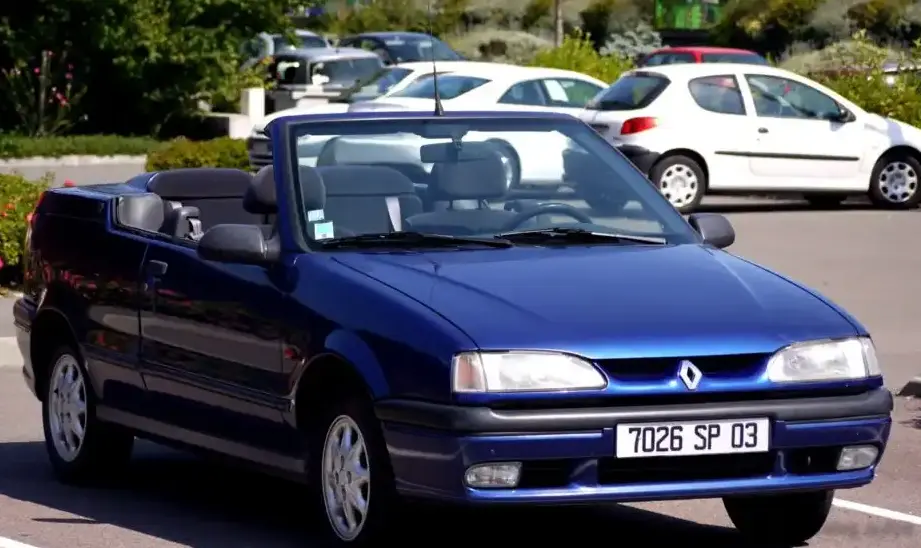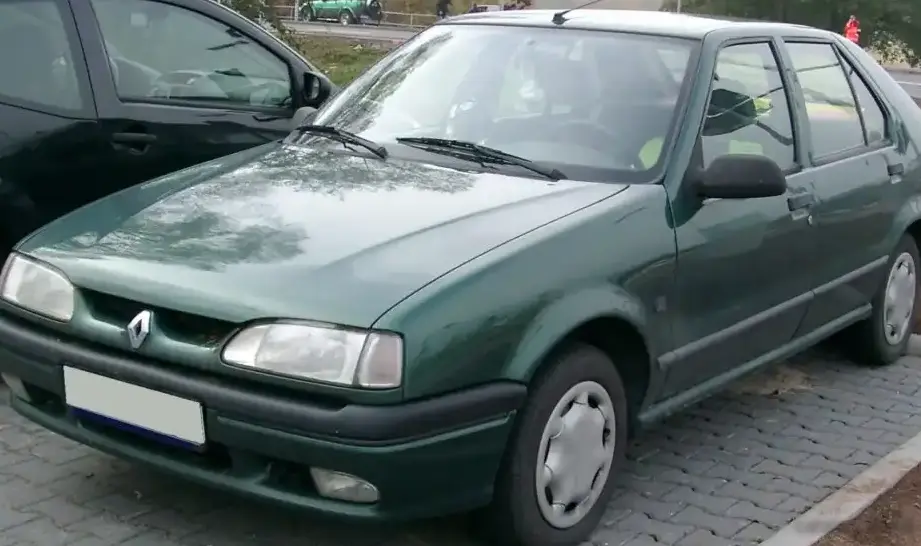
The Renault 19 1.7 i.e., produced from 1992 to 1995, represents a significant iteration of Renault’s popular compact hatchback. Part of the B/C53 series, which underwent a facelift in 1992, this variant occupied a middle ground within the 19 lineup, offering a balance between affordability and reasonable performance. It was primarily marketed in Europe as a practical and economical family vehicle, competing with models like the Peugeot 305 and Volkswagen Golf. The 1.7 i.e. aimed to provide a more refined driving experience than the base models while remaining accessible to a wider customer base.
Technical Specifications
| Brand | Renault |
| Model | 19 |
| Generation | 19 (B/C53) (facelift 1992) |
| Type (Engine) | 1.7 i.e. (73 Hp) |
| Start of production | 1992 |
| End of production | 1995 |
| Powertrain Architecture | Internal Combustion engine |
| Body type | Hatchback |
| Seats | 5 |
| Doors | 3-5 |
| Fuel consumption (combined) | 7.2 l/100 km |
| Fuel consumption (US mpg) | 32.7 US mpg |
| Fuel consumption (UK mpg) | 39.2 UK mpg |
| Fuel consumption (km/l) | 13.9 km/l |
| Fuel Type | Petrol (Gasoline) |
| Acceleration 0 – 100 km/h | 12.3 sec |
| Acceleration 0 – 62 mph | 12.3 sec |
| Acceleration 0 – 60 mph | 11.7 sec |
| Maximum speed | 171 km/h (106.25 mph) |
| Weight-to-power ratio | 13.3 kg/Hp |
| Weight-to-torque ratio | 7.6 kg/Nm |
| Power | 73 Hp @ 5000 rpm |
| Power per litre | 42.4 Hp/l |
| Torque | 127 Nm @ 2750 rpm (93.67 lb.-ft. @ 2750 rpm) |
| Engine layout | Front, Transverse |
| Engine Model/Code | F3N |
| Engine displacement | 1721 cm3 (105.02 cu. in.) |
| Number of cylinders | 4 |
| Engine configuration | Inline |
| Cylinder Bore | 81 mm (3.19 in.) |
| Piston Stroke | 83.5 mm (3.29 in.) |
| Compression ratio | 9.5:1 |
| Number of valves per cylinder | 2 |
| Fuel injection system | Single-point injection |
| Engine aspiration | Naturally aspirated engine |
| Valvetrain | OHC |
| Engine oil capacity | 5.2 l (5.49 US qt | 4.58 UK qt) |
| Coolant capacity | 6 l (6.34 US qt | 5.28 UK qt) |
| Kerb Weight | 970 kg (2138.48 lbs.) |
| Max. weight | 1440 kg (3174.66 lbs.) |
| Max load | 470 kg (1036.17 lbs.) |
| Trunk (boot) space – minimum | 386 l (13.63 cu. ft.) |
| Trunk (boot) space – maximum | 865 l (30.55 cu. ft.) |
| Fuel tank capacity | 55 l (14.53 US gal | 12.1 UK gal) |
| Length | 4162 mm (163.86 in.) |
| Width | 1696 mm (66.77 in.) |
| Height | 1412 mm (55.59 in.) |
| Wheelbase | 2544 mm (100.16 in.) |
| Front track | 1426 mm (56.14 in.) |
| Rear track | 1412 mm (55.59 in.) |
| Drivetrain Architecture | Front wheel drive |
| Number of gears | 5 |
| Gearbox type | Manual transmission |
| Front suspension | Wishbone |
| Rear suspension | Torsion |
| Front brakes | Disc |
| Rear brakes | Drum |
| Steering type | Steering rack and pinion |
| Power steering | Hydraulic |
| Tires size | 165/70 R13 T |
| Wheel rims size | 13 |
INTRODUCTION
The Renault 19 1.7 i.e., produced between 1992 and 1995, was a key model in Renault’s lineup during that period. It built upon the success of the original Renault 19, launched in 1988, and benefited from the 1992 facelift which brought subtle styling updates and improvements to interior trim. Positioned as a mid-range offering, the 1.7 i.e. aimed to bridge the gap between the more basic 1.4-liter models and the sportier, higher-performance versions like the 16V. It was designed to appeal to buyers seeking a comfortable, reliable, and reasonably economical hatchback for everyday use.
Powertrain & Engine Architecture
At the heart of the Renault 19 1.7 i.e. lies the F3N engine, a 1.7-liter inline-four cylinder gasoline engine. This engine utilized a single-point fuel injection system, a relatively common technology in the early 1990s. While not as sophisticated as multi-point injection, it offered improved fuel efficiency and smoother operation compared to carbureted engines. The F3N engine featured an overhead camshaft (OHC) valvetrain with two valves per cylinder. This configuration contributed to a reasonable balance of power and efficiency. The engine produced 73 horsepower at 5000 rpm and 127 Nm (93.67 lb-ft) of torque at 2750 rpm. The engine was transversely mounted, driving the front wheels. The standard transmission was a five-speed manual, although an optional three-speed automatic transmission was also available, though less common. The automatic transmission was known for its simplicity but also for its impact on fuel economy and acceleration.
Driving Characteristics
The Renault 19 1.7 i.e. with the five-speed manual transmission offered a reasonably engaging driving experience. Acceleration from 0 to 60 mph took around 11.7 seconds, and top speed was approximately 106 mph. The engine provided adequate power for everyday driving, with sufficient torque for overtaking maneuvers. The gear ratios were well-spaced, allowing for comfortable cruising on the highway. However, compared to the more powerful 16V models, the 1.7 i.e. felt noticeably less responsive. The automatic transmission version, while offering convenience, significantly reduced performance and increased fuel consumption. The automatic’s gear changes were relatively slow, and it lacked the responsiveness of more modern automatic gearboxes. The car’s handling was generally considered safe and predictable, but not particularly sporty.
Equipment & Trim Levels
The Renault 19 1.7 i.e. typically came equipped with a reasonable level of standard features. These included power steering, central locking, and a basic stereo system. Interior upholstery was typically cloth, with a relatively simple dashboard layout. Optional extras included electric windows, a sunroof, and upgraded stereo systems. Higher trim levels, such as the “Si” or “RT” variants, offered additional features like alloy wheels, upgraded interior trim, and fog lights. The 1.7 i.e. was often seen as a good value proposition, offering a comfortable and well-equipped package for its price point.
Chassis & Braking
The Renault 19 1.7 i.e. utilized a front-wheel-drive chassis with a wishbone front suspension and a torsion beam rear suspension. This suspension setup provided a comfortable ride quality, although it wasn’t particularly sophisticated. The front brakes were disc brakes, while the rear brakes were drum brakes. This configuration was typical for cars in this class during the early 1990s. The steering was a rack and pinion system with hydraulic power assistance, providing light and easy steering. Tire size was typically 165/70 R13.
Market Reception & Comparison
The Renault 19 1.7 i.e. was generally well-received by automotive critics as a practical and affordable family car. It was praised for its comfortable ride, reasonable fuel economy, and spacious interior. However, some critics noted that the engine lacked refinement and that the performance was somewhat underwhelming, especially when compared to competitors like the Volkswagen Golf. Compared to the higher-performance Renault 19 16V, the 1.7 i.e. offered significantly less power and a less engaging driving experience. However, it was also more affordable to purchase and maintain. The 1.7 i.e. also offered better fuel economy than the 16V models.
Legacy
The Renault 19 1.7 i.e. has proven to be a relatively reliable car, with many examples still on the road today. The F3N engine is known for its durability, although it can be prone to oil leaks as it ages. The single-point fuel injection system is relatively simple to maintain, but it can sometimes suffer from issues with fuel delivery. The automatic transmission, while reliable, is not as durable as the manual transmission. In the used car market, the Renault 19 1.7 i.e. remains an affordable and practical option for those seeking a classic 1990s hatchback. Its simplicity and relatively low running costs make it an appealing choice for enthusiasts and budget-conscious buyers alike.