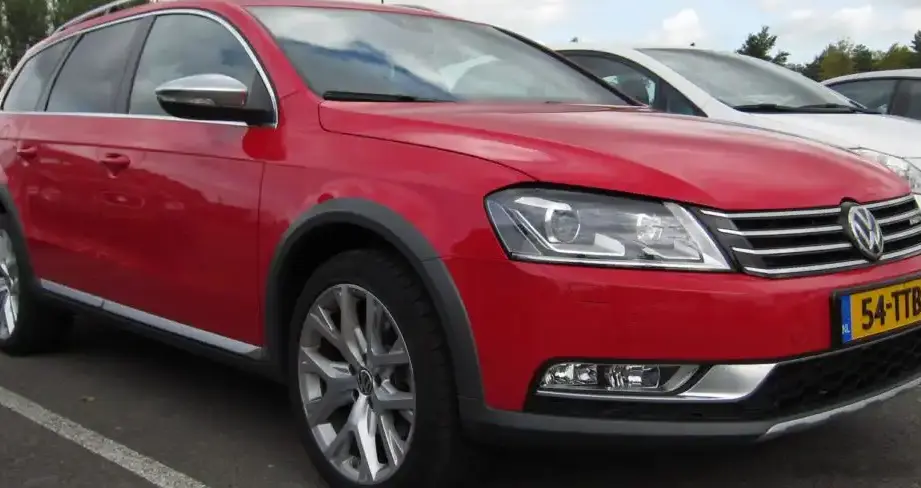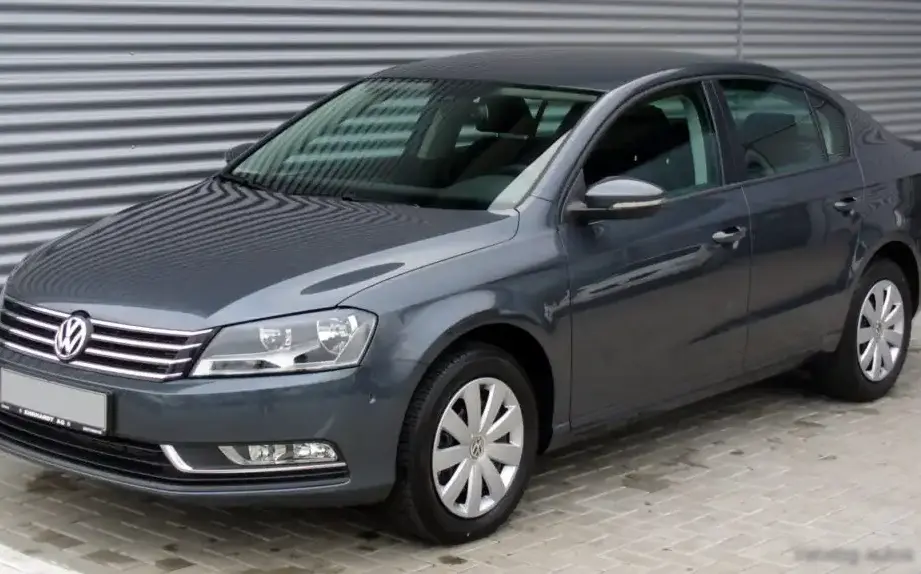
The Volkswagen Passat B7 2.0 TSI (211 hp) represents a significant iteration of Volkswagen’s mid-size sedan, produced between 2010 and 2014. Positioned as a higher-performance variant within the B7 generation (which spanned 2010-2015), this model aimed to deliver a more engaging driving experience compared to the lower-powered engine options. It served as a key offering in the European market, where the Passat consistently ranked among the best-selling vehicles in its class, and also saw moderate success in North America. The B7 was a comprehensive refresh of the B6, featuring revised styling, improved interior quality, and updated technology.
Technical Specifications
| Brand | Volkswagen |
| Model | Passat |
| Generation | Passat (B7) |
| Type (Engine) | 2.0 TSI (211 Hp) |
| Start of production | 2010 |
| End of production | 2014 |
| Powertrain Architecture | Internal Combustion engine |
| Body type | Sedan |
| Seats | 5 |
| Doors | 4 |
| Fuel consumption (economy) – urban (NEDC) | 10 l/100 km (23.5 US mpg, 28.2 UK mpg, 10 km/l) |
| Fuel consumption (economy) – extra urban (NEDC) | 5.6 l/100 km (42 US mpg, 50.4 UK mpg, 17.9 km/l) |
| Fuel consumption (economy) – combined (NEDC) | 7.2 l/100 km (32.7 US mpg, 39.2 UK mpg, 13.9 km/l) |
| CO2 emissions (NEDC) | 169 g/km |
| Fuel Type | Petrol (Gasoline) |
| Acceleration 0 – 100 km/h | 7.6 sec |
| Acceleration 0 – 62 mph | 7.6 sec |
| Acceleration 0 – 60 mph | 7.2 sec |
| Maximum speed | 238 km/h (147.89 mph) |
| Emission standard | Euro 5 |
| Weight-to-power ratio | 6.9 kg/Hp, 144.3 Hp/tonne |
| Weight-to-torque ratio | 5.2 kg/Nm, 191.5 Nm/tonne |
| Power | 211 Hp @ 5300-6200 rpm |
| Power per litre | 106.4 Hp/l |
| Torque | 280 Nm @ 1700-5200 rpm (206.52 lb.-ft. @ 1700-5200 rpm) |
| Engine layout | Front, Transverse |
| Engine Model/Code | EA888 / CCZB |
| Engine displacement | 1984 cm3 (121.07 cu. in.) |
| Number of cylinders | 4 |
| Engine configuration | Inline |
| Cylinder Bore | 82.5 mm (3.25 in.) |
| Piston Stroke | 92.8 mm (3.65 in.) |
| Compression ratio | 9.8:1 |
| Number of valves per cylinder | 4 |
| Fuel injection system | Direct injection |
| Engine aspiration | Turbocharger, Intercooler |
| Valvetrain | DOHC |
| Engine oil capacity | 4.7 l (4.97 US qt | 4.14 UK qt) |
| Kerb Weight | 1462 kg (3223.16 lbs.) |
| Max. weight | 2060 kg (4541.52 lbs.) |
| Max load | 598 kg (1318.36 lbs.) |
| Trunk (boot) space – minimum | 565 l (19.95 cu. ft.) |
| Fuel tank capacity | 70 l (18.49 US gal | 15.4 UK gal) |
| Max. roof load | 100 kg (220.46 lbs.) |
| Permitted trailer load with brakes (8%) | 1800 kg (3968.32 lbs.) |
| Permitted trailer load with brakes (12%) | 1600 kg (3527.4 lbs.) |
| Permitted trailer load without brakes | 750 kg (1653.47 lbs.) |
| Permitted towbar download | 90 kg (198.42 lbs.) |
| Length | 4769 mm (187.76 in.) |
| Width | 1820 mm (71.65 in.) |
| Width including mirrors | 2062 mm (81.18 in.) |
| Height | 1470 mm (57.87 in.) |
| Wheelbase | 2712 mm (106.77 in.) |
| Front track | 1552 mm (61.1 in.) |
| Rear (Back) track | 1551 mm (61.06 in.) |
| Front overhang | 941 mm (37.05 in.) |
| Rear overhang | 1116 mm (43.94 in.) |
| Ride height (ground clearance) | 135 mm (5.31 in.) |
| Minimum turning circle (turning diameter) | 11.4 m (37.4 ft.) |
| Drivetrain Architecture | The Internal combustion engine (ICE) drives the front wheels of the vehicle. |
| Drive wheel | Front wheel drive |
| Number of gears and type of gearbox | 6 gears, manual transmission |
| Front suspension | Independent, type McPherson with coil spring and anti-roll bar |
| Rear suspension | Independent multi-link spring suspension with stabilizer |
| Front brakes | Ventilated discs, 312×25 mm |
| Rear brakes | Disc, 286×12 mm |
| Assisting systems | ABS (Anti-lock braking system) |
| Steering type | Steering rack and pinion |
| Power steering | Electric Steering |
| Tires size | 215/55 R16; 235/45 R17; 235/40 R18 |
| Wheel rims size | 7J x 16; 7.5J x 17; 8J x 18 |
INTRODUCTION
The Volkswagen Passat B7 2.0 TSI (211 hp) was introduced as part of the mid-cycle refresh of the B7 Passat, building upon the success of the B6 generation. This variant was primarily aimed at drivers seeking a balance between performance and fuel efficiency. It occupied a middle ground in the Passat lineup, offering more power than the base 1.4 TSI engine but remaining more accessible than the range-topping models. The B7 Passat, and this 2.0 TSI variant specifically, was built on the Volkswagen Group’s PQ46 platform (also known as the A6 platform in some contexts), shared with models like the Audi A4 and Škoda Superb.
Powertrain & Engine Architecture
At the heart of the Passat B7 2.0 TSI is the EA888 engine, specifically the CCZB code variant. This is a 1.984-liter (121.07 cubic inches) turbocharged, direct-injection four-cylinder engine. The direct injection system, coupled with a turbocharger and intercooler, allows for a high compression ratio of 9.8:1 and efficient combustion. The engine utilizes a dual overhead camshaft (DOHC) valvetrain with four valves per cylinder, optimizing airflow for increased power output. The 211 horsepower peak is achieved between 5300 and 6200 rpm, while the 280 Nm (206.52 lb-ft) of torque is readily available from 1700 to 5200 rpm. The engine’s transverse mounting and front-wheel-drive configuration contribute to its compact packaging. The standard transmission for this variant was a 6-speed manual, though a 6-speed DSG (Direct-Shift Gearbox) dual-clutch automatic was also available as an option.
Driving Characteristics
The 2.0 TSI engine in the Passat B7 delivers a noticeably more spirited driving experience compared to the lower-powered engine options. Acceleration from 0-60 mph takes approximately 7.2 seconds, and the car feels responsive in everyday driving situations. The broad torque curve ensures ample power for overtaking maneuvers and maintaining comfortable cruising speeds on the highway. While not a sports sedan, the 2.0 TSI offers a good balance between performance and refinement. The 6-speed manual transmission provides precise shifts, while the optional DSG automatic offers quick and seamless gear changes. Compared to the more economical 1.4 TSI, the 2.0 TSI feels significantly more powerful, but it lacks the ultimate performance of the higher-end models equipped with larger engines.
Equipment & Trim Levels
The Passat B7 2.0 TSI typically came well-equipped, reflecting its position as a mid-range offering. Standard features often included air conditioning, power windows and mirrors, a multi-function steering wheel, and an audio system with CD player. Higher trim levels added features such as leather upholstery, heated front seats, a sunroof, and a more advanced infotainment system with navigation. Optional extras included parking sensors, bi-xenon headlights, and a premium sound system. Interior upholstery was typically cloth on base models, with leather available as an upgrade. Dashboard configurations were generally consistent across the B7 range, with a focus on functionality and ergonomics.
Chassis & Braking
The Passat B7 2.0 TSI utilizes an independent suspension system, with a McPherson strut setup at the front and a multi-link setup at the rear. This configuration provides a comfortable ride while maintaining good handling characteristics. Stabilizer bars are fitted to both axles to reduce body roll during cornering. The braking system consists of ventilated discs at the front and solid discs at the rear. Anti-lock Braking System (ABS) is standard, enhancing safety and control during emergency braking situations. The chassis is tuned to provide a balance between comfort and handling, making it suitable for both city driving and long-distance journeys.
Market Reception & Comparison
The Passat B7 2.0 TSI was generally well-received by automotive critics. It was praised for its refined engine, comfortable ride, and spacious interior. However, some reviewers noted that the styling was conservative and that the handling wasn’t as sporty as some of its rivals. Compared to the 1.4 TSI, the 2.0 TSI offered a significant performance upgrade, but at the cost of slightly higher fuel consumption. The 2.0 TDI diesel variant offered comparable torque and better fuel economy, but the TSI provided a smoother and quieter driving experience. The 2.0 TSI positioned itself as a strong all-rounder, appealing to buyers who prioritized a balance of performance, comfort, and practicality.
Legacy
The EA888 engine family, including the CCZB code used in the Passat B7 2.0 TSI, has proven to be relatively reliable over the long term. However, like any turbocharged engine, it requires regular maintenance, including oil changes and inspection of the turbocharger and intercooler. Common issues can include carbon buildup on the intake valves, which can affect performance. In the used car market, the Passat B7 2.0 TSI remains a popular choice, offering a good value proposition for buyers seeking a comfortable and well-equipped mid-size sedan. Its reputation for reliability and relatively affordable maintenance costs contribute to its continued appeal.