
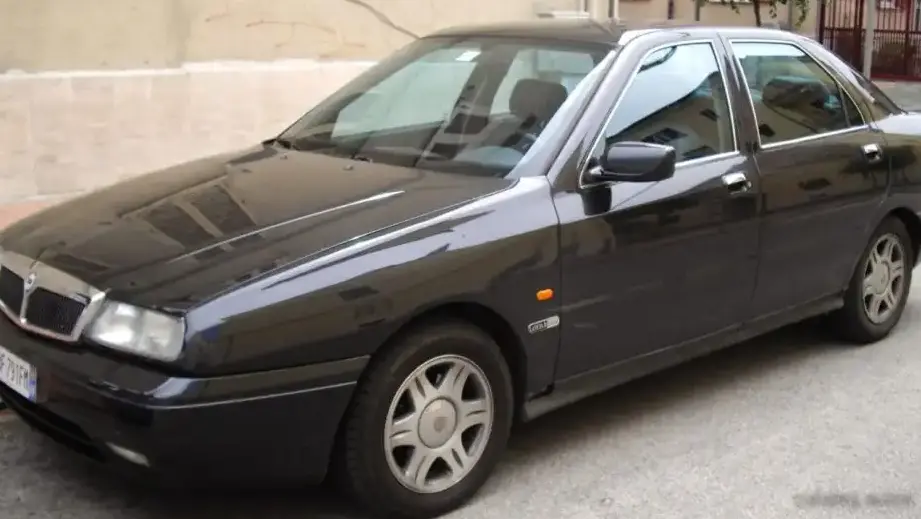
The Lancia Kappa 2.0 Turbo 16V, produced between 1994 and 1998, represented a significant step forward for the Italian automaker. Part of the 838 series, the Kappa aimed to recapture Lancia’s reputation for innovative engineering and sophisticated design within the executive sedan segment. This particular variant, boasting 205 horsepower from its turbocharged 2.0-liter engine, occupied a mid-to-upper position in the Kappa lineup, offering a blend of performance and comfort. It was positioned above the naturally aspirated 2.0-liter models and below the flagship 3.0 V6, appealing to buyers seeking a spirited driving experience without sacrificing refinement. The Kappa, as a whole, was intended to replace the aging Thema and Trevi, offering a more modern and technologically advanced package.
Technical Specifications
| Brand | Lancia |
| Model | Kappa |
| Generation | Kappa (838) |
| Type (Engine) | 2.0 Turbo 16V (205 Hp) |
| Start of production | 1994 |
| End of production | 1998 |
| Powertrain Architecture | Internal Combustion engine |
| Body type | Sedan |
| Seats | 5 |
| Doors | 4 |
| Fuel consumption (urban) | 11.2 l/100 km (21 US mpg) |
| Fuel consumption (extra urban) | 7 l/100 km (33.6 US mpg) |
| Fuel Type | Petrol (Gasoline) |
| Acceleration 0 – 100 km/h | 7.3 sec |
| Acceleration 0 – 62 mph | 7.3 sec |
| Acceleration 0 – 60 mph | 6.9 sec |
| Maximum speed | 235 km/h (146.02 mph) |
| Weight-to-power ratio | 7.1 kg/Hp |
| Weight-to-torque ratio | 4.9 kg/Nm |
| Power | 205 Hp @ 5000 rpm |
| Torque | 298 Nm @ 3750 rpm (219.79 lb.-ft. @ 3750 rpm) |
| Engine layout | Front, Transverse |
| Engine Model/Code | 838A4000 |
| Engine displacement | 1995 cm3 (121.74 cu. in.) |
| Number of cylinders | 4 |
| Engine configuration | Inline |
| Compression ratio | 8:1 |
| Number of valves per cylinder | 4 |
| Fuel injection system | Multi-port manifold injection |
| Engine aspiration | Turbocharger, Intercooler |
| Valvetrain | DOHC |
| Engine oil capacity | 5.5 l (5.81 US qt | 4.84 UK qt) |
| Coolant capacity | 8.3 l (8.77 US qt | 7.3 UK qt) |
| Kerb Weight | 1465 kg (3229.77 lbs) |
| Trunk (boot) space | 525 l (18.54 cu. ft.) |
| Fuel tank capacity | 70 l (18.49 US gal | 15.4 UK gal) |
| Permitted trailer load with brakes (12%) | 1500 kg (3306.93 lbs) |
| Length | 4687 mm (184.53 in) |
| Width | 1826 mm (71.89 in) |
| Height | 1462 mm (57.56 in) |
| Wheelbase | 2700 mm (106.3 in) |
| Front track | 1546 mm (60.87 in) |
| Rear track | 1527 mm (60.12 in) |
| Minimum turning circle | 10.9 m (35.76 ft) |
| Drivetrain Architecture | Front wheel drive |
| Number of gears | 5 gears, manual transmission |
| Front suspension | Independent, McPherson with coil spring and anti-roll bar |
| Rear suspension | McPherson |
| Front brakes | Ventilated discs, 281 mm |
| Rear brakes | Disc, 276 mm |
| Assisting systems | ABS (Anti-lock braking system) |
| Steering type | Steering rack and pinion |
| Power steering | Hydraulic |
| Tires size | 205/60 R15 |
Powertrain & Engine Architecture
The heart of the Kappa 2.0 Turbo 16V is the 838A4000 engine, a 1995cc inline-four cylinder powerplant. This engine utilizes a Garrett turbocharger with an intercooler to boost power output. The engine features multi-port fuel injection and a double overhead camshaft (DOHC) valvetrain, operating with four valves per cylinder. This configuration allowed for efficient cylinder filling and improved breathing, contributing to the engine’s respectable power figures. The 8:1 compression ratio was a compromise between performance and reliability when used with forced induction. The five-speed manual transmission was the standard offering, providing drivers with direct control over the engine’s power. While an automatic transmission was available in some markets, the manual was generally preferred by enthusiasts for its responsiveness and engagement.
Driving Characteristics
The Kappa 2.0 Turbo offered a noticeably more engaging driving experience than its naturally aspirated counterparts. The turbocharger provided a surge of power in the mid-range, making overtaking maneuvers effortless. While not a sports car, the Kappa 2.0 Turbo could accelerate from 0 to 60 mph in around 6.9 seconds, a respectable figure for the mid-1990s. The five-speed manual transmission allowed drivers to keep the engine in its optimal power band. The suspension, while tuned for comfort, provided adequate handling and stability. Compared to the 3.0 V6, the 2.0 Turbo offered a lighter front end and a more balanced feel, though it lacked the V6’s outright power and smoothness.
Equipment & Trim Levels
The Kappa 2.0 Turbo 16V typically came well-equipped, reflecting its position as a premium sedan. Standard features included power windows, central locking, air conditioning, and an upgraded audio system. Interior upholstery was typically cloth, though leather options were available. Higher trim levels offered features such as automatic climate control, heated seats, and a sunroof. The dashboard layout was modern for its time, featuring a clean and functional design. Optional extras included alloy wheels, a CD changer, and upgraded sound systems.
Chassis & Braking
The Kappa 2.0 Turbo utilized an independent McPherson strut suspension setup at both the front and rear. This provided a comfortable ride while maintaining reasonable handling characteristics. The front brakes were ventilated discs, providing ample stopping power, while the rear brakes were solid discs. Anti-lock Braking System (ABS) was standard, enhancing safety and control during emergency braking situations. The steering was rack and pinion with hydraulic power assistance, offering precise and responsive steering feel.
Market Reception & Comparison
The Lancia Kappa 2.0 Turbo 16V was generally well-received by automotive critics. It was praised for its stylish design, comfortable interior, and strong performance. However, some critics noted that the Kappa’s reliability was not on par with its Japanese competitors. Fuel economy was reasonable for a turbocharged engine of this era, averaging around 21 mpg in the city and 33.6 mpg on the highway. Compared to the naturally aspirated 2.0-liter Kappa, the Turbo offered a significant performance boost, but at a slightly higher price point. The 3.0 V6 offered more power and refinement, but was considerably more expensive.
Legacy
The Lancia Kappa, while not a commercial success in the same vein as some of its rivals, remains a fondly remembered car among enthusiasts. The 2.0 Turbo 16V powertrain, while not without its quirks, proved to be relatively durable when properly maintained. Today, well-preserved examples of the Kappa 2.0 Turbo are becoming increasingly collectible. Common issues include turbocharger wear, oil leaks, and electrical gremlins. However, parts availability is generally good, and the Kappa’s relatively simple mechanical design makes it a rewarding car for DIY mechanics. The Kappa 2.0 Turbo represents a high point in Lancia’s engineering history, showcasing the brand’s commitment to innovation and driving pleasure.
