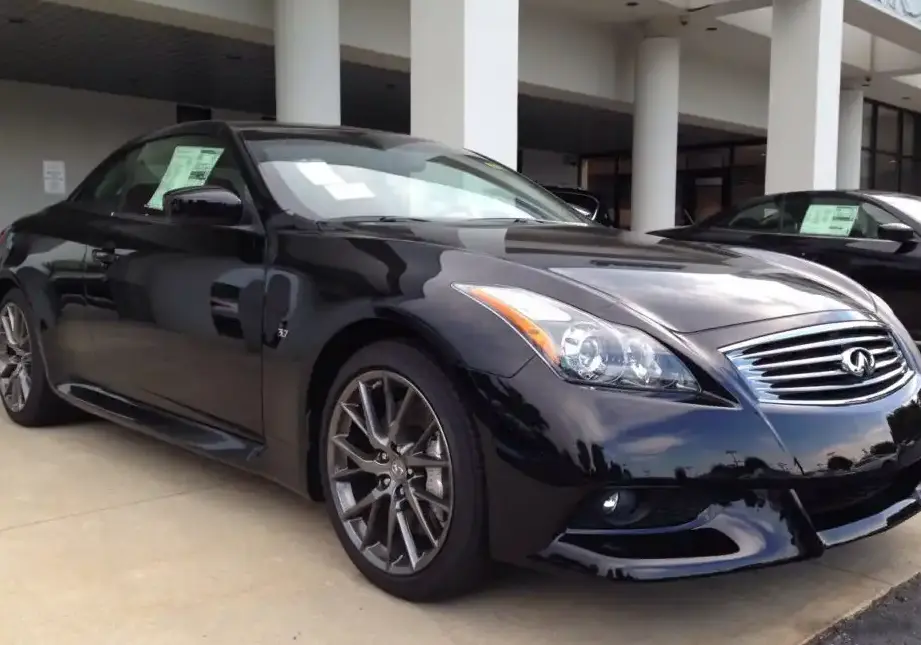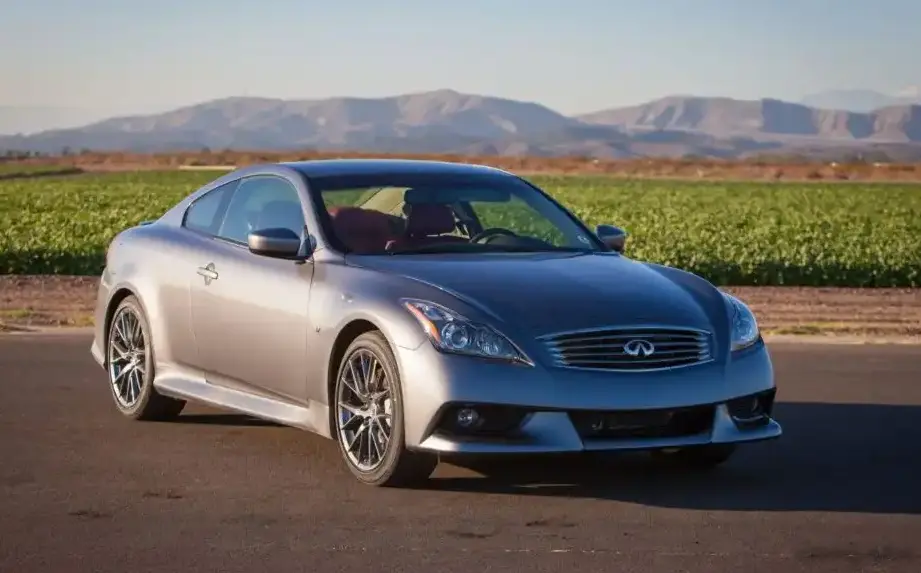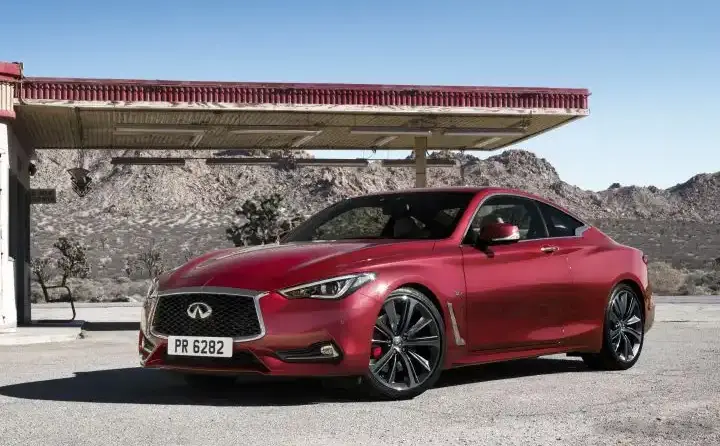
The Infiniti Q60 II Coupe 3.0t V6 AWD Automatic, launched in 2017, represents the second generation of Infiniti’s luxury sports coupe. Positioned as a premium offering within the Q60 lineup, this variant aimed to deliver a blend of performance, technology, and all-weather capability. It replaced the previous G37 Coupe, adopting a more refined design language and a new, more sophisticated powertrain. The Q60 II Coupe is built on the FM platform, shared with other Nissan/Infiniti models, and was primarily marketed towards buyers seeking a stylish and capable grand tourer with a focus on driver engagement.
Technical Specifications
| Brand | Infiniti |
| Model | Q60 |
| Generation | Q60 II Coupe |
| Type (Engine) | 3.0t V6 (300 Hp) AWD Automatic |
| Start of production | 2017 |
| Powertrain Architecture | Internal Combustion engine |
| Body type | Coupe |
| Seats | 4 |
| Doors | 2 |
| Fuel consumption (urban) | 12.4 l/100 km (19 US mpg, 22.8 UK mpg, 8.1 km/l) |
| Fuel consumption (extra urban) | 8.7 l/100 km (27 US mpg, 32.5 UK mpg, 11.5 km/l) |
| Fuel consumption (combined) | 10.7 l/100 km (22 US mpg, 26.4 UK mpg, 9.3 km/l) |
| Fuel Type | Petrol (Gasoline) |
| Weight-to-power ratio | 5.9 kg/Hp, 168.9 Hp/tonne |
| Weight-to-torque ratio | 4.4 kg/Nm, 225.2 Nm/tonne |
| Power | 300 Hp @ 6400 rpm |
| Power per litre | 100.1 Hp/l |
| Torque | 400 Nm @ 1600-5200 rpm (295.02 lb.-ft. @ 1600-5200 rpm) |
| Maximum engine speed | 6800 rpm |
| Engine layout | Front, Longitudinal |
| Engine Model/Code | VR30DDTT |
| Engine displacement | 2997 cm3 (182.89 cu. in.) |
| Number of cylinders | 6 |
| Engine configuration | V-engine |
| Cylinder Bore | 86 mm (3.39 in.) |
| Piston Stroke | 86 mm (3.39 in.) |
| Compression ratio | 10.3:1 |
| Number of valves per cylinder | 4 |
| Fuel injection system | Direct injection |
| Engine aspiration | Twin-Turbo, Intercooler |
| Valvetrain | DOHC, VVT |
| Engine oil capacity | 7 l (7.4 US qt | 6.16 UK qt) |
| Coolant capacity | 9 l (9.51 US qt | 7.92 UK qt) |
| Kerb Weight | 1776-1792 kg (3915.41 – 3950.68 lbs.) |
| Max. weight | 2305 kg (5081.66 lbs.) |
| Max load | 513-529 kg (1130.97 – 1166.25 lbs.) |
| Trunk (boot) space (minimum) | 246 l (8.69 cu. ft.) |
| Fuel tank capacity | 76 l (20.08 US gal | 16.72 UK gal) |
| Length | 4684 mm (184.41 in.) |
| Width | 1849 mm (72.8 in.) |
| Height | 1394 mm (54.88 in.) |
| Wheelbase | 2850 mm (112.2 in.) |
| Front track | 1554 mm (61.18 in.) |
| Rear track | 1585 mm (62.4 in.) |
| Drag coefficient (Cd) | 0.29 |
| Minimum turning circle | 11.6 m (38.06 ft.) |
| Drive wheel | All wheel drive (4×4) |
| Number of gears | 7 |
| Gearbox type | Automatic transmission |
| Front suspension | Double wishbone |
| Rear suspension | Independent multi-link suspension |
| Front brakes | Ventilated discs, 320 mm |
| Rear brakes | Ventilated discs, 307 mm |
| Assisting systems | ABS (Anti-lock braking system) |
| Steering type | Steering rack and pinion |
| Power steering | Electric |
| Tires size | 255/40 R19 |
| Wheel rims size | 9J x 19 |
Powertrain & Engine Architecture
The heart of the Q60 3.0t is the VR30DDTT 3.0-liter V6 engine. This engine is a 24-valve, dual-overhead camshaft (DOHC) design featuring variable valve timing (VVT) and direct injection. The “DDTT” designation signifies its twin-turbocharged configuration, utilizing two smaller turbochargers to minimize turbo lag and provide a broad torque curve. The engine produces 300 horsepower at 6400 rpm and 295 lb-ft of torque between 1600 and 5200 rpm. The engine’s longitudinal mounting and all-wheel-drive system contribute to balanced handling. The Q60 utilizes a seven-speed automatic transmission with manual shift mode. This transmission is designed for smooth and responsive gear changes, optimized for both daily driving and spirited performance.
Driving Characteristics
The Q60 3.0t AWD Automatic delivers a refined and capable driving experience. The twin-turbo V6 provides ample power for confident acceleration, with the all-wheel-drive system ensuring excellent traction in various conditions. While not as overtly sporty as some competitors, the Q60 prioritizes comfort and ease of use. The seven-speed automatic transmission is generally smooth, although some reviewers noted occasional hesitancy during downshifts. Compared to the base 2.0t model, the 3.0t offers a significant performance upgrade. The 3.0t also feels more planted and stable than rear-wheel-drive versions, particularly during inclement weather. The gear ratios are tuned for a balance between acceleration and fuel efficiency, favoring mid-range torque over peak horsepower.
Equipment & Trim Levels
The Q60 3.0t AWD Automatic typically came well-equipped with standard features including leather upholstery, heated front seats, a dual-screen infotainment system, a rearview camera, and a suite of driver-assistance technologies like automatic emergency braking and lane departure warning. Optional extras included a Bose premium audio system, navigation, adaptive cruise control, and a performance exhaust system. Trim levels beyond the base 3.0t often added features like upgraded interior trim, larger wheels, and more advanced safety systems. The interior design focused on a driver-centric layout with a comfortable and well-appointed cabin.
Chassis & Braking
The Q60 II Coupe features a double wishbone front suspension and an independent multi-link rear suspension, tuned for a balance of ride comfort and handling precision. The all-wheel-drive system utilizes a rear-biased torque distribution, enhancing driving engagement. Braking duties are handled by ventilated discs on all four wheels, providing ample stopping power. The Q60’s chassis is relatively stiff, contributing to its overall stability and responsiveness. The steering is electrically assisted, offering a reasonable level of feedback and precision.
Market Reception & Comparison
The Infiniti Q60 3.0t AWD Automatic was generally well-received by automotive critics, who praised its stylish design, powerful engine, and comfortable interior. However, some reviewers noted that its infotainment system could be complex to use and that its handling wasn’t as sharp as some of its European rivals, such as the BMW 4 Series or Audi A5. Fuel economy was considered average for its class. Compared to the Q60 2.0t, the 3.0t offered a substantial performance advantage, justifying its higher price tag for buyers prioritizing power and acceleration. Reliability reports have been mixed, with some owners reporting issues with the infotainment system and minor mechanical components.
Legacy
The Infiniti Q60 II Coupe 3.0t V6 AWD Automatic remains a desirable option in the used car market, offering a compelling combination of style, performance, and luxury. The VR30DDTT engine, while not without its quirks, has proven to be generally reliable with proper maintenance. The Q60’s all-wheel-drive system continues to be a valuable asset for buyers in regions with inclement weather. As a grand touring coupe, the Q60 offers a comfortable and refined driving experience, making it a suitable choice for long-distance travel. Its distinctive design and powerful engine ensure it remains a relevant and appealing option for enthusiasts seeking a stylish and capable luxury coupe.