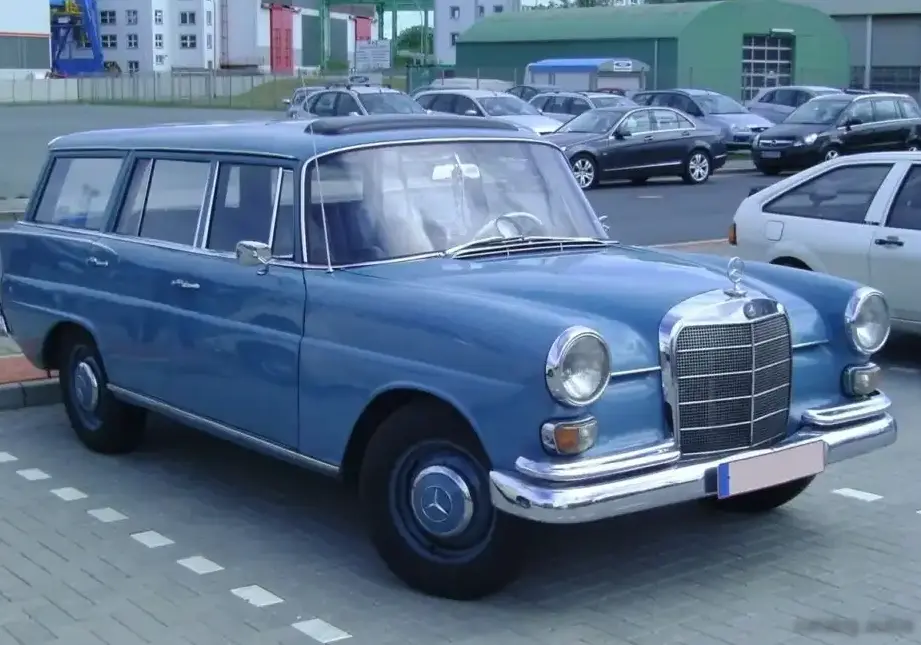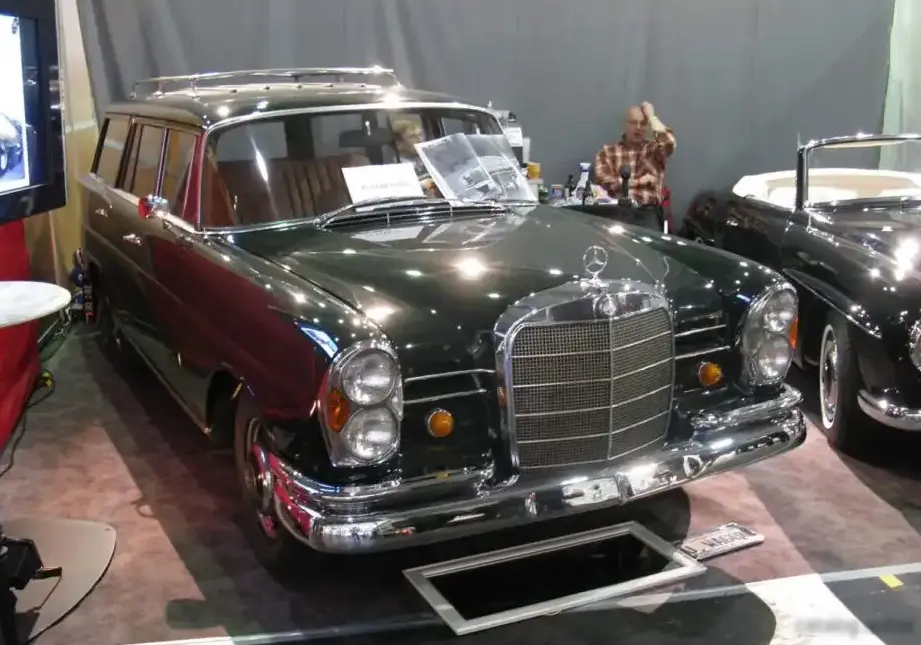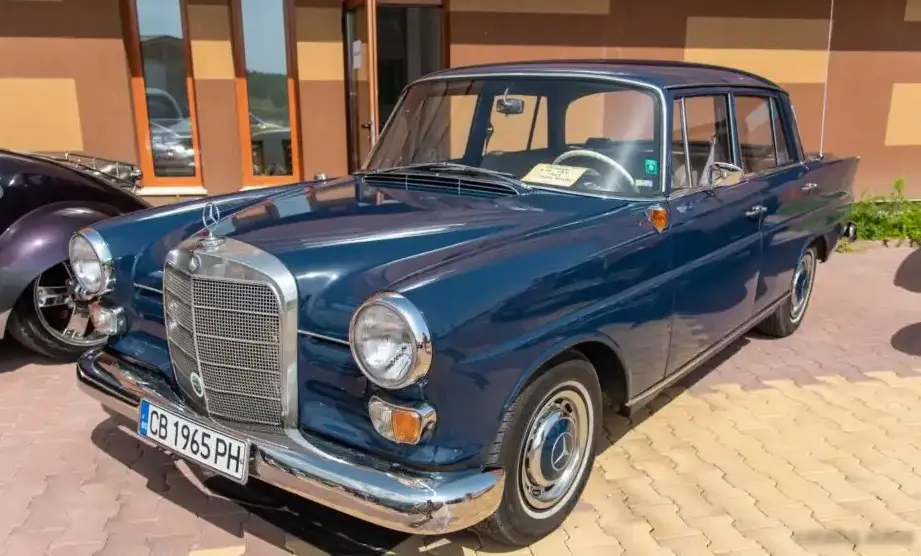
The Mercedes-Benz W110 “Fintail” 190 c, equipped with the 80 horsepower engine and automatic transmission, represents a pivotal entry-level model in the post-war Mercedes-Benz lineup. Produced from August 1962 to August 1965, this variant occupied an important position within the W110 series, offering a more accessible price point and a focus on comfortable, albeit leisurely, motoring. The W110 series, replacing the W105, was a significant step towards modernizing Mercedes-Benz production and broadening its appeal to a wider customer base. This particular 190 c model, with its smaller engine and automatic gearbox, was aimed at buyers prioritizing ease of use and a smooth driving experience over outright performance.
Technical Specifications
| Brand | Mercedes-Benz |
| Model | Fintail |
| Generation | Fintail (W110) |
| Type (Engine) | 190 c (80 Hp) Automatic |
| Start of production | August, 1962 |
| End of production | August, 1965 |
| Powertrain Architecture | Internal Combustion engine |
| Body type | Sedan |
| Seats | 5 |
| Doors | 4 |
| Fuel consumption (combined) | 10.8 l/100 km (21.8 US mpg, 26.2 UK mpg, 9.3 km/l) |
| Fuel Type | Petrol (Gasoline) |
| Acceleration 0 – 100 km/h | 17.8 sec |
| Acceleration 0 – 62 mph | 17.8 sec |
| Acceleration 0 – 60 mph | 16.9 sec |
| Maximum speed | 142 km/h (88.23 mph) |
| Weight-to-power ratio | 15.6 kg/Hp (64 Hp/tonne) |
| Weight-to-torque ratio | 8.8 kg/Nm (113.6 Nm/tonne) |
| Power | 80 Hp @ 5000 rpm |
| Power per litre | 42.2 Hp/l |
| Torque | 142 Nm @ 2500 rpm (104.73 lb.-ft. @ 2500 rpm) |
| Engine layout | Front, Longitudinal |
| Engine Model/Code | M 121 B V / 121.924 |
| Engine displacement | 1897 cm3 (115.76 cu. in.) |
| Number of cylinders | 4 |
| Engine configuration | Inline |
| Cylinder Bore | 85 mm (3.35 in.) |
| Piston Stroke | 83.6 mm (3.29 in.) |
| Compression ratio | 8.7:1 |
| Number of valves per cylinder | 2 |
| Fuel injection system | Carburettor |
| Engine aspiration | Naturally aspirated engine |
| Valvetrain | SOHC |
| Engine oil capacity | 4 l (4.23 US qt | 3.52 UK qt) |
| Coolant | 9 l (9.51 US qt | 7.92 UK qt) |
| Kerb Weight | 1250 kg (2755.78 lbs.) |
| Max. weight | 1750 kg (3858.09 lbs.) |
| Max load | 500 kg (1102.31 lbs.) |
| Fuel tank capacity | 52 l (13.74 US gal | 11.44 UK gal) |
| Length | 4730 mm (186.22 in.) |
| Width | 1795 mm (70.67 in.) |
| Height | 1495 mm (58.86 in.) |
| Wheelbase | 2700 mm (106.3 in.) |
| Front track | 1482 mm (58.35 in.) |
| Rear (Back) track | 1485 mm (58.46 in.) |
| Drivetrain Architecture | The Internal combustion engine (ICE) drives the rear wheels of the vehicle. |
| Drive wheel | Rear wheel drive |
| Number of gears and type of gearbox | 4 gears, automatic transmission |
| Front suspension | Double wishbone, Transverse stabilizer |
| Rear suspension | Trailing arm |
| Front brakes | Disc |
| Rear brakes | Drum |
| Steering type | Cone worm with recirculation balls |
| Wheel rims size | 5J x 13 |
Powertrain & Engine Architecture
The 190 c Automatic was powered by the M121 B V engine, a 1.9-liter (1897 cc) inline-four cylinder unit. This engine, designated with code 121.924, featured a single overhead camshaft (SOHC) valvetrain and utilized a Solex 32 PDS carburetor for fuel delivery. The engine produced 80 horsepower at 5000 rpm and 142 Nm (104.73 lb-ft) of torque at 2500 rpm. The relatively low compression ratio of 8.7:1 was typical for the era and contributed to the engine’s ability to run on lower octane fuels. The engine was mounted longitudinally in the front of the vehicle, driving the rear wheels. The automatic transmission was a four-speed hydraulic unit, offering a smoother, though less engaging, driving experience compared to the available manual gearbox.
Driving Characteristics
The 190 c Automatic’s driving experience was defined by its relaxed nature. Acceleration was modest, taking approximately 17.8 seconds to reach 62 mph (100 km/h). The automatic transmission, while providing convenience, did sap some power from the engine. Gear ratios were optimized for comfortable cruising rather than spirited performance. Compared to the more powerful 190 D (diesel) or the higher-spec 200 models, the 190 c Automatic felt noticeably slower. However, its smooth operation and ease of driving made it well-suited for urban environments and long-distance journeys where outright speed wasn’t a priority.
Equipment & Trim Levels
The 190 c Automatic was generally equipped with a fairly basic level of trim, reflecting its position as the entry-level model. Standard features included cloth upholstery, a simple dashboard layout with basic instrumentation, and manually operated windows. Optional extras, such as a radio, whitewall tires, and a sunroof, were available to enhance the comfort and convenience of the vehicle. The interior was functional and durable, prioritizing practicality over luxury. The exterior typically featured chrome trim around the windows and bumpers, contributing to the “Fintail” styling that characterized the W110 series.
Chassis & Braking
The W110 chassis featured independent front suspension with double wishbones and a transverse stabilizer, providing a reasonably comfortable ride. The rear suspension utilized a trailing arm setup. Braking was accomplished via disc brakes on the front wheels and drum brakes on the rear. The braking system, while adequate for the vehicle’s performance, lacked the stopping power of more modern systems. Steering was handled by a cone worm and recirculation balls system, which provided a relatively heavy but precise feel.
Market Reception & Comparison
The 190 c Automatic was generally well-received as a practical and reliable family sedan. Critics acknowledged its comfortable ride and ease of use, but often noted its lack of performance. Compared to the manual transmission versions of the 190 c, the automatic offered less responsiveness and slightly lower fuel economy (around 10.8 l/100 km or 21.8 US mpg). The diesel-powered 190 D offered superior fuel efficiency, while the 200 models provided significantly more power. The 190 c Automatic appealed to buyers who prioritized convenience and a smooth driving experience over sporty handling or rapid acceleration.
Legacy
The Mercedes-Benz W110 190 c Automatic, while not the most powerful or prestigious model in the lineup, remains a respected classic car. The M121 engine, when properly maintained, is known for its durability and reliability. Today, these vehicles are sought after by enthusiasts for their classic styling, simple mechanicals, and relatively affordable price point. Finding well-preserved examples can be challenging, as many were used as everyday transportation and subjected to wear and tear. However, the 190 c Automatic represents a significant chapter in Mercedes-Benz history, embodying the company’s commitment to quality and engineering during the early 1960s. Parts availability is generally good, making it a viable option for those interested in classic car ownership and restoration.