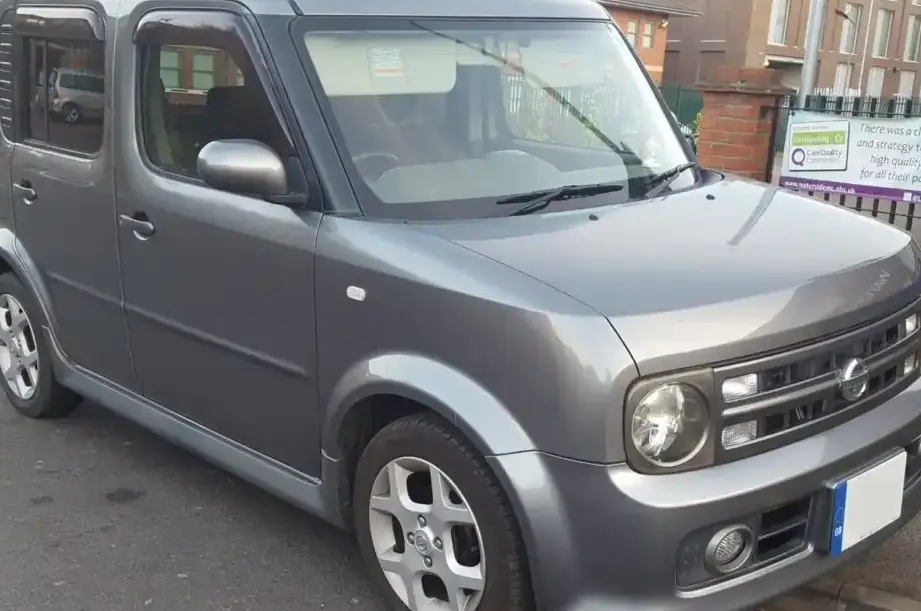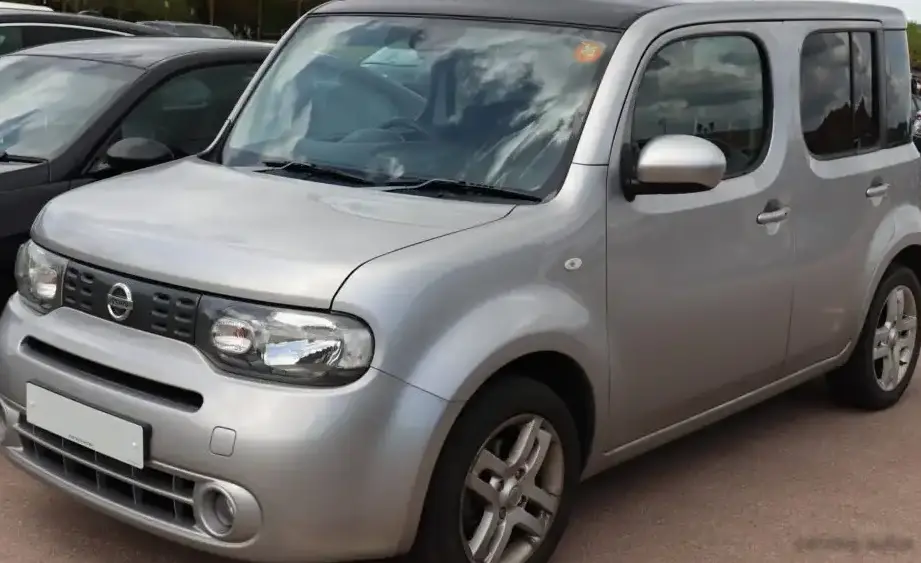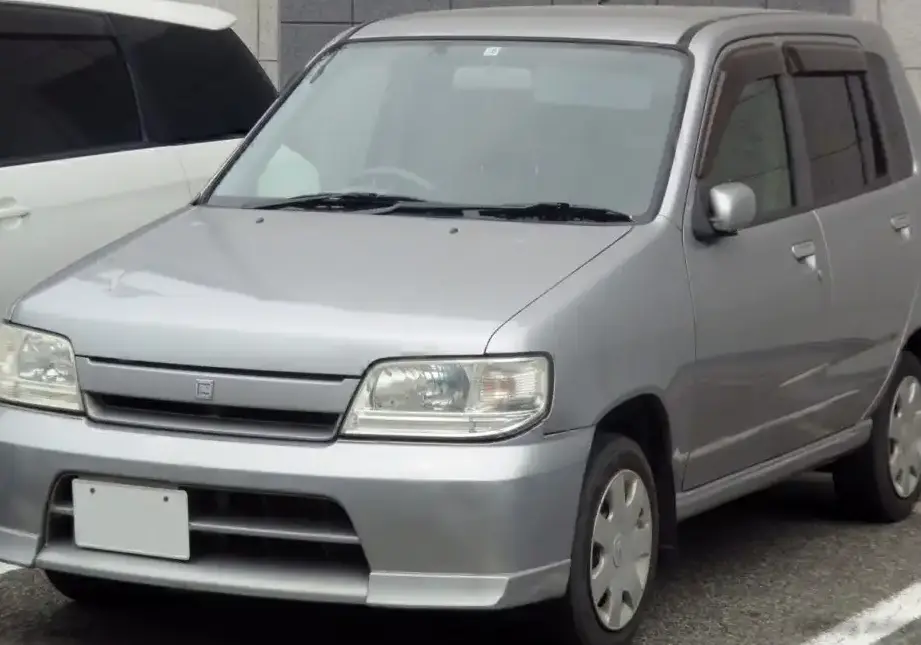
The Nissan Cube (Z10) 1.3 i 16V, produced between 1998 and 2002, represents the entry point into the first generation of Nissan’s distinctive, boxy micro-MPV. Positioned as an affordable and practical urban vehicle, this variant was primarily sold in the Japanese domestic market (JDM) and select European countries. It offered a unique blend of space efficiency and quirky styling, appealing to buyers seeking something different from conventional small cars. The Z10 Cube was built on Nissan’s B-platform, shared with models like the March/Micra, and aimed to maximize interior space within a compact footprint. This particular 1.3-liter engine and four-speed automatic transmission combination was designed for ease of use and fuel economy, prioritizing practicality over outright performance.
Technical Specifications
| Brand | Nissan |
| Model | Cube |
| Generation | Cube (Z10) |
| Type (Engine) | 1.3 i 16V (82 Hp) |
| Start of production | 1998 |
| End of production | 2002 |
| Powertrain Architecture | Internal Combustion engine |
| Body type | Minivan |
| Seats | 5 |
| Doors | 5 |
| Fuel consumption (urban) | 8 l/100 km (29.4 US mpg) |
| Fuel consumption (extra urban) | 5.5 l/100 km (42.8 US mpg) |
| Fuel Type | Petrol (Gasoline) |
| Maximum speed | 160 km/h (99.42 mph) |
| Weight-to-power ratio | 11.7 kg/Hp |
| Weight-to-torque ratio | 9.1 kg/Nm |
| Power | 82 Hp @ 6000 rpm |
| Power per litre | 64.3 Hp/l |
| Torque | 106 Nm @ 4000 rpm (78.18 lb.-ft. @ 4000 rpm) |
| Engine layout | Front, Transverse |
| Engine displacement | 1275 cm3 (77.81 cu. in.) |
| Number of cylinders | 4 |
| Engine configuration | Inline |
| Cylinder Bore | 71 mm (2.8 in.) |
| Piston Stroke | 80.5 mm (3.17 in.) |
| Compression ratio | 9.5:1 |
| Number of valves per cylinder | 4 |
| Fuel injection system | Multi-port manifold injection |
| Engine aspiration | Naturally aspirated engine |
| Valvetrain | DOHC |
| Kerb Weight | 960 kg (2116.44 lbs.) |
| Max. weight | 1290 kg (2843.96 lbs.) |
| Max load | 330 kg (727.53 lbs.) |
| Length | 3750 mm (147.64 in.) |
| Width | 1610 mm (63.39 in.) |
| Height | 1630 mm (64.17 in.) |
| Front track | 1375 mm (54.13 in.) |
| Rear track | 1335 mm (52.56 in.) |
| Drivetrain Architecture | Front wheel drive |
| Number of gears | 4 |
| Gearbox type | Automatic transmission |
| Front suspension | Coil spring |
| Rear suspension | Coil spring |
| Front brakes | Disc |
| Rear brakes | Drum |
| Steering type | Steering rack and pinion |
| Power steering | Hydraulic |
| Tires size | 165/70 R13 |
Powertrain & Engine Architecture
The heart of the Z10 Cube 1.3 i 16V is the Nissan CG13DE engine. This 1.3-liter, inline-four cylinder engine utilizes a double overhead camshaft (DOHC) valvetrain with four valves per cylinder, contributing to its relatively efficient breathing. The engine employs multi-point fuel injection, a common feature for the era, ensuring precise fuel delivery. The CG13DE is a naturally aspirated engine, meaning it doesn’t rely on turbocharging or supercharging for increased power. It produces 82 horsepower at 6000 rpm and 106 Nm (78.18 lb-ft) of torque at 4000 rpm. Paired with this engine is a four-speed automatic transmission, designed for smooth and convenient operation. This transmission was a typical automatic of the late 1990s, prioritizing comfort over sporty responsiveness. The transmission’s gear ratios were geared towards maximizing fuel efficiency and providing adequate acceleration for urban driving.
Driving Characteristics
The 1.3-liter engine and automatic transmission combination in the Cube Z10 delivers a driving experience focused on practicality and ease of use. Acceleration is modest, with the car taking a noticeable amount of time to reach highway speeds. The automatic transmission, while smooth, lacks the responsiveness of a manual gearbox, and doesn’t offer any manual shift modes. Compared to the later, more powerful 1.5-liter engine options available in the Cube lineup, the 1.3L feels noticeably underpowered, especially when fully loaded with passengers and cargo. However, the lighter engine weight contributes to nimble handling in city environments. The gear ratios are optimized for fuel economy, resulting in lower engine speeds at cruising speeds, but also limiting the car’s ability to quickly overtake or climb hills.
Equipment & Trim Levels
The 1.3 i 16V Cube typically represented the base trim level. Standard equipment generally included power steering, central locking, and basic audio system. Interior upholstery was typically cloth, with a simple and functional dashboard layout. Air conditioning was often an optional extra, as were power windows and alloy wheels. The interior design prioritized space efficiency, with a relatively flat floor and upright seating position. The rear seats could be folded down to increase cargo capacity, enhancing the Cube’s versatility. The overall interior ambiance was basic but durable, reflecting the car’s affordable positioning.
Chassis & Braking
The Z10 Cube utilizes a relatively simple chassis design. Front suspension consists of coil springs and struts, while the rear suspension employs a coil spring and torsion beam setup. This configuration provides a comfortable ride quality, but doesn’t offer particularly sporty handling characteristics. Braking is handled by disc brakes on the front wheels and drum brakes on the rear. This combination was common for vehicles in this price range during the late 1990s. The braking system is adequate for normal driving conditions, but lacks the stopping power of more advanced braking systems found on higher-end vehicles. The steering is rack and pinion, providing reasonably precise steering feel.
Market Reception & Comparison
The Nissan Cube 1.3 i 16V was generally well-received as an affordable and practical city car. Critics praised its spacious interior and unique styling, but noted its lack of performance. Compared to other small cars of the era, such as the Toyota Yaris or Honda Jazz, the Cube offered a more distinctive design and a slightly larger interior. However, it typically lagged behind these competitors in terms of performance and fuel economy. The automatic transmission, while convenient, was often criticized for its lack of responsiveness. The 1.5-liter engine option, available in higher trim levels, offered a significant performance improvement, but at a higher price point.
Legacy
The Nissan Cube Z10 1.3 i 16V, while not known for its blistering performance, has proven to be a relatively reliable vehicle. The CG13DE engine is generally considered durable, and the four-speed automatic transmission is relatively trouble-free. In the used car market, these Cubes are often sought after for their affordability and unique styling. Maintenance costs are generally low, and parts availability is still reasonable. However, potential buyers should be aware of the possibility of rust, particularly in areas with harsh winters. The Z10 Cube paved the way for subsequent generations of the Cube, solidifying its reputation as a quirky and practical urban vehicle.