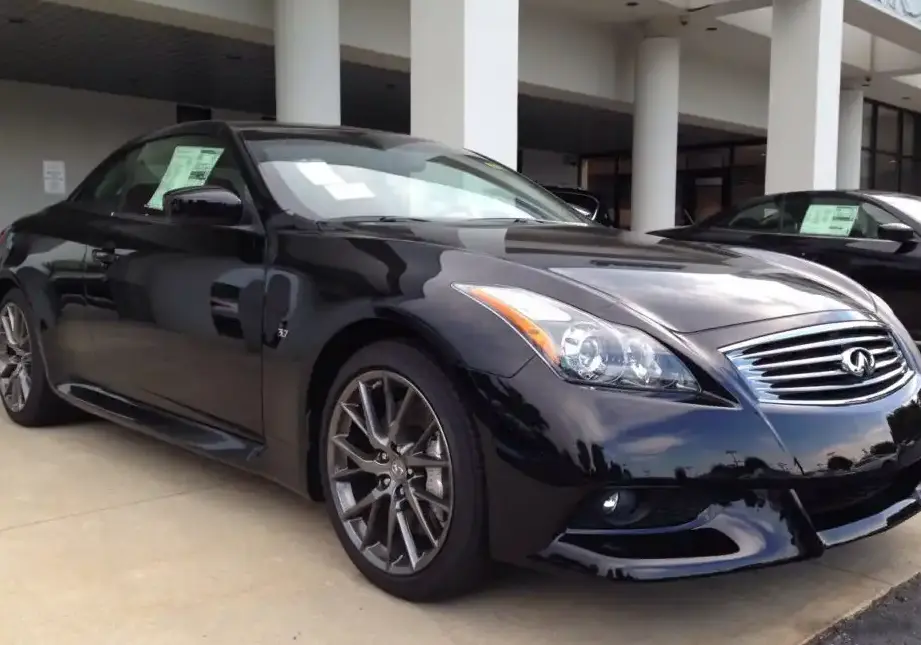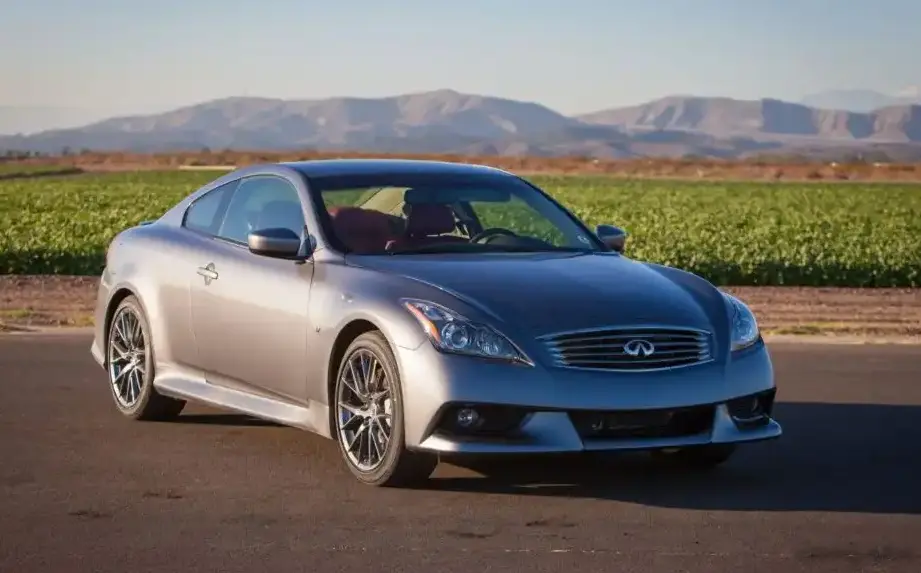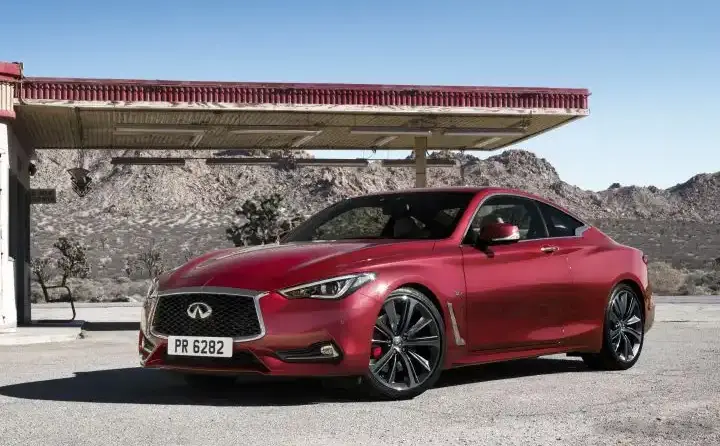
The Infiniti Q60 II Coupe RED SPORT 3.0t, introduced for the 2017 model year, represents the performance pinnacle of the second-generation Q60 lineup. Positioned as the flagship trim, it offered a significant power upgrade over the standard 3.0t models, targeting enthusiasts seeking a luxurious yet capable grand tourer. The Q60 II, built on the shared FM platform with the Nissan 370Z and earlier Infiniti G37, aimed to recapture the spirit of the original Q60 (formerly the Infiniti G35 Coupe) while offering modern technology and refinement. This variant specifically distinguishes itself with its twin-turbocharged 3.0-liter V6 engine paired exclusively with a seven-speed automatic transmission.
Technical Specifications
| Brand | Infiniti |
| Model | Q60 |
| Generation | Q60 II Coupe |
| Type (Engine) | RED SPORT 3.0t V6 (400 Hp) Automatic |
| Start of production | 2017 |
| Powertrain Architecture | Internal Combustion engine |
| Body type | Coupe |
| Seats | 4 |
| Doors | 2 |
| Fuel consumption (urban) | 11.8 l/100 km (19.9 US mpg) |
| Fuel consumption (extra urban) | 8.7 l/100 km (27 US mpg) |
| Fuel consumption (combined) | 10.7 l/100 km (22 US mpg) |
| Fuel Type | Petrol (Gasoline) |
| Weight-to-power ratio | 4.4 kg/Hp, 227.1 Hp/tonne |
| Weight-to-torque ratio | 3.7 kg/Nm, 269.7 Nm/tonne |
| Power | 400 Hp @ 6400 rpm |
| Power per litre | 133.5 Hp/l |
| Torque | 475 Nm @ 1600-5200 rpm (350.34 lb.-ft. @ 1600-5200 rpm) |
| Maximum engine speed | 6800 rpm |
| Engine layout | Front, Longitudinal |
| Engine Model/Code | VR30DDTT |
| Engine displacement | 2997 cm3 (182.89 cu. in.) |
| Number of cylinders | 6 |
| Engine configuration | V-engine |
| Cylinder Bore | 86 mm (3.39 in.) |
| Piston Stroke | 86 mm (3.39 in.) |
| Compression ratio | 10.3:1 |
| Number of valves per cylinder | 4 |
| Fuel injection system | Direct injection |
| Engine aspiration | Twin-Turbo, Intercooler |
| Valvetrain | DOHC, VVT |
| Engine oil capacity | 7 l (7.4 US qt | 6.16 UK qt) |
| Coolant | 9 l (9.51 US qt | 7.92 UK qt) |
| Kerb Weight | 1761 kg (3882.34 lbs.) |
| Max. weight | 2225 kg (4905.29 lbs.) |
| Max load | 464 kg (1022.94 lbs.) |
| Trunk (boot) space – minimum | 246 l (8.69 cu. ft.) |
| Fuel tank capacity | 76 l (20.08 US gal | 16.72 UK gal) |
| Length | 4684 mm (184.41 in.) |
| Width | 1849 mm (72.8 in.) |
| Height | 1384 mm (54.49 in.) |
| Wheelbase | 2850 mm (112.2 in.) |
| Front track | 1554 mm (61.18 in.) |
| Rear (Back) track | 1570 mm (61.81 in.) |
| Drag coefficient (Cd) | 0.29 |
| Minimum turning circle (turning diameter) | 11.2 m (36.75 ft.) |
| Drivetrain Architecture | Rear wheel drive |
| Number of gears and type of gearbox | 7 gears, automatic transmission |
| Front suspension | Double wishbone |
| Rear suspension | Independent multi-link suspension |
| Front brakes | Ventilated discs, 356 mm |
| Rear brakes | Ventilated discs, 351 mm |
| Assisting systems | ABS (Anti-lock braking system) |
| Steering type | Steering rack and pinion |
| Power steering | Electric Steering |
| Tires size | Front wheel tires: 255/35 R20 Rear wheel tires: 275/30 R20 |
| Wheel rims size | Front wheel rims: 9J x 20 Rear wheel rims: 9.5J x 20 |
Powertrain & Engine Architecture
The heart of the Q60 RED SPORT 3.0t is the VR30DDTT engine, a 2.997-liter twin-turbocharged V6. This engine represents a significant departure from the naturally aspirated VQ37VHR found in earlier Q60/G37 models. The VR30DDTT utilizes direct injection and variable valve timing (VVT) on both intake and exhaust valves to optimize performance and efficiency. The twin-turbocharger setup employs electronically controlled wastegates for precise boost control. The seven-speed automatic transmission, sourced from Mercedes-Benz (7G-TRONIC), was chosen for its smooth shifting characteristics and ability to handle the engine’s substantial torque output. While offering manual shift modes, the transmission prioritizes comfort and refinement over outright sporty engagement.
Driving Characteristics
The Q60 RED SPORT 3.0t delivers a markedly different driving experience compared to its lower-trim siblings. The 400 horsepower and 475 lb-ft of torque provide strong acceleration, with 0-60 mph times typically falling in the low-to-mid 4-second range. The automatic transmission is well-tuned for everyday driving, offering smooth gear changes. However, it can sometimes feel hesitant during aggressive downshifts. The rear-wheel-drive configuration contributes to a balanced feel, although the car’s weight (over 3,800 pounds) is noticeable during spirited cornering. Compared to a manual transmission equipped Q60, the RED SPORT sacrifices some driver involvement for ease of use.
Equipment & Trim Levels
The RED SPORT trim came standard with a comprehensive list of features, including leather upholstery, heated and ventilated front seats, a Bose premium audio system, a dual-screen infotainment system, and a suite of advanced driver-assistance systems (ADAS) such as adaptive cruise control, lane departure warning, and blind-spot monitoring. Optional extras included carbon fiber interior trim, a limited-slip differential, and upgraded brake rotors. The interior design focused on a driver-centric layout with a sporty aesthetic.
Chassis & Braking
The Q60 RED SPORT features a double-wishbone front suspension and an independent multi-link rear suspension. The suspension tuning is geared towards a balance of comfort and handling. Larger brakes, with 356mm front and 351mm rear ventilated discs, provide ample stopping power. The standard tires are 255/35R20 front and 275/30R20 rear, offering good grip in various conditions. While the suspension is capable, it doesn’t offer the same level of adjustability or track-focused performance as some of its European rivals.
Market Reception & Comparison
Critics generally praised the Q60 RED SPORT for its powerful engine, luxurious interior, and attractive styling. However, some reviewers noted the transmission’s occasional sluggishness and the car’s relatively high weight. Compared to competitors like the BMW 4 Series, Audi S5, and Lexus RC F, the Q60 RED SPORT offered a compelling value proposition, often undercutting its rivals in price. Fuel economy, at around 22 mpg combined, was respectable for a performance coupe but not class-leading. Reliability reports have been mixed, with some owners experiencing issues with the infotainment system and turbocharger components.
Legacy
The Q60 RED SPORT 3.0t represents a significant step forward for Infiniti in terms of performance and technology. The VR30DDTT engine, while not without its quirks, proved to be a capable and potent powerplant. On the used car market, the Q60 RED SPORT holds its value relatively well, appealing to buyers seeking a stylish and powerful coupe with a touch of luxury. Regular maintenance, particularly regarding the turbochargers and cooling system, is crucial for long-term reliability. The RED SPORT’s blend of performance, comfort, and features continues to make it an attractive option for enthusiasts today.