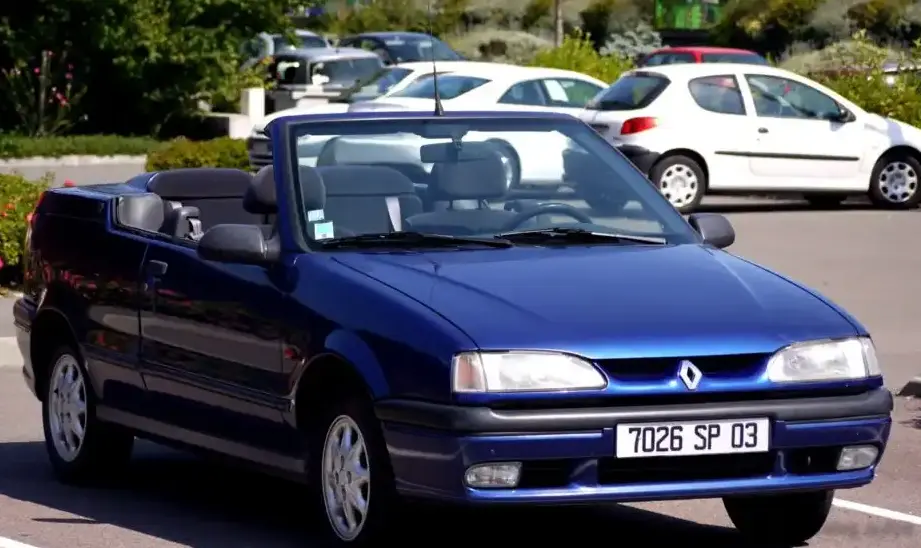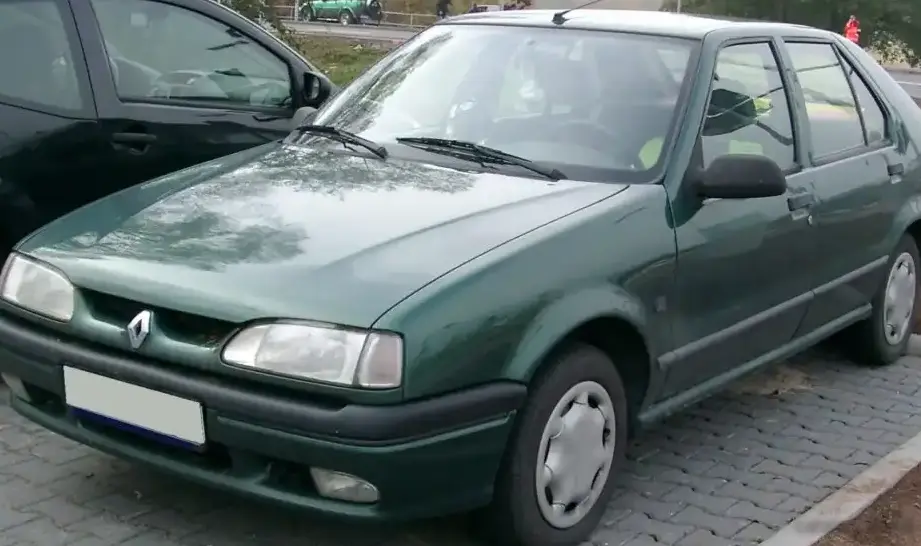
The Renault 19 1.8 16V, produced from 1992 to 1996, represented a performance-oriented variant within the broader Renault 19 (B/C53) range. This facelifted model, part of the second generation of the 19, aimed to offer a more engaging driving experience than the base models, appealing to enthusiasts seeking a sporty compact hatchback. It occupied a mid-to-upper position in the lineup, bridging the gap between the more economical engine options and the potential for future, more focused Renault Sport models. The 1.8 16V was primarily sold in European markets, where compact hatchbacks were a dominant force, and offered a compelling blend of performance, practicality, and affordability.
Technical Specifications
| Brand | Renault |
| Model | 19 |
| Generation | 19 (B/C53) (facelift 1992) |
| Type (Engine) | 1.8 i 16V (135 Hp) |
| Start of production | 1992 |
| End of production | 1996 |
| Powertrain Architecture | Internal Combustion engine |
| Body type | Hatchback |
| Seats | 5 |
| Doors | 3-5 |
| Fuel consumption (combined) | 8.2 l/100 km (28.7 US mpg, 34.4 UK mpg, 12.2 km/l) |
| Fuel Type | Petrol (Gasoline) |
| Acceleration 0 – 100 km/h | 8.5 sec |
| Acceleration 0 – 62 mph | 8.5 sec |
| Acceleration 0 – 60 mph | 8.1 sec |
| Maximum speed | 212 km/h (131.73 mph) |
| Weight-to-power ratio | 8.3 kg/Hp, 121.1 Hp/tonne |
| Weight-to-torque ratio | 7.1 kg/Nm, 141.7 Nm/tonne |
| Power | 135 Hp @ 6500 rpm |
| Power per litre | 75.3 Hp/l |
| Torque | 158 Nm @ 4250 rpm (116.53 lb.-ft. @ 4250 rpm) |
| Engine layout | Front, Transverse |
| Engine Model/Code | F7P |
| Engine displacement | 1794 cm3 (109.48 cu. in.) |
| Number of cylinders | 4 |
| Engine configuration | Inline |
| Compression ratio | 10:1 |
| Number of valves per cylinder | 4 |
| Fuel injection system | Multi-port manifold injection |
| Engine aspiration | Naturally aspirated engine |
| Valvetrain | DOHC |
| Engine oil capacity | 6.5 l (6.87 US qt | 5.72 UK qt) |
| Coolant capacity | 7 l (7.4 US qt | 6.16 UK qt) |
| Kerb Weight | 1115 kg (2458.15 lbs.) |
| Max. weight | 1580 kg (3483.3 lbs.) |
| Max load | 465 kg (1025.15 lbs.) |
| Trunk (boot) space – minimum | 386 l (13.63 cu. ft.) |
| Trunk (boot) space – maximum | 865 l (30.55 cu. ft.) |
| Fuel tank capacity | 55 l (14.53 US gal | 12.1 UK gal) |
| Length | 4162 mm (163.86 in.) |
| Width | 1696 mm (66.77 in.) |
| Height | 1412 mm (55.59 in.) |
| Wheelbase | 2544 mm (100.16 in.) |
| Front track | 1426 mm (56.14 in.) |
| Rear track | 1406 mm (55.35 in.) |
| Drivetrain Architecture | Front wheel drive |
| Number of gears | 5 |
| Gearbox type | Manual transmission |
| Front suspension | Wishbone |
| Rear suspension | Torsion |
| Front brakes | Ventilated discs |
| Rear brakes | Disc |
| Assisting systems | ABS (Anti-lock braking system) |
| Steering type | Steering rack and pinion |
| Power steering | Hydraulic |
| Tires size | 195/50 R15 V |
| Wheel rims size | 15 |
Powertrain & Engine Architecture
The heart of the Renault 19 1.8 16V is the F7P engine, a 1.8-liter inline-four cylinder powerplant. This engine is notable for its dual overhead camshafts (DOHC) and four valves per cylinder, a configuration that allowed for improved breathing and higher revs compared to simpler engines. The F7P utilized multi-port fuel injection, delivering fuel directly into the intake ports for precise metering and efficient combustion. The 10:1 compression ratio was a relatively high figure for the time, contributing to the engine’s spirited performance. The engine produced 135 horsepower at 6500 rpm and 158 Nm (116.53 lb-ft) of torque at 4250 rpm. The engine was transversely mounted, driving the front wheels. The five-speed manual transmission was the standard offering, providing a direct connection between the engine and the wheels. The gear ratios were tuned to maximize acceleration and provide a reasonably comfortable cruising experience.
Driving Characteristics
The 1.8 16V Renault 19 offered a noticeably more engaging driving experience than the lower-powered variants. Acceleration to 60 mph was achieved in approximately 8.1 seconds, and it could reach a top speed of 131.73 mph. While not a sports car by any means, the 16V engine provided ample power for everyday driving and confident overtaking maneuvers. The five-speed manual transmission allowed drivers to fully exploit the engine’s powerband, while the relatively lightweight chassis contributed to nimble handling. Compared to the 1.4-liter models, the 1.8 16V felt significantly more responsive. It also offered a more refined experience than the diesel options, with smoother power delivery and less engine noise. The suspension, while tuned for comfort, provided adequate body control during cornering.
Equipment & Trim Levels
The Renault 19 1.8 16V typically came equipped with a reasonable level of standard features. These included power steering, ABS brakes, and a basic stereo system. Interior upholstery was typically cloth, with a functional and straightforward dashboard layout. Optional extras included electric windows, central locking, and a sunroof. Higher trim levels might have featured upgraded interior materials and additional comfort features. The overall interior design was typical of European hatchbacks of the era – practical, durable, and focused on functionality rather than luxury.
Chassis & Braking
The Renault 19 utilized a front-wheel-drive layout with a wishbone front suspension and a torsion beam rear suspension. This setup provided a good balance between ride comfort and handling. The front brakes were ventilated discs, offering good stopping power, while the rear brakes were solid discs. The ABS system helped to prevent wheel lockup during hard braking, enhancing safety. The chassis was relatively lightweight, contributing to the car’s agility. Stabilizer bars were fitted to both the front and rear axles to reduce body roll during cornering.
Market Reception & Comparison
The Renault 19 1.8 16V was generally well-received by automotive critics. It was praised for its lively performance, nimble handling, and reasonable fuel economy. Compared to rivals like the Volkswagen Golf and Opel Astra, the Renault 19 offered a more affordable entry point to the 1.8-liter performance segment. However, some critics noted that the interior quality was not quite as refined as that of its German competitors. Fuel economy was respectable for the time, averaging around 28.7 US mpg in combined driving. Reliability was generally good, although the F7P engine could be prone to oil leaks as it aged.
Legacy
The Renault 19 1.8 16V remains a popular choice among enthusiasts and classic car collectors. The F7P engine is known for its durability and relatively simple maintenance requirements. While parts availability can be a challenge, many components are still readily available. Today, these cars are often sought after as affordable and enjoyable classic hatchbacks. The 1.8 16V variant, in particular, is valued for its performance and engaging driving experience, making it a standout model within the Renault 19 range. A well-maintained example can provide years of reliable and enjoyable motoring.