
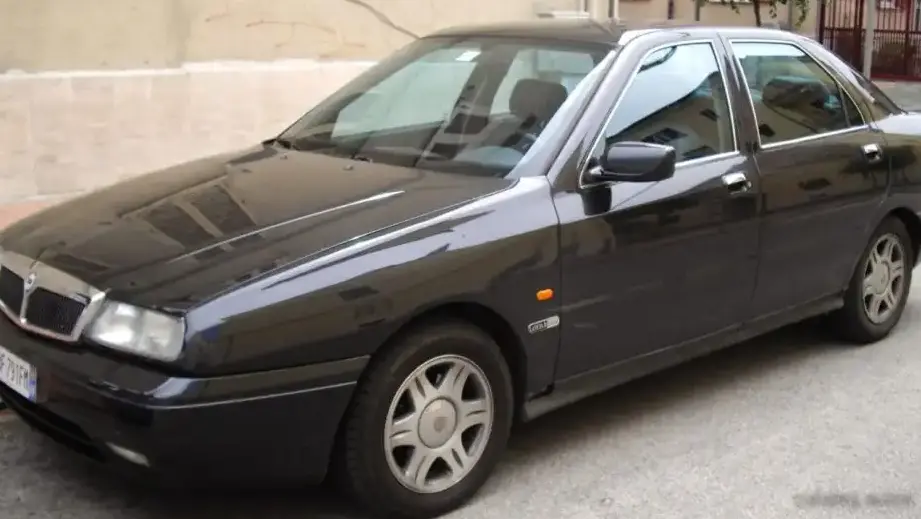
The Lancia Kappa 2.4 20V Automatic, produced between August 1994 and July 2000, represented a significant step forward for the Italian automaker. Part of the 838 series, the Kappa aimed to recapture Lancia’s reputation for innovative engineering and sophisticated design within the executive sedan segment. This particular variant, powered by the 2.4-liter five-cylinder engine paired with a four-speed automatic transmission, occupied a mid-range position in the Kappa lineup, offering a balance of performance and comfort. It was positioned above the entry-level 1.8-liter models and below the more powerful 3.0 V6 versions, targeting buyers who desired a refined driving experience without the higher price tag of the flagship trim.
Technical Specifications
| Brand | Lancia |
| Model | Kappa |
| Generation | Kappa (838) |
| Type (Engine) | 2.4 20V (175 Hp) Automatic |
| Start of production | August, 1994 |
| End of production | July, 2000 |
| Powertrain Architecture | Internal Combustion engine |
| Body type | Sedan |
| Seats | 5 |
| Doors | 4 |
| Fuel consumption (urban) | 15.4 l/100 km (15.3 US mpg, 18.3 UK mpg, 6.5 km/l) |
| Fuel consumption (extra urban) | 9 l/100 km (26.1 US mpg, 31.4 UK mpg, 11.1 km/l) |
| Fuel Type | Petrol (Gasoline) |
| Acceleration 0 – 100 km/h | 10.5 sec |
| Acceleration 0 – 62 mph | 10.5 sec |
| Acceleration 0 – 60 mph | 10 sec |
| Maximum speed | 212 km/h (131.73 mph) |
| Weight-to-power ratio | 8.3 kg/Hp, 120.7 Hp/tonne |
| Weight-to-torque ratio | 6.3 kg/Nm, 158.6 Nm/tonne |
| Power | 175 Hp @ 6100 rpm |
| Power per litre | 71.5 Hp/l |
| Torque | 230 Nm @ 3750 rpm (169.64 lb.-ft. @ 3750 rpm) |
| Engine layout | Front, Transverse |
| Engine Model/Code | 838 A2.000 |
| Engine displacement | 2446 cm3 (149.26 cu. in.) |
| Number of cylinders | 5 |
| Engine configuration | Inline |
| Cylinder Bore | 83 mm (3.27 in.) |
| Piston Stroke | 90.4 mm (3.56 in.) |
| Compression ratio | 10:1 |
| Number of valves per cylinder | 4 |
| Fuel injection system | Multi-port manifold injection |
| Engine aspiration | Naturally aspirated engine |
| Valvetrain | DOHC |
| Engine oil capacity | 5.4 l (5.71 US qt | 4.75 UK qt) |
| Coolant | 8.3 l (8.77 US qt | 7.3 UK qt) |
| Kerb Weight | 1450 kg (3196.7 lbs.) |
| Max. weight | 2000 kg (4409.25 lbs.) |
| Max load | 550 kg (1212.54 lbs.) |
| Trunk (boot) space – minimum | 525 l (18.54 cu. ft.) |
| Fuel tank capacity | 70 l (18.49 US gal | 15.4 UK gal) |
| Length | 4687 mm (184.53 in.) |
| Width | 1826 mm (71.89 in.) |
| Height | 1462 mm (57.56 in.) |
| Wheelbase | 2700 mm (106.3 in.) |
| Front track | 1547 mm (60.91 in.) |
| Rear (Back) track | 1535 mm (60.43 in.) |
| Drivetrain Architecture | The Internal combustion engine (ICE) drives the front wheels of the vehicle. |
| Drive wheel | Front wheel drive |
| Number of gears and type of gearbox | 4 gears, automatic transmission |
| Front suspension | Wishbone |
| Rear suspension | Spring Strut |
| Front brakes | Ventilated discs |
| Rear brakes | Disc |
| Assisting systems | ABS (Anti-lock braking system) |
| Steering type | Steering rack and pinion |
| Power steering | Hydraulic Steering |
| Tires size | 205/65 R15 |
| Wheel rims size | 15 |
Powertrain & Engine Architecture
The heart of the Kappa 2.4 Automatic is the 838 A2.000 engine, a 2.4-liter inline five-cylinder powerplant. This engine was notable for its relatively sophisticated design, featuring a double overhead camshaft (DOHC) valvetrain and multi-port fuel injection. The five-cylinder configuration offered a unique blend of smoothness and character, providing more power than a comparable four-cylinder engine while maintaining a more compact size than a V6. The engine produced 175 horsepower at 6,100 rpm and 230 Nm (169.64 lb-ft) of torque at 3,750 rpm. The automatic transmission was a conventional four-speed unit, chosen for its ease of use and suitability for the Kappa’s intended market. While not particularly advanced by modern standards, it provided smooth shifts and adequate performance for everyday driving.
Driving Characteristics
The Kappa 2.4 Automatic offered a comfortable and refined driving experience. The automatic transmission, while lacking the responsiveness of a manual gearbox, provided seamless gear changes and made the car easy to drive in urban environments. Acceleration from 0 to 60 mph took around 10 seconds, which was respectable for the time but not particularly sporty. The engine’s torque delivery was relatively linear, providing adequate power for overtaking maneuvers. Compared to the manual transmission versions of the Kappa 2.4, the automatic offered less driver engagement but greater convenience. It also lagged behind the higher-output 3.0 V6 models in terms of outright performance. The gear ratios were tuned for fuel efficiency and comfort rather than outright speed.
Equipment & Trim Levels
The Kappa 2.4 Automatic typically came equipped with a generous array of standard features, reflecting its positioning as a mid-range executive sedan. These included power windows, central locking, air conditioning, and an AM/FM radio. Higher trim levels offered options such as leather upholstery, a sunroof, and upgraded audio systems. Interior appointments were generally well-executed, with a focus on comfort and ergonomics. The dashboard layout was clean and functional, although some materials felt less premium than those found in competing German or Japanese sedans. Optional extras could significantly enhance the Kappa’s appeal, but also increased its price point.
Chassis & Braking
The Kappa 2.4 Automatic featured a front-wheel-drive layout with independent wishbone suspension at the front and a spring strut rear suspension. This setup provided a comfortable ride quality, absorbing bumps and imperfections in the road surface effectively. The braking system consisted of ventilated discs at the front and solid discs at the rear, supplemented by an anti-lock braking system (ABS). The steering was rack and pinion, providing precise and responsive handling. The Kappa’s chassis was designed to prioritize comfort and stability over outright sportiness, resulting in a predictable and easy-to-drive vehicle.
Market Reception & Comparison
The Lancia Kappa 2.4 Automatic received mixed reviews from automotive critics. While praised for its comfortable ride, spacious interior, and distinctive styling, it was often criticized for its relatively bland handling and the lack of a truly engaging driving experience. Fuel economy was also a concern, with the 2.4-liter engine consuming a significant amount of gasoline, especially in urban driving conditions. Compared to rivals such as the Audi A6 and BMW 5 Series, the Kappa offered a more affordable price point but lacked the same level of refinement and performance. The 1.8-liter Kappa models offered better fuel economy but significantly less power, while the 3.0 V6 versions provided more performance but at a higher cost.
Legacy
The Lancia Kappa 2.4 Automatic, while not a commercial success on the scale of some of its competitors, remains a fondly remembered vehicle among Lancia enthusiasts. The 838 A2.000 engine proved to be relatively reliable, although regular maintenance is essential to prevent issues such as oil leaks and timing belt failures. Today, well-maintained examples of the Kappa 2.4 Automatic are becoming increasingly collectible, appealing to those who appreciate its unique character and Italian flair. The car represents a high point in Lancia’s engineering history, showcasing the brand’s commitment to innovation and design. Its blend of comfort, style, and relatively affordable performance continues to attract a dedicated following.
